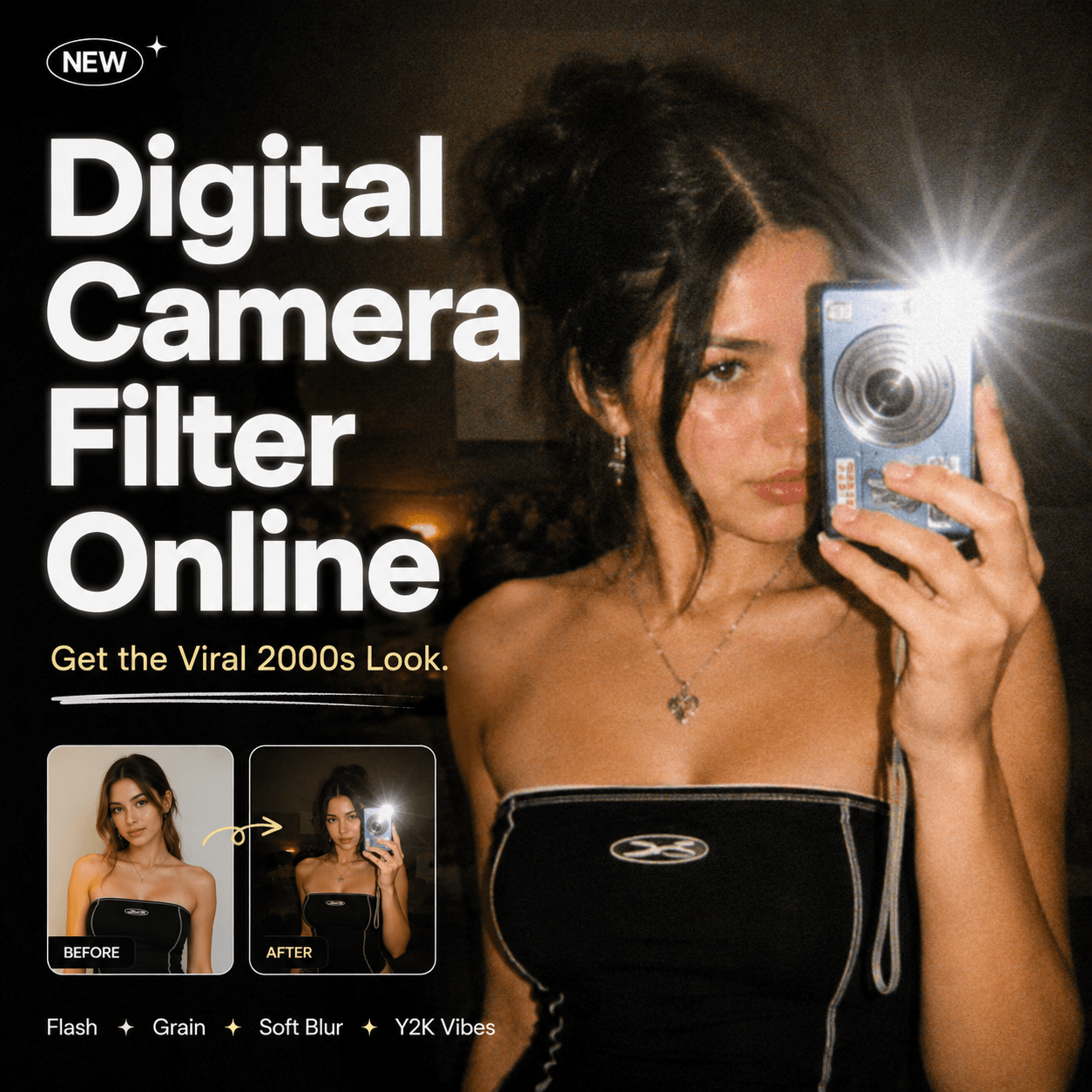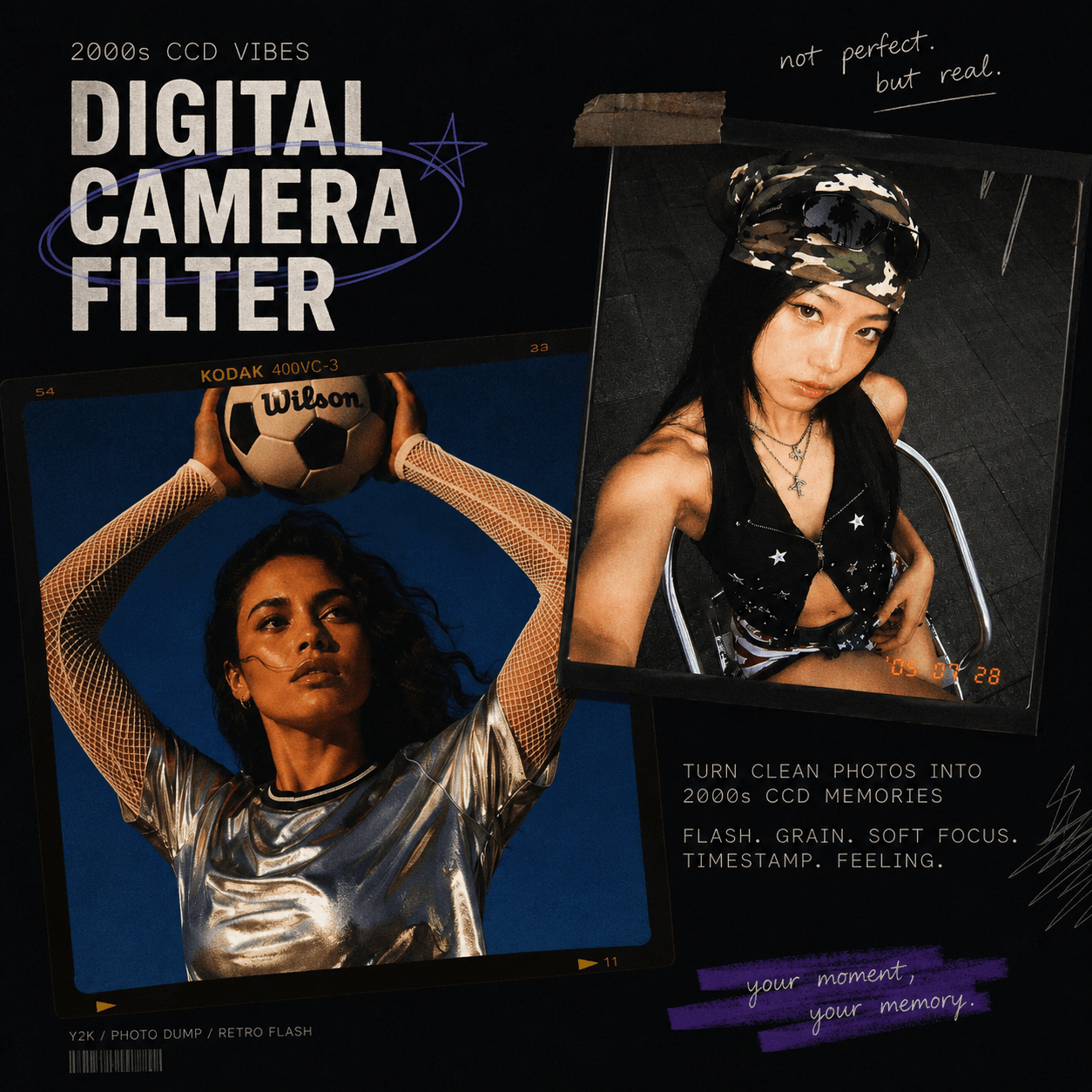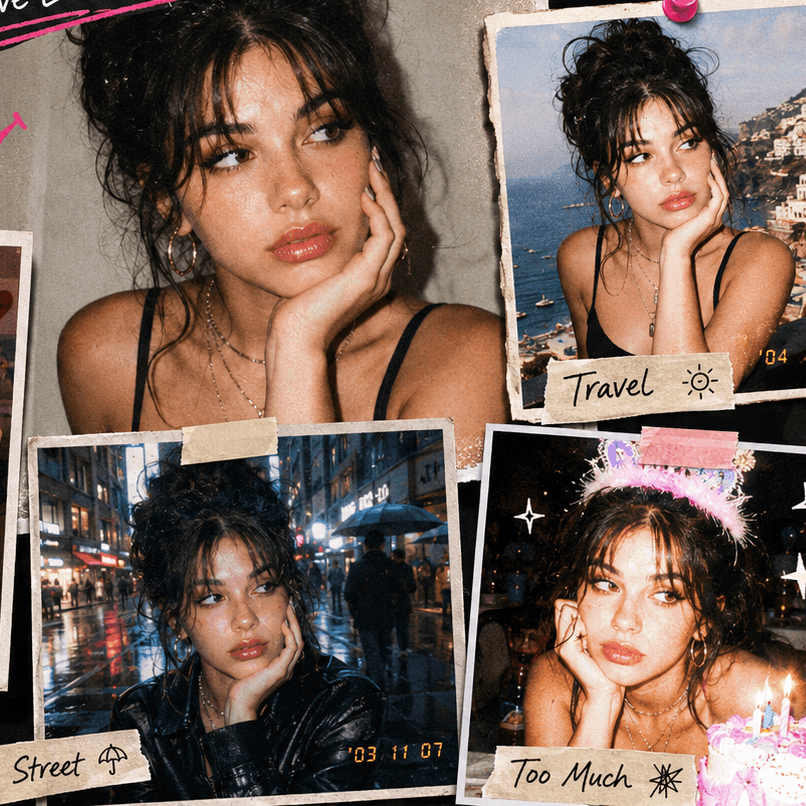
A 2000s Camera Effect can make one modern portrait feel like five completely different memories. However, not every retro edit looks believable. Some versions feel casual and camera-born. Others look like a heavy filter placed over a clean photo.
Therefore, this test uses one simple rule: keep the person recognizable, but change the visual story around them.
The same source image can become a late-night party shot, a summer travel memory, a bedroom mirror selfie, a rainy street portrait, or an overedited birthday photo. WeShop’s current tool page supports details such as direct flash, CCD color noise, soft focus, faded colors, grain, timestamps, and several retro camera directions, which makes this type of comparison possible.
Still, the goal is not to add every effect at once. Instead, each version should feel like it came from a different moment.
The Rules Behind This 2000s Camera Effect Test
To compare each 2000s Camera Effect fairly, the original subject should stay the same.
The face, hairstyle, clothing, and main pose should remain easy to recognize. Meanwhile, the lighting, background, framing, and camera texture can change.
Each version is judged in three areas:
Realism: Does the image look like it came from an older digital camera?
Mood: Does the effect create a clear feeling or story?
Subject Retention: Does the person still look like the original subject?
In addition, the test avoids perfect commercial lighting. A believable old-camera photo often includes small mistakes. For example, the crop may feel slightly awkward, the flash may be strong, or the background may lose detail.
However, those imperfections need to support the scene. Random blur and heavy grain are not enough.
2000s Camera Effect 1: Late-Night Party Flash
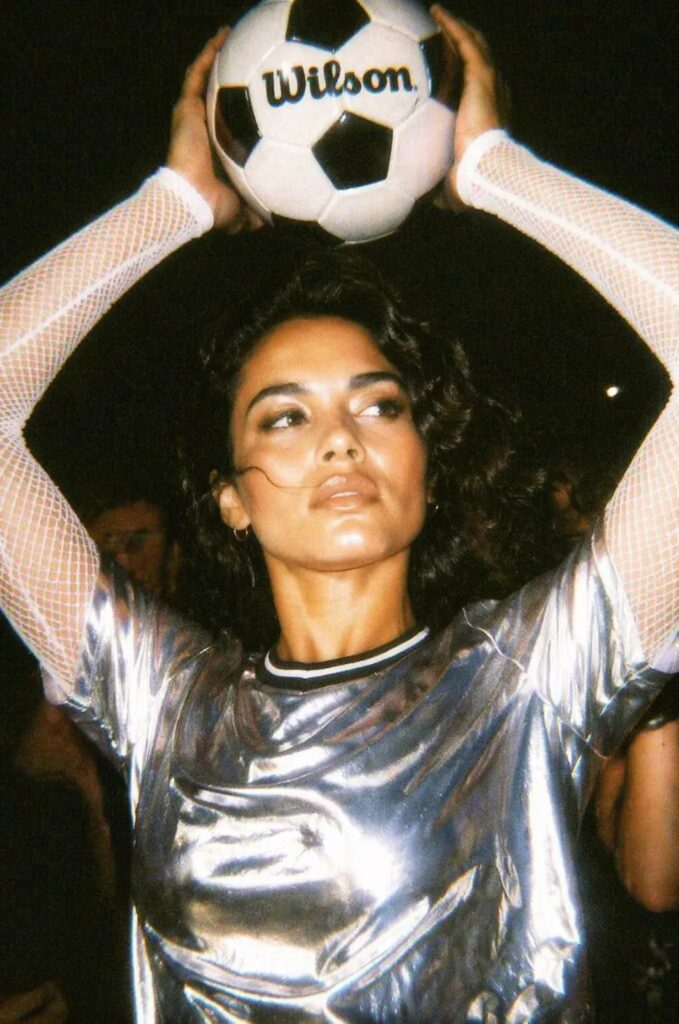
The first version places the subject inside a dark party setting.
A strong front flash lights the face and clothing. Meanwhile, the background remains dim, with only a few warm lights and blurred figures visible.
The crop feels close and slightly rushed. As a result, the photo looks as if a friend took it quickly during a busy night.
The skin is brighter than the background, but the facial details remain visible. In addition, a small amount of grain softens the modern sharpness of the original image.

Before 2000s Camera Effect

Why This 2000s Camera Effect Feels Real
The lighting makes sense for the scene.
Because the room is dark, the strong flash feels natural. Also, the background blur suggests movement without making the subject look distorted.
Most importantly, the image does not try to look beautiful in a perfect way. It feels spontaneous.
Realism: 9/10
Mood: 9/10
Best for: Night-out portraits, friendship photos, concert pictures, and party posts.
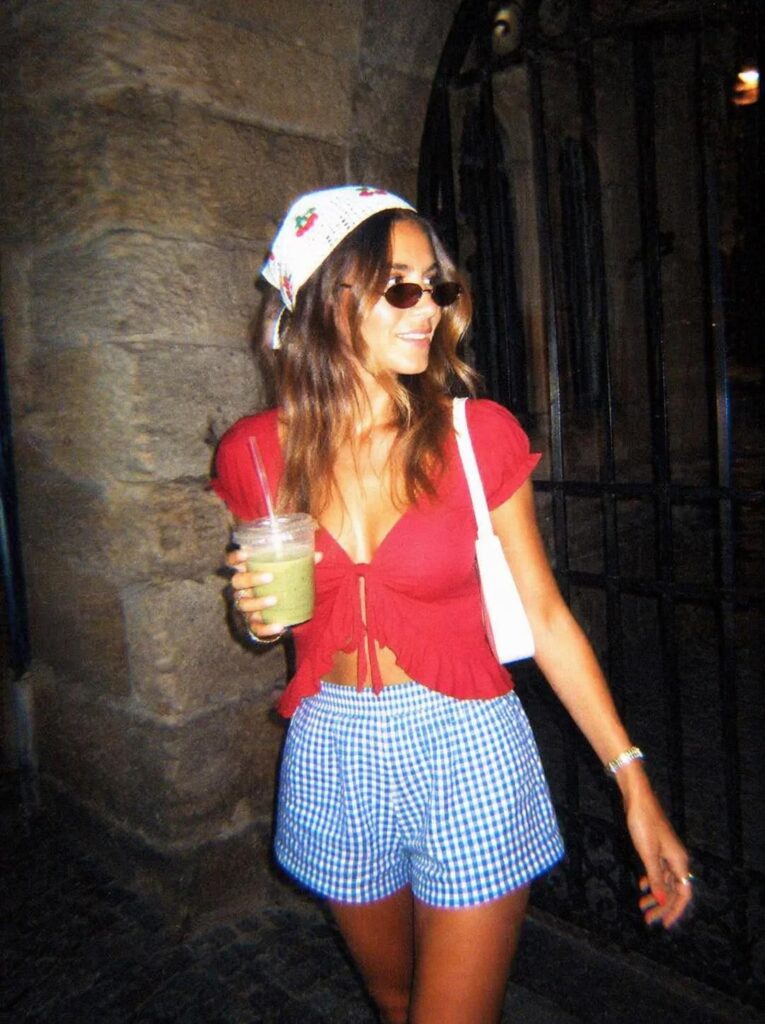
2000s Camera Effect 2: Summer Travel Snapshot
The second version moves the subject into a bright holiday setting.
Instead of using heavy flash, this 2000s Camera Effect relies on faded blue skies, warm skin tones, light grain, and slightly overexposed highlights.
Palm trees, hotel walls, beach chairs, or roadside buildings can appear in the background. However, the setting should feel ordinary rather than cinematic.
The final image resembles a photo taken during a family trip or a quiet afternoon near the beach.

What Makes the Travel Version Feel Too Modern
This style can easily become too polished.
For instance, a perfectly smooth sky may look like a modern travel advertisement. Similarly, flawless skin and sharp background details can break the old-camera mood.
Therefore, the image needs one or two gentle imperfections. A washed-out corner, softer shadow, or slightly uneven exposure may be enough.
Still, strong grain is not necessary. Daytime digital photos from the 2000s were often cleaner than night photos.
Realism: 7/10
Mood: 8/10
Best for: Holiday carousels, beach photos, casual travel posts, and summer mood boards.
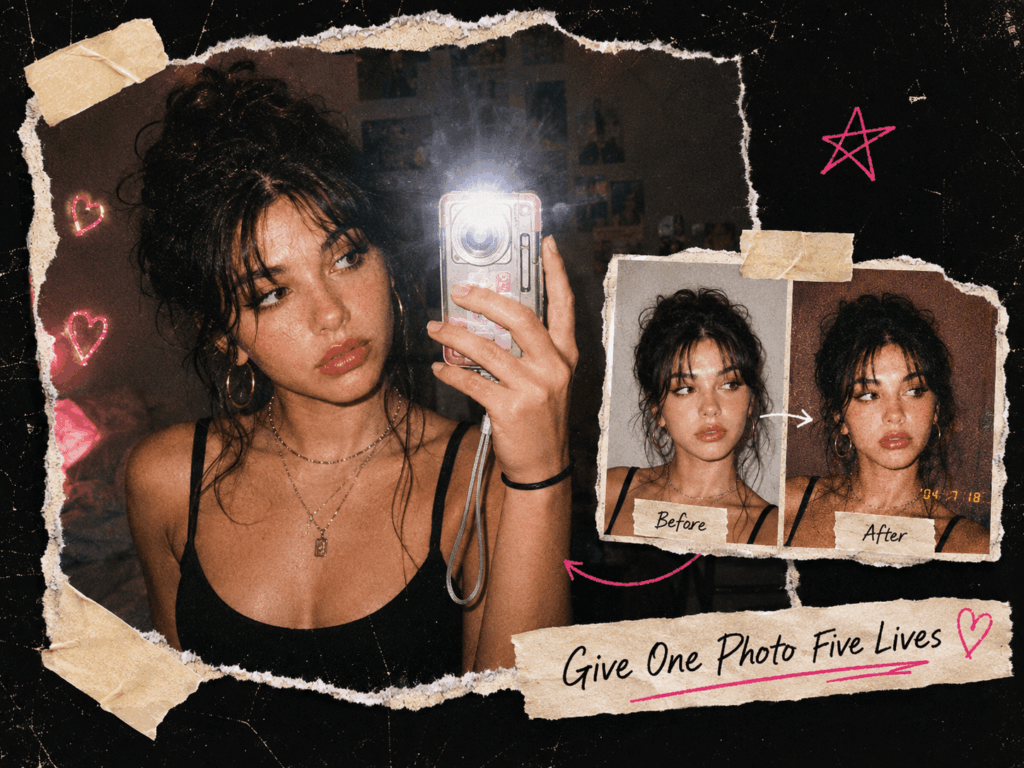
2000s Camera Effect 3: Bedroom Mirror Selfie
The bedroom mirror selfie creates the strongest sense of personal memory.
In this version, the subject stands or sits in front of a mirror. The compact camera appears in the frame, while the flash covers part of the face.
Meanwhile, the room includes small everyday details. Posters, clothes, shelves, lamps, or makeup items can remain visible in the background.
The image should not feel carefully arranged. Instead, it should look like the subject took the photo before leaving the house.

Why Imperfect Framing Improves the 2000s Camera Effect
A slightly uneven composition makes the result more believable.
For example, the head may sit close to the top edge. One arm may appear larger because it is closer to the mirror. Also, the background may contain objects that would normally be removed from a professional photo.
However, these details create personality.
The camera flash is also useful because it becomes part of the image. Rather than hiding the device, the photo celebrates the act of taking the selfie.
Realism: 9/10
Mood: 10/10
Best for: Profile photos, outfit posts, personal blogs, fashion edits, and nostalgic photo dumps.
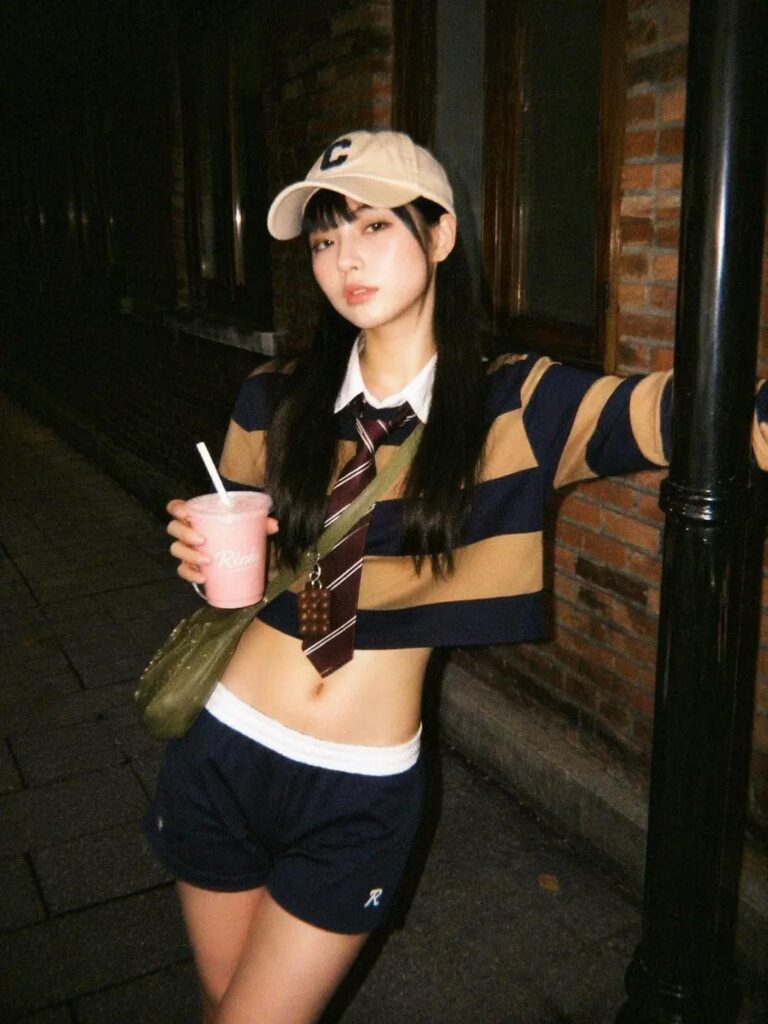
2000s Camera Effect 4: Rainy Street Digicam
The fourth version moves away from the bedroom and into a wet city street.
Streetlights reflect across the road. Meanwhile, the subject appears near a shop entrance, bus stop, or quiet corner.
This 2000s Camera Effect uses cooler shadows, weak background light, slight motion blur, and a small date stamp. The flash may still brighten the subject, but it should not remove the atmosphere behind them.
As a result, the image feels less playful and more cinematic.

The Small Detail That Sells the Street Mood
Reflections matter more than heavy grain.
When the pavement carries soft orange, red, or white light, the scene immediately feels deeper. In contrast, a flat black background makes the subject look pasted into the image.
A subtle timestamp can also help. However, it should sit near a corner and remain small.
The final photo should feel like a quiet memory after midnight, not a dramatic movie poster.
Realism: 8/10
Mood: 9/10
Best for: Album concepts, playlist covers, street portraits, mood boards, and editorial posts.
2000s Camera Effect 5: Birthday Flash Gone Too Far
The final version is intentionally overedited.
The flash turns faces almost white. Grain covers the clothing. Meanwhile, the date stamp becomes too large, and the background loses nearly every detail.
At first glance, the image looks very retro. However, it does not feel real.
Instead, the effects compete with one another. The blur hides expressions, while the heavy texture makes the photo look dirty rather than nostalgic.
Why More Retro Can Make a Photo Less Believable
Authenticity does not come from the number of effects.
If the image includes strong flash, heavy noise, deep blur, faded colors, extreme exposure, and a large timestamp, the result becomes visually confusing.
Therefore, choose one main feature and let the other effects remain subtle.
For example, a birthday image may need strong flash and light grain. It probably does not need severe blur as well.
Realism: 5/10
Mood: 7/10
Best for: Experimental edits, bold posters, or examples of what to reduce.
Which Effect Won?
The bedroom mirror selfie takes first place.
It feels personal, imperfect, and easy to believe. Moreover, the visible camera flash becomes part of the story rather than a decoration.
The late-night party version comes second. Its lighting feels natural, and the dark background gives the image strong energy.
Meanwhile, the rainy street look offers the most artistic mood. It works especially well when the background reflections remain visible.
The summer travel version is softer and easier to use. However, it needs careful color work to avoid looking too clean.
Finally, the birthday version proves an important point: the strongest filter is not always the strongest image.

Final Verdict: The Best 2000s Camera Effect Does Less
The most convincing result was not the grainiest image. It was also not the darkest or most blurred.
Instead, the winning version used a few effects that supported the same story.
The bedroom mirror selfie combined direct flash, casual framing, a visible camera, and an ordinary background. As a result, it felt like a real moment rather than a modern photo wearing a retro costume.
Ultimately, a strong 2000s Camera Effect should create memory, not noise.
Start with one clear mood. Then, add only the flash, texture, color, and imperfections that belong inside that moment.
Go to WeShop AI For Exploration: