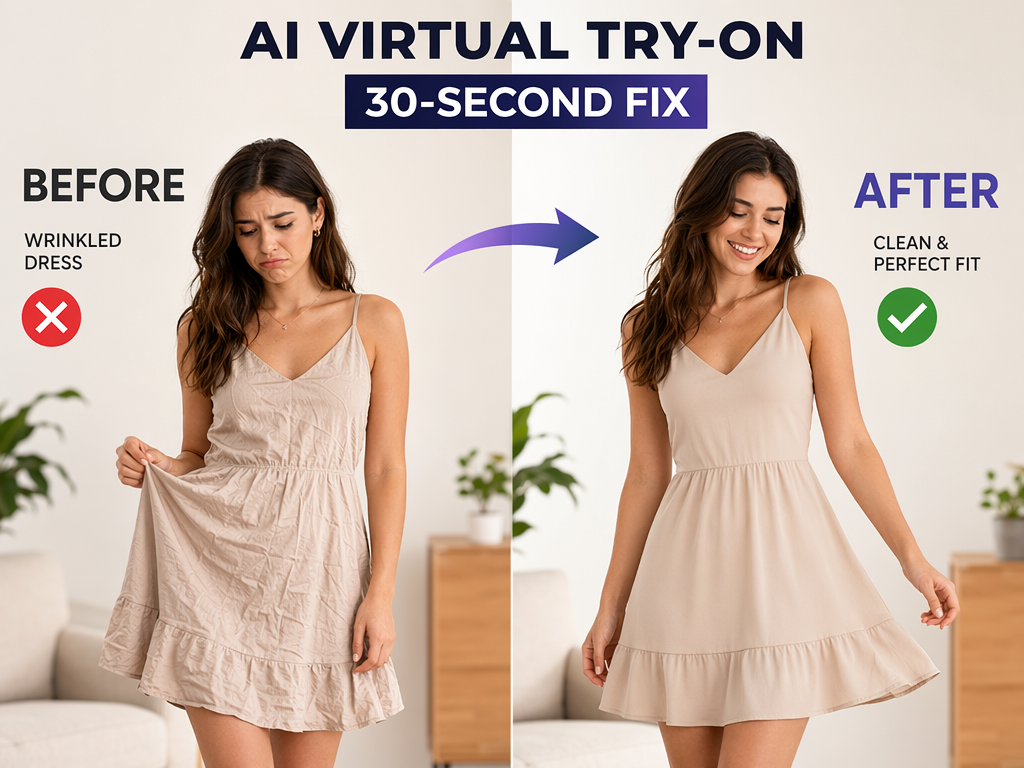
Fashion is becoming increasingly digital. Over the past few years, brands have invested heavily in ecommerce, AI styling tools, virtual try-on systems, and personalized shopping experiences. Now another trend is starting to grow quickly across the industry: the rise of the AI virtual closet.

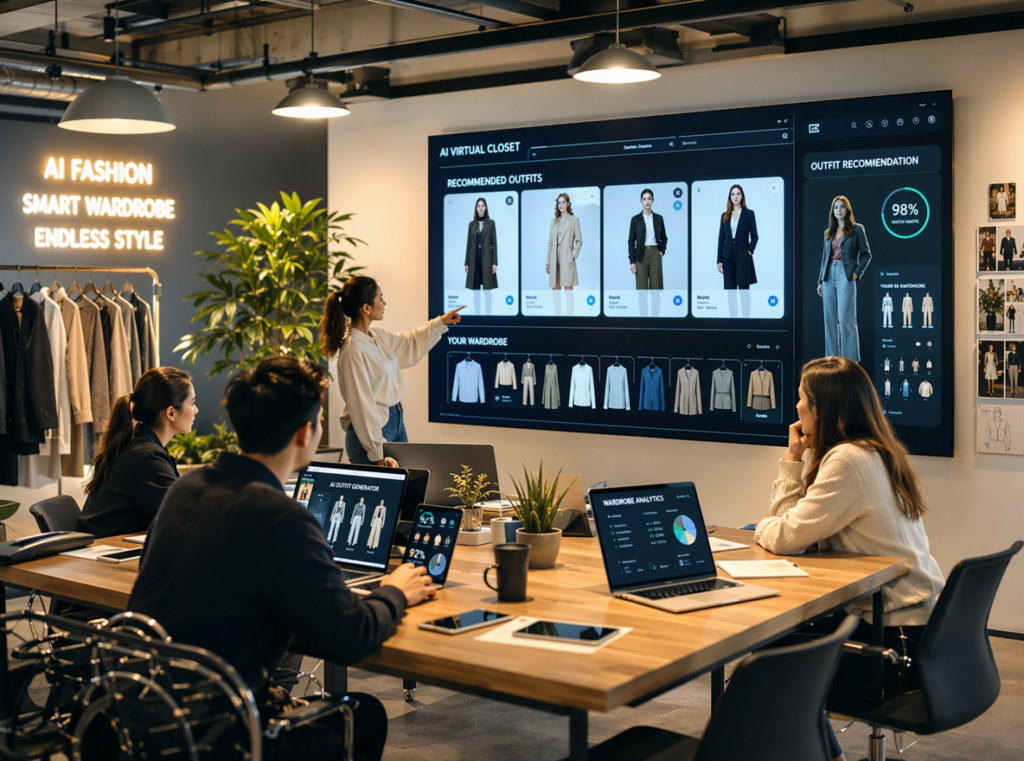
Instead of simply selling clothes online, brands are beginning to build digital wardrobe ecosystems that help users organize outfits, preview styling combinations, and receive AI-generated fashion recommendations automatically. The goal is no longer just online shopping. The goal is creating a smarter and more personalized fashion experience.
That is why the AI virtual closet is becoming one of the most important conversations in fashion technology right now.
👚 What Is an AI Virtual Closet?
An AI virtual closet is a digital wardrobe system powered by artificial intelligence. Users can upload clothing items, organize outfits, track personal style preferences, and receive outfit suggestions based on weather, trends, occasions, or previous fashion choices.
Modern AI virtual closet platforms can often:
- recommend outfit combinations
- organize wardrobe items automatically
- generate styling ideas
- support AI virtual try-on
- suggest new purchases
- create travel outfit plans
- personalize fashion recommendations
For consumers, the experience feels much more interactive than traditional online shopping.
💼 Why Fashion Brands Are Investing in AI Virtual Closets
Fashion brands are interested in AI virtual closet systems because personalization is becoming extremely important in ecommerce.
Today’s customers expect brands to understand:
- their style preferences
- favorite colors
- shopping habits
- sizing needs
- outfit interests
An AI virtual closet helps brands build longer-term engagement instead of focusing only on one-time purchases.
Instead of asking:
“What should we sell today?”
brands are increasingly asking:
“How do we become part of the customer’s daily wardrobe decisions?”
That is a major shift in fashion strategy.
📱 AI Virtual Closets and the Future of Ecommerce
Traditional ecommerce platforms mainly focus on product listings and checkout flows. AI virtual closet technology changes that by introducing a much more lifestyle-oriented experience.
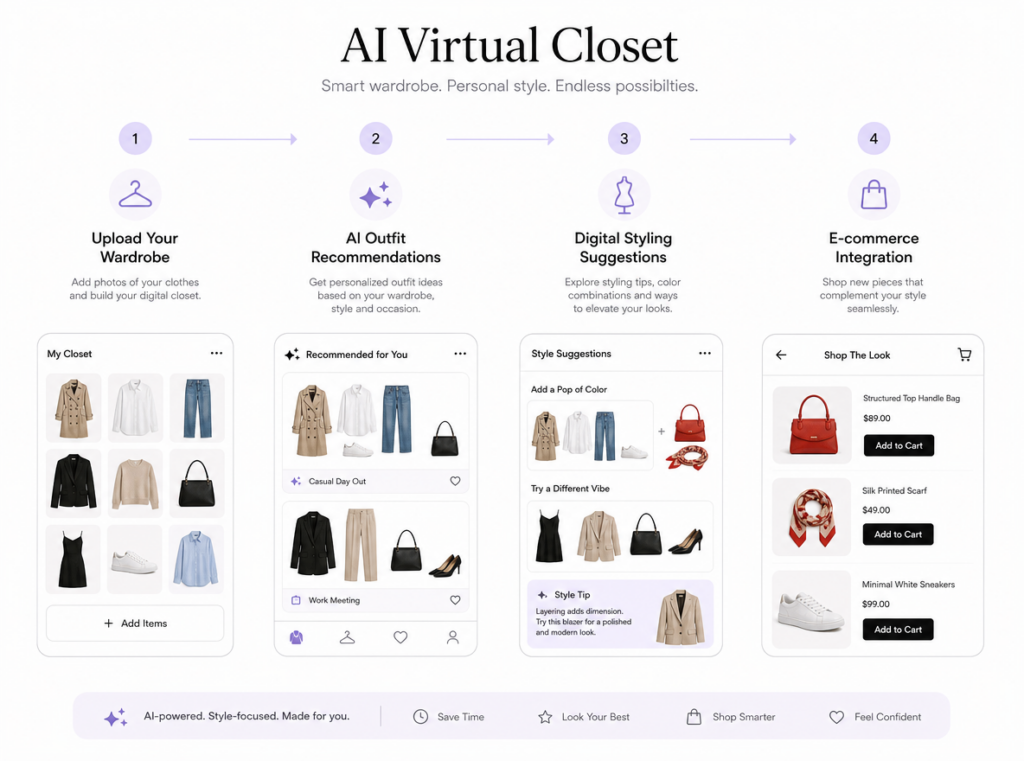
Users can now:
- preview outfits digitally
- save favorite combinations
- build seasonal wardrobes
- mix existing clothing with new products
- receive AI styling suggestions instantly
This creates a shopping experience that feels more personal, interactive, and useful.
Platforms connected to companies like Google and OpenAI are helping accelerate these recommendation and personalization systems through multimodal AI development.
✨ Why AI Virtual Closets Feel More Practical Than Traditional Fashion Apps
Many fashion apps failed in the past because they felt overly manual. Users had to upload clothing items individually, tag products, and organize everything themselves.
Modern AI virtual closet systems reduce that friction significantly.
AI can now recognize:
- clothing categories
- colors
- patterns
- fabric types
- outfit styles
automatically through image analysis.
That makes the experience feel much more seamless and realistic for everyday use.
AI Virtual Closet Technology and AI Virtual Try-On
One reason AI virtual closet platforms are growing quickly is because they work naturally with AI virtual try-onsystems.
Users can:
- save clothing digitally
- test outfits instantly
- compare styling combinations
- preview fashion purchases
without physically trying on multiple products.
For ecommerce brands, this creates a more engaging shopping environment while also helping reduce product return rates.
🌍 Why Digital Wardrobes Are Becoming a Lifestyle Product
The AI virtual closet is no longer only about fashion organization. Increasingly, brands see digital wardrobes as part of a larger lifestyle ecosystem.
Future AI virtual closet platforms may connect with:
- smart shopping assistants
- calendar apps
- weather systems
- travel planning tools
- social media styling feeds
This creates a much more integrated consumer experience.
Instead of acting like a simple shopping tool, the AI virtual closet becomes a personal fashion assistant.
📸 Social Media Is Accelerating AI Virtual Closet Adoption
Platforms like Instagram, TikTok, and Pinterest have dramatically increased the pressure to maintain consistent personal style online.
Users now create fashion content constantly, including:
- daily outfit posts
- travel looks
- event styling
- aesthetic moodboards
AI virtual closet tools help users organize these styling decisions more efficiently.
That convenience is a huge reason why younger consumers are becoming increasingly interested in digital wardrobe systems.
⚠️ Challenges AI Virtual Closets Still Face
Even though AI virtual closet technology is improving quickly, there are still limitations.
Some platforms still struggle with:
- sizing accuracy
- realistic fabric simulation
- inconsistent clothing recognition
- cross-brand compatibility
Privacy is also becoming an important discussion because wardrobe data can reveal detailed information about personal preferences and shopping behavior.
As the industry grows, brands will likely need to balance personalization with stronger user transparency.
🚀 Why the AI Virtual Closet Market Will Continue Growing
Fashion ecommerce is moving toward personalization very aggressively. Consumers increasingly expect digital experiences that feel tailored specifically to them.
The AI virtual closet supports that shift perfectly because it combines:
- fashion personalization
- AI recommendations
- virtual styling
- ecommerce integration
- digital wardrobe management
inside one ecosystem.
For fashion brands, this creates stronger long-term engagement. For consumers, it creates a shopping experience that feels more useful and less overwhelming.
Final Thoughts
The AI virtual closet is quickly evolving from a niche fashion technology into a much larger digital lifestyle tool 👗
By combining AI recommendations, wardrobe organization, styling assistance, and virtual try-on systems, brands are building fashion experiences that feel smarter, faster, and far more personalized.
And honestly, the idea of managing clothing through a digital wardrobe may soon feel completely normal for online shoppers around the world.
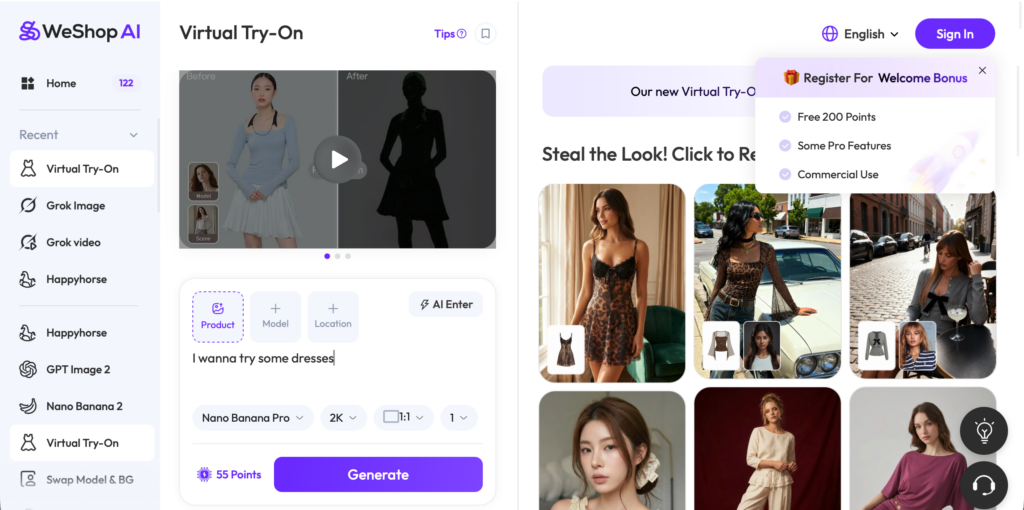
Go to WeShop AI For Exploration: