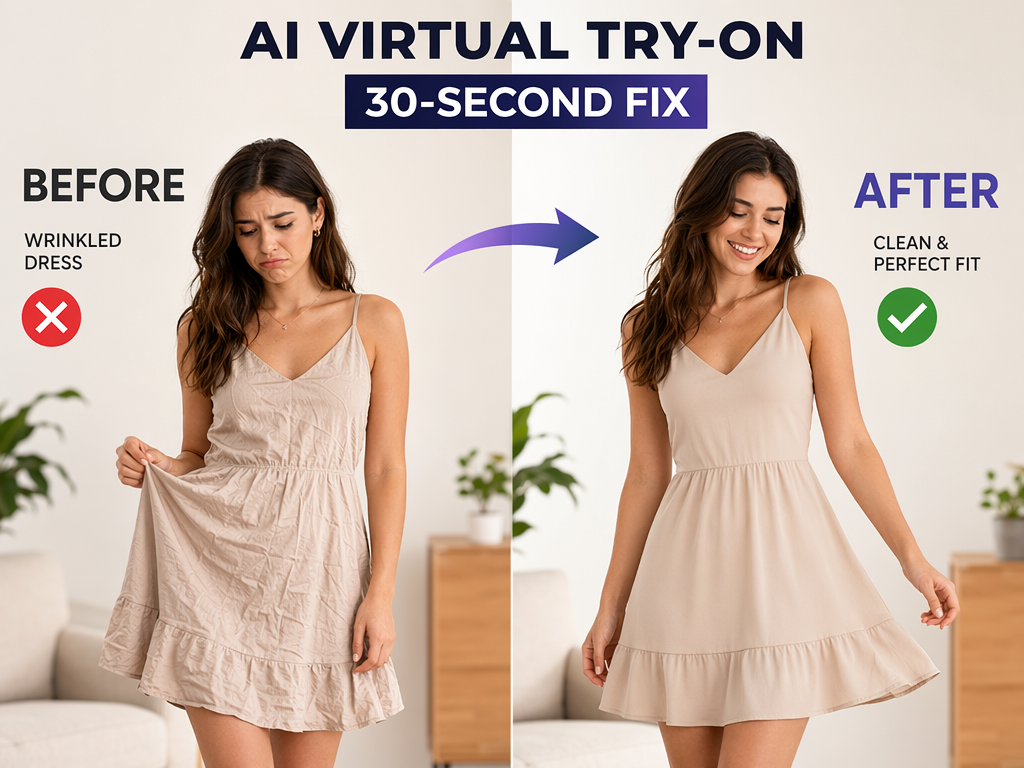
AI virtual try-on is rapidly changing how fashion ecommerce brands create product photography, marketing campaigns, and social media visuals. What once required expensive studio shoots, professional models, lighting teams, and post-production editing can now be generated using AI systems powered by large language models and diffusion models. Platforms connected to technologies from OpenAI and other AI image generation companies are making it possible to create realistic fashion visuals, ecommerce mockups, and virtual outfit previews in minutes instead of days. As AI virtual try-on becomes more accurate and scalable, many brands are beginning to rethink whether traditional fashion photoshoots are still worth the cost.
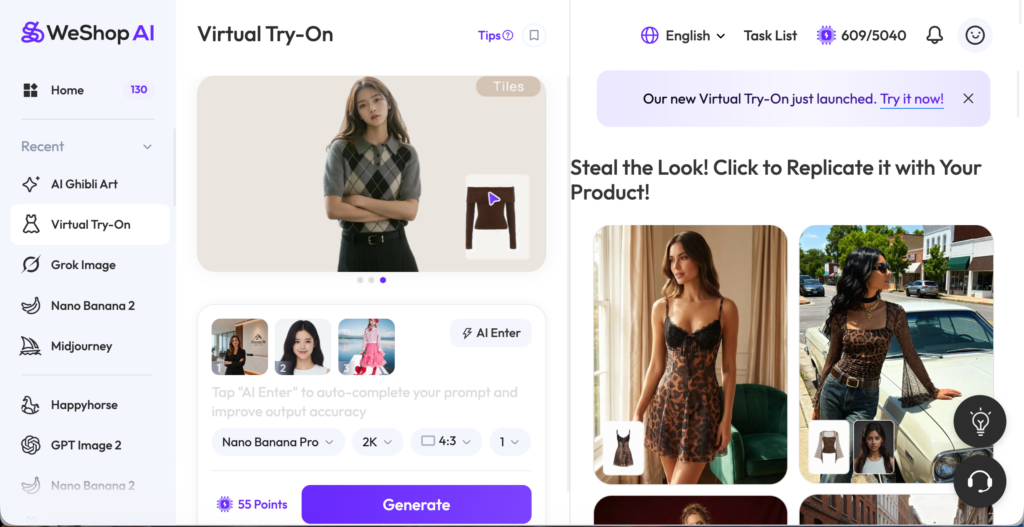
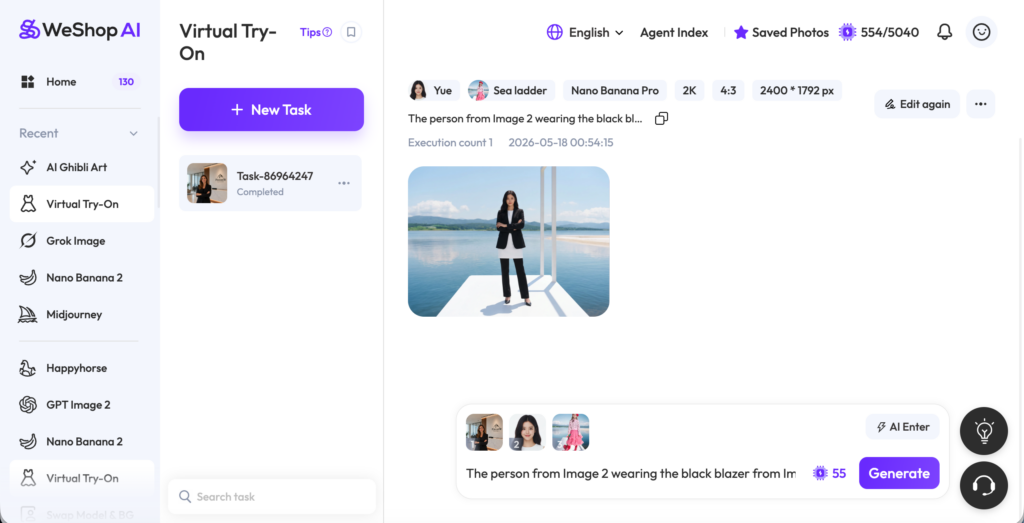
Fashion ecommerce used to have a very predictable problem:
great visuals were expensive.
A small clothing brand launching a new collection often needed:
- photographers
- studio rentals
- models
- lighting setups
- editors
- retouchers
- multiple shooting days
Even a relatively “simple” ecommerce campaign could easily cost over $2,000 before ads even started running.
Now, brands are beginning to replace large parts of that workflow with AI virtual try-on systems powered by large language models and diffusion-based image generation.
And surprisingly, many customers cannot even tell the difference anymore.
🧠 The Real Reason AI Virtual Try-On Suddenly Exploded
Most people think AI fashion generation became popular because image quality improved.
That is only partially true.
The bigger reason is that AI finally became good at understanding context.
Modern systems connected to OpenAI and similar multimodal AI platforms can now interpret prompts like:
“Create a luxury ecommerce photo featuring a minimalist oversized trench coat in soft natural lighting.”
The AI understands:
| AI Understanding Layer | What the Model Interprets |
|---|---|
| Fashion category | Trench coat |
| Brand aesthetic | Luxury / minimalist |
| Lighting style | Soft natural light |
| Ecommerce context | Clean product-focused composition |
| Mood | Premium editorial feel |
That is a massive shift.
Earlier AI tools generated random images.
Modern AI virtual try-on systems understand creative direction.
👗 Traditional Product Shoots vs AI Virtual Try-On
Here is why ecommerce teams are moving aggressively toward AI-generated workflows:
| Workflow | Traditional Photoshoot | AI Virtual Try-On |
|---|---|---|
| Cost | High | Low |
| Production speed | Days or weeks | Minutes |
| Outfit variations | Limited | Nearly unlimited |
| Localization | Expensive | Easy |
| Seasonal campaigns | Manual reshoots | Instant regeneration |
| A/B testing | Difficult | Extremely scalable |
For digital-first brands, this changes the economics of fashion content completely.
⚡ What Diffusion Models Actually Do
The phrase “diffusion models” sounds technical, but the idea is surprisingly simple.
Diffusion AI systems learn how realistic images should look by training on massive visual datasets.
That allows the AI to generate:
- realistic fabric folds
- shadows
- skin texture
- reflections
- garment structure
- lighting consistency
This is why modern AI virtual try-on systems suddenly look much closer to real photography.
Earlier AI images often looked:
- blurry
- distorted
- plastic-like
- visually inconsistent
Now?
The outputs are increasingly ecommerce-ready.
🛍️ Why Fashion Brands Love AI Virtual Try-On
For fashion brands, AI virtual try-on is not just about saving money.
It is about flexibility.
A traditional photoshoot creates one final version.
AI workflows create dozens.
Brands can instantly test:
- multiple backgrounds
- alternate models
- different ethnic markets
- seasonal aesthetics
- platform-specific formats
- influencer-style campaigns
without rebuilding the entire production pipeline.

That speed matters enormously in fast-moving ecommerce environments.
📸 The Hidden Shift: AI Product Photography Is Becoming Infrastructure
This is where things get interesting.
AI-generated fashion visuals are quietly moving from “experimental” to “operational.”
Some ecommerce teams already use AI virtual try-on for:
✅ Product page previews
✅ Social ads
✅ Pinterest creatives
✅ Mockup generation
✅ Landing page testing
✅ Influencer concepts
✅ Catalog experiments
The AI is becoming part of the actual production stack.
Not just a creative toy.
🔍 Inside a Modern AI Virtual Try-On Pipeline
Most modern systems combine multiple AI layers together.
A simplified version looks like this:
| Stage | What Happens |
|---|---|
| Image analysis | AI detects body shape, pose, lighting |
| Clothing segmentation | Garments are isolated digitally |
| Prompt understanding | Language model interprets styling direction |
| Diffusion rendering | Final image is reconstructed realistically |
| Refinement | Lighting and textures are adjusted |
This is why modern AI fashion systems feel dramatically smarter than early AI image generators.
🌍 Why AI Virtual Try-On Changes Global Ecommerce
Traditional fashion campaigns are difficult to localize globally.
AI-generated workflows make localization dramatically easier.
Brands can now generate region-specific visuals for:
- Asia
- Europe
- North America
- Middle East markets
while adapting:
- models
- styling preferences
- seasonal fashion
- campaign mood
without reshooting everything physically.
For global ecommerce brands, that is extremely valuable.
📱 Social Media Is Accelerating the Shift
The rise of short-form content changed fashion marketing completely.
Brands now need:
- faster campaigns
- more visuals
- more experiments
- constant content refreshes
Traditional production pipelines struggle to keep up with that pace.
AI virtual try-on solves a major part of this problem because content generation becomes dramatically faster.
And honestly?
Consumers are already becoming visually accustomed to AI-generated fashion imagery online.
⚠️ AI Virtual Try-On Still Has Weaknesses
Despite huge improvements, the technology still struggles with:
- transparent fabrics
- layered clothing
- complex accessories
- unusual poses
- difficult hand positioning
Luxury brands also worry about:
- inaccurate product representation
- unrealistic texture rendering
- customer trust issues
So while AI virtual try-on is improving rapidly, human oversight still matters heavily in premium ecommerce.
💡 The Most Interesting Part Is Not the AI Images
The biggest shift is not “AI art.”
It is production automation.
Fashion companies are realizing that many repetitive production tasks can now be generated, tested, and optimized algorithmically.
That changes:
- ecommerce operations
- campaign workflows
- content production speed
- global marketing scalability
far beyond simple image generation.
And over the next few years, AI virtual try-on may become as normal in ecommerce as Photoshop once did.
Go to WeShop AI For Exploration: