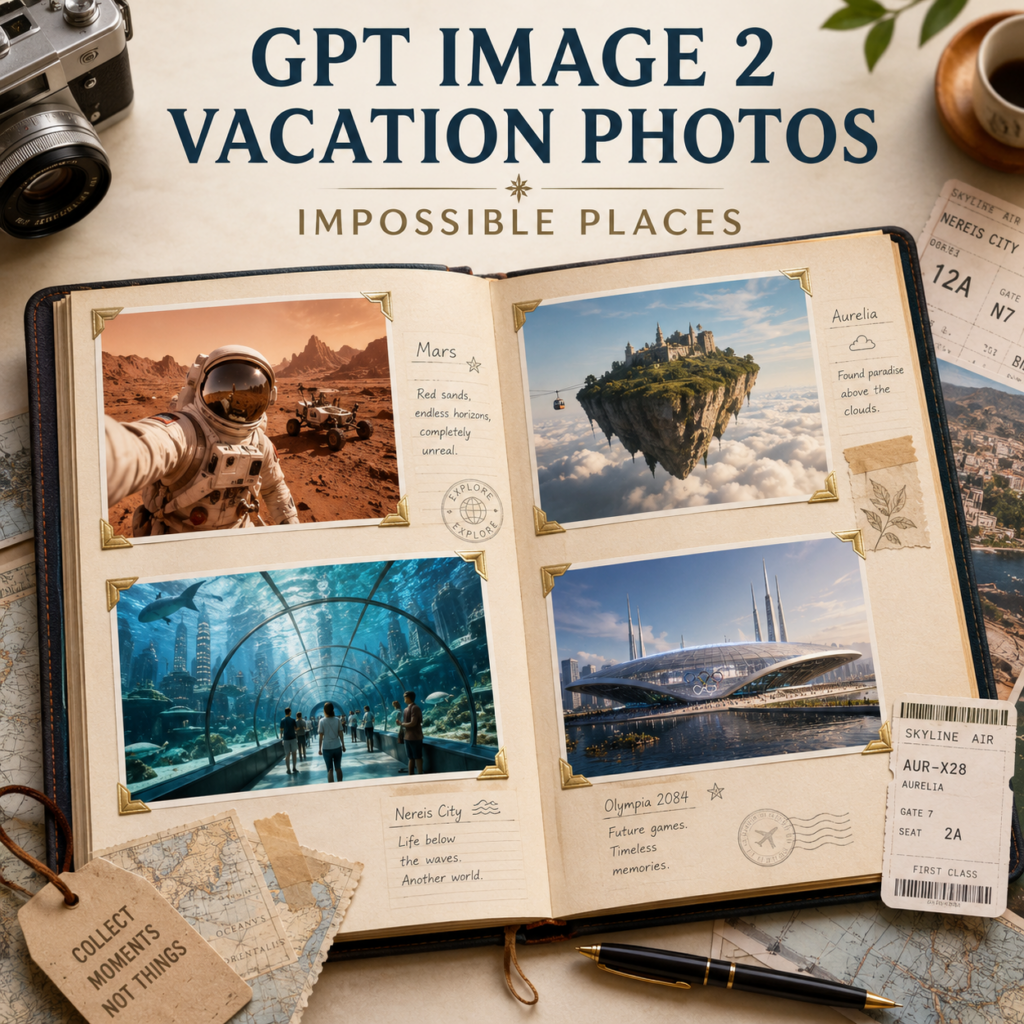
Travel photos usually capture places people have visited.
A beach sunset.
A city skyline.
A hidden mountain village.
But what if the destination does not exist?
With GPT Image 2 Vacation Photos, we can explore a different type of visual storytelling. Instead of recreating real locations, this experiment asks a more interesting question:
Can AI create vacation memories from places humans have never visited?
For this test, I asked GPT Image 2 to generate realistic travel photos from impossible destinations. The goal was not to create fantasy artwork. Instead, the challenge was making each image feel like a real photo taken during an unforgettable trip.
From Mars vacations to underwater cities, these experiments show how AI image generation is moving closer to creating believable experiences, not just beautiful pictures.
Why Are AI Vacation Photos Becoming More Interesting?
A traditional travel photo tells people:
“I was here.”
However, AI-generated vacation photos tell a different story:
“What if I could go anywhere?”
This change creates new possibilities for creators, marketers, and storytellers.
Instead of waiting for expensive locations or complex production setups, creators can now explore ideas before they become real projects.
For example, a travel brand could imagine future destinations. A filmmaker could test a scene before production. A designer could create a visual concept in minutes.
However, creating a convincing vacation photo is not easy.
A realistic travel image needs more than an unusual location.
It needs:
- Natural human expressions
- Realistic camera angles
- Believable environments
- Details that make the moment feel lived-in
That is why testing GPT Image 2 with impossible travel scenes becomes interesting.
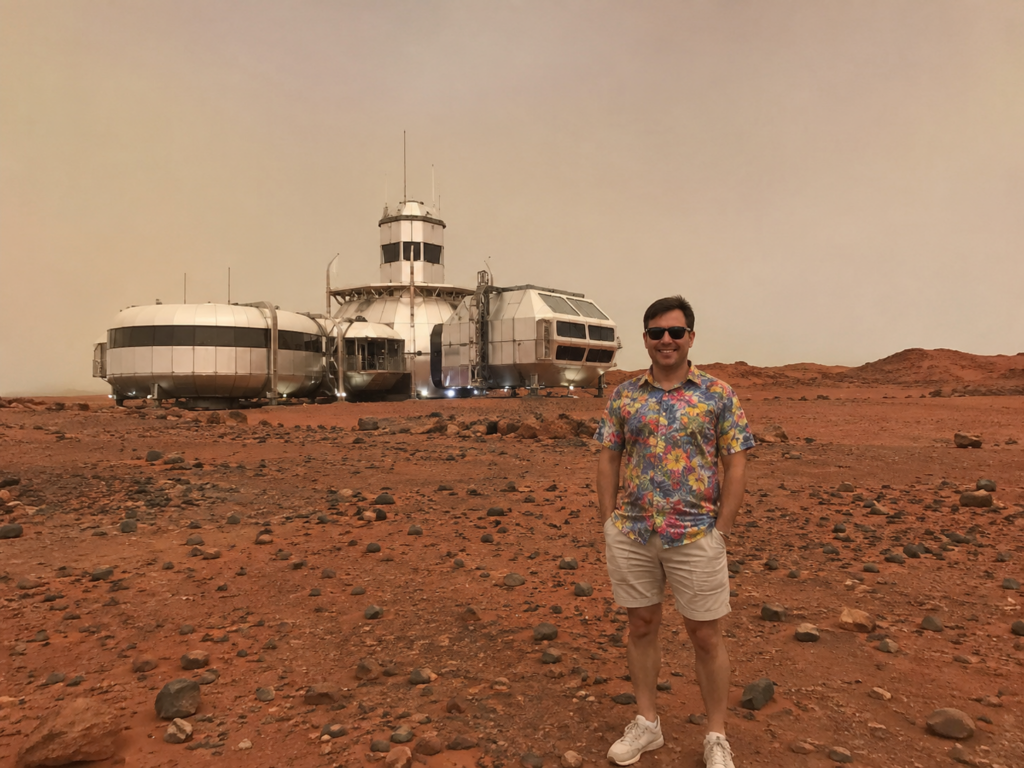
Experiment 1: A Tourist Photo From Mars
Image Prompt
Create a realistic tourist snapshot taken on Mars. Show an ordinary traveler wearing modern vacation clothes standing near a futuristic Mars exploration station. The image should feel like a casual travel photo, not a movie scene. Use natural lighting, imperfect composition, realistic shadows, and smartphone camera quality.
Test Goal:
Can GPT Image 2 make a fantasy location feel like a real vacation memory?
Most Mars images usually look like science fiction posters.
They focus on dramatic landscapes, advanced technology, and cinematic effects.
However, real vacation photos are usually much simpler.
People stand in front of landmarks.
They smile at the camera.
They capture ordinary moments.
The interesting part of this experiment is whether GPT Image 2 can balance a futuristic environment with everyday human behavior.
A believable Mars vacation photo should not only show another planet.
It should show someone who looks like they actually traveled there.
Experiment 2: A Weekend Trip to an Underwater City
Image Prompt
Create a realistic vacation photo of tourists visiting a massive underwater city. Show people walking through a transparent ocean tunnel with marine life outside. Make it look like a travel blogger captured the moment with a normal camera. Avoid fantasy illustration style. Use realistic lighting and natural human expressions.
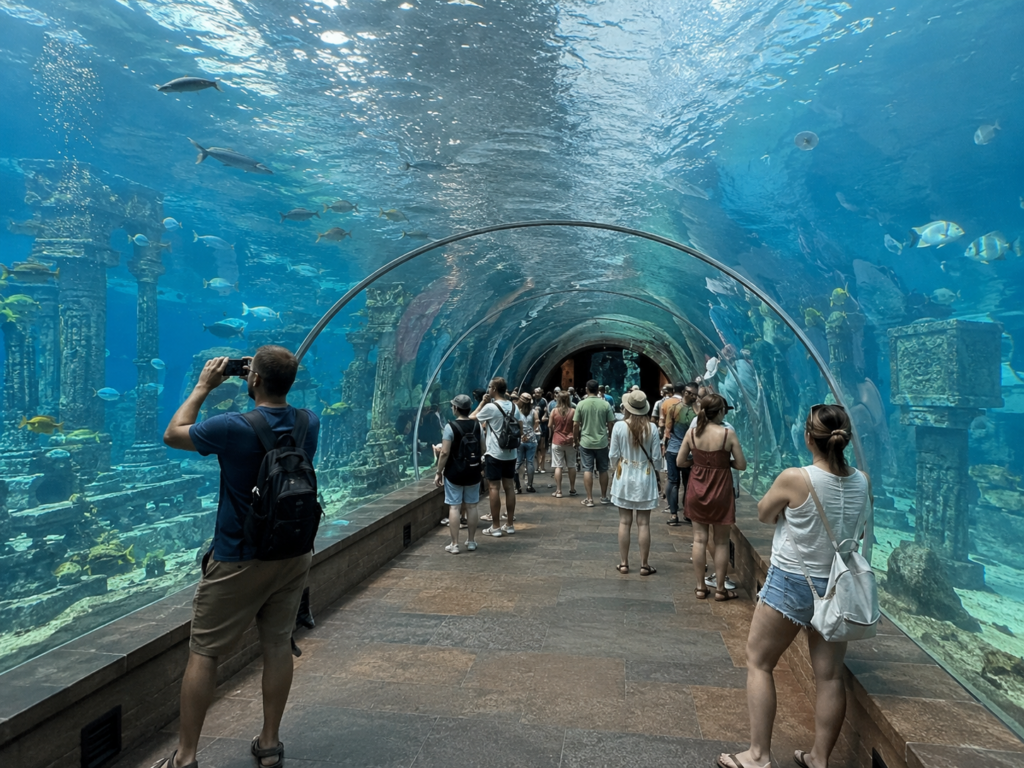
Test Goal:
Can GPT Image 2 create a new world while keeping real-world photography style?
An underwater city is a perfect test because it combines imagination with realism.
The environment needs to feel impossible.
At the same time, the people inside the scene need to feel normal.
The strongest travel images usually create contrast:
A familiar human moment.
A completely unfamiliar place.
This balance is what makes viewers stop scrolling.
Instead of thinking:
“This is a cool AI image.”
They start thinking:
“Would I visit this place?”
Experiment 3: A Family Holiday on a Floating Island
Image Prompt
Create a realistic family vacation photo on a floating island above the clouds. The scene should feel like a real travel memory, with casual clothing, natural poses, travel photography composition, and realistic atmospheric lighting.
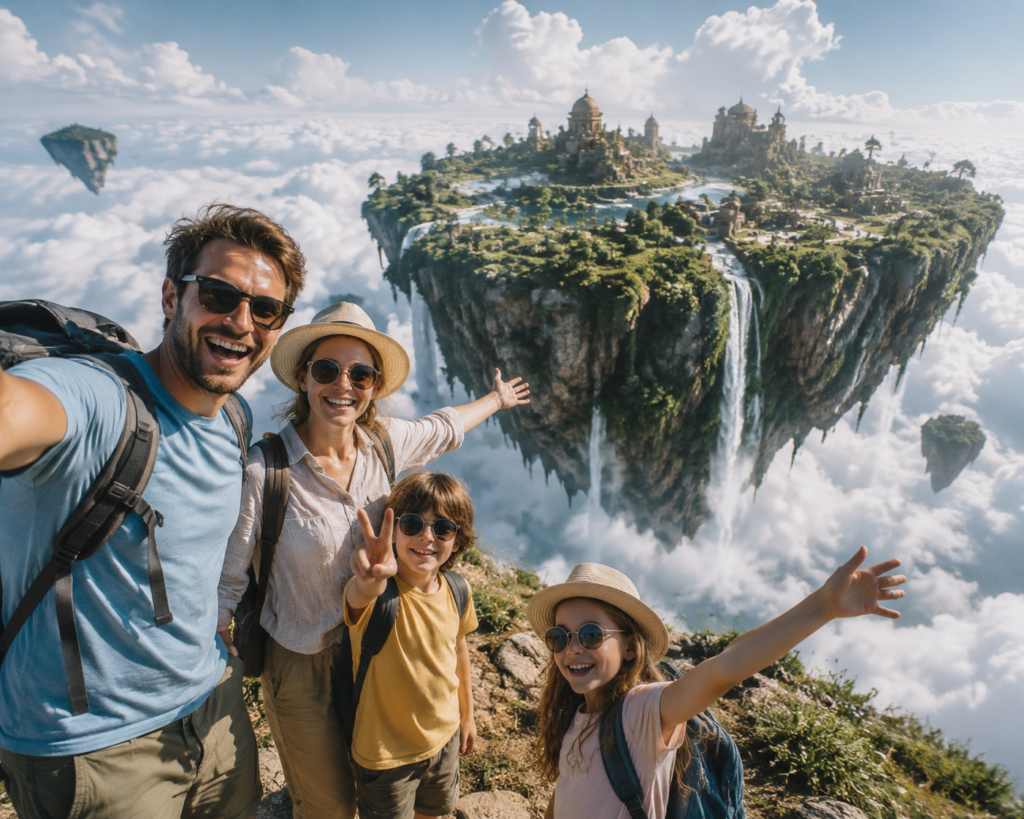
Test Goal:
Can GPT Image 2 create emotional travel memories?
Not every memorable travel photo needs a dramatic location.
Sometimes, the emotion matters more.
A family photo works because of small details:
A child looking at the view.
Someone pointing at the landscape.
A relaxed moment after a long journey.
For AI image models, these details are challenging.
The image needs to show not only where people are.
It needs to show why the moment matters.
Experiment 4: Visiting A Future Olympic Stadium
Image Prompt
Create a realistic tourist photo taken during a future Olympic event in 2050. Show visitors exploring a futuristic stadium with advanced architecture, but keep the image style similar to a real travel photograph. Include natural crowd behavior, realistic lighting, and authentic travel photography composition.
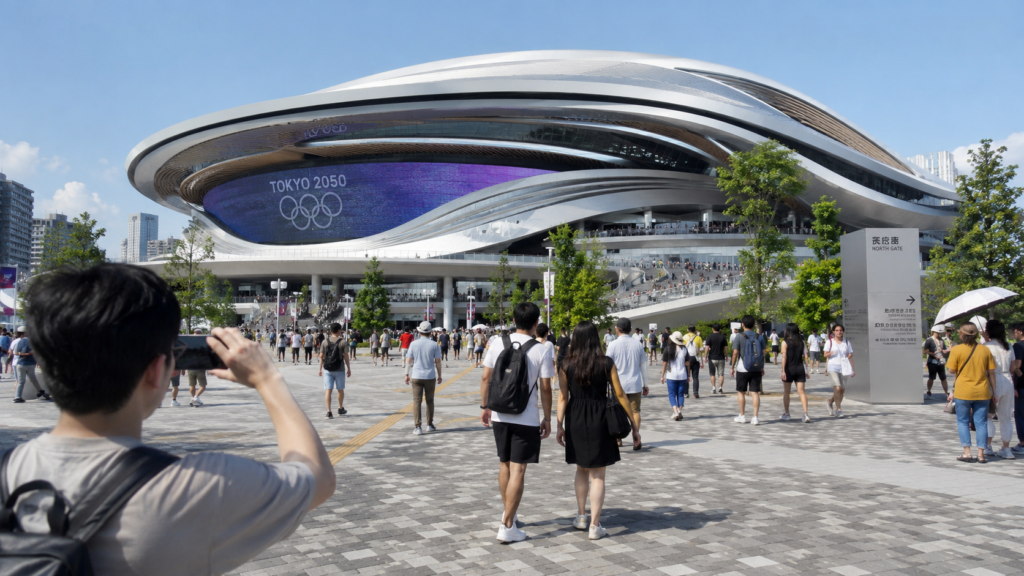
Test Goal:
Can GPT Image 2 imagine future events through a human perspective?
Future concepts often become too artificial.
They usually focus on machines, robots, and technology.
However, real future experiences will still be about people.
Visitors taking photos.
Friends exploring new places.
Fans celebrating together.
This experiment shows an important difference between futuristic design and futuristic storytelling.
Technology creates the environment.
People create the memory.
What Makes GPT Image 2 Vacation Photos Feel Real?
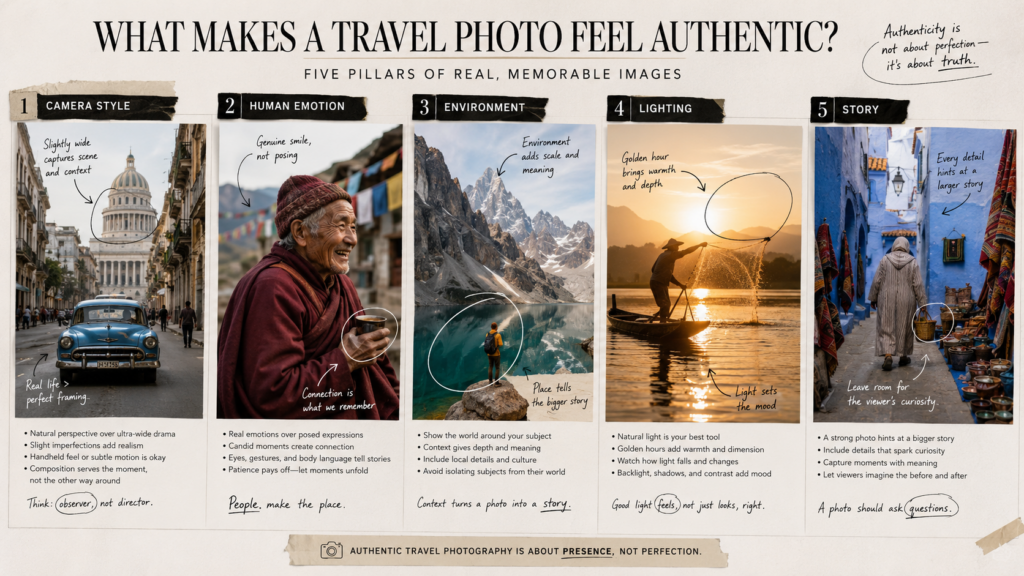
After testing different impossible destinations, one thing becomes clear:
Realism is not only about image quality.
A convincing travel photo needs storytelling.
1. Ordinary Moments Create Authenticity
The most realistic images often contain simple actions.
Someone walking.
Someone looking around.
Someone enjoying the view.
Small human behaviors make impossible locations feel believable.
2. Camera Style Changes Everything
A professional fantasy image feels different from a vacation snapshot.
Travel photos usually include:
- Slight imperfections
- Natural framing
- Casual composition
- Realistic lighting
These details help AI images feel less like artwork and more like memories.
3. The Environment Needs A Story
A destination is not just a background.
A good travel image answers:
Why are people here?
What are they experiencing?
What would this place feel like?
This is where AI image generation becomes more creative.
Beyond Travel: How Creators Can Use GPT Image 2 Vacation Photos
Although impossible destinations are fun to explore, the same workflow can support real creative projects.
Travel Marketing
Brands can visualize future campaigns before planning expensive shoots.
Entertainment
Creators can develop fictional worlds for films, games, and stories.
Social Media
Content creators can build unique visual concepts that stand out from ordinary posts.
Brand Storytelling
Companies can communicate emotions instead of only showing products.
Final Thoughts: Are AI Vacation Photos The Future of Visual Storytelling?
After creating vacation photos from places that do not exist, the biggest surprise is not the locations.
It is the feeling.
The most interesting AI images are not always the most impossible ones.
They are the ones that make viewers imagine themselves inside the scene.
GPT Image 2 shows that image generation is becoming less about creating objects and more about creating experiences.
Maybe the future of photography is not only capturing where we have been.
It is imagining where we could go.
Go to WeShop AI For Exploration: