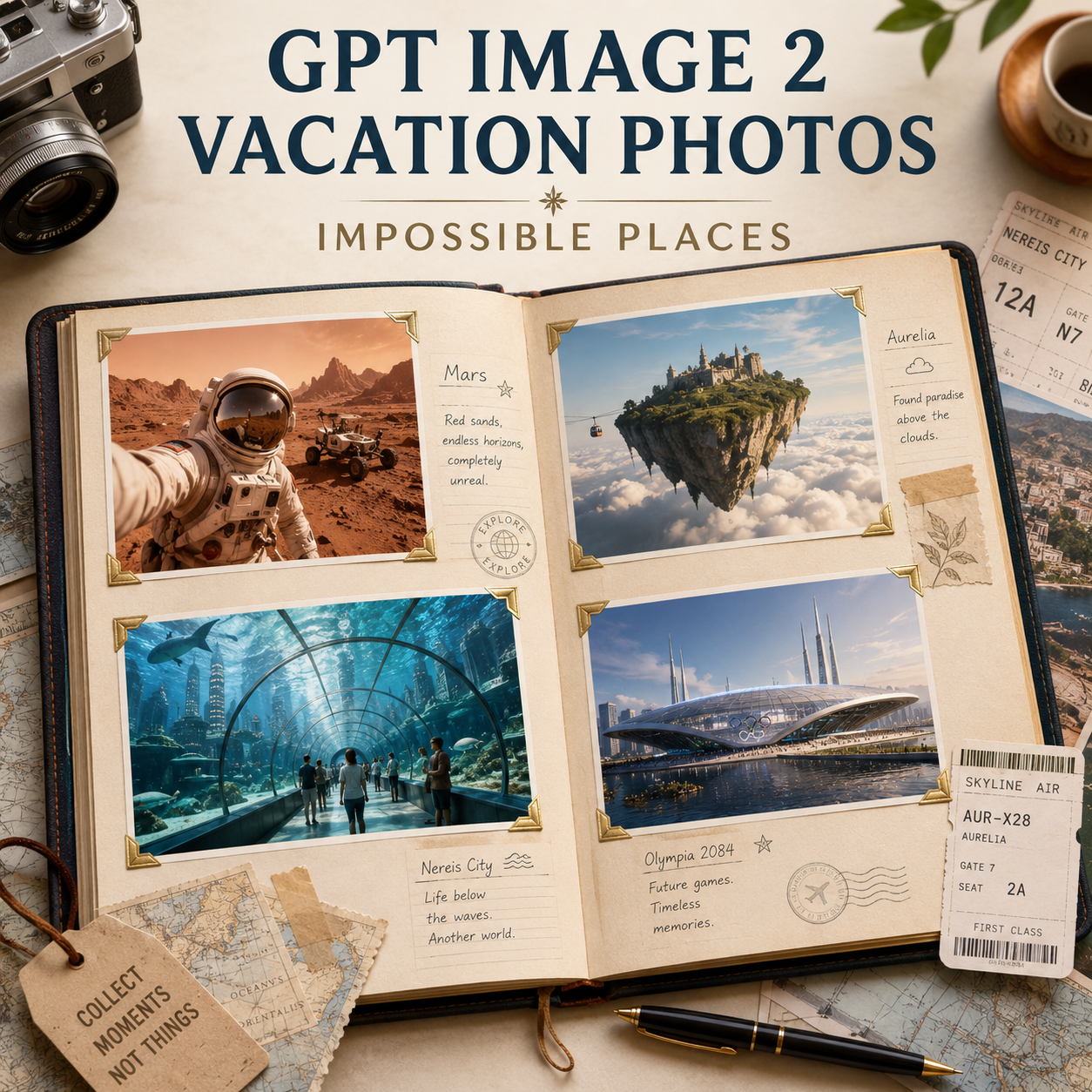
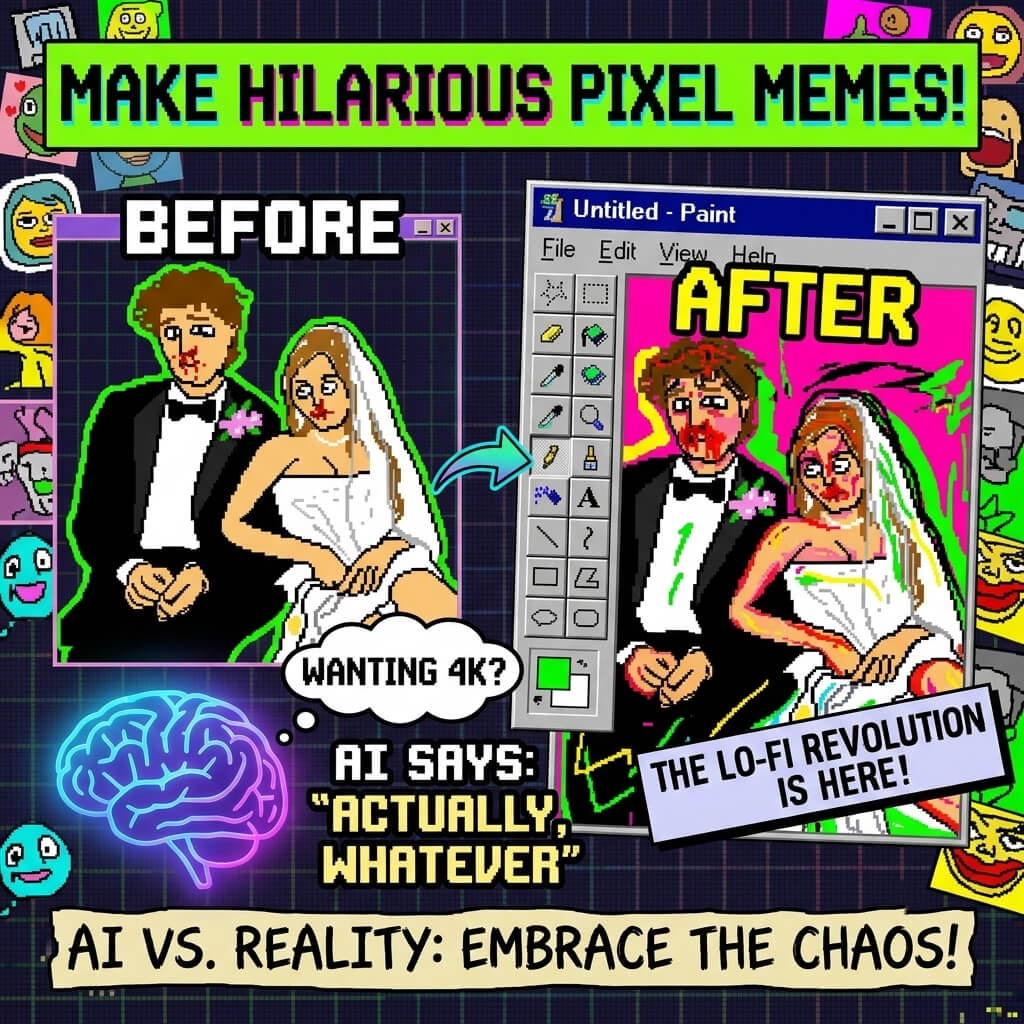
By April 2026, AI image generation has moved far beyond being a “fun toy.” In today’s professional world, companies no longer care if an AI can draw a “cat in a suit.” Instead, they care if that AI can produce a “physically accurate car render for an aerodynamic test.”
Among all the tools available today, GPT Image 2 stands out as the leader. It is no longer just a drawing tool; it is a high-performance production engine. In this deep dive, we will explain its core advantages, its new workflow, and why it is currently dominating the 2026 creative market.
The Game Changer: What is the Cognitive Vision Transformer (CVT)?
In the past, models like DALL-E 3 or early Midjourney worked on “pixel prediction.” To put it simply, they knew what a hand looked like, but they didn’t understand how a hand actually moved.
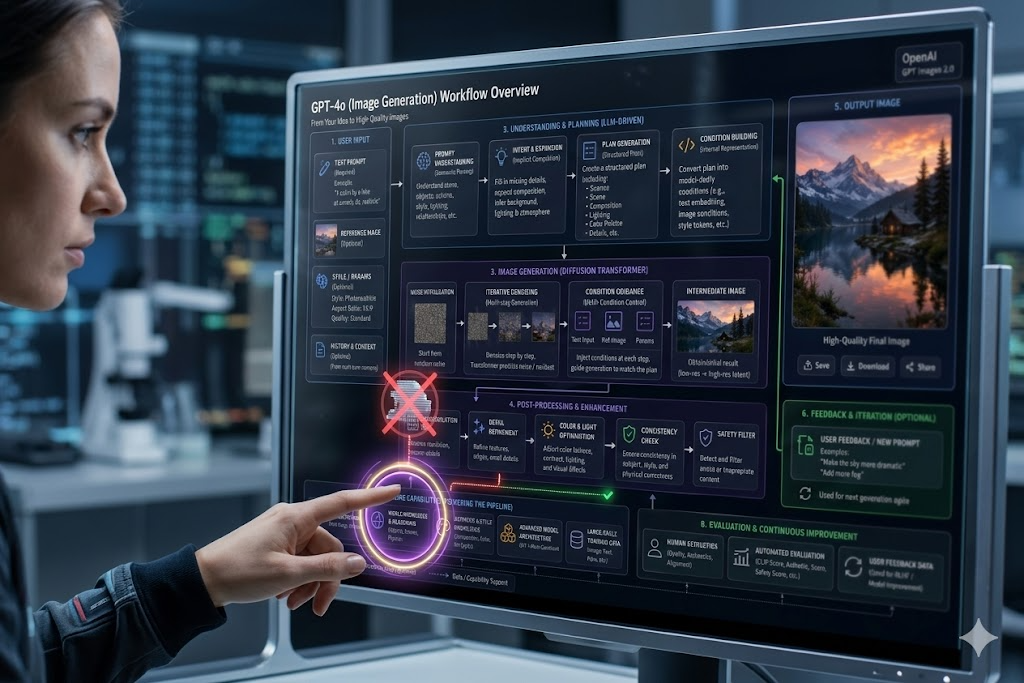
GPT Image 2 has changed the rules of the game by introducing the Cognitive Vision Transformer (CVT) architecture.
Understanding Physics, Not Just Patterns
The most impressive part of this architecture is its “Physics Inference Layer.”
- For example: If you ask an old model to draw “a glass of water falling,” it might just draw a random splash.
- In contrast: GPT Image 2 calculates the refractive index of water and the stress points where the glass would break.
- As a result: The output looks logically perfect. You won’t need to spend hours in Photoshop fixing weird physics mistakes.
Saying Goodbye to “AI Hallucinations”
Furthermore, this model uses enhanced semantic parsing to almost eliminate hallucinations. It understands human anatomy—fingers, teeth, and joints—with nearly 100% accuracy. Because of this, industries like medical imaging and high-end fashion design are now using it as their primary tool.
The 2026 Triple Threat: GPT Image 2 vs. Flux 4.0 vs. Midjourney v10
In 2026, the market is divided among three giants. To help you choose the right tool for your project, I have put together a clear comparison.
| Feature | GPT Image 2 | Flux 4.0 (Ultra) | Midjourney v10 |
| Core Logic | Cognitive Transformer | Hybrid Diffusion | Latent Flow v5 |
| Logical Accuracy | ★★★★★ (Industrial Grade) | ★★★★☆ (Consumer Grade) | ★★★☆☆ (Artistic Bias) |
| Text Rendering | Crisp, Editable Paths | Good, but occasional typos | Artistic but hard to use |
| Speed | ~1.2s (at 4K) | 0.4s (Real-time) | ~2.5s (High Detail) |
In short:
- If you need perfect logic and precision for product design or ads, choose GPT Image 2.
- If you need speed for live streaming or social media, Flux 4.0 is the winner.
- If you want a specific artistic “vibe” for a gallery, stick with Midjourney.
“Create Once, Use Everywhere”: Maximizing Marketing ROI
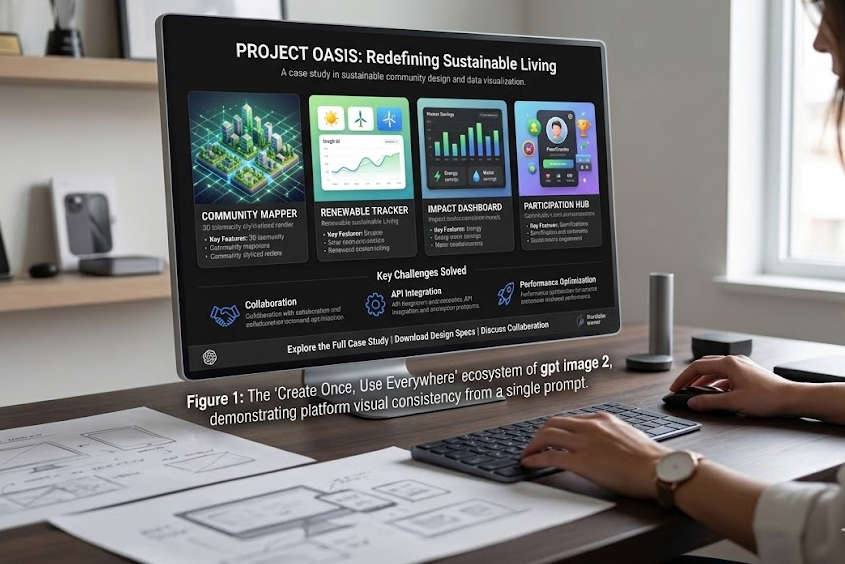
One of the biggest headaches for creators is resizing content for different platforms. GPT Image 2 solves this through its “Multi-Layout Consistency” feature.
The “One Concept” Workflow
Previously, if you had one idea, you had to prompt it four different times for Instagram, YouTube, LinkedIn, and your blog. This often led to inconsistent colors or characters.
Now, with GPT Image 2, you can use the “Universal Blueprint” mode.
- First, you generate your core concept.
- Next, the AI automatically adapts that concept into a wide blog cover, a vertical social post, and a high-impact thumbnail.
- Finally, it ensures that the lighting, the brand colors, and the characters remain 100% identical across all versions.
Solving the Professional Pain Points
Beyond just making pretty pictures, GPT Image 2 addresses the “boring” but essential parts of the job.
Advanced Typography and Brand Integration
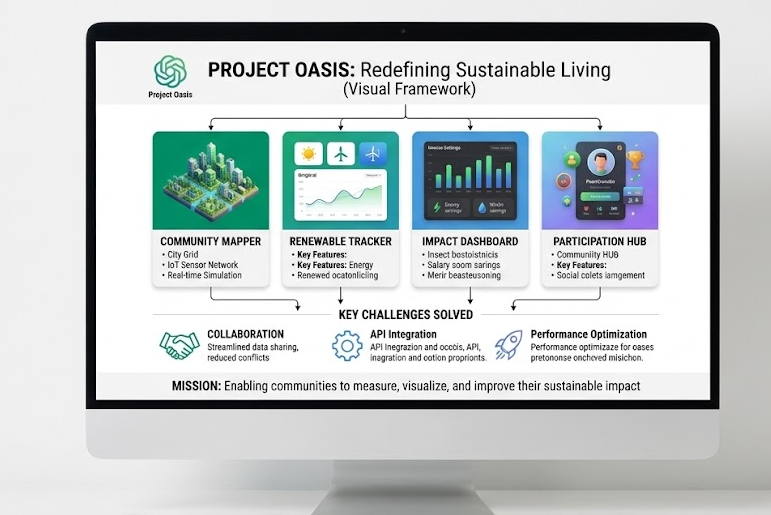
In the old days, putting text in AI images was a nightmare. However, GPT Image 2 treats text as a separate vector layer. This means the text is not only spelled correctly but is also perfectly aligned with the lighting of the scene. Marketing teams can now generate “ready-to-post” ads in seconds.
VRAM and Compute Efficiency
Moreover, the 2026 update introduced “Adaptive Compute.” This technology allows the model to run on smaller enterprise servers without losing quality. Consequently, large agencies can now host their own private versions of the model, ensuring their data never leaves their office.
The Ethics of 2026: Provenance and Fair Trade
We cannot talk about AI in 2026 without mentioning copyright. GPT Image 2 is the first major model to fully integrate the “Visual Provenance Protocol.”
How it works:
- Every image has a digital fingerprint.
- If the AI uses a specific artist’s style, a micro-payment is automatically sent to that creator.
- Because of this transparent system, 85% of professional photographers have now opted-in to the training data.
- Therefore, using GPT Image 2 is no longer a legal risk for your company; it is a “Fair Trade” certified creative process.
Final Verdict: Why Your Agency Needs to Switch Today
To wrap things up, GPT Image 2 is not just a marginal improvement over DALL-E 3. It is a complete structural shift in how we create digital assets.
By using transition-focused workflows and physics-aware rendering, it removes the “luck” factor from AI art. Instead of clicking “Generate” and hoping for the best, you are now acting as an architect of a visual world.
If your goal is to reduce production costs while increasing the quality of your output, GPT Image 2 is the only logical choice in 2026. Stop wasting time with models that don’t understand how the real world works. It’s time to move to the Cognitive Era.
Go to WeShop AI For Exploration: