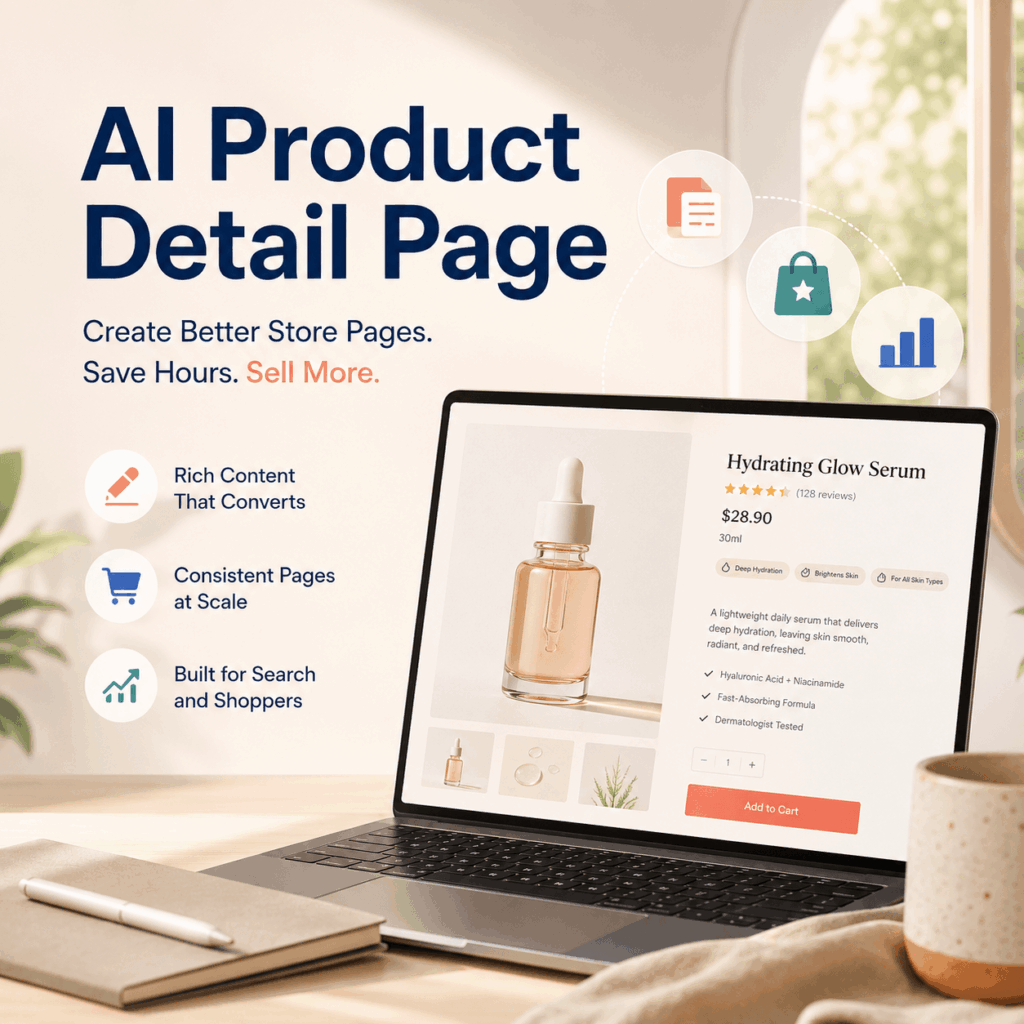
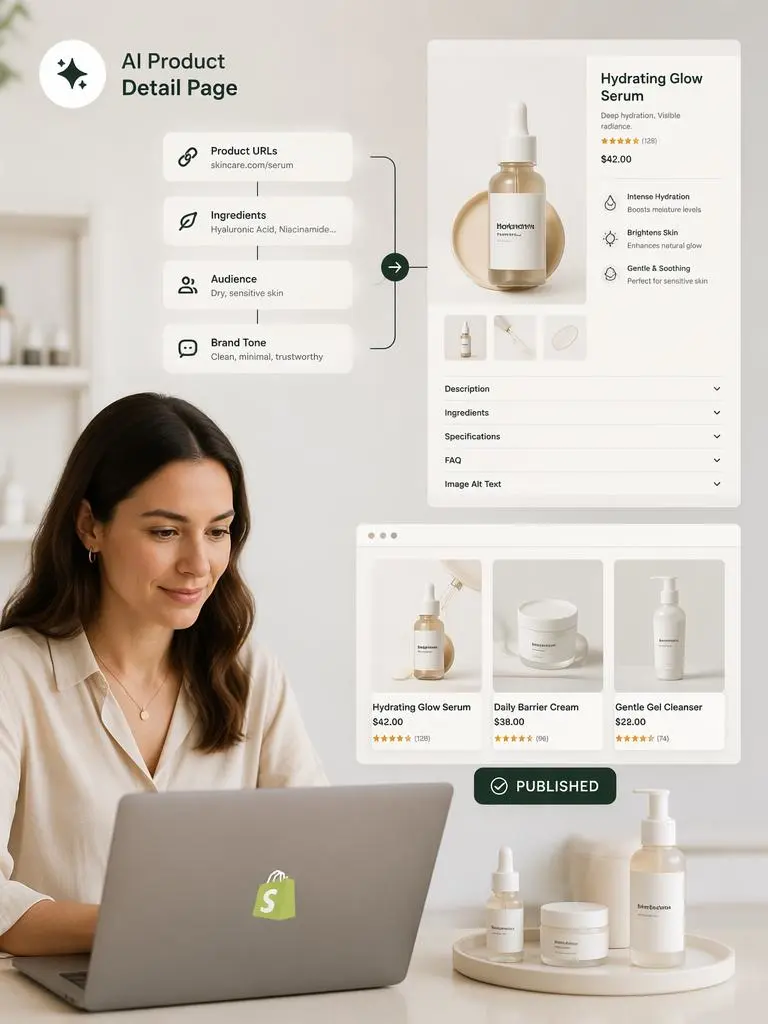
An AI Product Detail Page can turn a product URL, image, specification sheet, or short set of notes into structured ecommerce content. Instead of writing every section separately, sellers can prepare descriptions, benefits, SEO metadata, FAQs, specifications, and image alt text in one workflow. As a result, launching a new product page becomes faster and easier to manage.
However, speed is not the only advantage.
A good product page must help shoppers understand the product, trust the information, and decide whether it fits their needs. Therefore, the goal is not to fill an empty page with more words. The goal is to organize useful product information in the right order.
Why an AI Product Detail Page Solves Launch Bottlenecks
A new product may be ready to sell long before its product page is ready to publish.
The photography is finished. The price has been approved. The stock is available. Yet the team still needs to write a product title, short description, benefit section, specifications, FAQs, metadata, image alt text, and campaign copy.
For one product, this work may feel manageable. However, it quickly becomes difficult when a store launches ten products, fifty variants, or an entire seasonal collection.
Common Problems an AI Product Detail Page Can Solve
Several common problems usually appear:
- Supplier descriptions are too short or too generic.
- Product benefits are mixed with technical specifications.
- Different writers use different tones.
- Important details are missing from some pages.
- Similar products contain almost identical copy.
- SEO fields are added at the last minute.
- Product image alt text is forgotten.
An AI Product Detail Page helps bring these separate tasks into one structured process. The WeShop AI tool can work from product URLs, photos, SKU data, supplier copy, short notes, and campaign briefs. It can then produce product descriptions, SEO titles, metadata, benefits, specifications, FAQs, alt text, and other page modules.
What Makes an AI Product Detail Page Useful?
More content does not always create a better page.
Instead, each section should answer a real customer question. A shopper may want to know:
- What is this product?
- Who is it made for?
- What makes it different?
- What material or ingredients does it use?
- How large is it?
- How should it be used or cared for?
- When will it arrive?
- Can it be returned?
Therefore, a useful product detail page moves from basic understanding to confident decision-making.
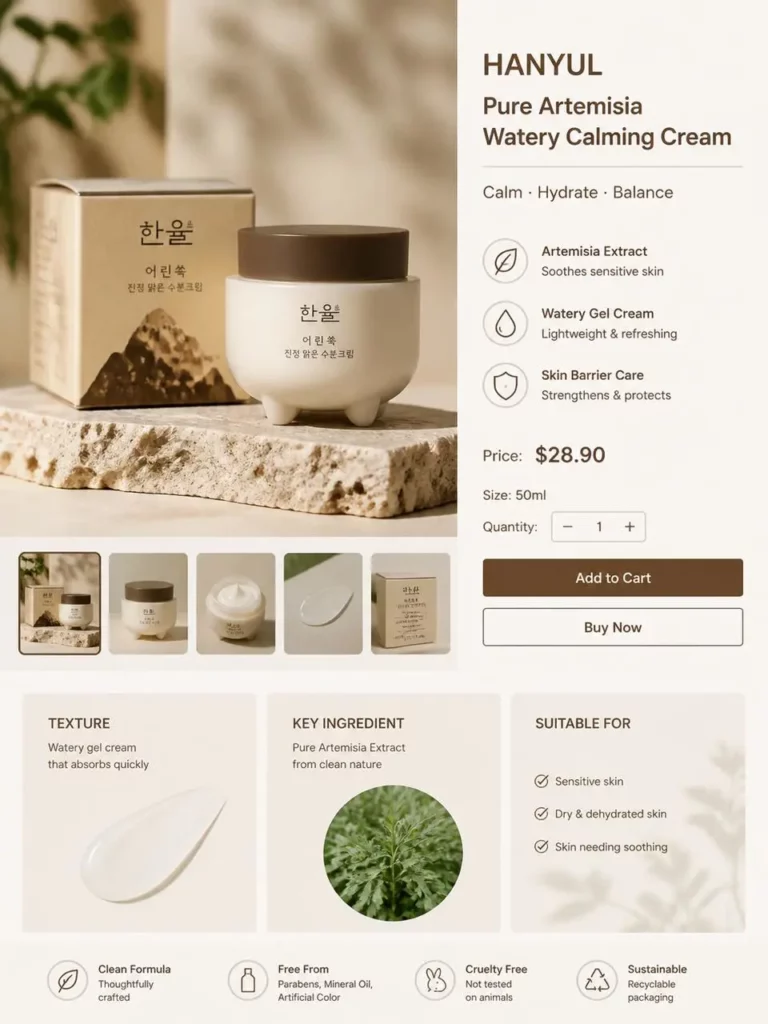
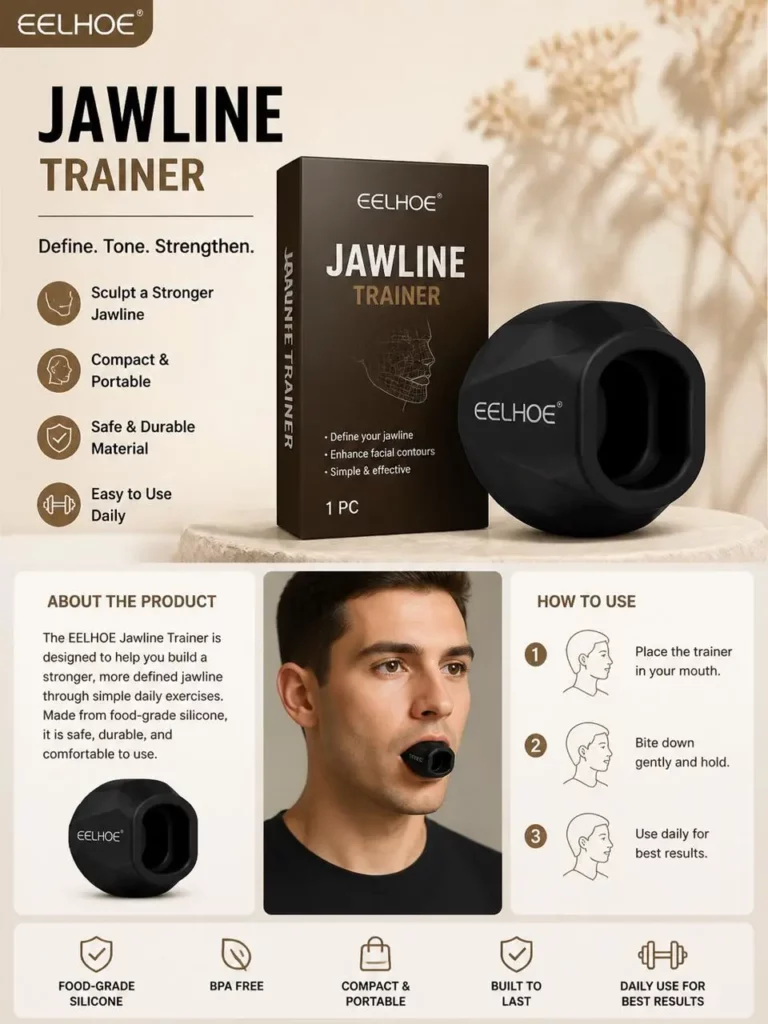
The top of the page should explain the product quickly. Then, the middle sections can introduce benefits, features, proof points, use cases, and specifications. Finally, FAQs and supporting information can remove the last objections before purchase.
This structure is more helpful than one long paragraph filled with adjectives.

How AI Product Detail Page Builds Complete Content
1. Start with Reliable Product Information
First, collect the most accurate source material available.
You may use a current product URL, product images, a specification sheet, supplier notes, SKU data, or an internal product brief. In addition, include the target customer, main benefit, materials, dimensions, care instructions, and brand tone.
A weak input such as “premium black handbag” leaves too much room for guessing.
A stronger input might include:
“Structured black shoulder bag made from recycled nylon, designed for daily commuting, with a padded tablet sleeve, adjustable strap, water-resistant finish, and silver hardware.”
The second version gives the tool real details to organize. Consequently, the output is more specific and easier to review.
2. Separate Features from Benefits
A feature describes what the product has. A benefit explains why that feature matters.
For example:
Feature: Water-resistant recycled nylon
Benefit: Helps protect daily essentials during light rain
Another example:
Feature: Adjustable shoulder strap
Benefit: Allows a more comfortable fit across different outfits
This difference matters because shoppers do not buy technical details alone. They want to understand how those details improve their daily experience.
An AI Product Detail Page can turn raw specifications into benefit-led content. Still, every benefit should remain connected to a real and verifiable feature.
3. Build the Page in Clear Modules
Next, organize the generated content into short sections.
A complete page may include:
- Product title
- Short product summary
- Key benefits
- Feature highlights
- Materials or ingredients
- Dimensions and specifications
- How to use
- Care instructions
- Comparison section
- Shipping information
- Frequently asked questions
- Image alt text
- SEO title and meta description
The tool supports common product detail page modules, including benefits, specifications, size guides, care instructions, comparison sections, FAQs, alt text, and schema-ready summaries. ever, not every product needs every module. A simple candle may need scent notes, burn time, materials, care instructions, and safety information. Meanwhile, a technical device may need compatibility, dimensions, setup steps, and detailed specifications.
Therefore, choose sections based on the product rather than forcing every page into the same template.


Use AI Product Detail Page for Search Intent
SEO product content should match the language shoppers use when they search.
For instance, “black bag” is broad. In contrast, “lightweight black commuter shoulder bag” describes a clearer need. Similarly, “face cream” gives less context than “fragrance-free moisturizer for dry skin.”
The AI Product Detail Page can help organize product copy around materials, benefits, use cases, audience needs, and long-tail keywords. It can also generate SEO titles, meta descriptions, FAQ copy, and product image alt text. ll, keywords should fit naturally. Repeating the same phrase in every paragraph makes the page harder to read. Instead, use related language that reflects how customers compare and understand the product.
For example, a travel bottle page may naturally mention:
- Leak-resistant design
- Carry-on bag
- Refillable container
- Travel toiletries
- Lightweight packaging
- Weekend trips
These phrases provide useful context without turning the description into a list of keywords.
Product Content and Structured Data Are Different
Product page copy helps shoppers understand an item. Structured data helps search engines interpret product information in a standardized format.
Google explains that product structured data can make information such as price, availability, ratings, shipping details, and return information eligible for richer search appearances. Product variant markup can also help Google understand that several products belong to the same parent product. ever, generating a schema-ready summary is not the same as adding valid structured data to a website.
The final technical markup must still be implemented and tested correctly. Therefore, ecommerce teams should review their Product, Offer, shipping, return, price, availability, and variant data before publication.
Keep Brand Voice Consistent Across Every SKU
A single product page may sound polished. Yet the wider catalog can still feel inconsistent.
One page may sound luxurious. Another may sound highly technical. A third may repeat supplier language with no clear brand personality.
This problem becomes more visible when several team members manage the same store.
Therefore, define the tone before generating content. Useful directions include:
- Minimal and direct
- Warm and conversational
- Premium and refined
- Playful and energetic
- Technical and precise
- Natural and eco-conscious
The WeShop AI tool supports different brand tones and reusable workflows, which can help stores keep wording more consistent across multiple SKUs, variants, seasonal launches, and category pages. addition, prepare a small brand language guide. Include preferred phrases, banned claims, capitalization rules, measurement formats, and examples of acceptable CTAs.

Review Every Claim Before Publishing
AI can organize product information quickly. However, it should not become the final source of truth.
Always check:
- Materials and ingredients
- Product dimensions
- Compatibility
- Safety information
- Medical or performance claims
- Sustainability claims
- Prices and discounts
- Shipping details
- Return policies
- Marketplace character limits
This review is especially important when the source page is incomplete or outdated.
Also, remove vague phrases such as “best quality,” “perfect for everyone,” or “guaranteed results” unless they are supported. Specific information is usually more persuasive than exaggerated language.
Instead of writing “the ultimate travel bag,” explain that the bag weighs 450 grams, includes three internal pockets, and fits under most airline seats when packed within the listed dimensions.
A Simple AI Product Detail Page Workflow for Ecommerce Teams
A practical workflow can follow five steps.
Step 1: Collect the Product Truth
Gather the URL, photos, specifications, materials, dimensions, price, target audience, and confirmed product claims.
Step 2: Define the Page Goal
Decide whether the page is for Shopify, Amazon, Etsy, a campaign landing page, or another sales channel. Each platform needs a different structure.
Step 3: Generate the Core Modules
Create the product summary, key benefits, specifications, FAQs, metadata, and image alt text.
Step 4: Edit for Brand and Accuracy
Remove repetition, verify every detail, adjust the tone, and replace generic statements with specific information.
Step 5: Publish and Improve
After publication, review search queries, customer questions, returns, support tickets, and conversion data. Then update the page when shoppers repeatedly need information that is missing.
This final step matters because a product page should not remain static. It should improve as the team learns more about customer behavior.
Who Should Use an AI Product Detail Page?
This workflow is useful for:
- Shopify and WooCommerce stores
- Amazon and marketplace sellers
- Dropshipping teams
- Product marketers
- Catalog managers
- SEO teams
- Small ecommerce brands
- Agencies managing several stores
- Teams launching multilingual catalogs
It is especially useful when the business has strong product information but limited time to turn that information into consistent, customer-friendly pages.
Frequently Asked Questions
Can AI Product Detail Page create content from a URL?
Yes. The tool can analyze a product URL or work from product names, images, specifications, SKU notes, supplier content, and marketing briefs. However, the result should still be checked against the latest confirmed product data. Can it write Shopify product descriptions?
Yes. It can create Shopify-focused descriptions, SEO metadata, product highlights, FAQs, specifications, and image alt text. The final layout can then be adjusted to match the store theme and product type.
Can AI Product Detail Page help with marketplace listings?
It can draft titles, bullet points, descriptions, features, and buyer-focused content for marketplace listings. However, sellers must still follow the current rules, claims policies, and character limits of each platform.
Does AI Product Detail Page replace an ecommerce copywriter?
No. It reduces repetitive drafting and content organization. A human editor is still needed for positioning, brand judgment, factual review, compliance, and final quality control.
Can AI Product Detail Page Support Large Catalogs?
Yes. The tool supports workflows using multiple URLs, product data, CSV information, feeds, and reusable templates. Therefore, it can help teams refresh older pages or prepare larger product collections more efficiently. Turn Product Data into a Page That Sells
A strong product page does more than describe an item. It guides shoppers from curiosity to understanding and from understanding to confidence.
An AI Product Detail Page makes this process more manageable by turning scattered product data into structured ecommerce content. It can help create descriptions, benefits, specifications, FAQs, metadata, alt text, and reusable page modules without starting from an empty document every time.
However, the best results still begin with accurate information and end with careful review.
Start with the product truth. Organize it around real customer questions. Then use AI to create a clearer and more consistent path to purchase.
Go to WeShop AI For Exploration: