The influencer marketing landscape is facing an existential pivot. The era of just taking pretty pictures is sunsetting. Today, it’s about content volume, lightning-fast trend adoption, and narrative continuity. But there is a ceiling to human output. You can’t be in five cities at once, and you can’t have a professional photoshoot every single day.
Enter Generative AI. For a moment, it seemed like the ultimate solution—infinite content at the click of a button. But early adopter influencers quickly hit a wall. You could generate a stunning image of a fashion model, but you couldn’t make it look like you. You couldn’t maintain brand consistency. The AI would give you a perfect subject in one image, but in the next, their face, hair, and height would be entirely different.
For a social media influencer, a generic face is worthless. Your face is your equity. Your consistency is your trust.
That is why this is not just another review of AI image generators. We aren’t comparing aesthetic quality in a vacuum. We are reviewing the top tools on the market based on one critical metric: The ability to create and maintain a consistent “Virtual Twin.”
We are looking for the holy grail of influencer AI: the ability to dress your AI clone in digital apparel, place them in any environment, and have your audience never question if it’s really you.
Here is the ultimate review of image AI for influencers who want to scale their presence without losing their identity.
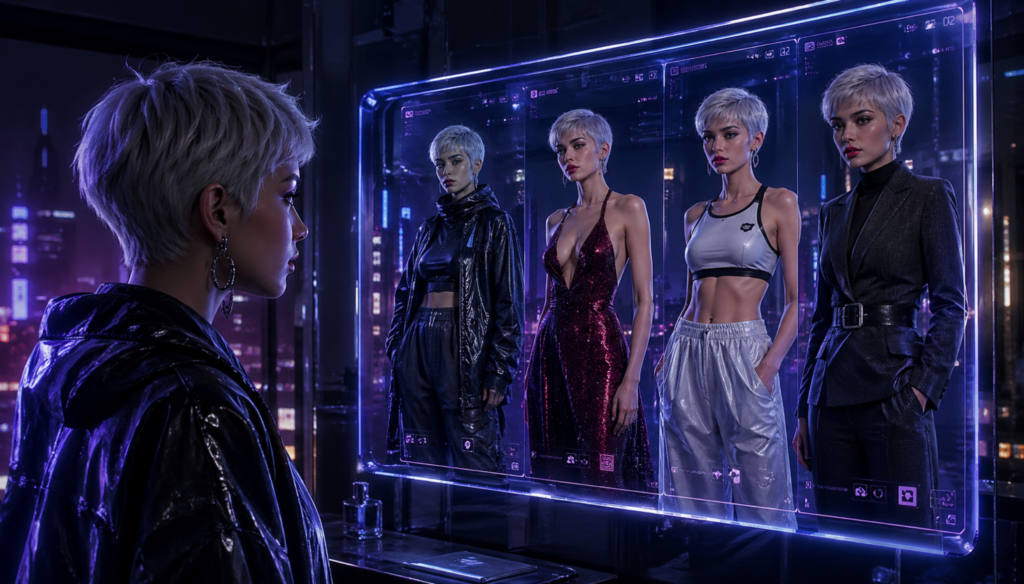
The Landscape: Why Standard Reviews Fail Influencers
If you read a standard review of DALL-E 3 or Midjourney, they focus on creative prompt adherence, artistic style variance, or ease of use. While important, these reviews ignore the influencer’s workflow.
An influencer needs control. You don’t need the AI to be creative for you; you need the AI to execute your vision. You need model consistency, fabric texture realism, and lighting control. Most importantly, you need to solve the “identity fragmentation” problem where AI generates a “new person” for every image.
We will evaluate the heavy hitters—Midjourney, Stable Diffusion, Flux.1, and Adobe Firefly—through this lens of control and consistency.
Midjourney V6.1: The King of Aesthetics Gets a “Soul”
For a long time, Midjourney was the king of beautiful but uncontrollable images. That changed dramatically with the introduction of the --cref (Character Reference) feature.
The Verdict on Consistency
Midjourney has narrowed the gap between artistic brilliance and practical utility. By using --cref followed by the URL of a reference image of yourself (or a model you created), Midjourney attempts to keep the face, hair, and build consistent across new prompts.
It is not perfect. It is not a “deepfaking” tool. It is more of an “artistic likeness” tool. It captures the essence, the bone structure, and the overall vibe of the face. For lifestyle, fashion, and artistic influencers, this is often enough.
Workflow & Aesthetics
Where Midjourney still destroys the competition is “out-of-the-box” aesthetics. A simple prompt yields a cinematic, high-fashion result that requires almost no post-processing. V6.1 has improved fabric textures, better eye rendering, and far less “uncanny valley” skin smoothness.
The Influencer Scorecard
- Consistency (Character Reference): 7.5/10 (Requires strong reference photos; sometimes loses likeness in complex poses.)
- Aesthetic Quality: 9.5/10 (Cinematic, trendy, Instagram-ready.)
- Ease of Use: 8/10 (Now accessible via a sleek web UI, removing the Discord barrier for power users.)
- Commercial Safety: 6/10 (Still in a legal gray area regarding training data.)
Best For: Lifestyle, Travel, and Fashion influencers who need stunning visual quality and “close-enough” character continuity without technical headache.
Flux.1: The New Challenger Demanding Respect
Flux.1 is the new, open-weights model that has sent shockwaves through the AI community. It arrived with a singular promise: superior prompt adherence and massive realism.
The Verdict on Consistency
Flux is rapidly becoming the favorite for advanced users because it is extraordinarily receptive to LoRA (Low-Rank Adaptation) training. A LoRA is essentially a mini-model trained on only your face.
While this requires technical know-how to train (or paying a service to do it), the results are staggering. Once a LoRA of your face is plugged into Flux, the likeness is incredibly stable. Furthermore, Flux seems to handle “identity” better in its base model, creating less “generic AI face” look than Stable Diffusion previously did.
Workflow & Text Rendering
Flux has two major advantages. First, its photographic realism is less “plasticky” than Midjourney. Second, it renders text perfectly. If you want your Virtual Twin wearing a hoodie that actually says “MY BRAND,” Flux is the only model that reliably does this in a single generation.
The Influencer Scorecard
- Consistency (via LoRA training): 9/10 (The current gold standard when properly trained.)
- Aesthetic Quality: 9/10 (Ultra-realistic, excellent textures, phenomenal lighting.)
- Ease of Use: 4/10 (Requires running locally on high-end hardware, using a cloud provider like Fal.ai, or using complex third-party tools.)
- Commercial Safety: 7/10 (Open-weights offers some independence, but training data questions remain.)
Best For: Tech-savvy influencers, brand owners needing specific text rendering, and anyone willing to invest time in training a perfect digital clone for maximum realism.
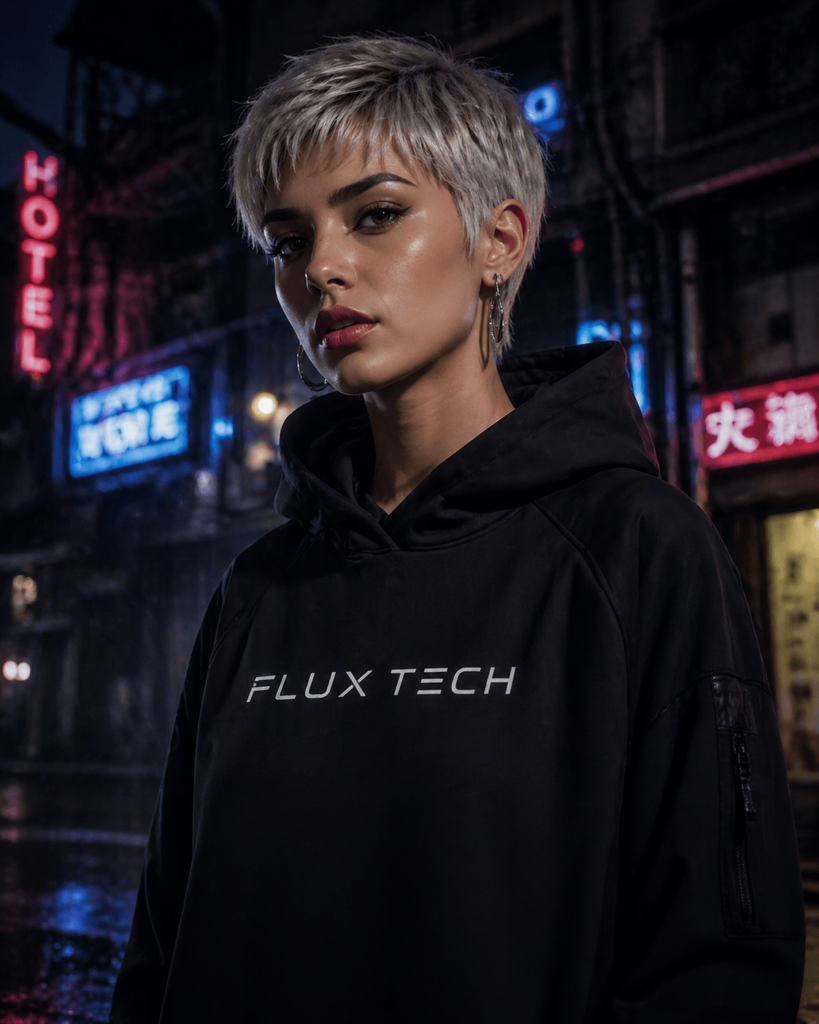
Stable Diffusion (SDXL/Pony): The Wild West of Unlimited Control
Stable Diffusion is the grandfather of controllable AI image generation. It is open-source and has the largest community ecosystem. However, that comes with massive complexity.
The Verdict on Consistency
For a year, SDXL (Stable Diffusion XL) combined with LoRA training was the only way to get a consistent Virtual Twin. When tuned correctly, it is still powerful.
However, Stable Diffusion is losing ground to Flux because it requires a symphony of add-ons (ControlNet for poses, IP-Adapter for face referencing, detailed LoRAs) just to match what Flux can do more simply. The likelihood of artifacts (bad hands, weird lighting) is much higher in SDXL.
Workflow & Ecosystem
The strength of SD remains its ecosystem. Tools like Automatic1111 or ComfyUI give you microscopic control over the generation process. You can sculpt the pose, paint over mistakes (Inpainting), and upscale to massive resolutions.
The Influencer Scorecard
- Consistency (via LoRA/ControlNet): 8.5/10 (Highly effective, but requires managing multiple parameters.)
- Aesthetic Quality: 7/10 to 9/10 (Entirely dependent on the user’s skill, custom models, and post-processing.)
- Ease of Use: 1/10 (A steep learning curve that discourages most non-technical creatives.)
- Commercial Safety: 7/10 (If run locally and trained on your own data, you have maximum control.)
Best For: Power users, technical directors, and creators who need absolute, granular control over every pixel and pose, regardless of the difficulty.
Adobe Firefly Image 3: The Safe, Corporate Playground
Adobe Firefly is built directly into Photoshop. For influencers who already use the Adobe suite, it is highly accessible.
The Verdict on Consistency
Firefly does not offer a robust feature to create a consistent virtual twin. You cannot train a LoRA of your face, and its “Structure Reference” and “Style Reference” features don’t lock down identity.
Firefly is useful for influencers who have existing photos. Its “Generative Fill” is unmatched for changing outfits, altering backgrounds, or fixing messy details in a real photo of you. But for generating a Virtual Twin from scratch? It fails.
Workflow & Commercial Safety
Firefly’s main selling point is that it was trained only on Adobe Stock and licensed content, making it commercially safe. It also integrates seamlessly with Photoshop’s precision editing tools.
The Influencer Scorecard
- Consistency (Character): 2/10 (Virtually non-existent for identity locking.)
- Aesthetic Quality: 7.5/10 (Good, realistic, but often less “exciting” or cinematic than Midjourney.)
- Ease of Use: 9/10 (Integrated directly into the Photoshop workflow.)
- Commercial Safety: 10/10 (The gold standard for legal peace of mind.)
Best For: Influencers doing commercial brand work who have real photos and need safe, powerful “Generative Fill” editing tools rather than full character generation.
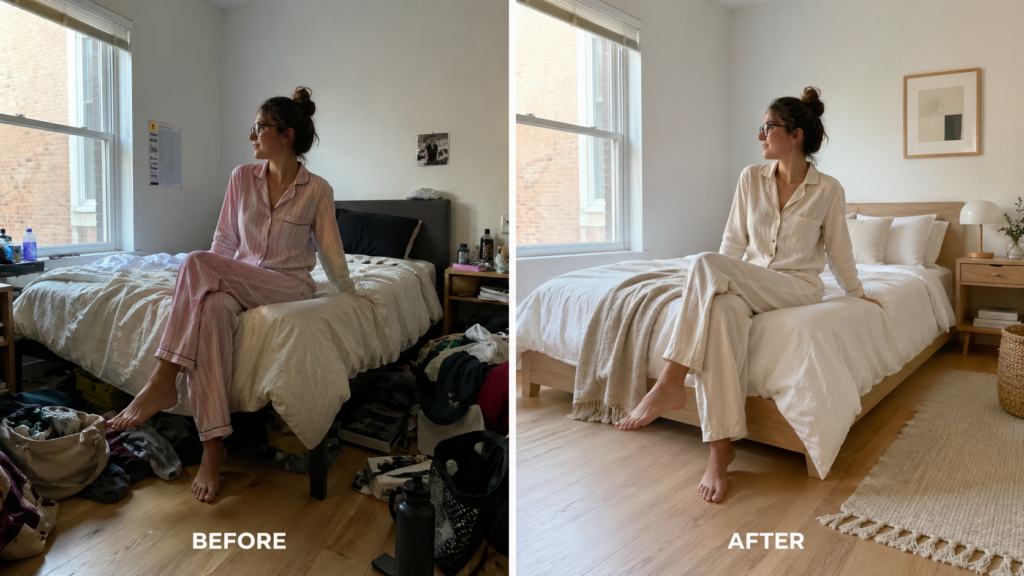
The Ultimate Decision Matrix: Which Model Wins?
There is no single “best” model. It depends entirely on your brand, your workflow, and your technical willingness.
| Feature Need | Winner | Runner-Up |
| Instant Instagram Aesthetic | Midjourney (Easy brilliance) | Flux (Close second) |
| Absolute Likeness (Virtual Twin) | Flux + LoRA (Most stable) | Stable Diffusion + LoRA |
| Text on Clothing/Background | Flux (Flawless) | Midjourney (Improves, but unreliable) |
| Commercial/Legal Safety | Adobe Firefly (Adobe Stock training) | Flux (Open Weights) |
| Editing Existing Photos | Adobe Firefly (Generative Fill) | Stable Diffusion (Inpainting) |
The Strategy for 2025: The Hybrid Workflow
The smartest influencers are not choosing just one. They are using a hybrid workflow:
- Concept & Aesthetic: Use Midjourney to conceptualize the shoot vibe, background, and lighting.
- Identity Insertion (The Twin): Take the vibe and use Flux + a custom LoRA of your face to generate the final image with perfect likeness and branding.
- Final Polish: Use Adobe Firefly/Photoshop to clean up any artifacts, upscale, or fix apparel details.
Conclusion: The “Virtual Twin” is a Brand Asset
The pivot toward AI character consistency is not a trend; it is the digitization of influencer equity. By creating a Virtual Twin, you aren’t trying to trick your audience. You are scaling your creativity. You are ensuring that your digital self can show up on days when your physical self cannot.
For most influencers reading this, Midjourney (with --cref) is the fastest path to acceptable consistency with massive aesthetic appeal. It offers the best return on effort.
But if your brand is defined by high-fidelity realism, complex streetwear with logos, and perfect likeness, the winner is Flux. It requires more setup, but it delivers the future of influencer content today.
The key to standing out now isn’t just using AI—it’s owning your AI likeness. Start building your Virtual Twin today.
Go to WeShop AI For Exploration: