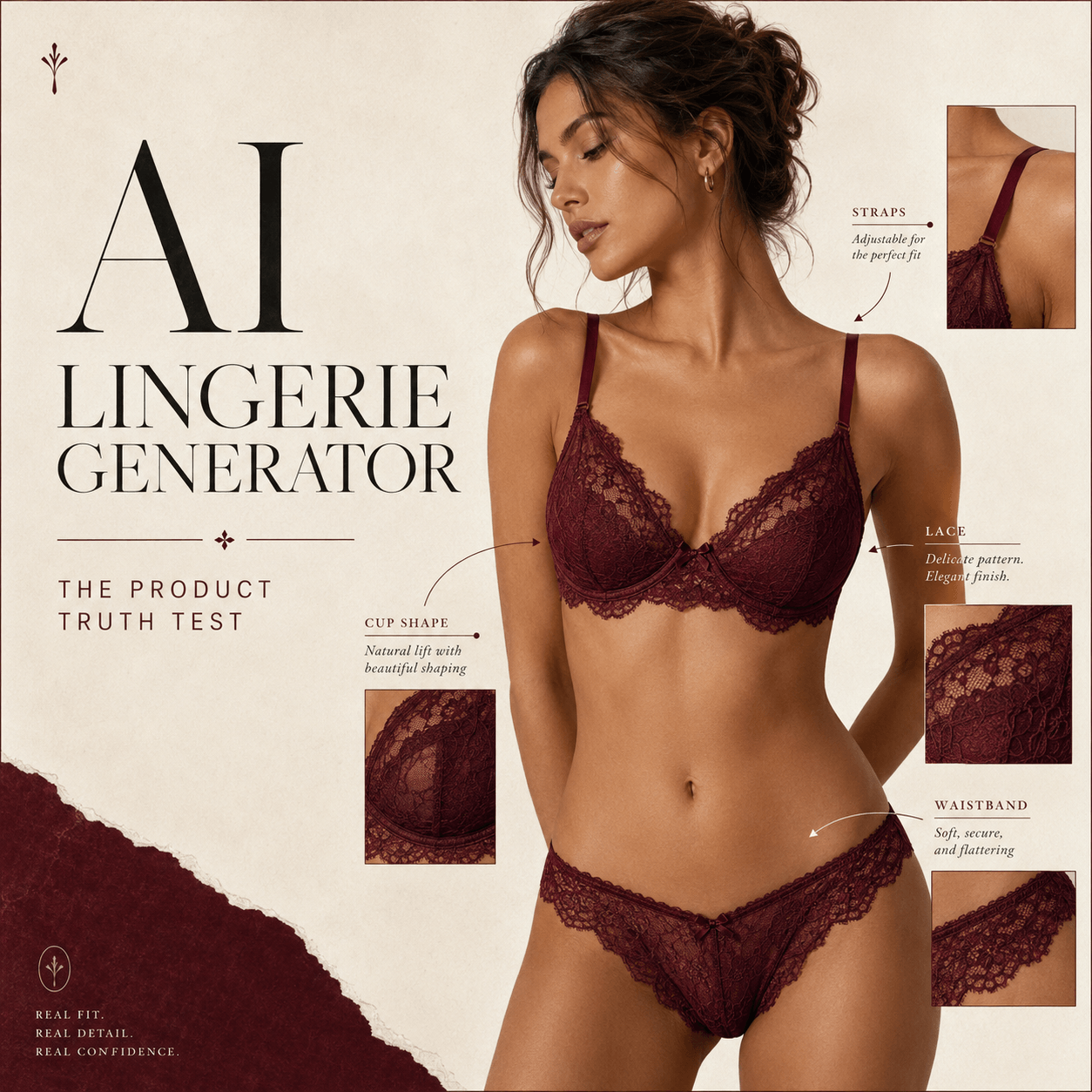
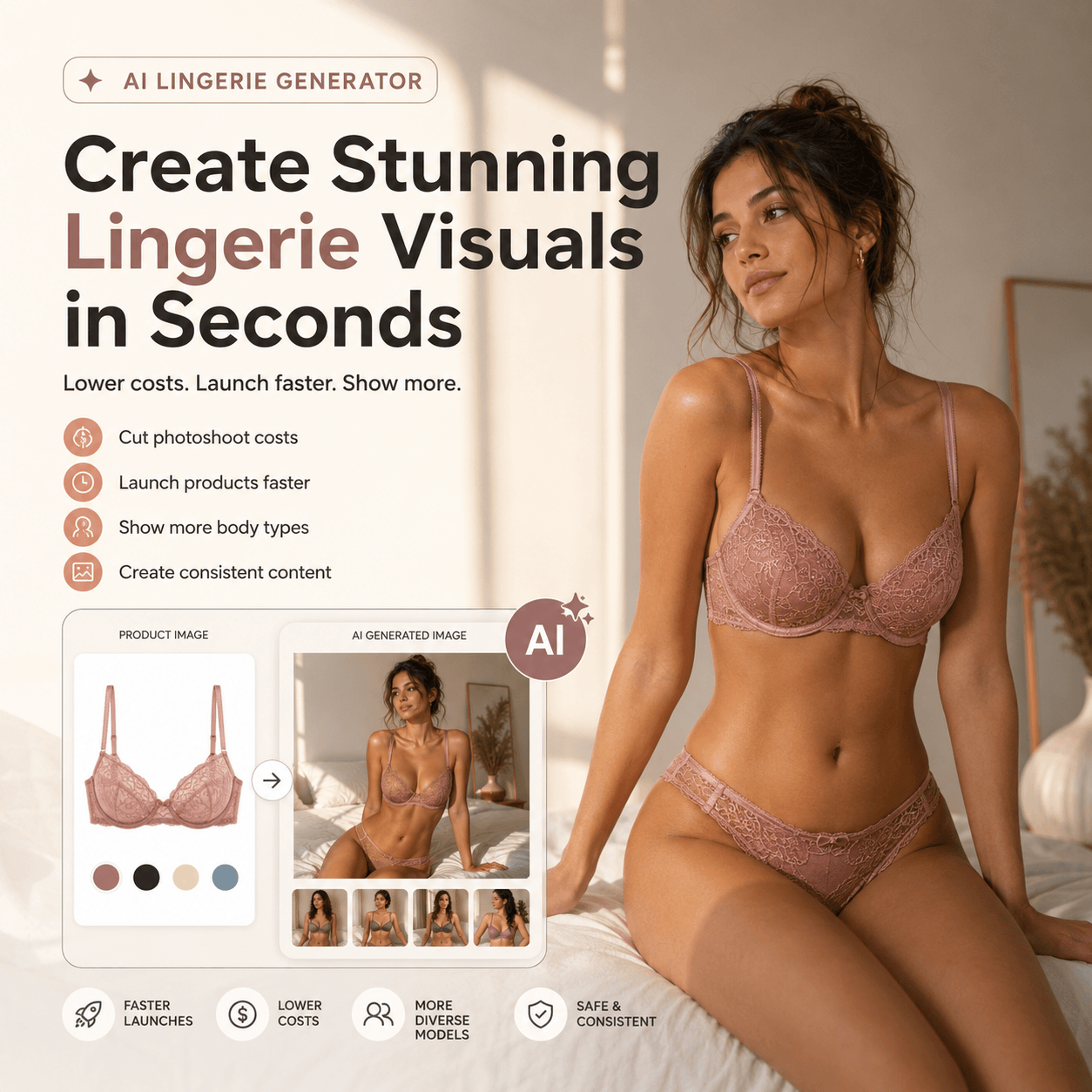
An AI Lingerie Generator can create more than polished product images. It can also help lingerie brands test creative ideas before they spend more time or budget on them.
That shift matters. Many teams still choose campaign images through personal taste. One person prefers a clean studio. Another wants a soft bedroom scene. Meanwhile, the marketing team asks for something bolder.
However, none of those opinions proves which image will work best.
Instead, brands can treat each visual idea as a small test. They can keep the product stable, change one creative element, and compare the response. As a result, decisions become clearer and less personal.
The goal is not to generate endless options. The goal is to find the strongest direction before scaling it.
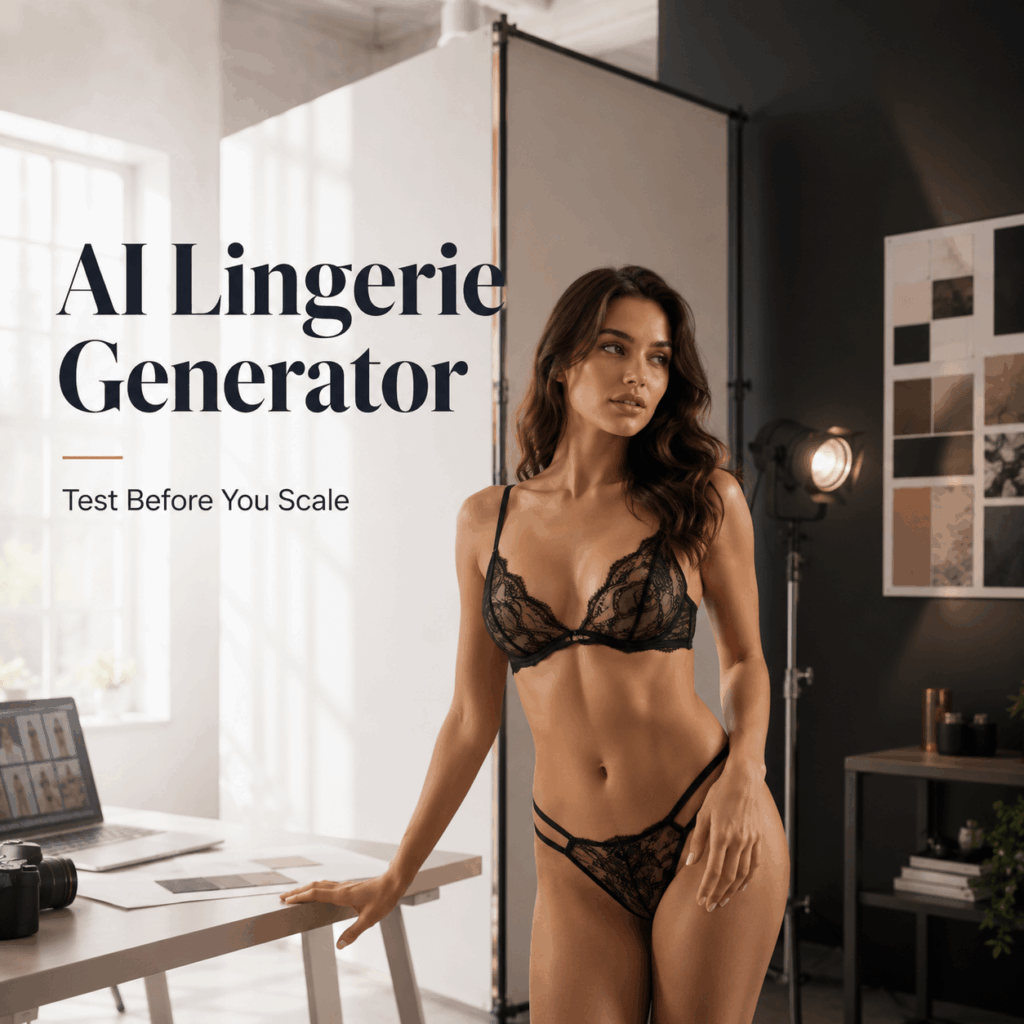
Why Use an AI Lingerie Generator for Creative Testing?
Lingerie visuals carry a lot of information. They show the product, but they also create a mood. In addition, they shape how shoppers understand style, coverage, confidence, and occasion.
Therefore, one creative choice can change the full message.
A pale studio background may feel clear and practical. In contrast, warm hotel lighting may feel more premium. A close crop may highlight lace. Meanwhile, a wider frame may sell a lifestyle.
An AI Lingerie Generator makes these directions easier to compare. However, the test only works when the changes are controlled.
Creative Opinions Can Become Expensive
Without testing, a team may build a full campaign around the loudest opinion in the room.
For example, a dramatic editorial image may look impressive during a review. However, it may hide the straps or leave little room for ad copy.
Likewise, a safe catalog image may explain the product well. Still, it may not attract attention in a fast social feed.
Therefore, the most beautiful image is not always the most useful image.
Creative testing helps separate taste from purpose. Instead of asking, “Which one do we like?” the team can ask, “Which one works better for this channel?”
One Change Creates a Clearer Answer
A useful test changes one main element at a time.
For instance, keep the same model, product, pose, and crop. Then, test two backgrounds.
Alternatively, keep the scene and product stable. Next, compare a direct pose with a more relaxed pose.
If everything changes, the result becomes hard to read. You will not know whether the model, light, setting, or composition caused the difference.
Therefore, controlled variation is more valuable than random variety.
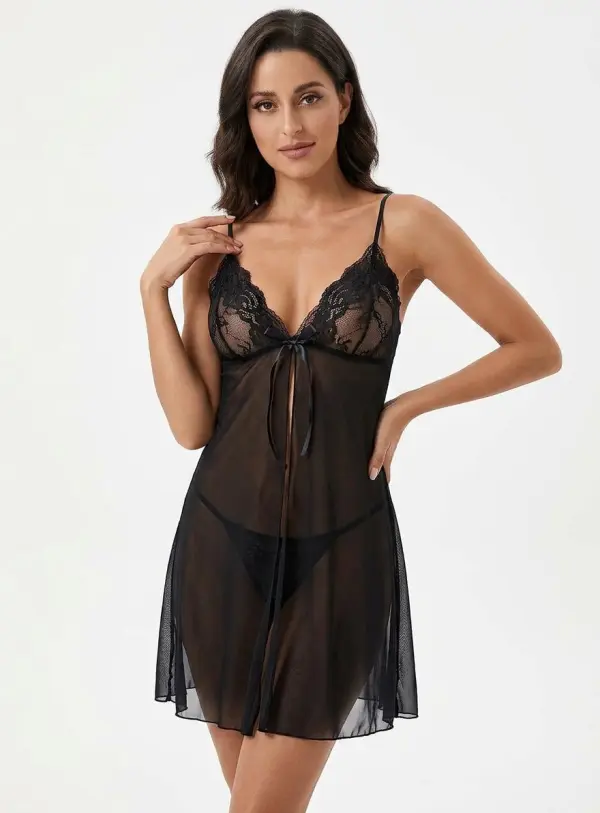
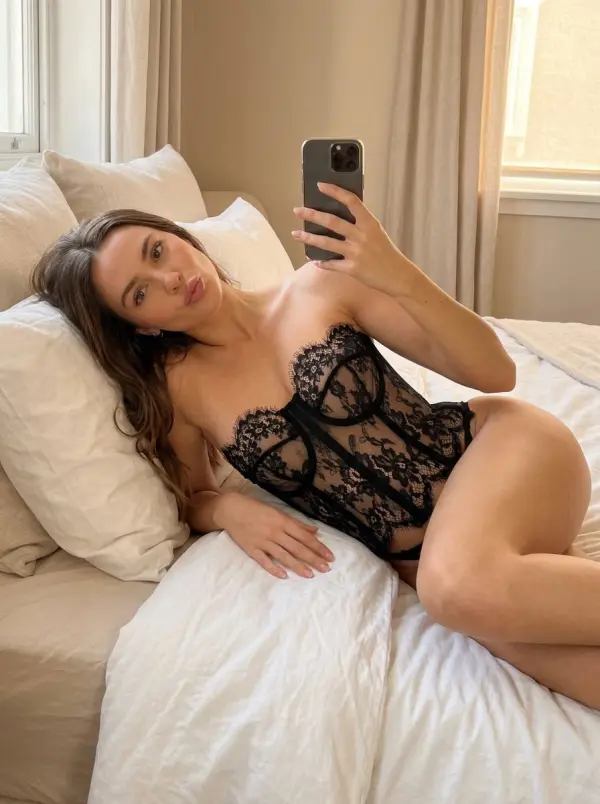
Five AI Lingerie Generator Tests Worth Running
You do not need twenty versions. Instead, start with five focused test groups.
Each group should answer one clear question.
Test 1: Product Crop
First, compare a full-body composition with a closer product-led crop.
The full-body image may create more personality. However, the closer crop may show fabric and construction more clearly.
Use both images in the same channel. Then, compare how people respond.
For a product page, you may watch image engagement or movement toward the add-to-cart area. For an ad, you may compare clicks or landing-page visits.
The result can show whether shoppers respond more to the full look or the product detail.
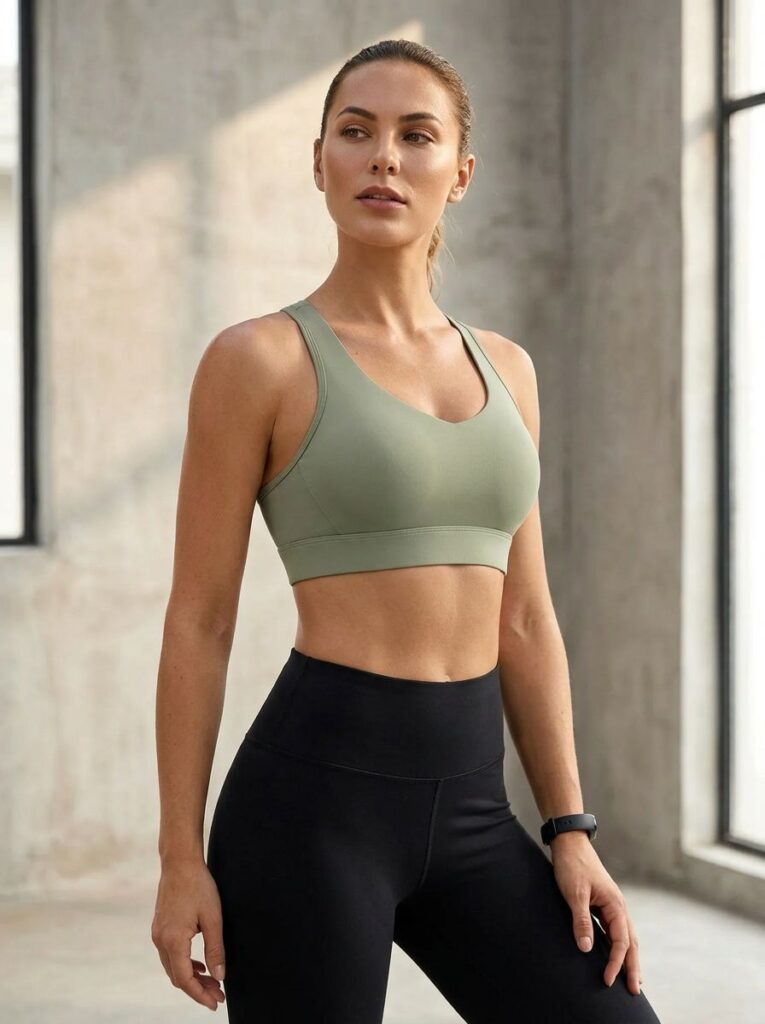
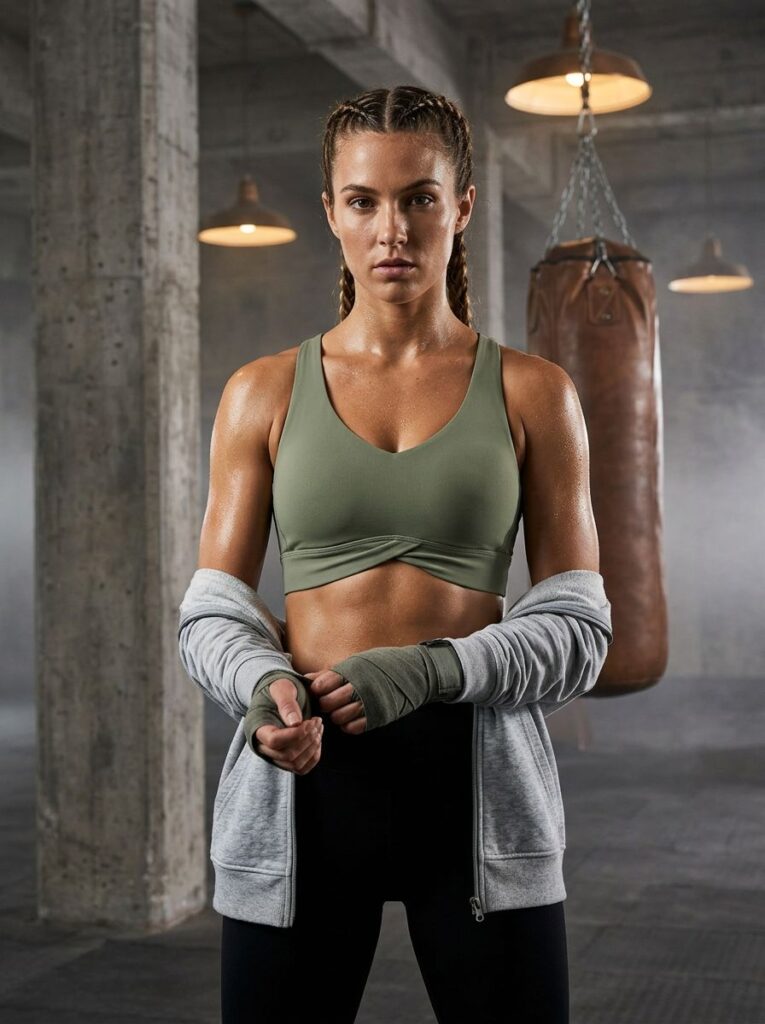
Test 2: Model Pose
Next, keep the background and styling the same. Change only the pose.
For example, compare a simple front-facing pose with a slight turn. Alternatively, test a standing pose against a calm seated pose.
A direct pose may feel clearer. Meanwhile, a relaxed pose may feel more natural.
However, avoid poses that hide key product areas. The aim is to test mood, not remove useful information.
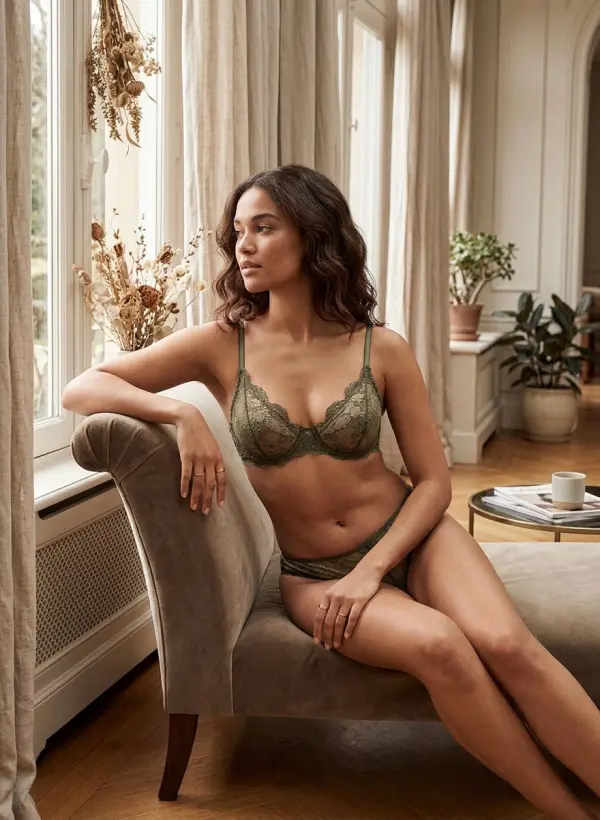
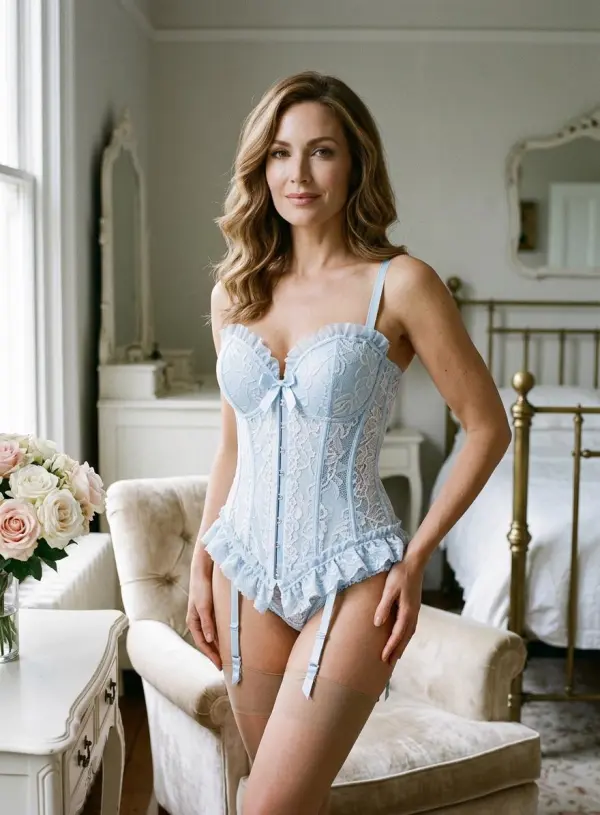
Test 3: Scene and Lighting
Now test the world around the product.
One version may use clean studio light. Another may use warm morning light. A third may use stronger campaign shadows.
Because the model and garment stay stable, you can see how atmosphere changes the message.
For example, a soft setting may support everyday comfort. In contrast, sharper light may support a more fashion-led launch.
Therefore, the best scene depends on the product story, not only visual beauty.
Test 4: Model Direction
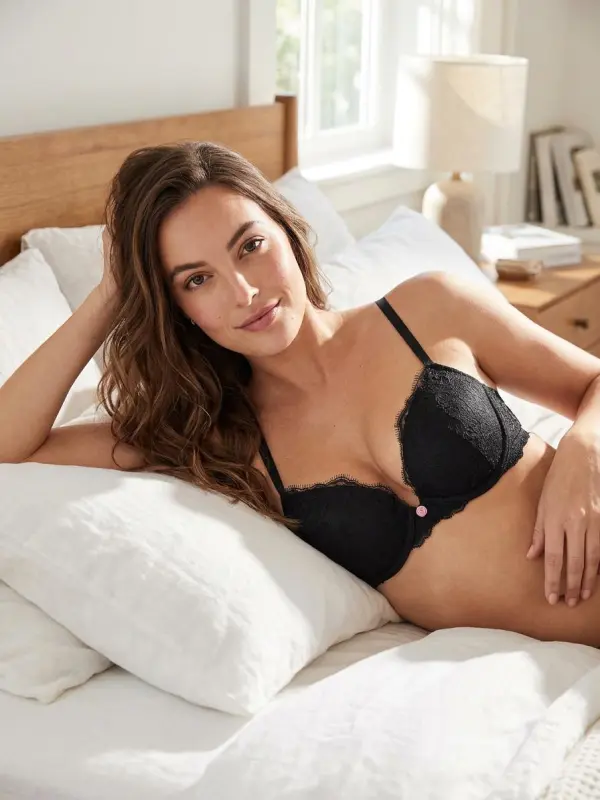
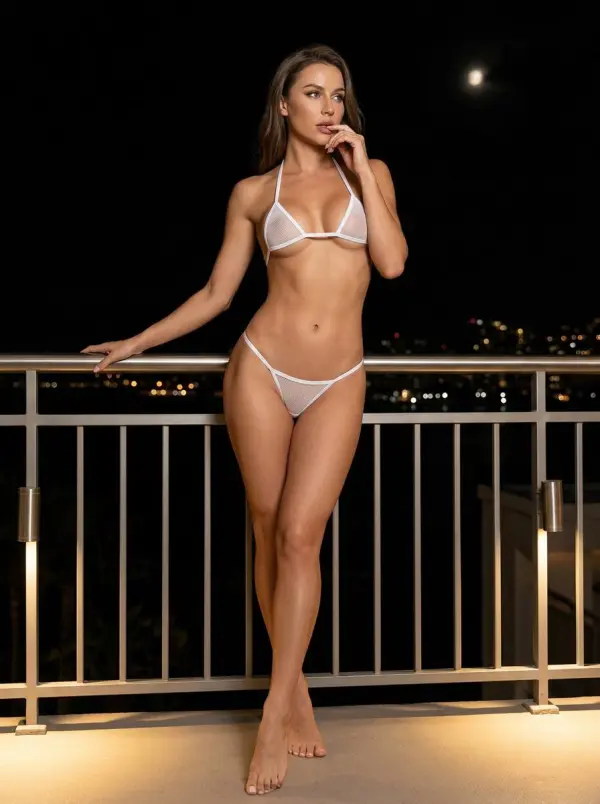
Different models can change how a product feels.
Therefore, test more than one model direction. You may compare a slim model with a curvy model. You may also compare different hair, age, or styling directions when they match the target market.
However, do not change the whole visual at the same time. Keep the product, scene, pose, and lighting similar.
This test is not about deciding which body is “better.” Instead, it helps the brand understand which representation connects with a specific audience or channel.
Test 5: Space for Marketing Copy
A strong product image is not always a strong ad layout.
Therefore, create one centered version and one version with the model placed to the side. The second image should leave clean space for a headline, price, or CTA.
Then, test the full layouts rather than the image alone.
A centered composition may work well on a product page. In contrast, a side composition may work better for banners and paid ads.
Because of this, composition should follow the destination.
Turn a Winning AI Lingerie Generator Test Into a Campaign
Once one direction performs well, do not immediately create fifty random versions.
First, identify why it may have worked.
Was the crop clearer? Did the model direction match the audience? Did the background support the product color? Was there better space for the message?
Next, build a small visual system around that answer.
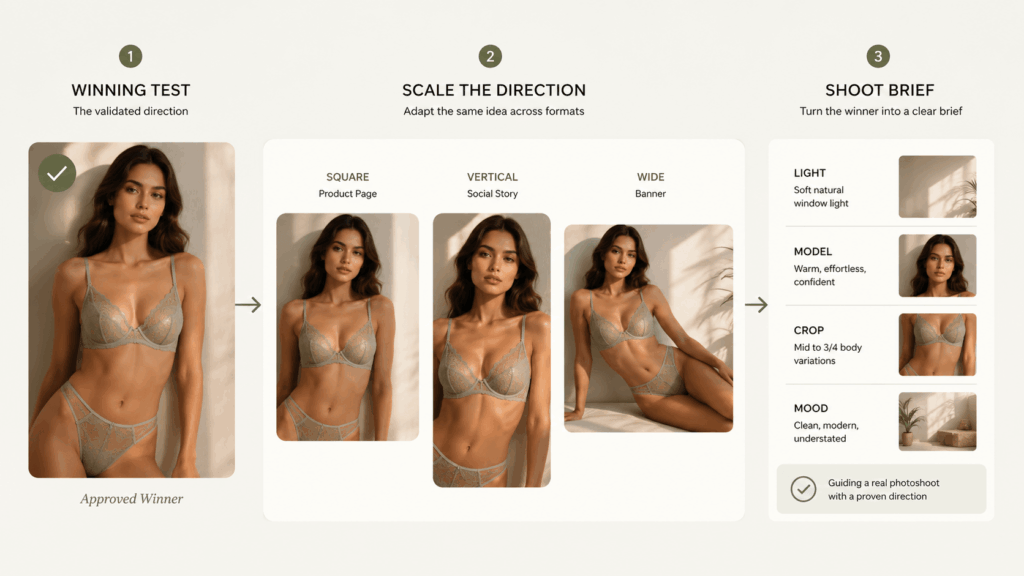
Scale the Winning Direction
Keep the core creative idea stable.
Then, adapt it into square, vertical, and wide formats. In addition, create a product-page version and a social version.
However, review each crop separately. A strong vertical image may lose its impact when forced into a wide banner.
Therefore, adaptation should protect the idea, not simply resize the file.
Use the Winner as a Shoot Brief
A successful AI test can also guide real photography.
For example, the team can bring the winning light, model direction, crop, and background mood into a professional shoot.
As a result, the photographer receives a clearer brief. The brand also enters production with fewer unresolved choices.
AI does not need to compete with photography. Instead, it can help the team arrive at the shoot with a tested direction.
Match AI Lingerie Generator Tests to Each Channel
The same winner may not work everywhere.
Therefore, every test should have a clear channel before it begins.
AI Lingerie Generator Tests for Product Pages
Product pages need clarity first.
Therefore, test images that help shoppers understand the garment. These may include a front view, a slight side angle, and one close detail.
Do not judge these images only by clicks. Instead, look at how they support the full shopping journey.
For example, does the image encourage visitors to view more product photos? Does it help them move toward size information or the purchase button?
A product-page winner should reduce confusion, not simply attract attention.
AI Lingerie Generator Tests for Paid Ads
Paid ads have a different job. They must earn attention quickly.
Therefore, test stronger crops, clearer contrast, and more direct composition.
However, keep the test simple. Use the same headline and audience when comparing two images. Otherwise, the result may reflect the copy or targeting instead of the visual.
In addition, do not choose a winner after only a tiny amount of activity. Let both versions collect enough exposure for a fair comparison.
AI Lingerie Generator Tests for Social Content
Organic social content can support more personality.
For example, you can compare a polished campaign scene with a more relaxed creator-style image.
One may earn more saves. Meanwhile, the other may create more profile visits or comments.
Therefore, define success before posting. A visual designed for discovery should not be judged by the same goal as a product education post.
Read Creative Test Results More Carefully
Numbers can help. However, they do not explain everything on their own.
A high-click image may create curiosity but weak purchase intent. In contrast, a quieter image may attract fewer visitors but better-qualified shoppers.
Therefore, look beyond one metric.
Separate Attention From Buying Intent
First, check whether the image earns attention.
Next, check what happens after the click.
If people click but leave quickly, the visual may promise something the page does not deliver. However, if visitors continue to product details, the creative and landing page may be working together.
As a result, the strongest image is often the one that attracts the right person, not the largest number of people.
Do Not Change the Rules Mid-Test
Teams often make one version brighter, add a stronger headline, and use a different audience. Then, they call it an image test.
However, that test contains too many changes.
Instead, keep the rules stable. Use the same copy, placement, audience, and timing when possible.
Because of this, the result becomes easier to trust.
Let Weak Ideas Fail Early
Not every idea deserves a full campaign.
That is useful.
An AI Lingerie Generator can help teams explore a direction before they build every size, crop, and channel format around it.
Therefore, allow weak ideas to fail during the small test. It is better to reject one concept early than repair an entire campaign later.
Use the AI Lingerie Generator Without Misleading Shoppers
Creative testing still needs clear limits.
First, use only adult and authorized model images. In addition, review the rules of the channel where the image will appear.
Most importantly, keep the real product recognizable.
Protect Product Truth During Every Test
Do not approve a winning image if it changes the item.
Check the straps, cups, lace, seams, waistband, hardware, and coverage. Also, compare color and transparency with the real product.
A high-performing image is not valuable if it creates the wrong expectation.
Therefore, product truth remains part of the test score.
Avoid Turning Visual Tests Into Fit Claims
An image can show a styling idea. However, it cannot prove comfort, lift, support, or exact sizing.
Therefore, continue to provide real measurements, size charts, and tested product details.
The creative should help shoppers understand the design. It should not replace verified product information.
Final Thoughts on AI Lingerie Generator Testing
Most lingerie brands do not need more random images. Instead, they need better reasons for choosing each image.
An AI Lingerie Generator can turn creative direction into a testable process. First, lock the product. Next, change one visual element. Then, compare the result in the correct channel.
Because of this, teams can stop arguing over personal taste. They can learn which crop, model direction, scene, and layout serve the product best.
The final benefit is not simply faster image creation. It is better creative judgment.
Test small. Learn clearly. Then, scale the visual that earns its place.
Go to WeShop AI For Exploration: