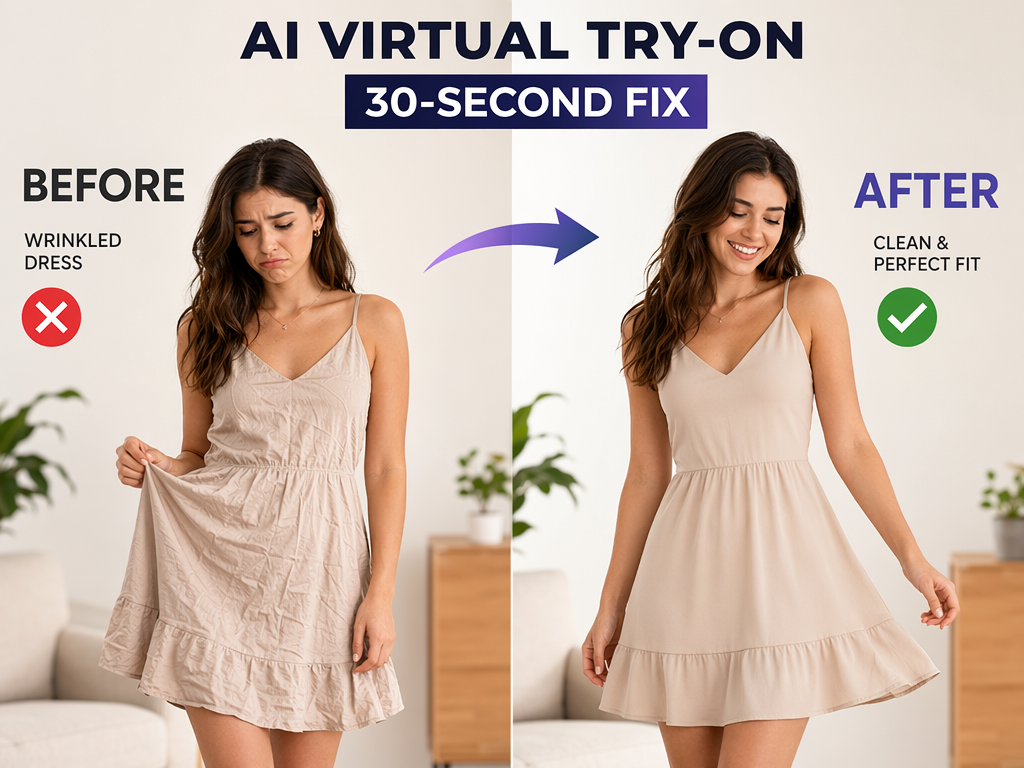
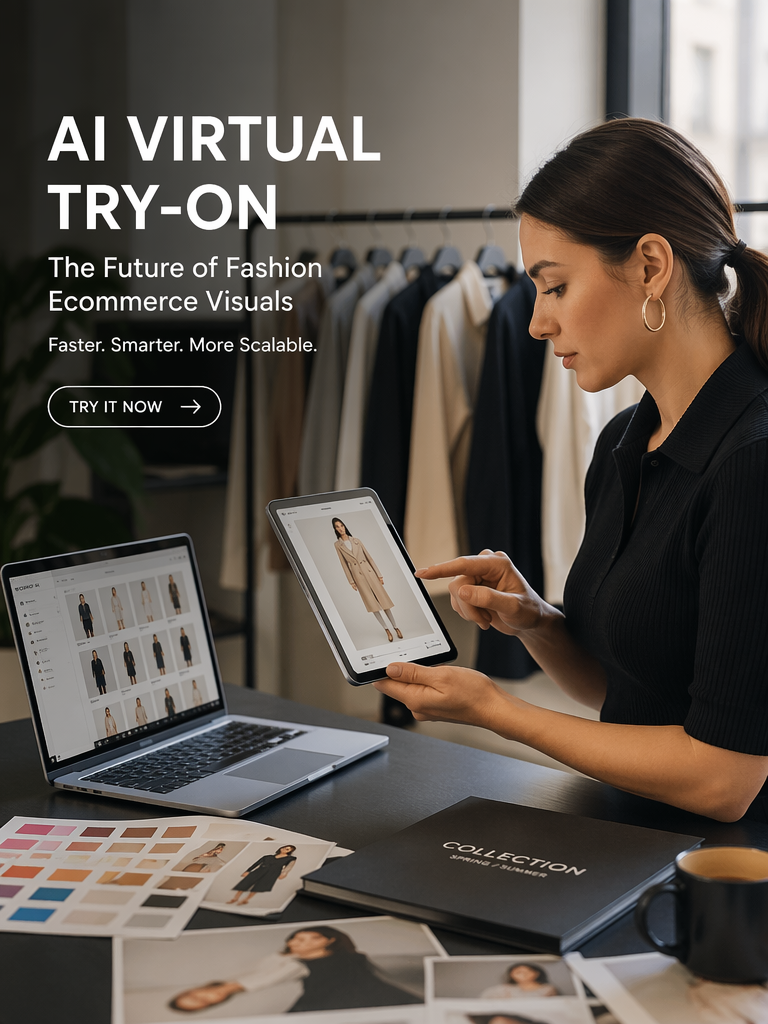
Imagine opening an app on your phone and seeing every garment you own — not as a flat photo in a grid, but as a styled outfit on a model with your body proportions, in the lighting of the restaurant you’re heading to tonight. A growing community of fashion-forward consumers has been asking for exactly this: a virtual closet with AI try-on built in. The demand is loud. The technology is close. But the economics tell a more complicated story — one that reveals where AI virtual try-on delivers real value today and where it’s still aspirational.

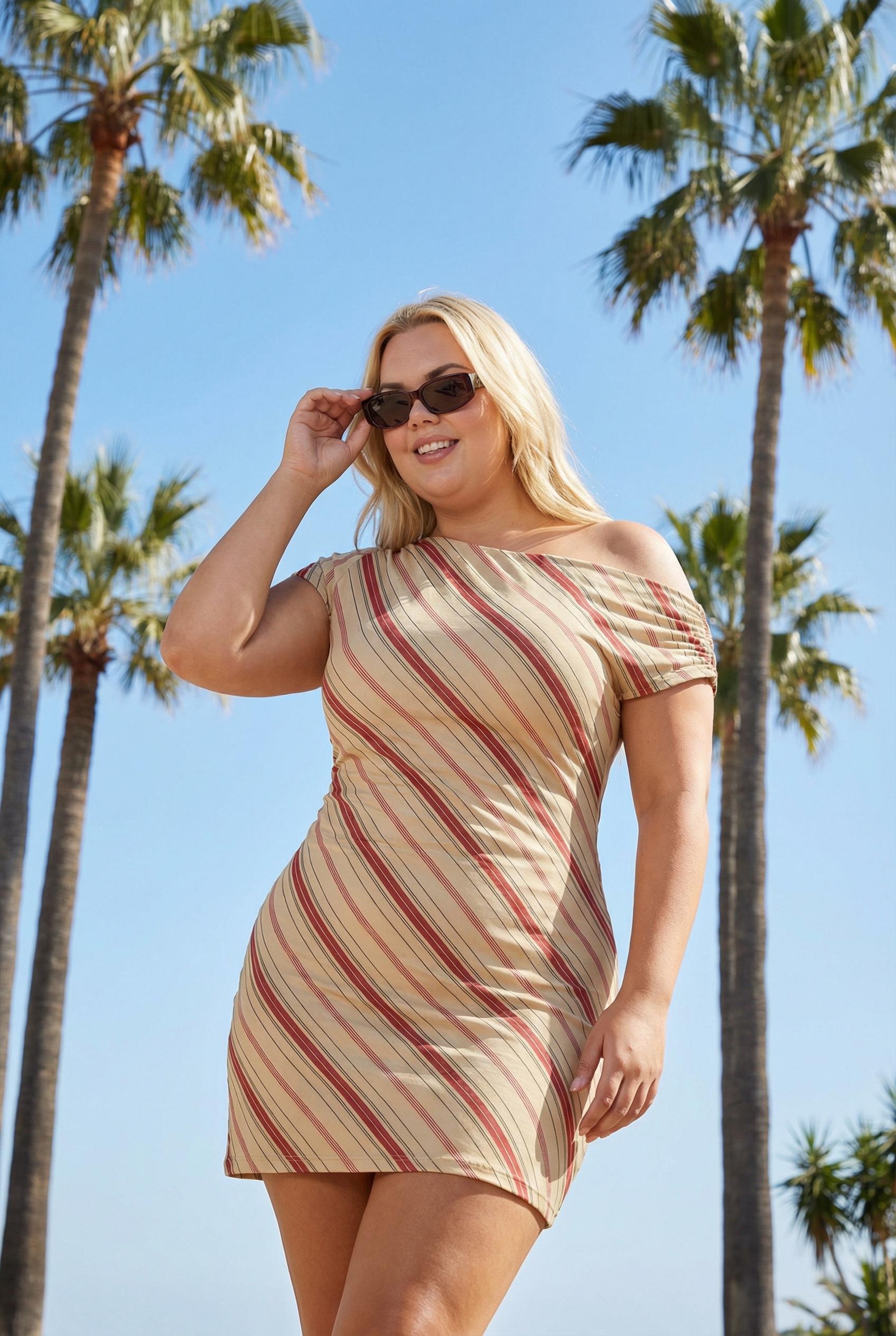
Left: Flat-lay product | Right: AI-generated lifestyle styling
The Consumer Dream vs. The Commerce Reality
The idea of a digital wardrobe app — one where you photograph your clothes, and AI shows you outfits styled on a virtual version of yourself — sounds irresistible. Social media polls consistently show 80%+ interest. But building this product is fiendishly expensive, and the cost structure doesn’t favor consumers.
The core issue is personalization cost. Generating a single virtual try-on image requires substantial GPU computation — currently around $0.02-0.05 per generation for cloud-based inference. That sounds trivial until you multiply it by usage patterns. An average wardrobe contains 100+ items. Mix-and-match combinations run into the thousands. A user playing with outfits for 10 minutes might trigger 50-100 generations. At scale, with millions of users, the compute bill dwarfs any subscription revenue model.
This economic reality explains why the most successful AI try-on applications today serve sellers, not shoppers. A seller generates 3-5 images per garment and uses them across multiple channels for months. The per-image cost is amortized over thousands of views and dozens of sales. The ROI is clear and immediate.
The Science Behind Virtual Closet Intelligence: Outfit Recommendation Meets Generative AI
A true digital wardrobe requires two AI systems working together. The first is a recommendation engine — a system that understands which garments in your closet combine well based on color theory, style rules, occasion appropriateness, and your personal preferences. This part is well-established; apps like Cladwell and Stylebook have been doing it for years with traditional recommendation algorithms.
The second system is the generative try-on engine — the part that shows you what the recommended outfit actually looks like on a body. This is where the technical frontier lies. Current systems can generate a single garment on a model with high fidelity, but multi-garment generation — a complete outfit with top, bottom, shoes, and accessories — remains significantly harder.
The challenge is compositional consistency. Each garment has its own draping behavior, and they interact physically: a tucked shirt looks different from an untucked one; a belt changes how pants sit; a jacket covers parts of the shirt. The generative model must understand these physical interactions — and current diffusion architectures handle them through learned priors rather than actual physics simulation, which means they get it right most of the time but sometimes produce impossible configurations.
Where AI Virtual Closets Create Real Value Today
For Fashion Brands: Digital Asset Libraries
Rather than building consumer-facing virtual closets, brands are building internal asset libraries where every garment in their catalog exists as a “try-on-ready” digital asset. When they need a new campaign image, product listing, or social media post, they generate it from this library in minutes. The garment has already been photographed once; everything else is AI-generated variation.
For Stylists: Client Visualization
Personal stylists are using AI try-on to show clients outfit recommendations before purchasing. Instead of describing “imagine this blouse with those trousers,” they generate the image. Client approval rates have jumped 40-60% with visual previews.
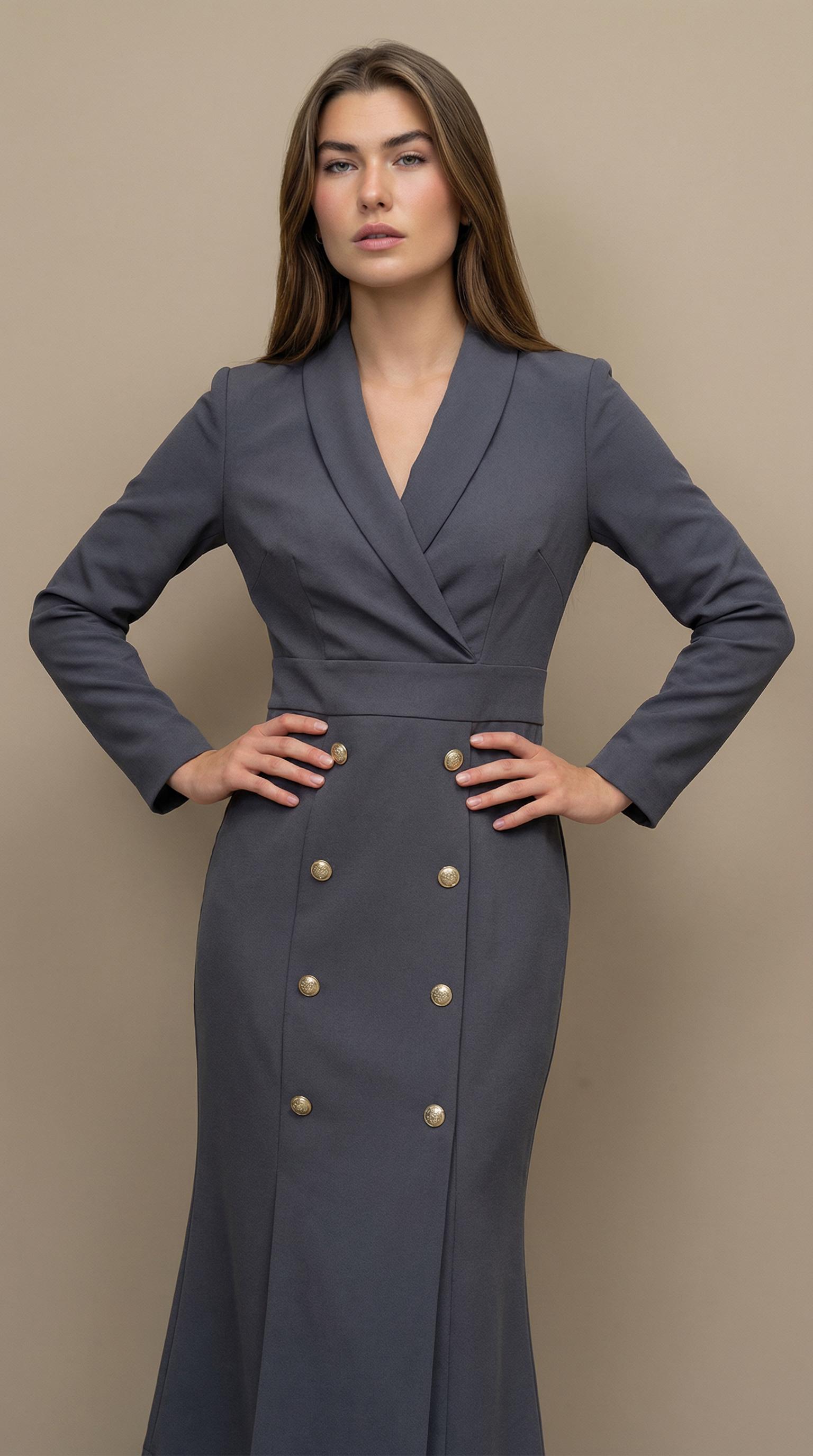
The sharp tailoring of the lapel, the precise break of the trouser over the shoe — details that are easy to describe but impossible to visualize without seeing the actual drape on a body. AI bridging this visualization gap is transforming how personal styling operates.
For Resale Platforms: Enhanced Listings
Secondhand sellers often have one item and one chance to photograph it. AI transforms a single flat-lay into a multi-angle model presentation that dramatically increases buyer confidence and listing conversion rates.
Actionable Scene Guide: Building a Basic AI-Enhanced Wardrobe Workflow
Cataloging Your Closet (One-Time Setup)
Photograph each garment on a white surface with consistent lighting. Overhead angle, natural daylight, no flash. This 30-second investment per garment creates the foundation for any AI try-on tool to produce quality outputs.
Outfit Planning for Events
When you need to plan an outfit for a specific occasion, upload your shortlisted garments to an AI try-on tool. Generate them on a model one at a time. Even without multi-garment composition, seeing each piece individually helps eliminate poor choices before you start physically trying things on.
Shopping Integration
Before buying a new piece, generate it via AI try-on alongside photos of garments you already own. Does the new jacket’s color palette complement your existing trousers? Does the silhouette match your style? This pre-purchase visualization reduces impulse buys and returns.
Expert Consulting FAQ
Q1: When will full-featured AI virtual closet apps be available to consumers?
Basic versions exist today (wardrobe cataloging + simple outfit suggestions). Full AI try-on integration — where you see every outfit on a body — is likely 18-24 months from mainstream availability, pending compute cost reductions and multi-garment generation improvements.
Q2: How can brands prepare for the virtual closet future?
Start building “try-on-ready” digital assets now. Every garment should have a high-resolution, well-lit flat-lay photograph. This investment pays off immediately for AI-generated marketing imagery and positions the brand for virtual closet integrations as they emerge.
Q3: Will virtual closets reduce fashion waste?
Potentially significant impact. If consumers can visualize outfits before purchasing, impulse buying decreases. If they can see how new purchases integrate with existing wardrobes, redundant purchases decrease. Early data from outfit planning apps (without AI try-on) already shows 15-20% reduction in unworn purchases.
Q4: What about privacy — do I need to upload photos of myself?
Not necessarily. Most AI try-on tools work with a model image as the target, not a personal photo. You can select a model with similar body proportions without uploading your own image. For personalized results, some tools accept body measurements as text input rather than photos.
Q5: Can AI virtual try-on handle outfit combinations — tops with bottoms, plus accessories?
Single-garment try-on is production-ready. Two-garment combinations (top + bottom) are emerging in advanced tools. Full outfit compositions (4+ pieces including accessories) remain experimental, with results that are creative but not yet reliable enough for purchase decisions.