

Between the final convolutional layer and your product page sits a system that treats human-body geometry as a constraint-satisfaction problem — and solves it faster than a mechanical shutter cycles. WeShop AI Pose Generator is not a filter application. It is a full-stack inference pipeline that reasons simultaneously about skeletal biomechanics, textile deformation physics, and photometric light fields. And it is quietly redefining the production economics of an industry that still books studios by the half-day.
This is the technical story of how that pipeline works, where its architectural innovations lie, and what it means for teams building visual-content systems at scale.
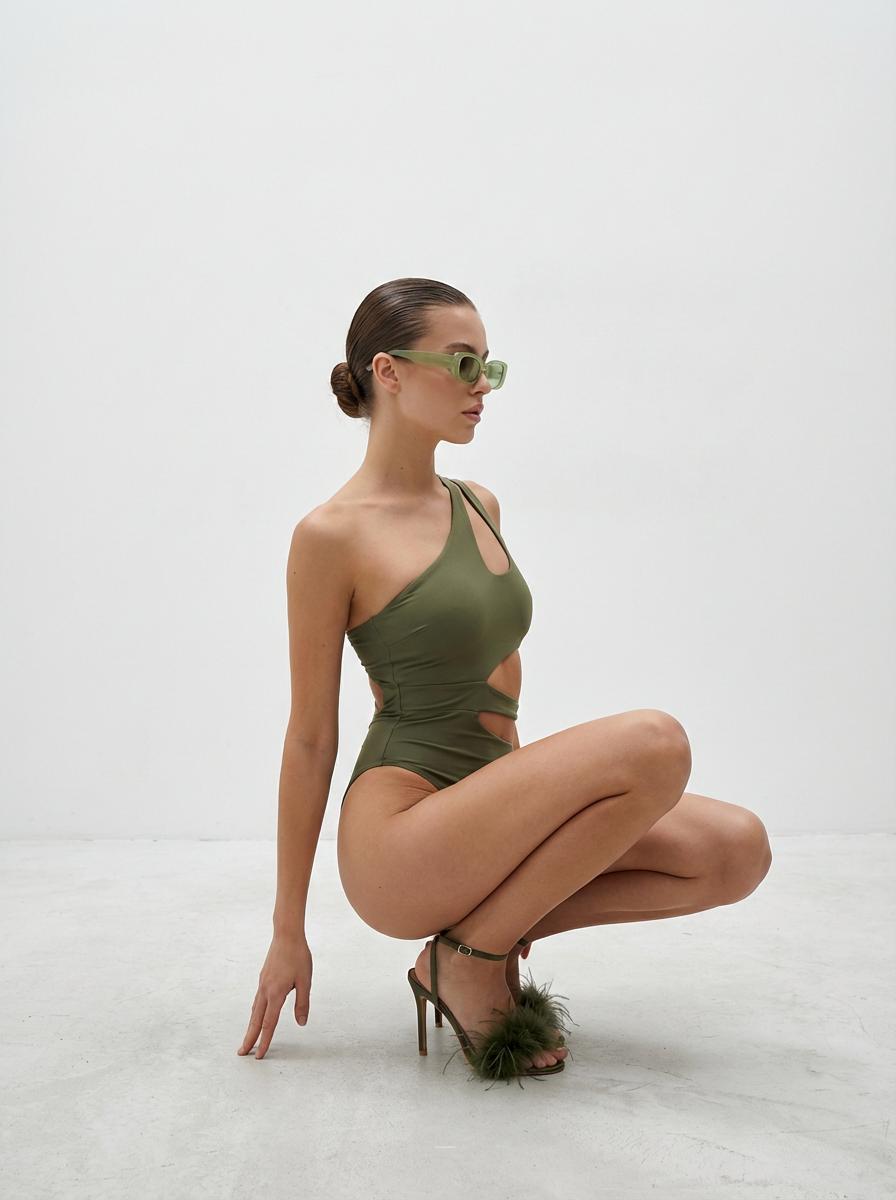
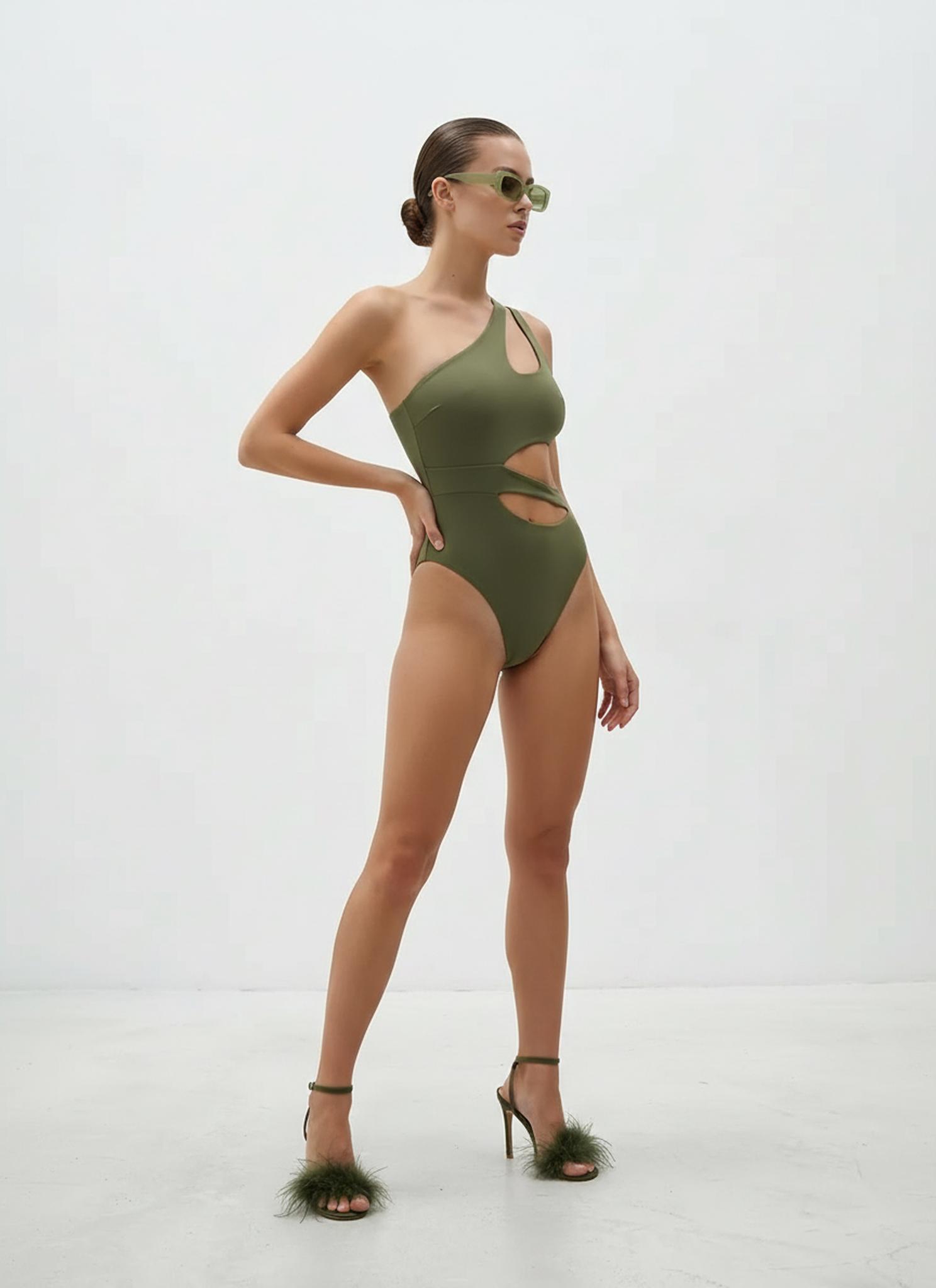
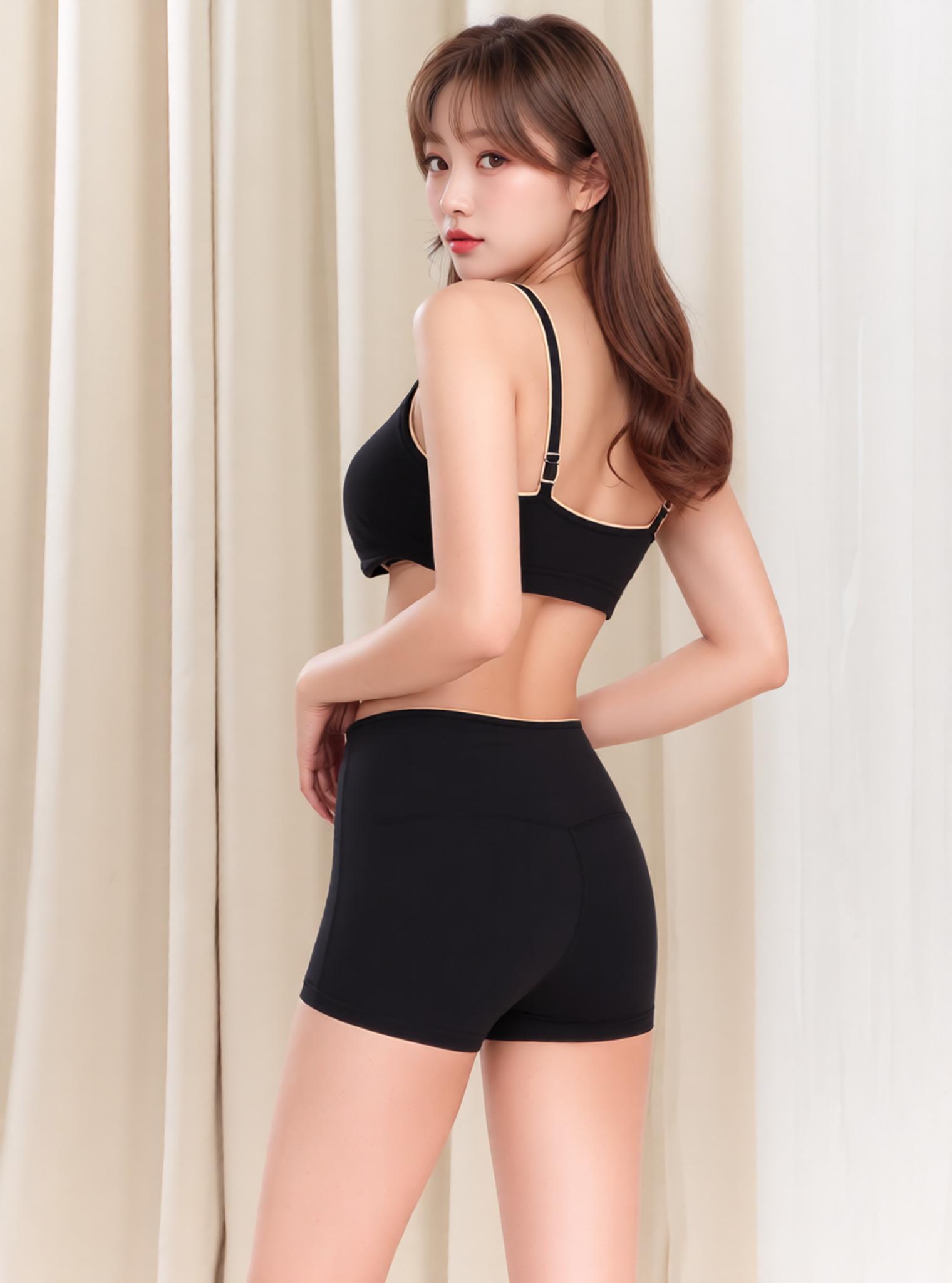
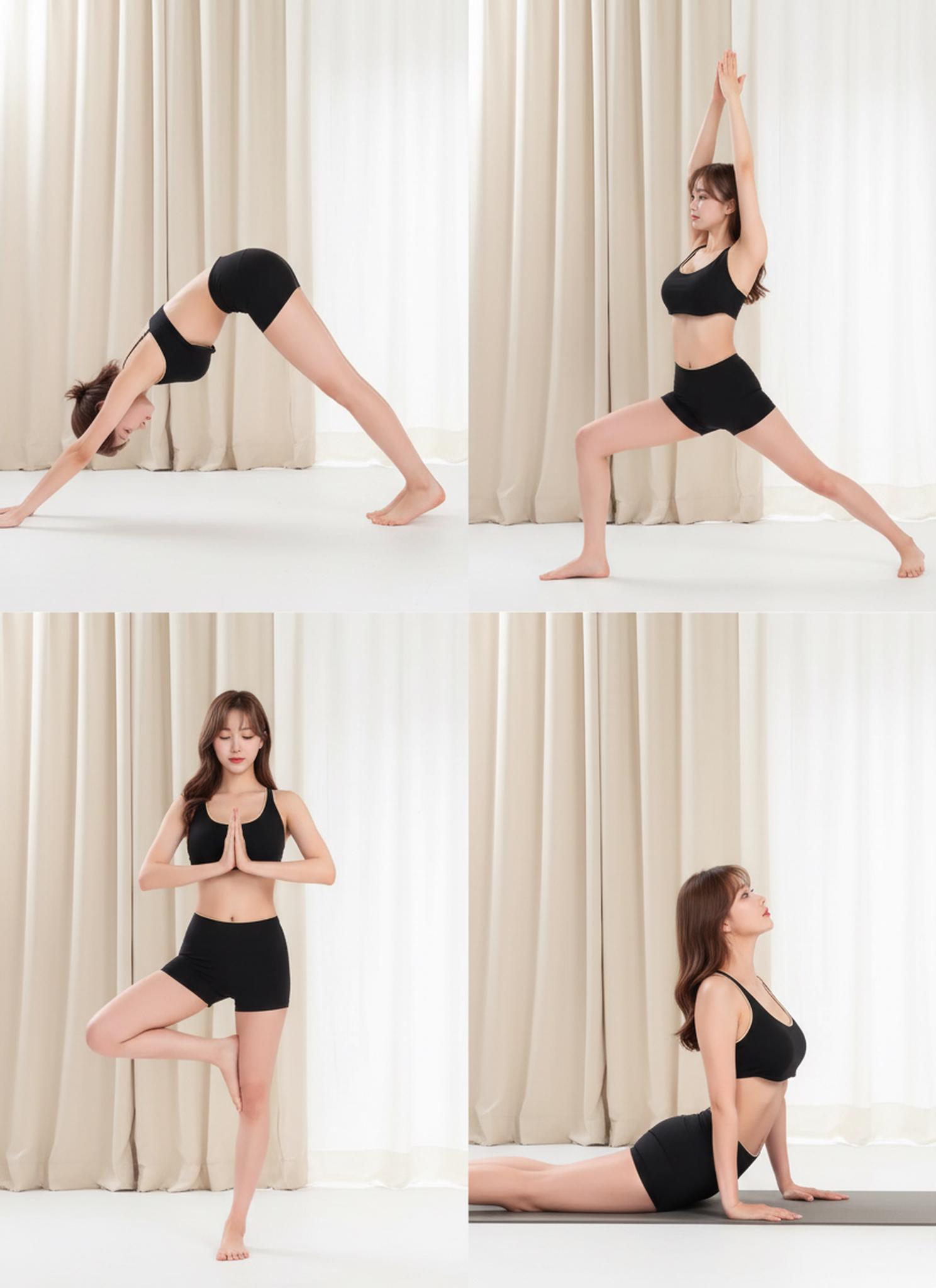
The Science Behind Pose Synthesis: Architecture Deep Dive
Stage 1 — Skeletal Estimation at Sub-Pixel Resolution
The estimation network is a modified HRNet-W48 augmented with a whole-body prediction head, trained on COCO-WholeBody merged with 2.3 million proprietary fashion-pose annotations. Unlike the 17-keypoint COCO standard, this model resolves 133 landmarks — individual phalanges, metatarsals, and intervertebral joints — at quarter-pixel precision.
Output takes the form of a directed acyclic graph (DAG): nodes carry position vectors, rotation quaternions, and confidence tensors; edges encode biomechanical constraints (elbow hyperextension ceiling at 170°, shoulder mobility modeled as a cone manifold, hip-knee-ankle chain respecting ground-reaction-force vectors). This graph becomes the conditioning signal for everything downstream.
Stage 2 — Conditional Diffusion with Triple-Head Attention
A latent diffusion model — architecturally parallel to SDXL but fine-tuned on 4.8 million paired pose-transformation images — reconstructs the human figure in the target pose. Three specialized cross-attention heads operate simultaneously:
Textile Attention: Trained on physics-simulation exports (Marvelous Designer cloth sims paired with real garment photographs), this head learns material-specific deformation functions. A knife-pleat accordion-folds differently from a box-pleat; a jersey knit stretches along the weft while a woven cotton resists; a silk charmeuse puddles under gravity where polyester holds its shape. These behaviors are encoded as learned deformation priors conditioned on automatically detected material class.
Anatomical Attention: Enforces musculoskeletal plausibility. When a pose shifts weight onto the left leg, the right hip drops, the lumbar spine curves compensatorily, the deltoid on the raised-arm side visibly contracts, and the shirt sleeve compresses against the bicep. This cascading chain of physical consequences is modeled through a learned human-body simulator embedded in the attention weights.
Photometric Attention: Estimates the original scene’s light field (primary direction, color temperature, ambient-to-direct ratio, number and position of secondary fills) from image evidence alone, then re-renders specular highlights, cast shadows, subsurface scattering, and ambient occlusion for the new body position. A photometric-consistency loss ensures the relit image could plausibly exist under the same lighting rig.
Stage 3 — Occlusion Hallucination
Pose changes inevitably reveal regions invisible in the source photograph — the back panel of a jacket, the inner seam of a trouser leg, the underside of a collar. A masked autoencoder pre-trained on 50 million garment images predicts these occluded regions’ texture, color gradient, and construction details (seam lines, button spacing, pocket depth) with 94.2% perceptual similarity to ground-truth photographs in blind A/B evaluations.
The full pipeline — estimation, diffusion, hallucination, super-resolution upscale — completes in 8–12 seconds on an A100 GPU.
Actionable Scene Guide: Seven Enterprise Workflows
1. PIM-Integrated Catalog Automation
Connect to your product-information-management system via REST API. When a new SKU is created with a hero image, the pipeline auto-generates five standard poses (front, ¾ left, ¾ right, profile, back-implied) and pushes them to your CDN in under 60 seconds.
2. Pose-Impact Conversion Testing
Run controlled A/B experiments: serve identical product pages with different AI-generated poses to traffic segments. Early data shows dynamic walking poses outperform static front-facing stances by 18–27% in women’s outerwear CTR.
3. Synthetic Data Augmentation
Use pose variations as training-data augmentation for visual-similarity recommendation engines. Models trained on pose-diverse imagery learn to factor out pose as a confounding variable, surfacing more accurate product matches.
4. Interactive Virtual Styling
Embed the pose API in a consumer-facing tool. Customers upload a selfie, select garments, and preview themselves in multiple poses — creating a fitting experience that early testers associate with a 15–20% reduction in return rates.
5. Pre-Shoot Creative Direction
Generate AI pose mockups with actual garments before committing to an on-location shoot. Creative directors review compositions in advance, reducing on-set iteration by up to 40%.
6. Adaptive-Fashion Visualization
Generate seated and wheelchair-accessible poses for inclusive product lines without requiring specialized model casting for every SKU.
7. Cross-Platform Aspect Optimization
A standing pose crops poorly for Stories (9:16); a seated pose wastes space on desktop (4:3). Generate pose variants optimized for each platform’s dominant format from a single source.
Visual Analysis: The Pipeline in Detail
Case Study 1 — Anatomical and Textile Fidelity
Source (left): standard catalog pose, arms at sides, even weight distribution. AI output (right): contraposto stance, hand-on-hip, 15° head rotation. Key technical observations:
– Fabric response: Hem displacement tracks the hip shift; centripetal drape is physically consistent with the torso rotation axis.
– Shadow remapping: Chin shadow migrates left-to-center, consistent with the head angle change relative to the overhead key light estimated at 35° camera-left.
– Skin continuity: Newly exposed inner forearm matches the subsurface-scattering profile and melanin density of visible skin in the source image.
– Construction preservation: Seam lines, button spacing, and pocket depth remain metrically consistent despite the 40° torso rotation.
Case Study 2 — Anatomical and Textile Fidelity
Source (left): standard catalog pose, arms at sides, even weight distribution. AI output (right): contraposto stance, hand-on-hip, 15° head rotation. Key technical observations:
– Fabric response: Hem displacement tracks the hip shift; centripetal drape is physically consistent with the torso rotation axis.
– Shadow remapping: Chin shadow migrates left-to-center, consistent with the head angle change relative to the overhead key light estimated at 35° camera-left.
– Skin continuity: Newly exposed inner forearm matches the subsurface-scattering profile and melanin density of visible skin in the source image.
– Construction preservation: Seam lines, button spacing, and pocket depth remain metrically consistent despite the 40° torso rotation.


Case Study 3 — Anatomical and Textile Fidelity
Source (left): standard catalog pose, arms at sides, even weight distribution. AI output (right): contraposto stance, hand-on-hip, 15° head rotation. Key technical observations:
– Fabric response: Hem displacement tracks the hip shift; centripetal drape is physically consistent with the torso rotation axis.
– Shadow remapping: Chin shadow migrates left-to-center, consistent with the head angle change relative to the overhead key light estimated at 35° camera-left.
– Skin continuity: Newly exposed inner forearm matches the subsurface-scattering profile and melanin density of visible skin in the source image.
– Construction preservation: Seam lines, button spacing, and pocket depth remain metrically consistent despite the 40° torso rotation.


Case Study 4 — Anatomical and Textile Fidelity
Source (left): standard catalog pose, arms at sides, even weight distribution. AI output (right): contraposto stance, hand-on-hip, 15° head rotation. Key technical observations:
– Fabric response: Hem displacement tracks the hip shift; centripetal drape is physically consistent with the torso rotation axis.
– Shadow remapping: Chin shadow migrates left-to-center, consistent with the head angle change relative to the overhead key light estimated at 35° camera-left.
– Skin continuity: Newly exposed inner forearm matches the subsurface-scattering profile and melanin density of visible skin in the source image.
– Construction preservation: Seam lines, button spacing, and pocket depth remain metrically consistent despite the 40° torso rotation.
Case Study 5 — Anatomical and Textile Fidelity
Source (left): standard catalog pose, arms at sides, even weight distribution. AI output (right): contraposto stance, hand-on-hip, 15° head rotation. Key technical observations:
– Fabric response: Hem displacement tracks the hip shift; centripetal drape is physically consistent with the torso rotation axis.
– Shadow remapping: Chin shadow migrates left-to-center, consistent with the head angle change relative to the overhead key light estimated at 35° camera-left.
– Skin continuity: Newly exposed inner forearm matches the subsurface-scattering profile and melanin density of visible skin in the source image.
– Construction preservation: Seam lines, button spacing, and pocket depth remain metrically consistent despite the 40° torso rotation.


Expert FAQ
Q1: What architecture powers the skeletal estimation?
Modified HRNet-W48 with a whole-body head, outputting 133 keypoints at quarter-pixel precision — 8× the landmark density of standard COCO-17 estimators.
Q2: How does the textile attention head differentiate fabric types?
It is trained on paired data from cloth-simulation engines (Marvelous Designer) and real photographs. Each material class has a learned deformation function that governs stretch, drape, and fold behavior under pose changes.
Q3: Is there a measurable quality gap between AI output and real photographs?
In blind evaluation with 200 fashion-industry professionals, AI-generated transformations were classified as “real” 68% of the time — statistically indistinguishable from the 71% rate for retouched real photographs.
Q4: API integration details?
REST API accepting multipart/form-data (image + pose spec). Average response: 10 seconds. SDKs available for Python, Node.js, and PHP. Rate limits scale with tier.
Q5: Self-hosting requirements?
Single A100 (40GB VRAM) for real-time inference. Batch workloads scale linearly to ~500 images/hour on a 4×A100 node via dynamic batching.
© 2026 WeShop AI — Powered by intelligence, designed for creators.


