AI Product Detail Page should do more than write a long product description. It should help sellers turn real customer questions into clear product content. That content can include summaries, benefits, specifications, FAQs, image alt text, and SEO fields.
Many stores still use vague copy. A page may say “premium quality” or “made for daily life.” However, shoppers often ask much simpler questions.
“Will it fit a 15-inch laptop?”
“Is the light color see-through?”
“Can I use it on sensitive skin?”
“Does the fabric stretch?”
“Is the charging cable included?”
“Should I use it before or after moisturizer?”
These questions can decide whether a shopper buys or leaves. Therefore, a useful page should answer them early.
WeShop AI Product Detail Page helps sellers work from product URLs, images, SKU data, supplier notes, and short briefs. It can turn those inputs into product summaries, benefit bullets, specifications, FAQs, comparison blocks, image alt text, and SEO content.
As a result, teams can build a complete product page instead of relying on one short paragraph.
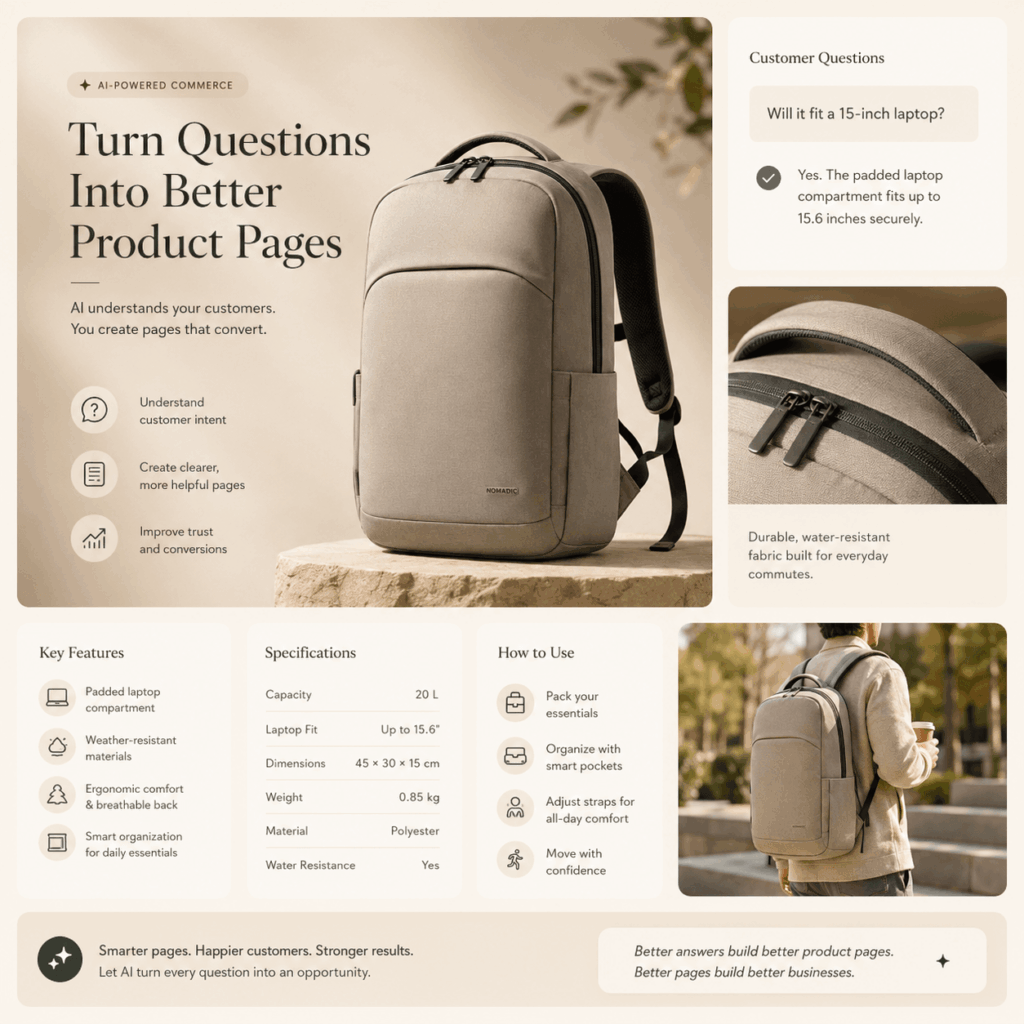
Why Customer Questions Matter for an AI Product Detail Page
Customer support teams see buying problems every day. Shoppers do not think in marketing terms. Instead, they want clear answers.
They may ask:
- Is this product right for me?
- Will it fit my body, space, device, or routine?
- What comes in the box?
- How is this model different from the other one?
- How should I use or care for it?
When one question appears again and again, the page is probably missing something.
For example, a bag page may say that it has “many inner pockets.” Yet the shopper may only want to know whether it fits a laptop, bottle, and charger.
Likewise, a skincare page may list several ingredients. However, the buyer may need to know when to apply the product and whether it suits sensitive skin.
These questions are useful inputs for an AI Product Detail Page. They show the gap between brand copy and buyer needs.
What AI Product Detail Page Can Build from One Question
A basic description generator often returns one block of copy. However, a complete product page needs several parts.
Depending on the product, the page may need:
- Product title
- Short summary
- Key benefits
- Feature highlights
- Materials or ingredients
- Dimensions and specifications
- Size guide
- Care instructions
- Usage steps
- Comparison section
- FAQ
- Image alt text
- SEO title and meta description
AI Product Detail Page can turn the same source facts into these separate modules. In addition, teams can use a more consistent tone across products and variants.
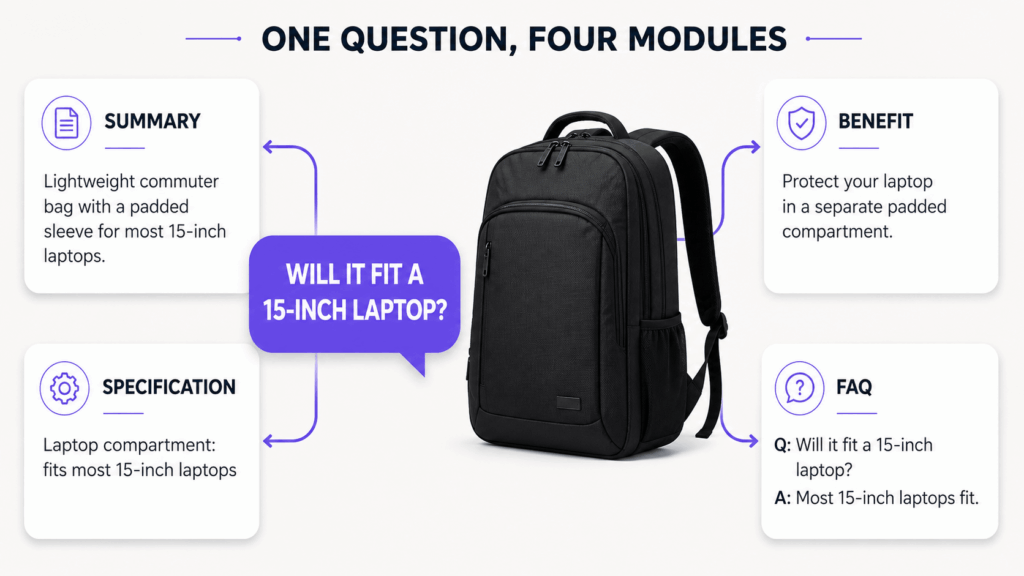
Consider one common question:
“Will this bag fit a 15-inch laptop?”
Product Summary
A lightweight commuter bag with a padded compartment for most 15-inch laptops.
Benefit Bullet
Keep your daily device protected in a separate padded sleeve.
Specification
Laptop compartment: 38 × 27 × 3 cm.
FAQ
Most 15-inch laptops fit inside the padded compartment. However, shoppers should compare the exact device dimensions, especially when using a thick case.
As a result, one customer question can improve four different parts of the page.
Which Questions Should Go on the Product Page?
Not every support ticket belongs on a product page.
Delivery delays and failed coupons are usually service issues. In contrast, questions about fit, use, size, and product limits can improve the page itself.
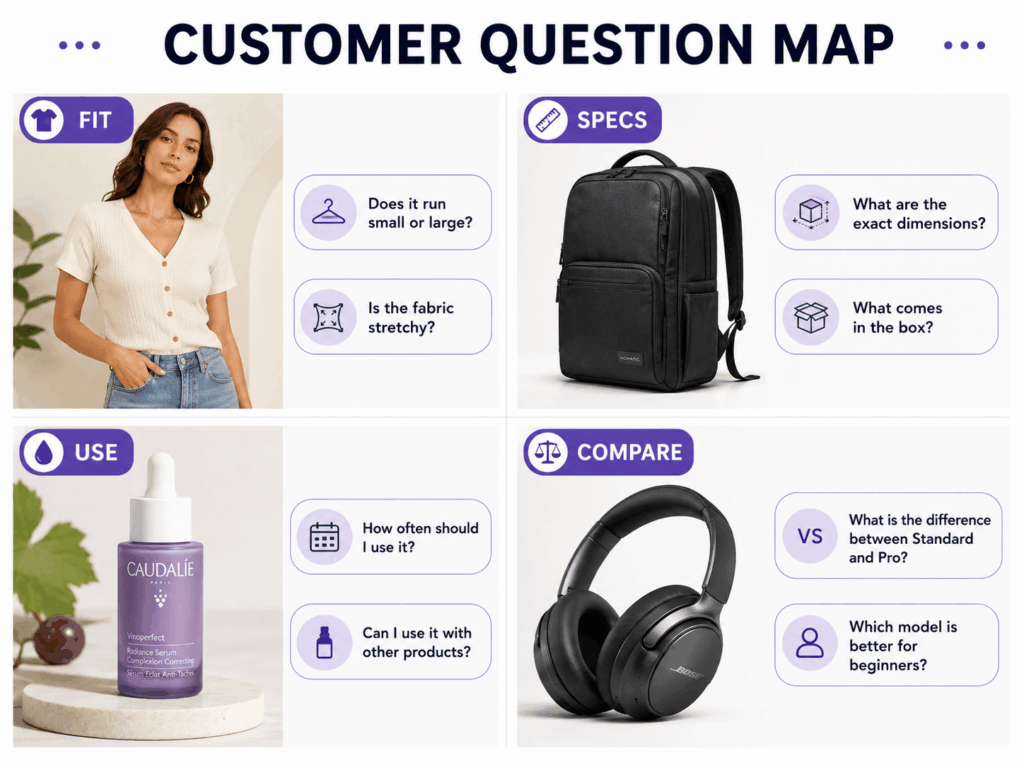
Product Fit Questions
These questions often appear early in the buying journey.
For example:
- Which skin type is it for?
- Does it work for beginners?
- Is it suitable for children or adults?
- Can I use it outdoors?
- Is it better for work or travel?
An AI Product Detail Page can turn these answers into audience notes, use cases, recommendation blocks, and short summaries.
However, sellers should avoid claims such as “perfect for everyone.” Clear limits often build more trust.
Size and Specification Questions
Size, weight, capacity, and compatibility often affect returns.
Customers may ask:
- What are the exact measurements?
- Does the fabric stretch?
- How much does it weigh?
- How long is the cable?
- Is the material waterproof?
- What comes in the box?
Raw numbers are useful. Still, context makes them easier to understand.
“Width: 40 cm” is a product fact.
“Width: 40 cm, with room for most 15-inch laptops” connects that fact to a real need.
Therefore, AI Product Detail Page can help turn confirmed data into clearer buyer language.
Use and Care Questions
Customers also need help after the sale.
For instance, they may ask:
- Should I wash it before first use?
- Can it go in a washing machine?
- How often should I apply it?
- Does it need charging?
- How do I install it?
- How should I store it?
These answers can become care guides, setup steps, usage notes, or FAQs.
In many cases, this information is more useful than another paragraph about the brand story.
Product Choice Questions
Similar products can create doubt.
A shopper may ask:
- What is the difference between Standard and Pro?
- Which model is better for beginners?
- How do the two materials compare?
- Should I choose medium or large?
- Why does this version cost more?
AI Product Detail Page can organize confirmed SKU facts into a comparison block.
However, it should not invent benefits. Every difference must come from real product data.
How to Use AI Product Detail Page with Support Data
Good output starts with good input. Therefore, do not begin with a vague request such as “write a great product page.”
Instead, combine reliable product facts with the questions customers actually ask.
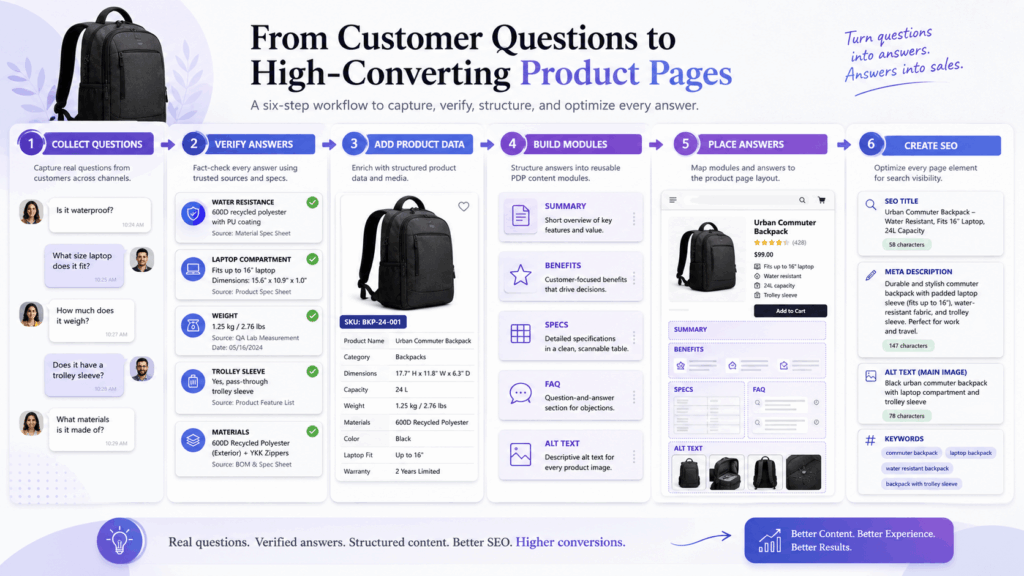
Step 1: Collect Repeated Questions
First, review a short period, such as the last 30 days.
Check:
- Live chat records
- Support emails
- Product reviews
- Social media comments
- Product question sections
- Return reasons
- Sales team notes
- On-site search terms
Next, record questions that appear more than once.
For example:
- 22 shoppers asked about size.
- 15 asked what comes in the box.
- 11 asked about device support.
- 8 asked how to clean the product.
This simple count shows what the page should fix first.
Step 2: Match Each Question with a Verified Answer
Customer questions show the information gap. However, they do not provide the final product facts.
Confirm each answer with:
- Current specification sheets
- Supplier files
- Package instructions
- Real measurements
- Test reports
- Product manager notes
- Warranty terms
- Return policies
In addition, review health, safety, environmental, and performance claims with care.
The tool should organize product truth. It should not create product truth.
Step 3: Add Product Data and Customer Context
AI Product Detail Page can work from product links, images, SKU notes, supplier copy, and short briefs.
A weak input might say:
“Create a product page for a travel bag.”
A stronger input might say:
“Create a product page for a 450-gram commuter bag. It has a padded sleeve for most 15-inch laptops. The shell is water-resistant, but it is not fully waterproof. Customers often ask about laptop size, rain protection, strap length, and bottle storage. Use a clear and practical tone.”
The second input gives the tool facts, limits, customer needs, and tone.
As a result, the first draft should be more specific and easier to edit.
Step 4: Choose the Right Product Page Modules
Every product does not need the same page structure.
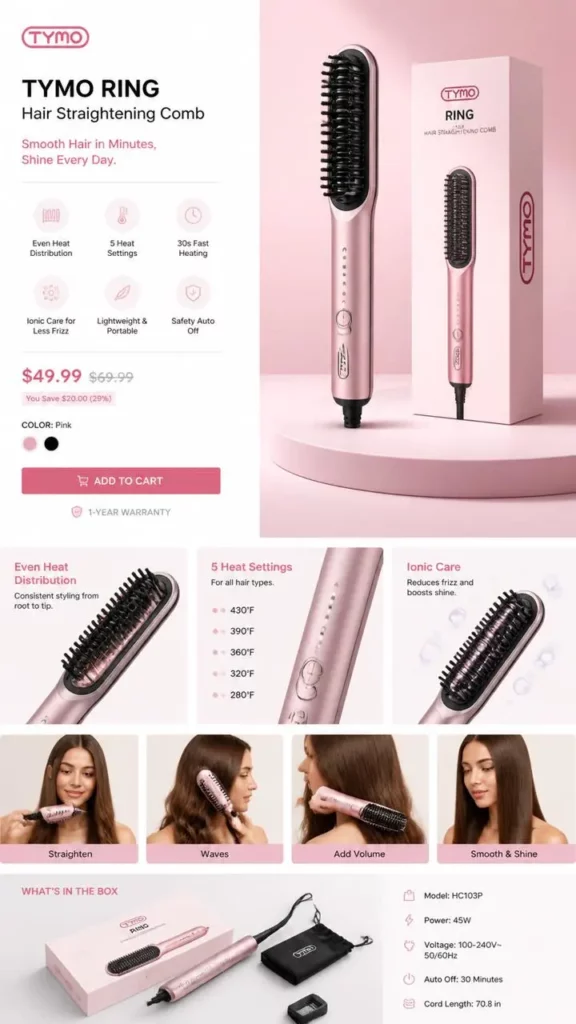
Clothing pages may need:
- Fit notes
- Size guide
- Fabric details
- Model information
- Care instructions
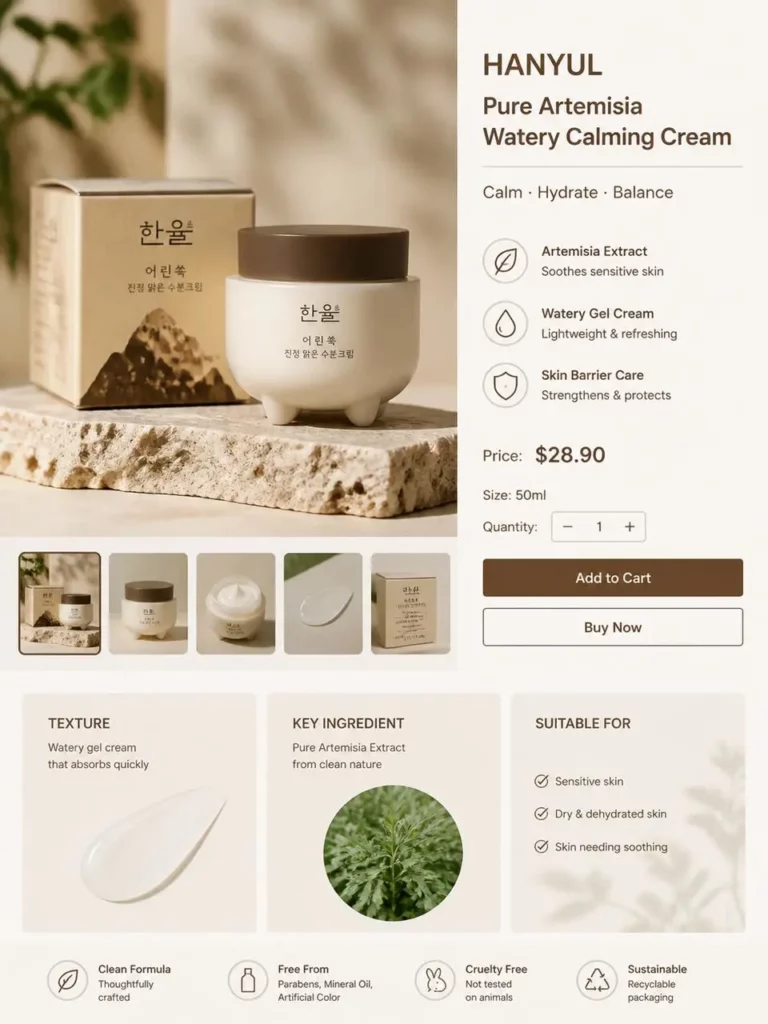
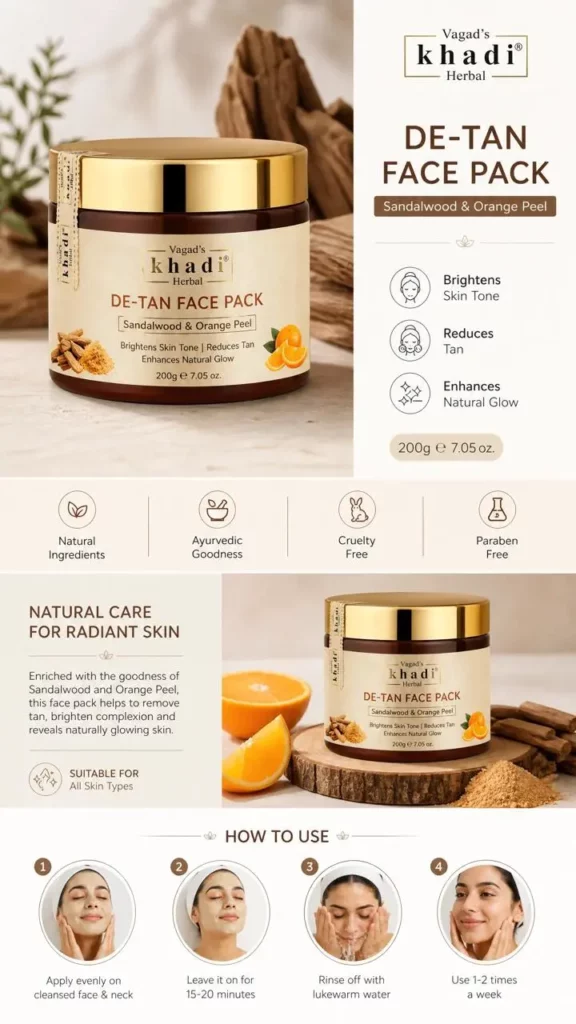
Meanwhile, skincare pages may need:
- Ingredient highlights
- Suitable skin types
- Usage order
- Application frequency
- Caution notes
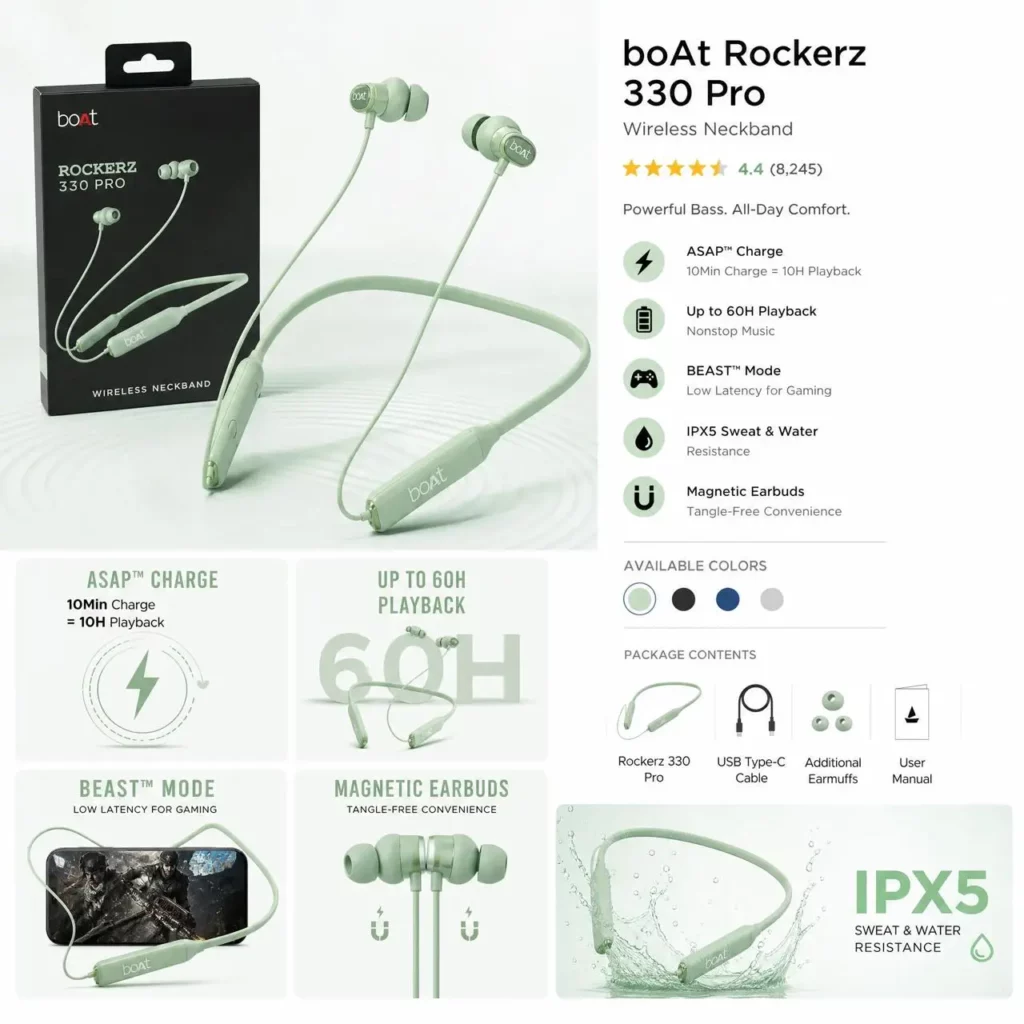
Electronics pages may require:
- Device compatibility
- Technical specifications
- Battery details
- Package contents
- Setup instructions
- Warranty information
Therefore, choose modules that match the actual product.
AI Product Detail Page can help create descriptions, benefits, specifications, size guides, FAQs, comparisons, image alt text, and SEO fields.
Step 5: Put Each Answer in the Right Place
Do not hide every answer inside the FAQ.
Place skin type information near the product summary when it affects the buying decision.
Show laptop fit in both the feature area and the specification table when it is a key benefit.
Put the size guide near the size selector when shoppers often choose the wrong option.
In short, important answers should appear early.
Meanwhile, the FAQ can cover care, package details, warranty terms, and less common questions.
Step 6: Create SEO and Image Content Together
A product page needs more than body copy.
In addition, AI Product Detail Page can help prepare:
- SEO titles
- Meta descriptions
- Short product summaries
- FAQ copy
- Product image alt text
- Search result descriptions
For example, the main copy may focus on storage and travel. Meanwhile, the alt text can describe the color, angle, pockets, strap, and laptop sleeve shown in each image.
As a result, the page copy and image text can follow the same facts.

A Practical AI Product Detail Page Rewrite
Imagine that a bag page only says:
“This premium commuter bag has a modern design, spacious storage, and comfortable straps for work and travel.”
The line sounds polished. However, it does not answer a clear buying question.
Support records show five common questions:
- What laptop size does it fit?
- How heavy is the empty bag?
- Can it handle rain?
- Is the strap adjustable?
- Where can I store a bottle?
The team can combine those questions with verified product facts. Then, AI Product Detail Page can build a fuller draft.
New Product Summary
A lightweight commuter shoulder bag with a padded sleeve for most 15-inch laptops. It also includes an adjustable strap and quick-access storage.
New Benefit Bullets
- Carry less weight with a 450-gram empty bag.
- Protect your laptop in a padded sleeve.
- Adjust the strap for shoulder or crossbody wear.
- Handle light rain with a water-resistant shell.
- Reach a bottle or folded umbrella through the outer pocket.
New Specification Block
- Bag dimensions
- Laptop compartment dimensions
- Empty weight
- Strap length
- Outer material
- Lining material
- Cleaning method
New FAQ
Is the bag fully waterproof?
No. The shell can handle light rain for a short time. However, do not leave the bag in heavy rain or place it in water.
New Image Alt Text
Black lightweight commuter shoulder bag shown from the front with an adjustable strap, outer bottle pocket, and padded laptop compartment.
The new page is not better just because it is longer. Instead, it helps the shopper decide whether the bag fits daily life.

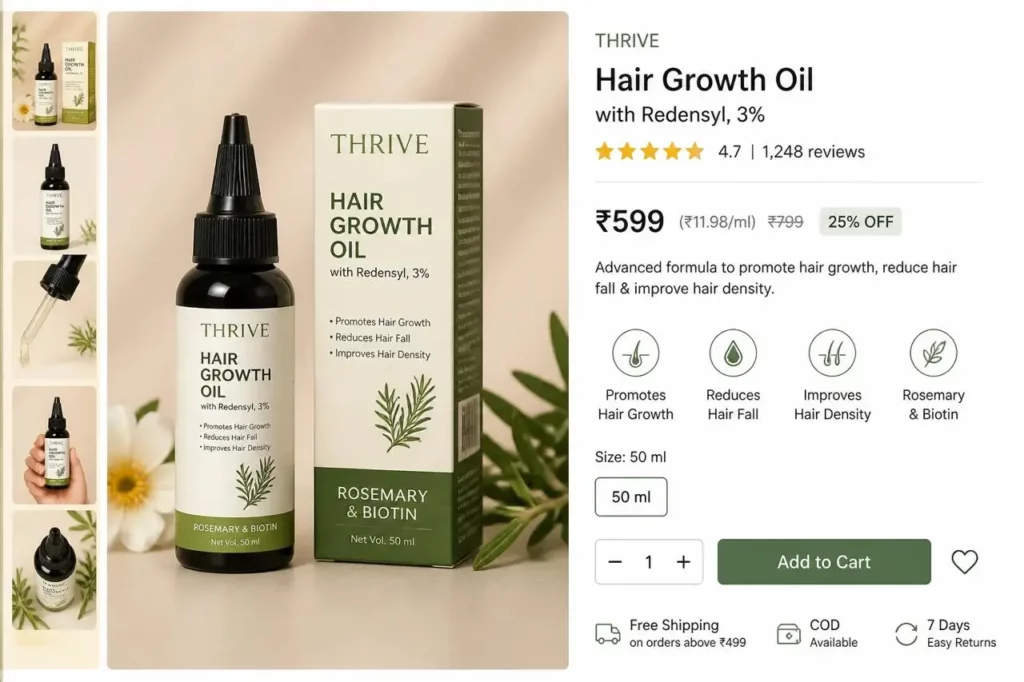
Use AI Product Detail Page Across Product Categories
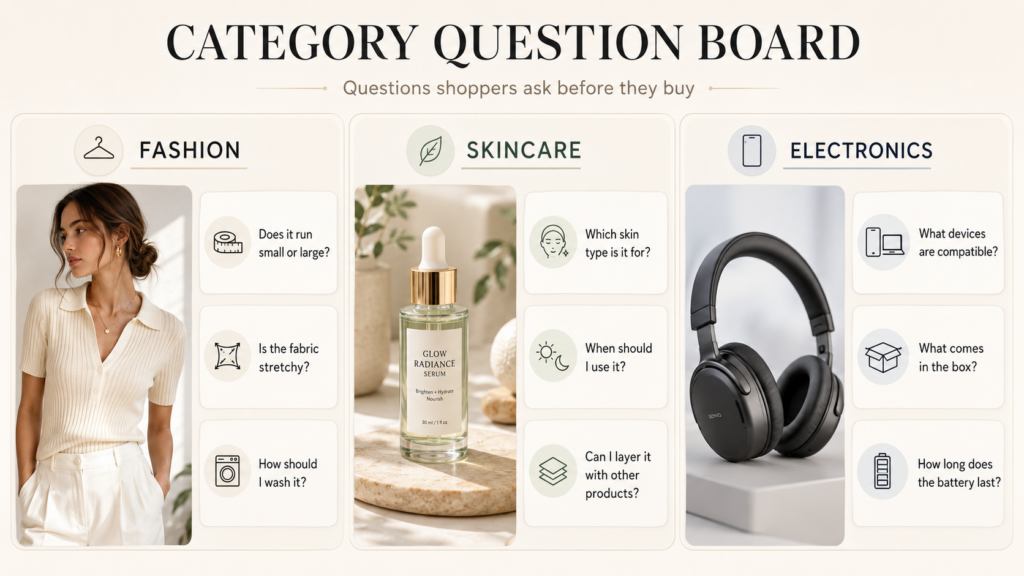
The same process can work for many products. However, the questions will change by category.
Fashion and Apparel
Fashion shoppers often ask about fit, stretch, sheerness, model size, garment length, and washing.
Therefore, clothing pages need clear size, fit, fabric, and care details.
Skincare and Beauty
Beauty shoppers often ask about skin type, ingredients, fragrance, use order, and patch tests.
As a result, beauty pages should explain product use and limits without making unsupported claims.
Electronics and Accessories
Electronics shoppers often ask about device support, battery life, ports, setup, package contents, and warranty terms.
In this case, clear technical details often matter more than emotional copy.
AI Product Detail Page can adapt the structure for each category. At the same time, it can help the brand keep a clear and consistent tone.
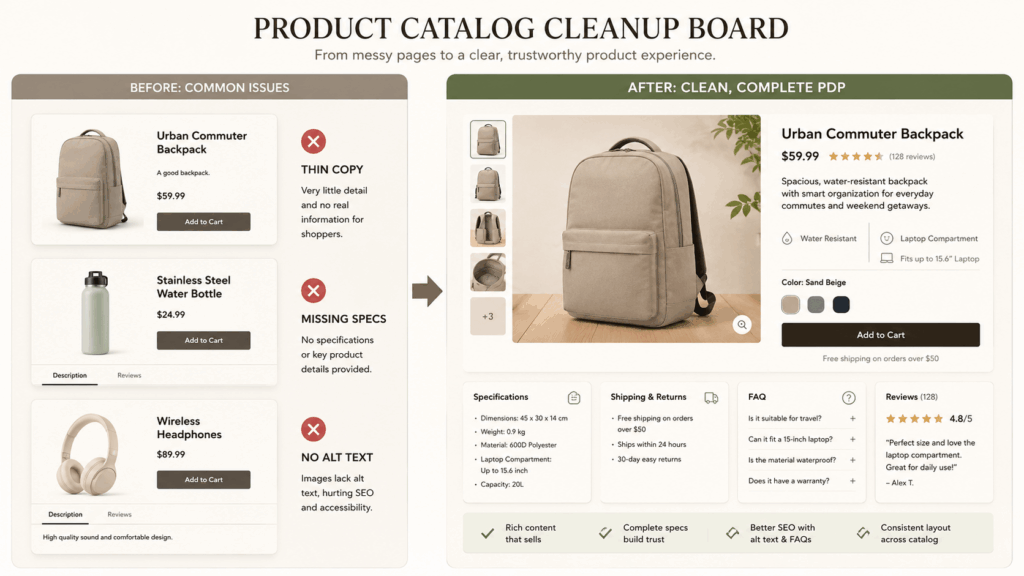
Improve Old Catalogs with AI Product Detail Page
This process is also useful for old product pages.
Older catalogs often have:
- Short supplier copy
- Missing specifications
- Repeated meta descriptions
- Empty image alt text
- Weak variant copy
- Old FAQs
- Inconsistent brand tones
First, start with pages that receive high traffic, many questions, or frequent returns.
Next, combine the current product URL, SKU data, verified facts, and repeated customer questions.
Then, use AI Product Detail Page to refresh thin copy, add missing modules, create SEO fields, and standardize the page structure.
For example, a clothing template may include:
- One short summary
- Five benefit bullets
- Fit notes
- Fabric details
- Size guide
- Care instructions
- Three FAQs
- SEO fields
- Image alt text
Because the structure stays consistent, editors can review products faster.
Still, each page can use its own facts, customer questions, and product details.
Review Every AI Product Detail Page Before Publishing
AI can organize content quickly. However, a person should still review the final page.
Check:
- Materials and ingredients
- Product dimensions
- Device compatibility
- Package contents
- Safety notes
- Health or performance claims
- Environmental claims
- Prices and discounts
- Shipping details
- Return rules
- Variant names
- SKU facts
Also, remove weak claims such as “the best,” “perfect for everyone,” and “guaranteed results.”
Instead, use clear facts.
For example, explain the bag weight, pocket count, laptop size, and water-resistance limit.
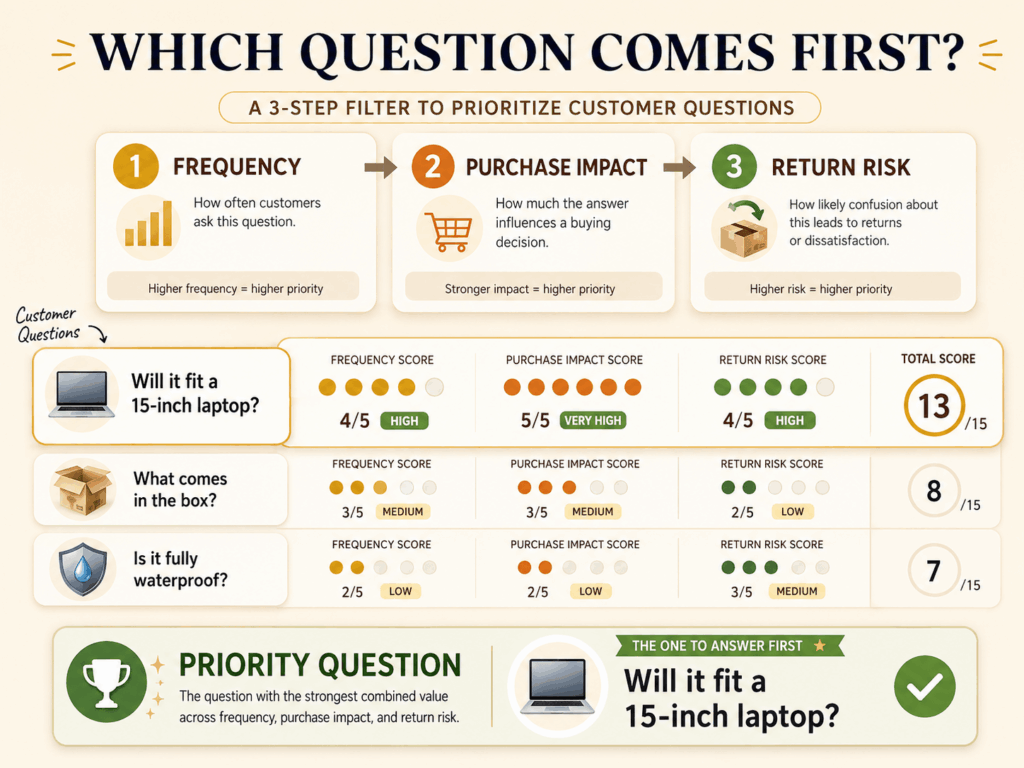
Which Customer Questions Should You Fix First?
Use three simple filters.
Frequency
First, check how often the question appears.
When many shoppers need the same answer, the page probably needs an update.
Purchase Impact
Next, ask whether the answer could affect the buying decision.
Size, device compatibility, skin suitability, and package contents often have a strong impact.
Return Risk
Finally, consider whether missing information could create the wrong expectation.
Fit, dimensions, materials, accessories, and product limits can all affect returns.
Therefore, questions with high frequency, strong purchase impact, and high return risk should come first.
Build Better Product Pages from Real Questions
A good product page does not need to answer every possible question. Instead, it should answer the questions that matter most.
Before adding more words such as “premium” or “perfect,” open the support inbox. Look at what shoppers keep asking.
Those questions show which facts are missing. They also reveal which benefits feel vague and which product differences need more detail.
Then, add the product URL, images, SKU data, specifications, and verified answers.
AI Product Detail Page can turn that material into clearer descriptions, useful benefits, detailed specifications, comparison blocks, FAQs, SEO fields, and image alt text.
Ultimately, the page improves because shoppers can find the answers they need.
They no longer have to ask the same question again.
Go to WeShop AI For Exploration: