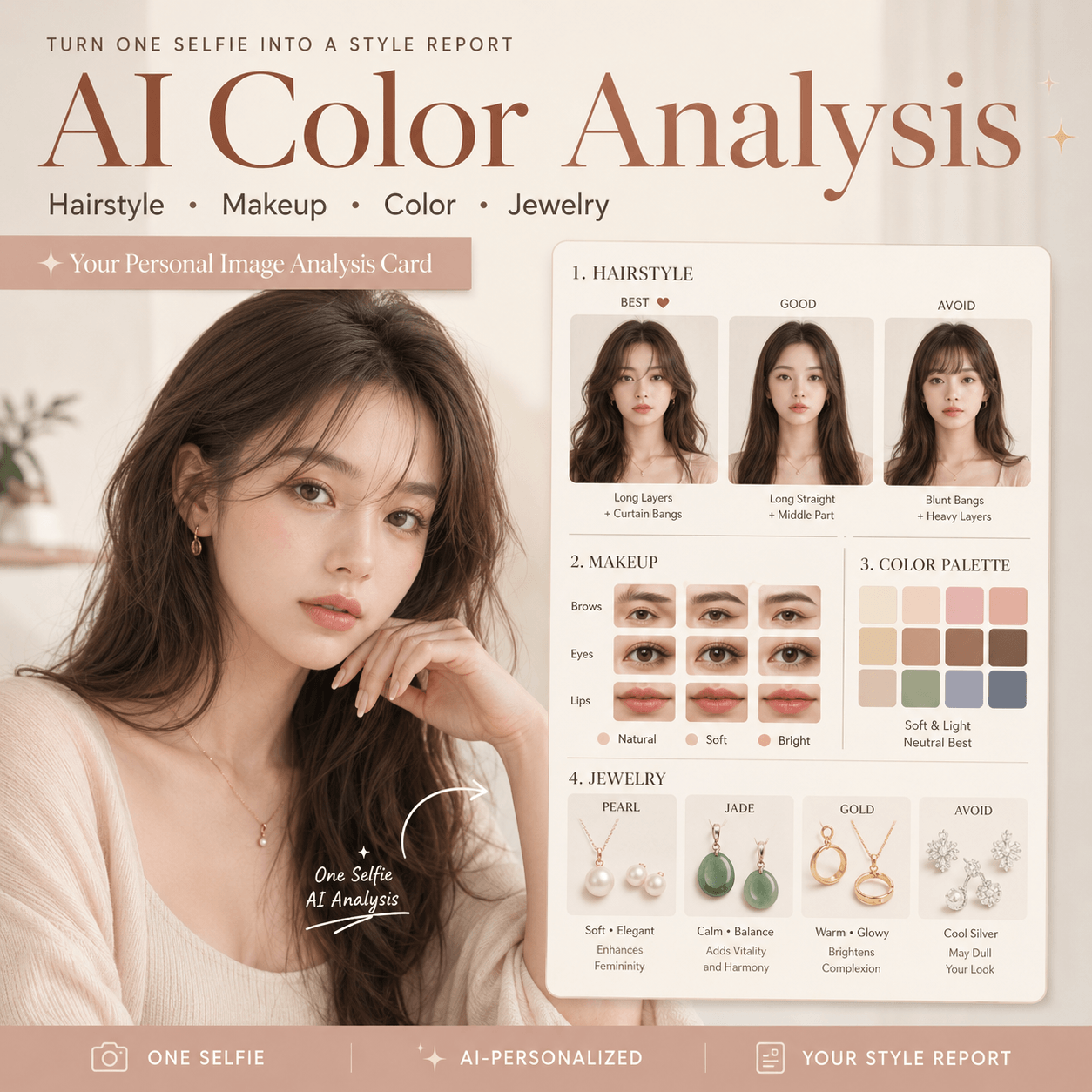
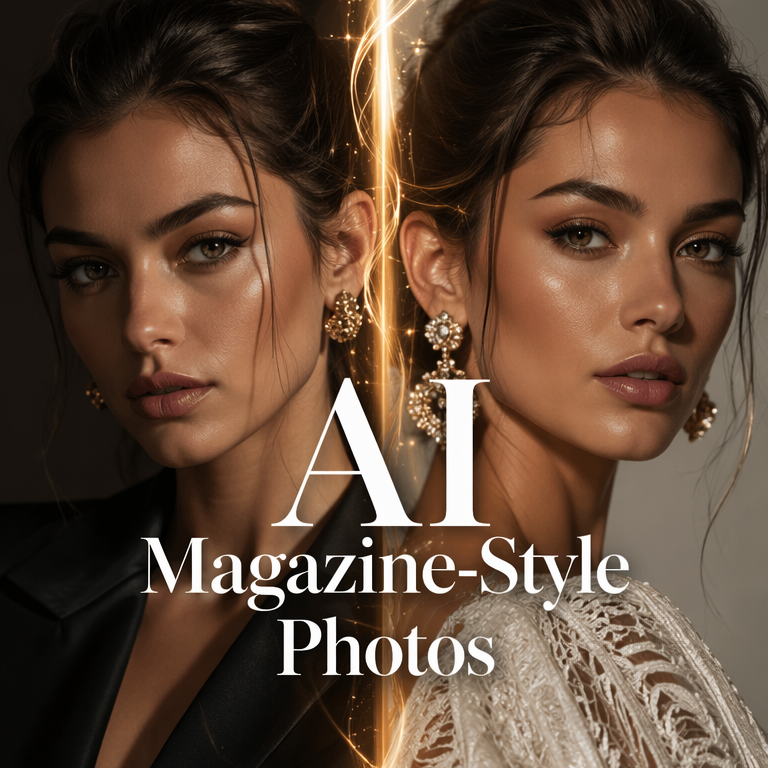
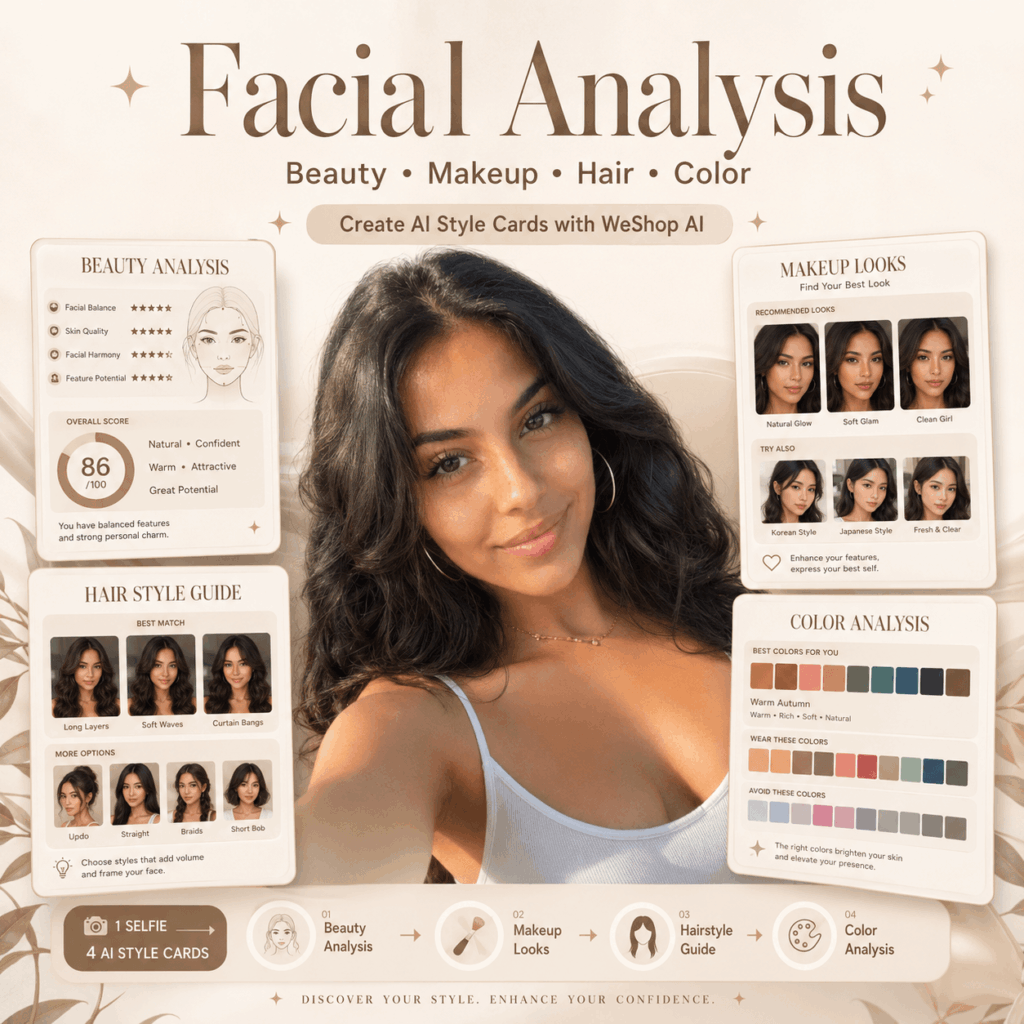
AI image trends move fast. However, one format keeps showing up on TikTok, Instagram, and AI creator feeds: Facial Analysis Cards.
This type of content turns one selfie into a polished visual report. As a result, it feels personal, useful, and very easy to share. Instead of posting only a pretty portrait, creators now use facial analysis layouts to show face shape, makeup direction, hairstyle ideas, color palettes, and overall style notes.
Also, the best part is simple. You do not need to be a designer, beauty consultant, or photo editor to make this kind of content. With WeShop AI and a clear prompt, you can create a premium facial analysis chart in minutes.
🧰 Preparation / Required Tools
- WeShop AI GPT Image 2
- One clear front-facing portrait
- One half-body or lifestyle photo(optional)
📸 Best Photos
To ensure more stable AI analysis, it is recommended to upload:
- Front-facing natural light selfie
- Facial features unobstructed
- Little or no filter
- Face taking about 40% to 70% of the image
🚫 Not Recommended
Try not to use:
- Sunglasses
- Heavy beauty filters
- Dark lighting
- Extreme side angles
- Group photos
💡The key is simple: the more natural the face looks, the better the facial analysis card will look.
🚀 Facial Analysis Tutorial: Create Your First AI Card
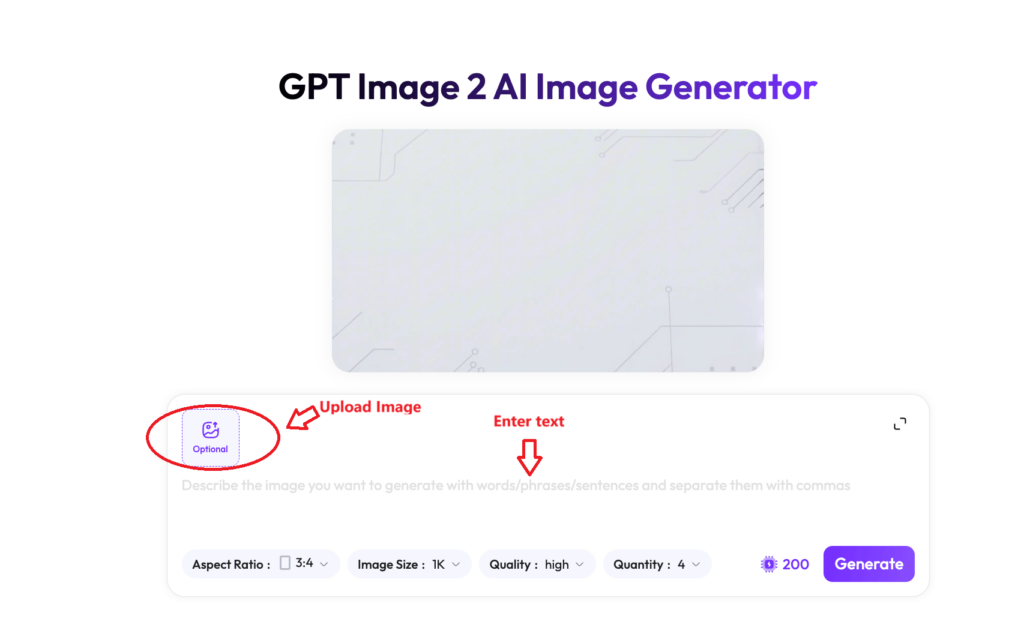
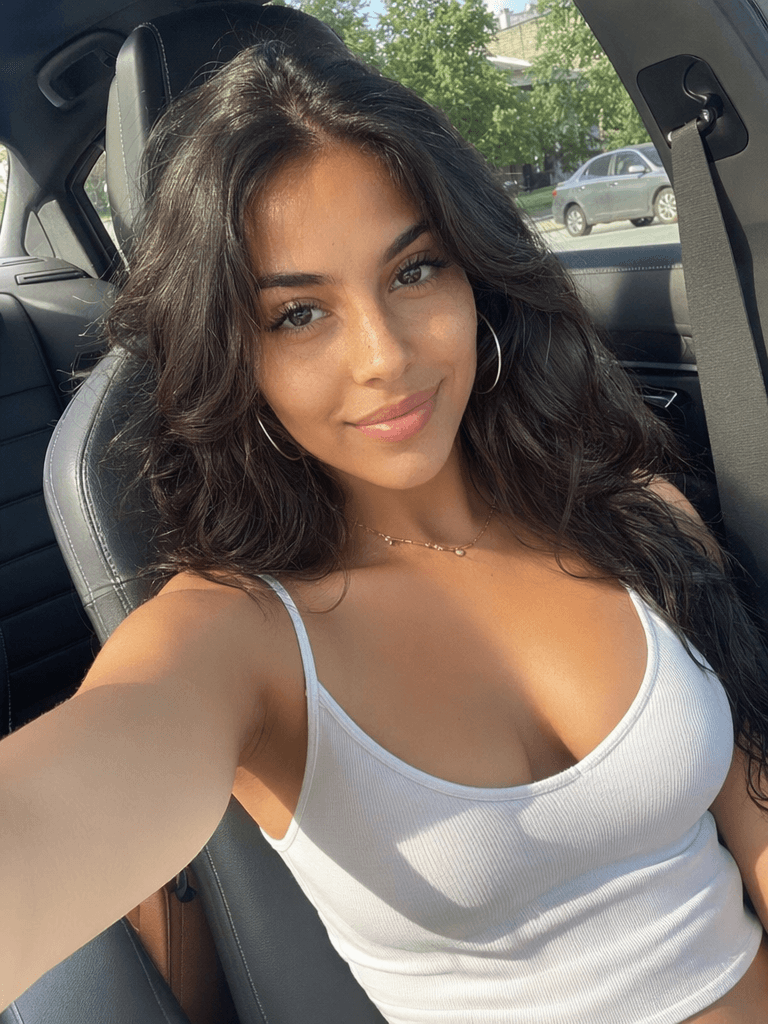
🖼️ Step 1: Open WeShop AI GPT Image
Open GPT Image 2: https://www.weshop.ai/tools/gpt-image
Then follow these steps:
- Upload your portrait photo.
- Select GPT Image 2 AI Image Generator.
- Paste the prompt into the input box.
- Click generate.
- Review the results.
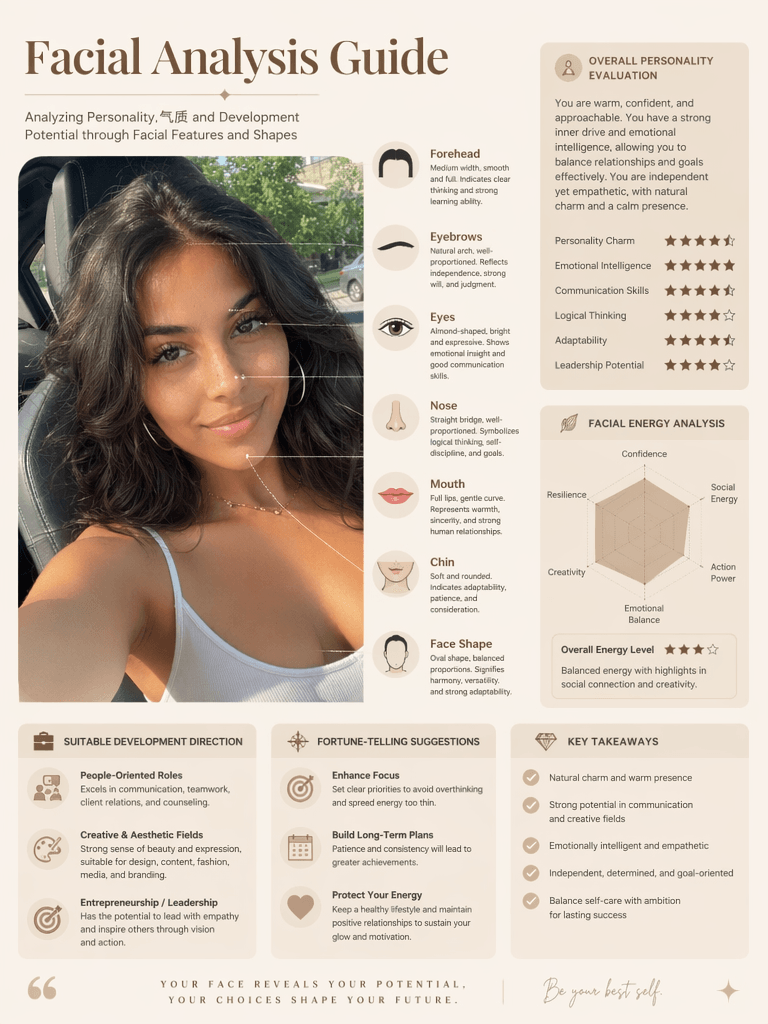
🧠 Step 2: Generate an AI Facial Analysis Guide Card
Copy and paste this prompt into WeShop AI:
Based on the uploaded portrait photo(s), create a high-quality English "Facial Analysis Guide" information chart.

Requirements:
1. Retain the original real facial features, face shape, skin tone, and recognizability of the person. Do not over-edit or over-beautify the photo.
2. The overall style should be clean, fashionable, and professional, like a premium magazine column or high-quality social media infographic.
3. The layout should feature the person's portrait as the main visual element, with detailed fine-line annotations for facial areas.
4. Frame the analysis as visual impression, image style, facial aesthetics, and beauty direction. Do not make real claims about personality, health, wealth, fate, or ability.

The content includes:
- Title: "Facial Analysis Guide"
- Subtitle: "A visual style report based on face shape, facial features, and overall image"
- Key annotations: forehead, eyebrows, eyes, nose, mouth, chin, face shape
- Short English analysis labels for each facial part
- Overall Style Impression
- Facial Style Energy
- Suitable Image Direction
- Light Beauty Suggestions
- Key Takeaways

Optional additions:
- Simple illustrations
- Radar charts
- Star ratings
- Key cards
- Fine-line callouts
- Small icons

Visual style:
light beige, warm gray, light brown, premium editorial aesthetic, clean spacing, elegant typography, fine-line callouts.

Important:
Do not make it overly superstitious. The style should feel like "Image Consultant / Facial Aesthetics / Personal Style Report".
Use concise English labels only. Avoid long paragraphs.
💄 Step 3: Add Makeup Ideas to Your Facial Analysis Content
Copy and paste this prompt into WeShop AI:
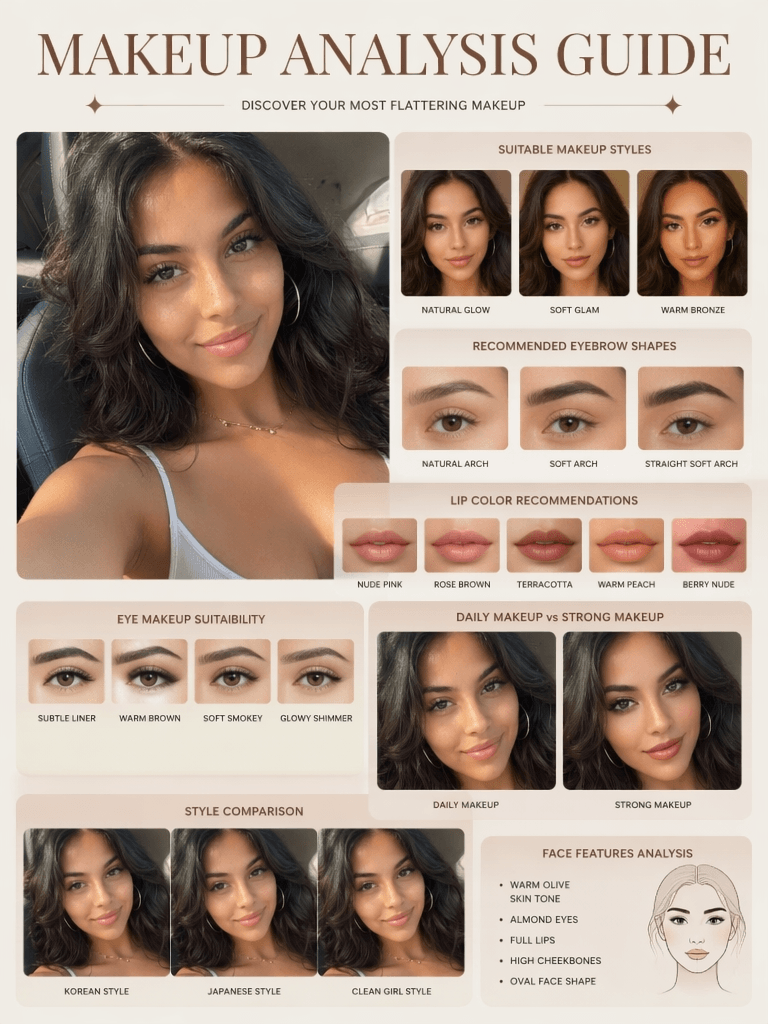
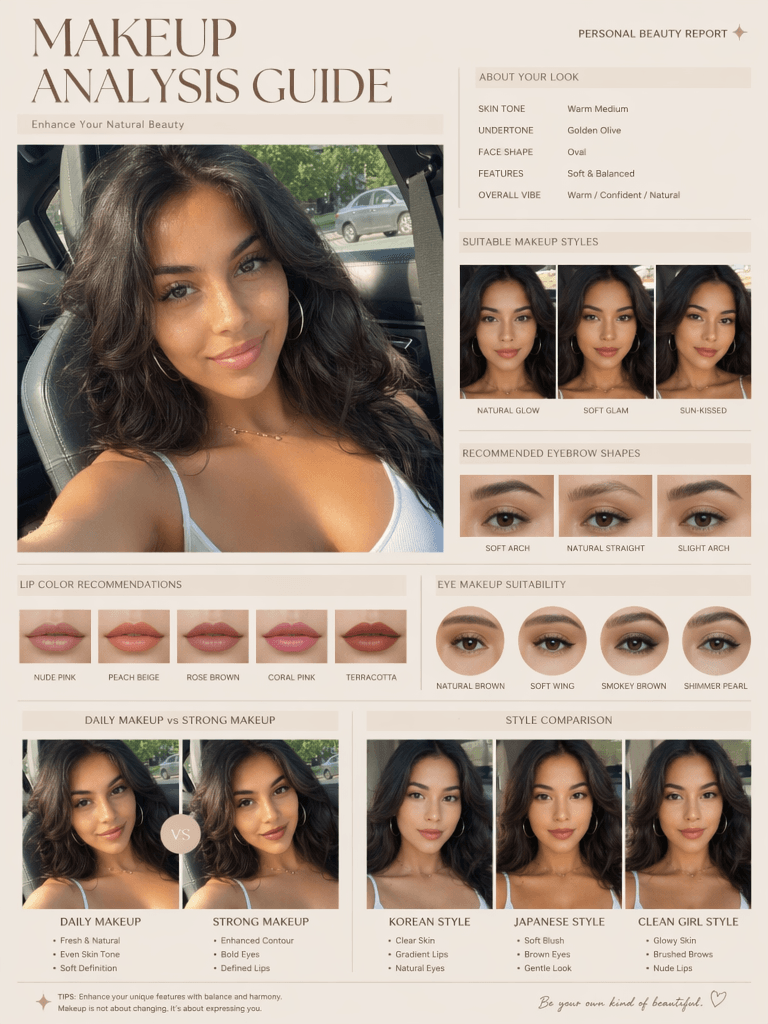
Please create a high-quality "Makeup Analysis Guide" information chart based on the portrait photo(s) I uploaded.

Requirements:
- The final chart text should be in English
- Clean, fashionable, and professional style
- Similar to a premium makeup magazine column
- Retain original facial features and recognizability
- Do not over-edit the photo
- Do not change the person's identity
- Keep the design visual-first and easy to understand
- Use the face shape and facial analysis as the base for makeup recommendations

The layout should:
- Use visual-first design
- Focus on makeup comparison effects
- Include concise labels only
- Show multiple makeup styles side by side
- Keep enough white space
- Make the chart suitable for social media sharing

Suggested sections:
- Suitable Makeup Styles
- Recommended Eyebrow Shapes
- Lip Color Recommendations
- Eye Makeup Suitability
- Blush and Contour Suggestions
- Daily Makeup vs Strong Makeup
- Korean / Japanese / Clean Girl Style Comparisons
- Best Overall Makeup Direction

Visual style:
light beige, warm gray, soft brown, editorial beauty report aesthetic, premium magazine layout, elegant spacing.

Important:
Use English labels only.
Avoid long paragraphs.
Make the result look like a professional beauty consultant report.
💇 Step 4: Create a Hairstyle Facial Analysis Card
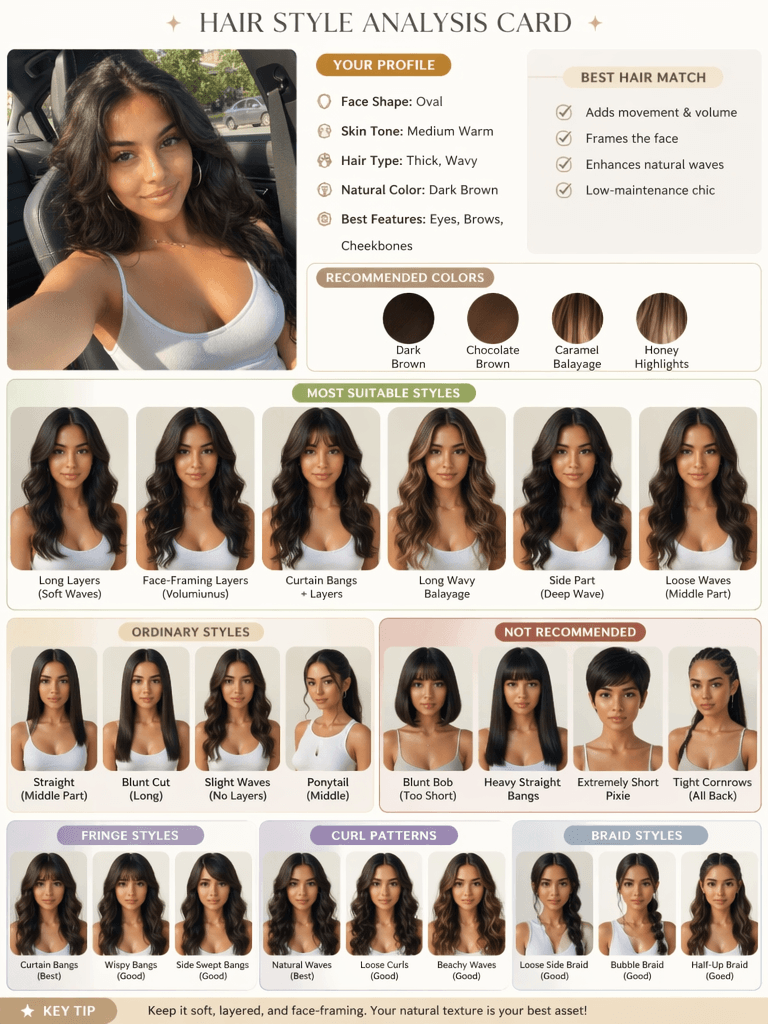
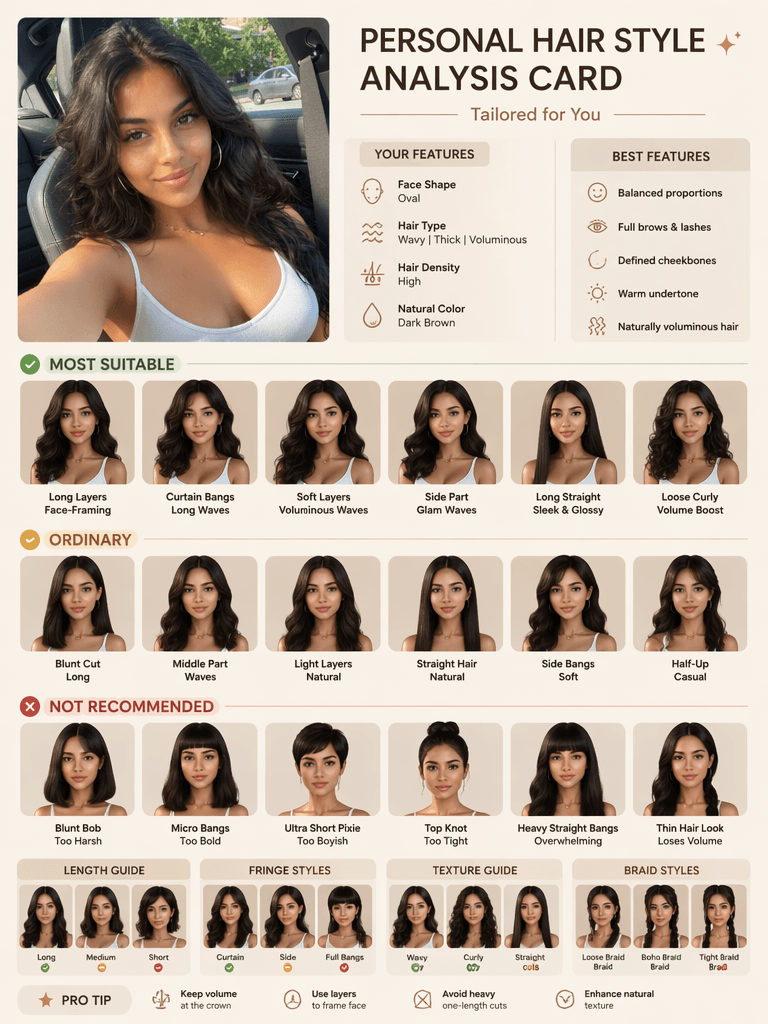
Hairstyle content is always popular. People often want to know if they suit long hair, short hair, bangs, curls, or a layered cut.Therefore, a hairstyle facial analysis card can get strong attention. It answers a real style question in a visual way.
Copy and paste this prompt into WeShop AI:
Based on the uploaded portrait photo(s), create a high-quality personal hairstyle facial analysis card.

Requirements:
- Retain original facial features and face shape
- Keep real characteristics of the subject
- Do not change the person's identity
- Use the face shape and facial analysis as the base for hairstyle recommendations
- Show side-by-side hairstyle comparisons
- Keep the design clean, fashionable, and professional
- Use concise English labels only

Clearly distinguish:
- Most Suitable Hairstyles
- Ordinary Hairstyles
- Not Recommended Hairstyles

Include:
- Long hair
- Short hair
- Fringe styles
- Curtain bangs
- Side part
- Middle part
- Curly hair
- Straight hair
- Layered cuts
- Braids
- Hair color suggestions

Suggested sections:
- Your Profile
- Face Shape
- Hair Type
- Natural Color
- Best Hair Match
- Recommended Colors
- Most Suitable Styles
- Ordinary Styles
- Not Recommended Styles

Style:
clean, fashionable, professional styling consultant report, premium beige editorial design, clear grid layout, elegant typography.

Important:
Use concise English labels only.
Avoid long paragraphs.
Make the result look like a professional personal hair consultant card.
🎨 Step 5: Make a Personal Color Facial Analysis Card
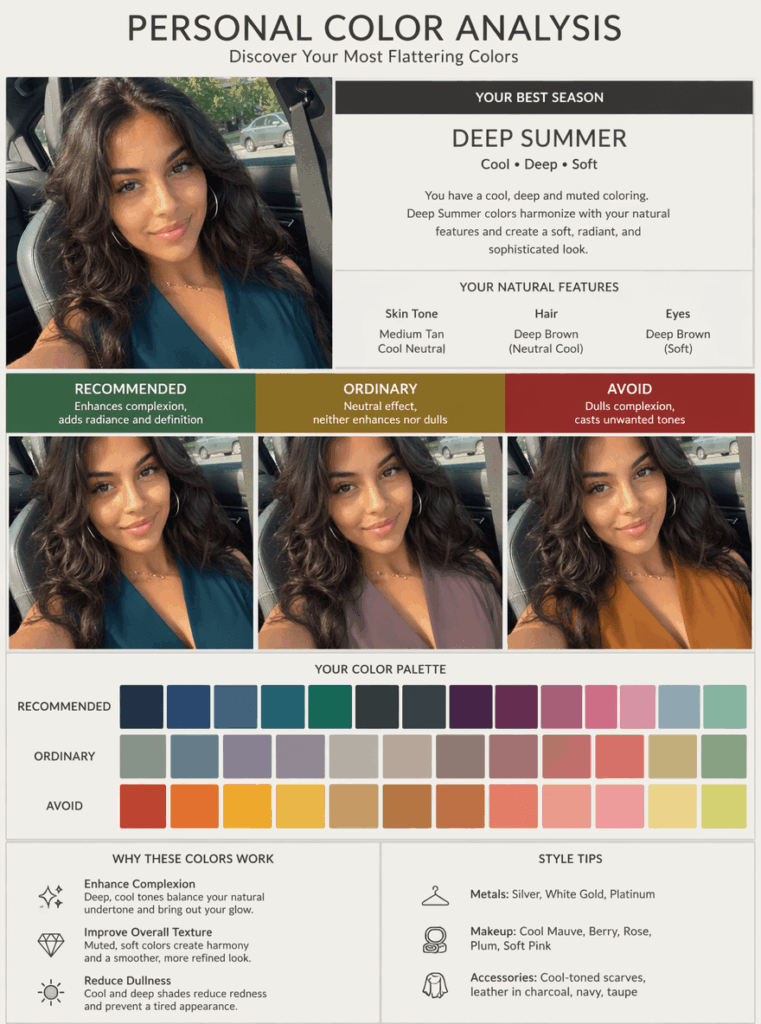
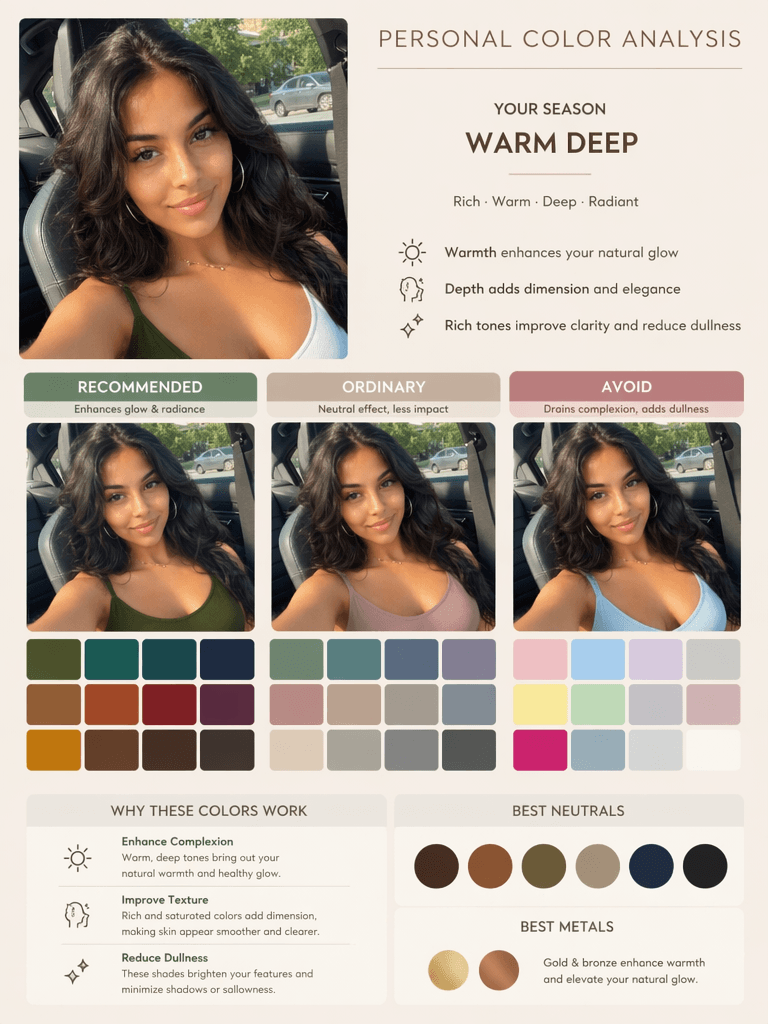
Personal color analysis is one of the easiest AI image formats to make look premium. It is also one of the most useful add-ons after facial analysis.
Specifically:
- Seasonal color analysis (Spring, Summer, Autumn, Winter)
- Color coordination for outfits
- Skin tone brightening analysis
Copy and paste this prompt into WeShop AI:
Based on the portrait photo(s) I uploaded, create a high-quality personal color facial analysis chart.

Requirements:
- Retain original facial features and skin tone
- Do not over-edit the photo
- Do not change the person's identity
- Use the facial analysis and skin tone as the base for color recommendations
- Show side-by-side clothing color comparisons
- Clearly distinguish suitable and unsuitable colors
- Use English labels only
- Keep the presentation clean, fashionable, and professional

Labels:
- Recommended
- Ordinary
- Avoid

Visual goals:
- Show which colors enhance complexion
- Show which colors improve overall texture
- Show which colors reduce dullness
- Show suitable clothing color palettes
- Show unsuitable color examples
- Include seasonal color analysis if appropriate: Spring, Summer, Autumn, Winter
- Include lipstick color or hair color suggestions if suitable

Suggested sections:
- Personal Color Type
- Best Colors
- Ordinary Colors
- Colors to Avoid
- Clothing Color Comparison
- Lip Color Suggestions
- Hair Color Suggestions
- Key Takeaways

Style:
clean, fashionable, professional image consultant report, light beige background, warm gray and soft brown design, premium editorial layout.

Important:
Use only concise English labels and highly visual presentation.
Avoid long paragraphs.
Make the chart look like a high-end personal color consultant report.
📈 Advanced Facial Analysis Content Ideas
Once you know how to make one facial analysis card, you can turn the format into a full content system. Because the structure is repeatable, you can create many posts with the same workflow. You only need to change the photo, angle, and prompt focus.
🧩 Build A Series Of Account
- AI facial analysis consultant
- AI color consultant
- AI hairstyle makeover
- AI vibe analysis account
- Ideally suited for high-volume content production.
🏷️ Add ‘Vibe Tags’
- A vibrant, energetic vibe
- Rich girl vibe
- Korean style
- Hong Kong retro
- Elegant and calm
- Sweet and cools
- Users will strongly identify with these personas.
💰 Turn Shareable Templates
- Paid template packs
- Custom analysis Services
- AI portrait packages
- Personal branding image kits
- Many accounts have already begun commercialization.
❓ FAQ
Q1:Why Does My Facial Analysis Image Not Look Like Me?
This usually happens when the input photo is weak. For example, the image may be blurry, filtered, too dark, or taken from a strong side angle.
Also, the prompt may not be clear enough. Add phrases like “retain real facial features and recognizability” and “do not change the person’s identity.”
Therefore, use a clear front-facing photo whenever possible. It gives the AI more useful detail.
Q2:Why Does My Facial Analysis Layout Look Messy?
A messy layout often means there is too much information. The AI may try to fit every label, chart, and note into one image.
To fix this, ask for fewer text blocks. Also, use more white space and shorter labels.
A premium facial analysis card should feel clean. It should not look like a crowded document.
✅ Conclusion & CTA
AI-based personal image analysis has evolved from a mere “novelty feature” into a genuine content category. The format works because it is personal, visual, and easy to share. Also, it gives viewers a reason to imagine their own result.
It is particularly well-suited for:
- TikTok
- AI-focused content accounts
- IP focused on women’s personal growth