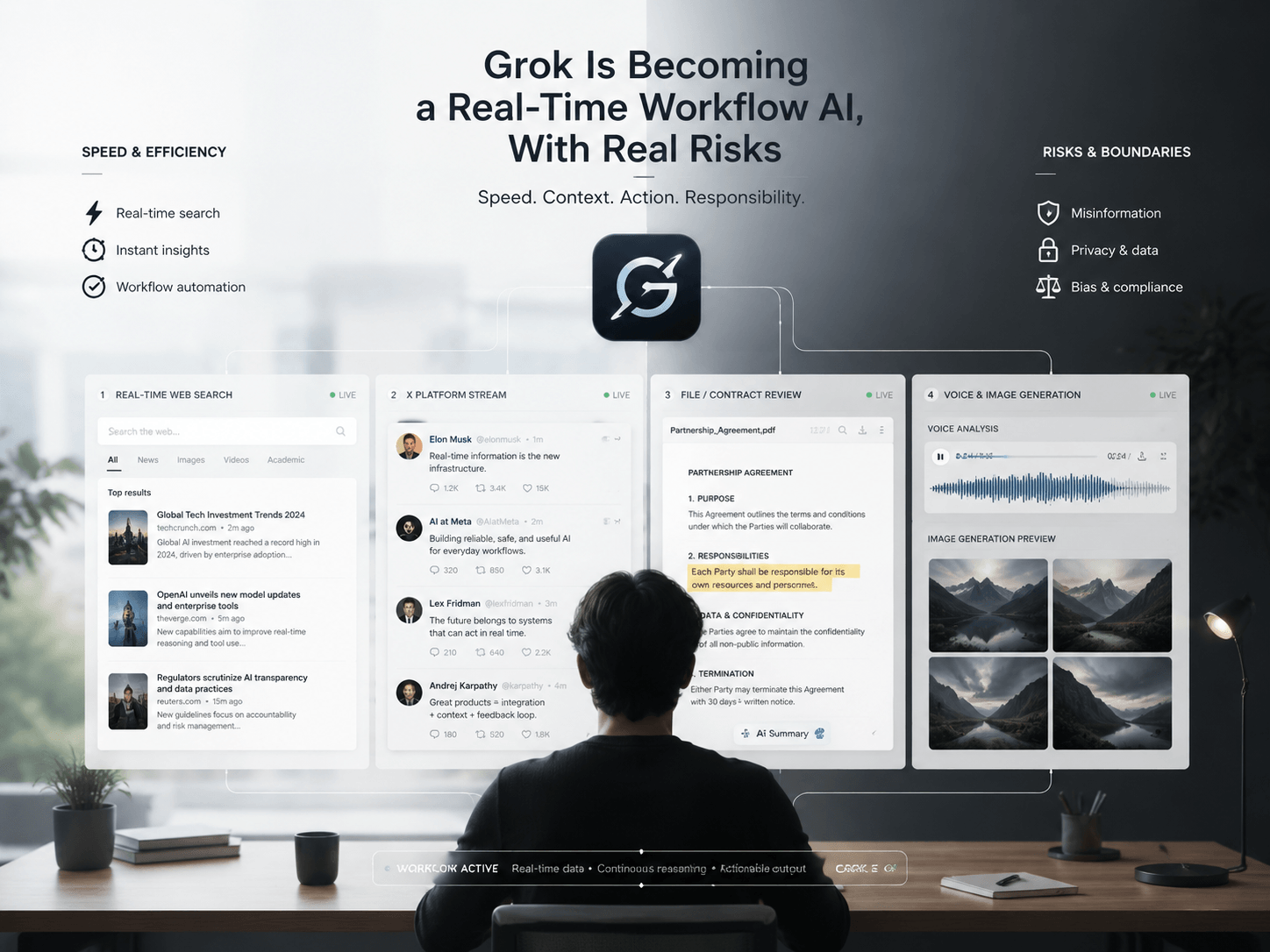
AI video content is growing faster than ever. Every day, millions of videos are uploaded across social media platforms, livestreams, podcasts, and short-form content apps. As a result, platforms are struggling to review and filter content manually. That is exactly why Grok video moderation is becoming an increasingly important AI topic.
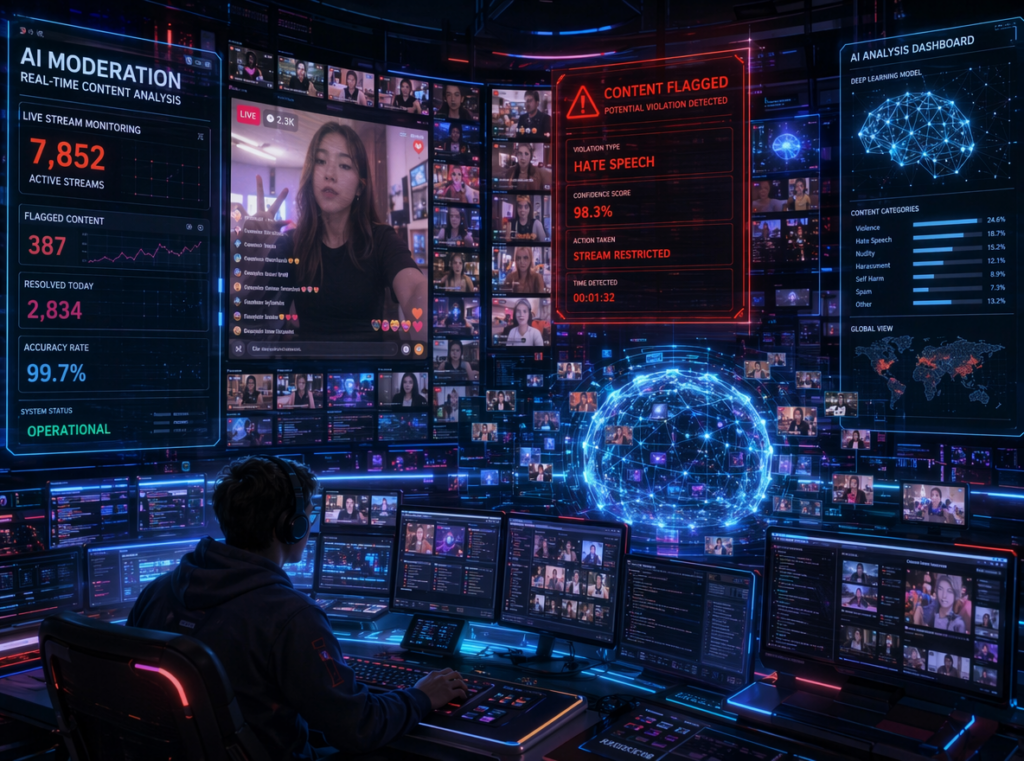
Every minute, users upload massive amounts of:
- TikTok videos
- livestreams
- podcasts
- gaming clips
- AI-generated videos
- memes
- reaction content
As a result, platforms increasingly rely on artificial intelligence to filter harmful, misleading, or unsafe content automatically.
Now, many users are starting to ask a new question:
Could Grok handle video moderation in the future?
The idea of “Grok video moderation” is attracting attention because Grok already feels deeply connected to internet culture, live discussions, and real-time social content.
And honestly, that creates both exciting possibilities and serious concerns.
🚀 Why Grok Video Moderation Is Suddenly Becoming Important
AI moderation is no longer optional for major platforms.
The internet moves too fast.
Human moderation teams simply cannot process millions of videos, livestreams, and uploads in real time anymore.
That is why AI moderation systems are becoming critical for:
- social media platforms
- livestreaming apps
- online communities
- AI-generated content
- advertising systems
- public safety workflows
Because Grok is closely connected to xAI and X, many people now speculate about how Grok video moderation could evolve in the future.
Especially as AI-generated video becomes more widespread.
🤖 What Is Grok Video Moderation?
Right now, there is no fully public standalone Grok video moderation platform.
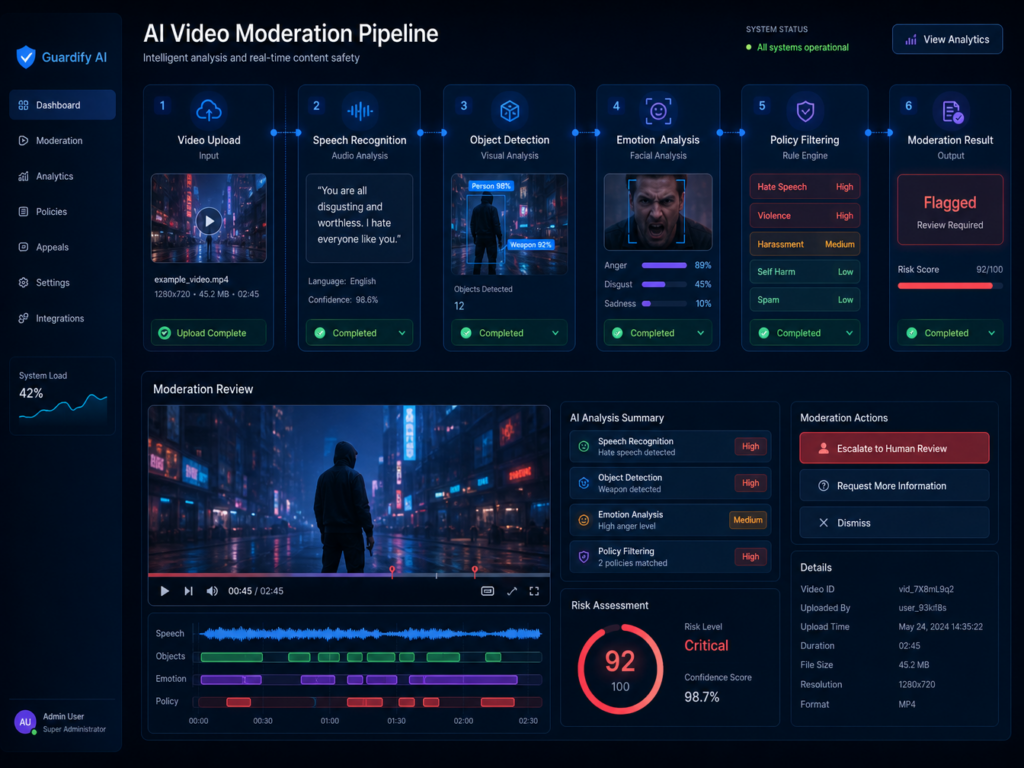
However, the phrase “Grok video moderation” generally refers to AI systems that could potentially use Grok-like intelligence to:
- analyze videos
- detect unsafe content
- flag policy violations
- identify harmful material
- understand internet context
- moderate livestreams in real time
Unlike older moderation systems that only scan keywords or metadata, future AI moderation systems may attempt to understand videos contextually.
That is a huge shift.
🎥 Why Video Moderation Is Much Harder Than Text Moderation
Text moderation is already difficult.
Video moderation is dramatically harder.
A single video may contain:
- speech
- music
- visual violence
- sarcasm
- memes
- edited clips
- emotional context
- cultural references
AI must analyze all of these layers simultaneously.
Even worse, internet culture changes constantly.
A harmless meme one week may become controversial the next.
This is exactly why Grok video moderation discussions are becoming so interesting.
Grok’s internet-aware personality may actually help it understand online culture better than more static moderation systems.
⚡ How Grok Video Moderation Could Work
Future Grok video moderation systems would likely combine multiple AI technologies together.
These could include:
- computer vision
- speech recognition
- multimodal AI
- emotional analysis
- contextual reasoning
- real-time internet trend analysis
The AI would not simply “watch” videos.
Instead, it would attempt to understand:
- what is happening
- why it matters
- whether it violates platform rules
- how users may interpret it
That is far more advanced than traditional moderation.
🌐 Why Grok Might Be Better at Internet Culture Understanding
One major challenge in moderation is cultural context.
Many older moderation systems struggle with:
- irony
- sarcasm
- meme humor
- internet slang
- rapidly evolving trends
However, Grok was designed to feel much closer to real internet culture.
That difference matters.
Because Grok is heavily connected to online discussions and social content, many users believe Grok video moderation systems could potentially understand viral culture more naturally.
In theory, this could reduce some false moderation decisions.
🔥 The Biggest Problem With AI Video Moderation
At the same time, AI moderation creates serious risks.
Even advanced AI systems still struggle with:
- emotional nuance
- political sensitivity
- satire
- misinformation context
- edited clips
- controversial humor
Sometimes AI systems confidently misunderstand content completely.
That becomes dangerous very quickly.
A moderation mistake on a viral platform can affect:
- creators
- businesses
- political discussions
- public perception
- online communities
This is why Grok video moderation discussions are becoming increasingly controversial.
👀 Grok Video Moderation and AI-Generated Videos
Another major reason Grok video moderation matters is the rise of AI-generated media.
Today, AI systems can generate:
- fake interviews
- synthetic voices
- AI influencers
- deepfake videos
- realistic animations
- fake news clips
As this technology improves, platforms will need stronger moderation systems capable of detecting manipulated media.
That challenge is becoming enormous.
And honestly, most current moderation systems are probably not ready yet.
🧠 Could Grok Video Moderation Become Real-Time?
Real-time moderation may become one of the most important future AI battlegrounds.
Platforms increasingly want AI systems that can analyze livestreams instantly.
This includes detecting:
- violence
- graphic content
- harassment
- dangerous behavior
- policy violations
before videos spread widely.
If Grok eventually develops strong multimodal capabilities, real-time Grok video moderation could become technically possible.
That would significantly change how platforms manage live content.
📈 Why the AI Industry Is Watching AI Moderation Closely
AI moderation is no longer just a technical issue.
It is becoming:
- political
- cultural
- financial
- social
Platforms must constantly balance:
- safety
- free speech
- creator freedom
- public pressure
- advertiser concerns
This balance is incredibly difficult.
As a result, future AI moderation systems will likely become some of the most controversial technologies in the AI industry.
💥 Why Grok Video Moderation Feels Different
Most moderation systems feel invisible.
Grok feels emotional.
That changes how users perceive the technology.
Because Grok already has a recognizable personality online, users may react differently to Grok-powered moderation decisions compared to traditional hidden AI systems.
Ironically, the more human-like AI becomes, the more emotional moderation debates may become too.
Final Thoughts
Right now, Grok video moderation remains more of a developing concept than a fully public product. However, the conversation around AI moderation is accelerating rapidly.
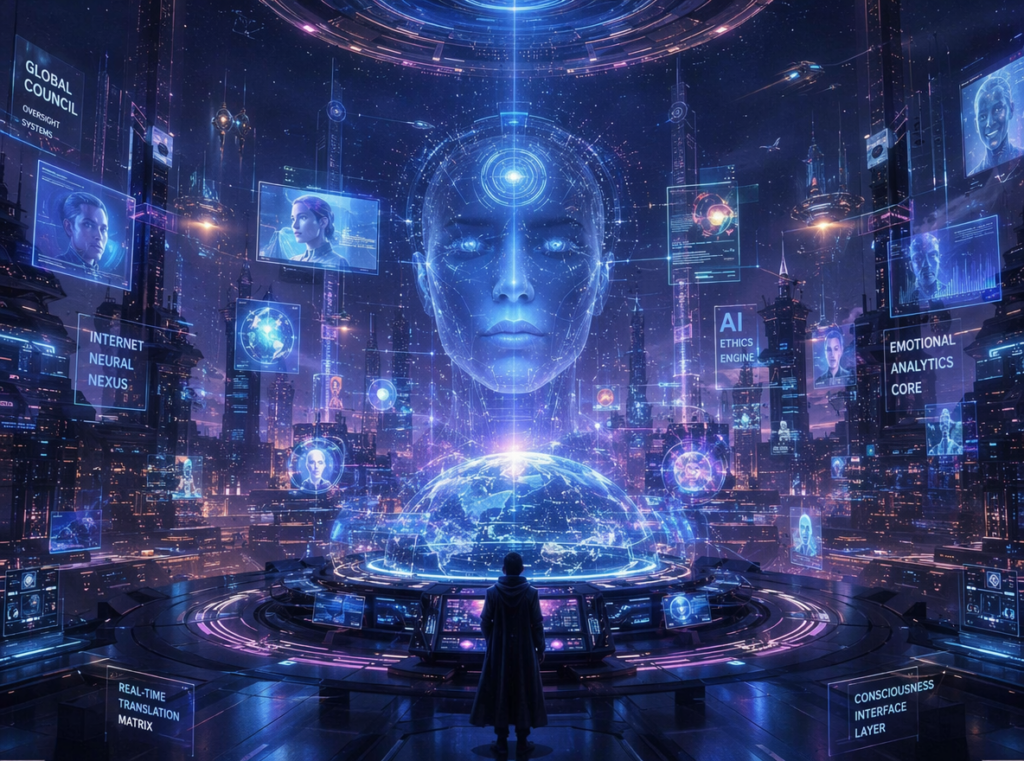
As video content, livestreams, and AI-generated media continue exploding online, platforms will increasingly depend on intelligent moderation systems.
The challenge is no longer simply detecting content.
The real challenge is understanding context, emotion, internet culture, and intent.
And honestly, that may become one of the hardest AI problems of the next decade.
Go to WeShop AI For Exploration: