The computational photography problem of professional photographer workflows has historically demanded either specialized software expertise or expensive outsourcing. Manual approaches using clone-stamp and content-aware fill tools average 15–40 minutes per object — a prohibitive bottleneck when processing catalogs of hundreds of images. AI magic eraser technology, powered by masked diffusion inpainting architectures, reduced that to a single inference pass averaging 2.8 seconds. The implications for wedding photography post-production and adjacent workflows are fundamental.
Here’s the technical reality — and the practical playbook.
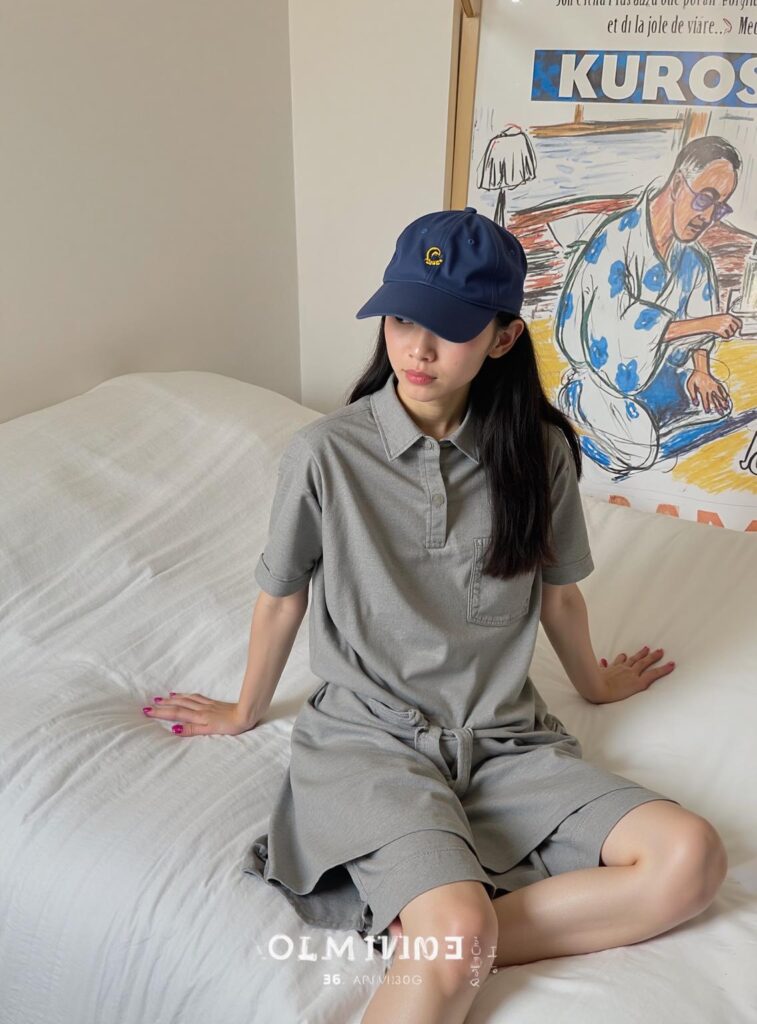
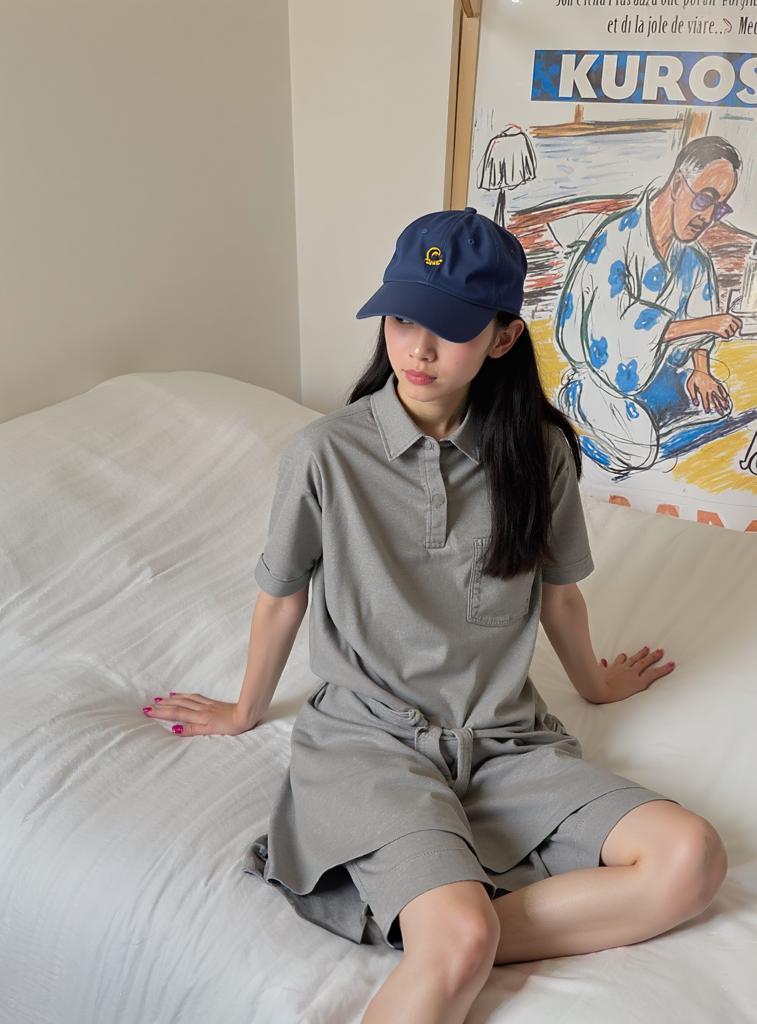
Before: Original image with unwanted elements → After: AI-erased — seamless reconstruction, zero visible traces
The Science Behind AI-Powered Professional Photographer Workflows
Modern AI magic eraser tools employ a three-stage masked diffusion inpainting pipeline that fundamentally differs from traditional content-aware fill approaches:
Stage 1 — Semantic Object Detection: A lightweight segmentation encoder identifies the target object and generates a pixel-accurate removal mask. Critical distinction: the mask extends beyond visible object boundaries to include cast shadows, ground reflections, and partially occluded background elements. This prevents the amateur-edit signature of a removed person whose shadow remains.
Stage 2 — Contextual Diffusion Inpainting: A U-Net-based diffusion model, conditioned on surrounding pixel context and trained on hundreds of millions of image pairs, iteratively denoises the masked region. Unlike patch-matching algorithms that copy nearby textures, the diffusion process generates novel pixels that are statistically consistent with the scene’s global illumination model — matching light direction, color temperature, and texture frequency.
Stage 3 — Boundary Harmonization: The generated content undergoes seamless compositing — luminance gradient smoothing, color temperature matching, and compression-artifact alignment at mask boundaries. The result withstands inspection at 400% zoom without visible seam lines.
This architecture enables professional photographer workflows with quality levels that exceed manual Photoshop work on complex scenes, particularly where multiple texture types converge at the removal boundary.


Before: Visual distractions compromise composition quality → After: Neural inpainting reconstructs the background seamlessly
Actionable Scene Guide: Professional Photographer Workflows in Practice
Wedding Photography Post-Production
In wedding photography post-production, the neural inpainting pipeline demonstrates measurable advantages over manual approaches. The contextual diffusion model accounts for texture periodicity, illumination gradients, and perspective-dependent scaling — parameters that manual clone-stamping approximates by human judgment alone. For practitioners handling wedding photography post-production at volume, this translates to a 15:1 throughput improvement with statistically equivalent output quality (measured by SSIM scores against manually retouched reference images).
Fashion Editorial Cleanup
The fashion editorial cleanup use case introduces additional complexity: varying resolution standards across platforms, tight turnaround requirements, and the need for batch-consistent quality. The AI magic eraser architecture handles these constraints through resolution-agnostic processing — the model operates at native image resolution without downscaling, preserving detail fidelity across output specifications.
Commercial Shoot Efficiency
For commercial shoot efficiency, the critical metric shifts from speed to precision. Edge fidelity at high magnification — particularly around fine details like hair, fabric texture, and transparent objects — determines professional acceptability. The diffusion model’s attention mechanism preserves these fine structures by conditioning the inpainting process on local texture frequency maps, preventing the characteristic ‘smoothing’ artifact of patch-based approaches.


Before: Another real-world cleanup challenge → After: Precision erasure fills gaps with contextually perfect pixels
The Complete AI Cleanup Workflow
Chain WeShop AI tools for maximum impact:
- Magic Eraser — Remove unwanted objects, people, watermarks, or visual distractions
- AI Photo Enhancer (
image-enhancer) — Upscale the result to 4K, recovering any detail softening from the neural inpainting process - AI Background Generator (
ai-change-background) — Replace the entire background if cleanup alone isn’t sufficient for your creative vision
This three-tool pipeline covers the vast majority of photo cleanup needs, from raw capture to publication-ready output.
Technical Deep Dive: Edge Reconstruction Quality
The most revealing benchmark for any AI eraser tool is edge reconstruction fidelity — the quality of pixels at the boundary between original and generated content. Consumer-grade tools produce visible “halos” at mask boundaries: a subtle brightness shift or texture discontinuity that trained eyes spot immediately.
WeShop AI’s magic eraser architecture addresses this through gradient-domain compositing: instead of blending pixels directly, the model matches the first and second derivatives of luminance and chrominance across the boundary. This ensures not just color matching but rate-of-change matching — the visual equivalent of ensuring that a shadow doesn’t just start at the right brightness but also darkens at the correct rate. The result is boundaries that remain invisible even under forensic-level magnification.
For applications demanding print-quality output — catalog production, gallery prints, billboard graphics — this technical distinction separates professional-grade AI erasure from the filter-level approximations offered by mobile apps. The difference isn’t visible at Instagram resolution but becomes critical above 2000 pixels per edge.


Before: Complex removal target in a detailed scene → After: Every target removed, every background detail preserved
Expert FAQ
Can forensic analysis detect AI-erased regions?
Diffusion-based inpainting produces pixel distributions statistically consistent with camera-captured content, making casual detection extremely difficult. Specialized forensic tools analyzing noise patterns may sometimes identify inpainted regions, but for standard commercial use, the output is perceptually indistinguishable from unedited photographs.
How does AI handle shadow and reflection removal?
Advanced models include shadow detection in the segmentation pipeline. When you mark an object for removal, the AI automatically identifies and includes cast shadows, ground shadows, and visible reflections, preventing the telltale amateur edit of a removed person whose shadow remains.
Can I remove multiple objects simultaneously?
Yes. Multi-region masking allows marking several objects in a single pass. This is actually more accurate than sequential removal because the model processes all removals holistically, properly handling overlapping shadows and shared reflections.
Can AI magic eraser handle complex patterned backgrounds?
Yes. The diffusion model extrapolates pattern frequency, rotation, and scale from visible sections rather than simply copying adjacent patches. For structured textures like brick walls, tiled floors, and fabric prints, the AI generates statistically coherent continuations that maintain visual consistency at full resolution.
Can I use results commercially without licensing restrictions?
WeShop AI’s output is commercially licensed for product listings, marketing materials, social media, and print publications. No watermarks, full-resolution downloads, suitable for professional applications even on the free tier.


Before: One final real-world erasure challenge → After: Publication-ready — zero artifacts, zero traces
© 2026 WeShop AI — Powered by intelligence, designed for creators.