

If you are running an e-commerce store, you have likely faced the classic dilemma: should you show your product on a clean white background, or do you need a professional model to showcase it in a lifestyle setting? For years, this has been a debate about aesthetics and budget. However, in 2025, this decision is no longer just about “looking good”—it is a critical component of your image seo strategy and your overall ad performance.
Many sellers mistakenly believe that image seo is solely about file names and alt tags. While those technical elements are important, search engines like Google have evolved. Today, user engagement signals—such as Click-Through Rate (CTR) and how long a user stays on your page—heavily influence your rankings. This means the type of image you choose (Model vs. Product) directly impacts your SEO visibility. In this article, we will explore the data behind these two visual styles and how AI tools can help you get the best of both worlds.
What Is Image SEO and Why Visual Content Strategy Matters
To make the right choice between model shots and white backgrounds, we first need to redefine what image seo actually means for a modern e-commerce business. Traditionally, SEO specialists focused on compressing images for speed and adding descriptive keywords to the metadata.
However, search engines now prioritize “User Experience.” If a user clicks on your image in Google Shopping or Google Images but immediately bounces back because the photo didn’t meet their expectations, your ranking drops. Conversely, high-quality visuals that hold a user’s attention send positive signals to the algorithm. Therefore, your A/B test between models and white backgrounds isn’t just optimizing for sales; it is optimizing for the engagement metrics that drive image seo success.
The Case for White Backgrounds in Technical Image SEO
Let’s start with the industry standard: the plain white background product shot. There is a reason why giants like Amazon and Google Shopping mandate this style. From a technical image seo perspective, white background images are often superior for several reasons:
- Clarity for Algorithms: Visual search algorithms (like Google Lens) can identify your product much faster when there is no background noise. If you are selling a beige handbag, a busy street background might confuse the AI, whereas a white background makes the object clear.
- Google Shopping Compatibility: If you want your products to appear in Google’s Product Listing Ads (PLAs), a white background is often a strict requirement. Non-compliant images are frequently rejected, killing your visibility instantly.
- File Size and Load Speed: Generally, images with plain white backgrounds compress better than complex lifestyle shots. Faster load times are a foundational pillar of technical image seo, directly improving your Core Web Vitals score.
If your primary goal is distribution on marketplaces and ensuring your product is machine-readable, the white background is your safest bet.
Boosting Dwell Time and Image SEO Signals with Model Photography
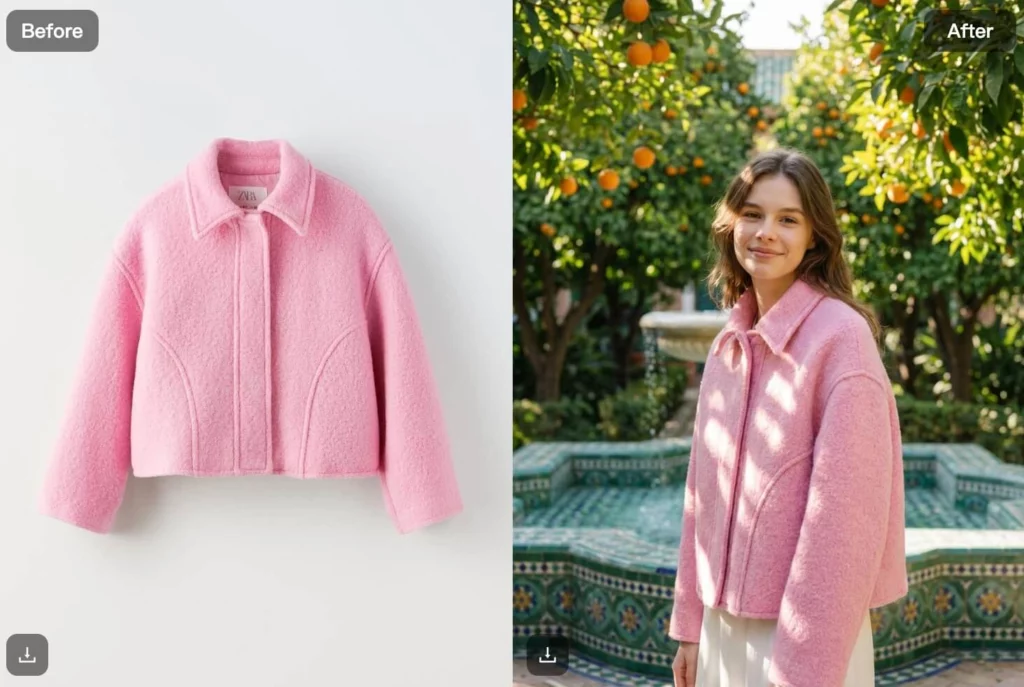
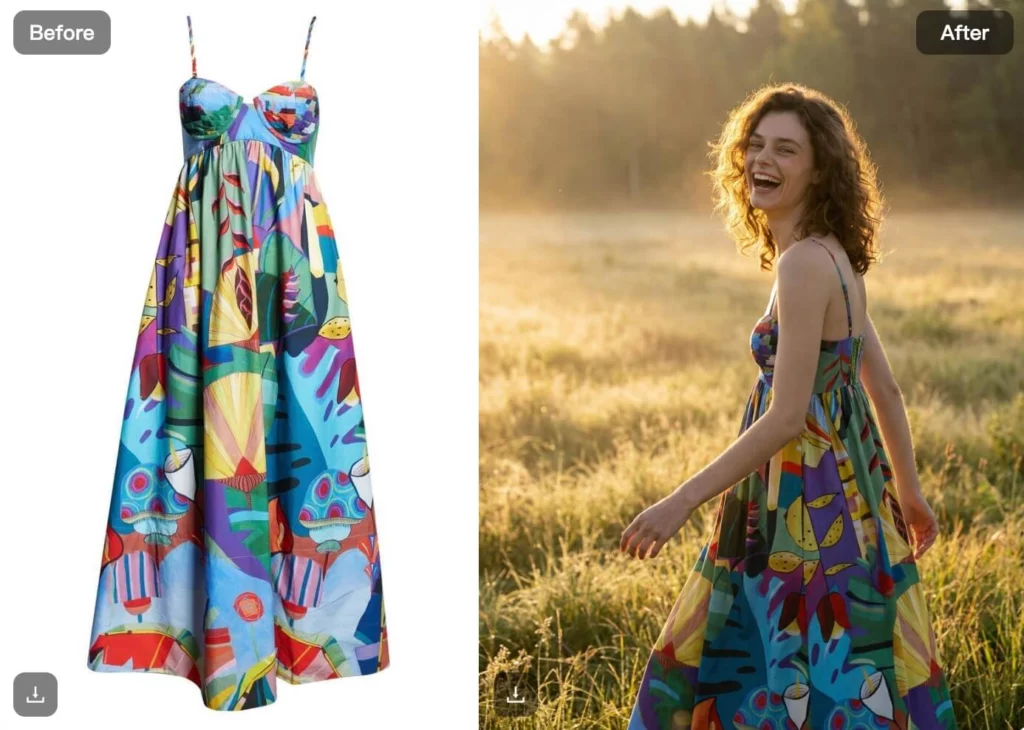
While white backgrounds satisfy the “robots,” model photography appeals to the “humans.” This is where the behavioral side of image seo comes into play.
A study referenced by BigCommerce suggests that over 75% of online shoppers prefer to see products being used in a real-life context. Why does this matter for SEO?
- Increased Dwell Time: When a user sees a model wearing a dress or using a fitness gadget, they spend more time analyzing the fit, the scale, and the vibe. Longer time-on-page is a massive ranking signal for Google.
- Higher Click-Through Rate (CTR): In social media feeds and Google Discover, white background images can look like spammy ads. Lifestyle images featuring models often generate higher CTRs because they look like organic content. A high CTR tells search engines that your content is relevant, which boosts your image seo authority over time.
- Trust and Scale: A common reason for returns is “item didn’t look like the photo.” Model shots provide immediate context on size and fit, reducing bounce rates and negative reviews—both of which indirectly protect your page’s SEO health.
A/B Testing Data: Analyzing the Performance Differences
So, which one wins? The honest answer from most A/B tests is “it depends on the channel.”
According to data aggregated from various marketing case studies (such as those by VWO and other CRO platforms), here is the general breakdown:
- Product Detail Pages (PDP): White background images often convert better as the primary image because they reduce distraction. However, adding model shots in the gallery can increase conversion rates by providing context.
- Facebook/Instagram Ads: Lifestyle and model images almost universally outperform white backgrounds. In some A/B tests, lifestyle creatives drove a 20-30% higher CTR compared to plain product shots.
- Google Shopping: White background is the clear winner (and requirement).
The Verdict: You cannot rely on just one. To maximize your image seo and sales, you need a hybrid strategy: white backgrounds for the catalog and Google, and model shots for engagement and social proof.
3 AI Tools to Optimize Your Image SEO and Creative Strategy
Historically, producing both types of images was expensive. You needed a studio for the white background shots and a location hire plus models for the lifestyle shots. Fortunately, the rise of Generative AI has democratized this process.
Here are three AI tools that can help you generate the diverse visual assets you need for a robust image seo strategy, without breaking the bank.
1. WeShop AI
WeShop AI is particularly strong for fashion and apparel merchants who face the high costs of hiring live models. Its core strength lies in its “Mannequin to Model” feature. You can photograph your clothing on a simple mannequin (or even a hanger), and the AI generates a realistic human model wearing the item.
- Use Case: Perfect for turning your standard catalog photos into high-engagement lifestyle images for social media and landing pages.
- SEO Benefit: It helps you create original, engaging content that keeps users on your site longer, boosting those behavioral image seo signals.

2. Pebblely
If you sell non-fashion items—like cosmetics, furniture, or gadgets—Pebblely is an excellent solution. It specializes in taking a standard product photo (even one with a white background) and placing it into a realistic AI-generated setting.
- Use Case: Quickly generating Instagram-ready marketing assets from your existing Amazon product photos.
- SEO Benefit: It allows you to refresh your creative assets frequently without new photoshoots. Fresh content is a positive signal for search engines.

3. Photoroom
Before you can generate fancy backgrounds, you often need a perfect cutout. Photoroom is widely regarded as one of the best tools for removing backgrounds and standardizing images for white-background marketplaces.
- Use Case: Bulk processing your raw photos to meet Google Shopping’s strict white background requirements.
- SEO Benefit: It ensures your images are clean, professional, and compliant with technical image seo standards for file size and visual clarity.

Conclusion
The debate between model photography and white background shots isn’t a zero-sum game. A healthy e-commerce store needs white backgrounds to satisfy the technical requirements of image seo and marketplaces, while simultaneously needing model and lifestyle shots to drive the human engagement that signals relevance to search engines.
By leveraging AI tools, you no longer have to compromise. You can test both styles, optimize your images for every platform, and ultimately drive more traffic to your store. Start by auditing your current product pages—are they optimized for the robot, the human, or both?