Creating fashion ecommerce images is no longer just about taking good photos. Today, brands need speed, flexibility, and consistency across hundreds—or thousands—of SKUs. Traditional photoshoots struggle to keep up.
That’s why AI tools are becoming essential. Among them, WeShop AI has emerged as one of the best AI tools for fashion ecommerce images, helping brands create, adapt, and scale visuals without constant reshooting.
This article breaks down how WeShop AI supports modern fashion ecommerce workflows—and why these tools matter more than ever.
Why Fashion Ecommerce Images Need a Different Approach
Fashion ecommerce images come with unique challenges.
Unlike simple product shots, fashion images must show:
- How clothes fit real bodies
- How fabrics move and drape
- How styles look in different contexts
At the same time, brands must stay consistent. Every product page, ad, and campaign should feel like it belongs to the same brand.
However, traditional workflows slow teams down. Photoshoots cost money. Models aren’t always available. And small changes—like a new color or pose—often require starting over.
This is where AI-built tools designed specifically for fashion ecommerce images make a real difference.
Virtual Try-On: The Foundation of Modern Fashion Ecommerce Images
One of the most important tools for fashion ecommerce today is Virtual Try-On.
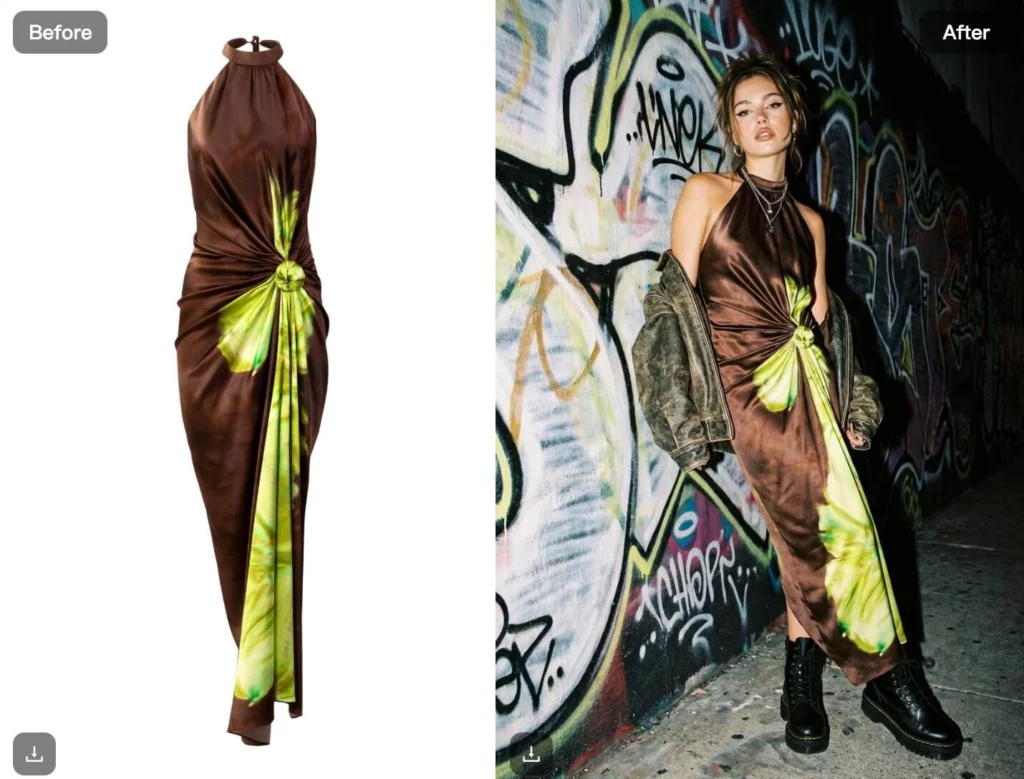
With WeShop AI, brands upload a clothing image and instantly place it on different models. You can select body types, skin tones, poses, and even environments. You can also upload your own model photos if needed.
This changes how teams work:
- No repeated fitting sessions
- No waiting for studio availability
- No reshooting for minor changes
As a result, brands create more accurate and relatable fashion ecommerce images. Shoppers see how products look on real bodies, which improves confidence and reduces returns.
AI Models: Keep Fashion Ecommerce Images Consistent at Scale
Once brands start scaling, consistency becomes a challenge.
Different models, lighting setups, and locations can make a collection look scattered. That’s where AI Models come in.
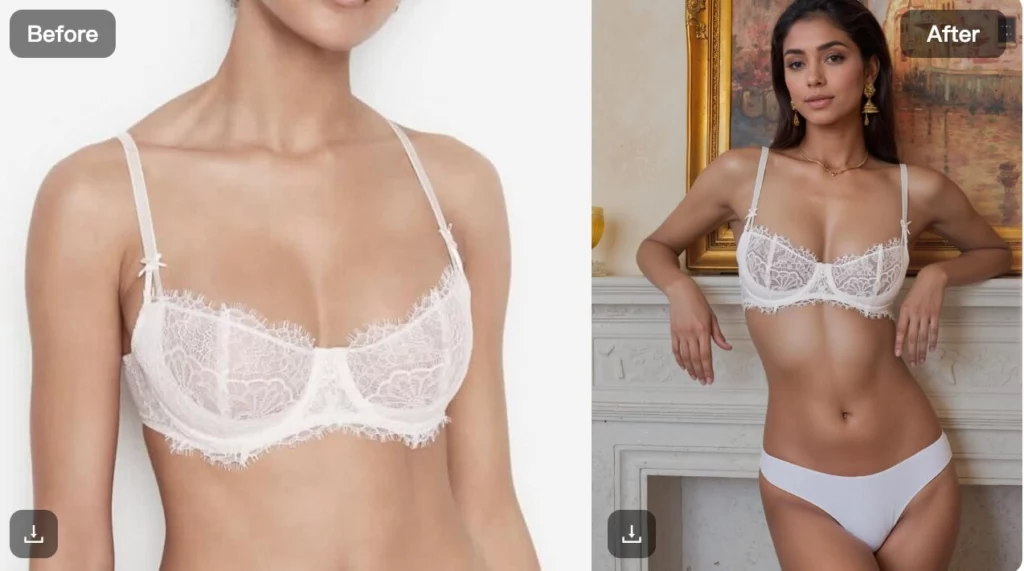
WeShop AI allows brands to showcase clothing using a consistent set of AI-generated models. These models maintain the same proportions, styling, and visual tone across collections.
This helps brands:
- Maintain a clear visual identity
- Represent diversity without extra shoots
- Build uniform catalogs faster
Instead of managing dozens of photoshoots, teams control their fashion ecommerce images from one system.
To Mannequin: Clean Product Images Without Studio Complexity
Not every fashion ecommerce image needs a lifestyle feel. Sometimes, clean and technical presentation works best.
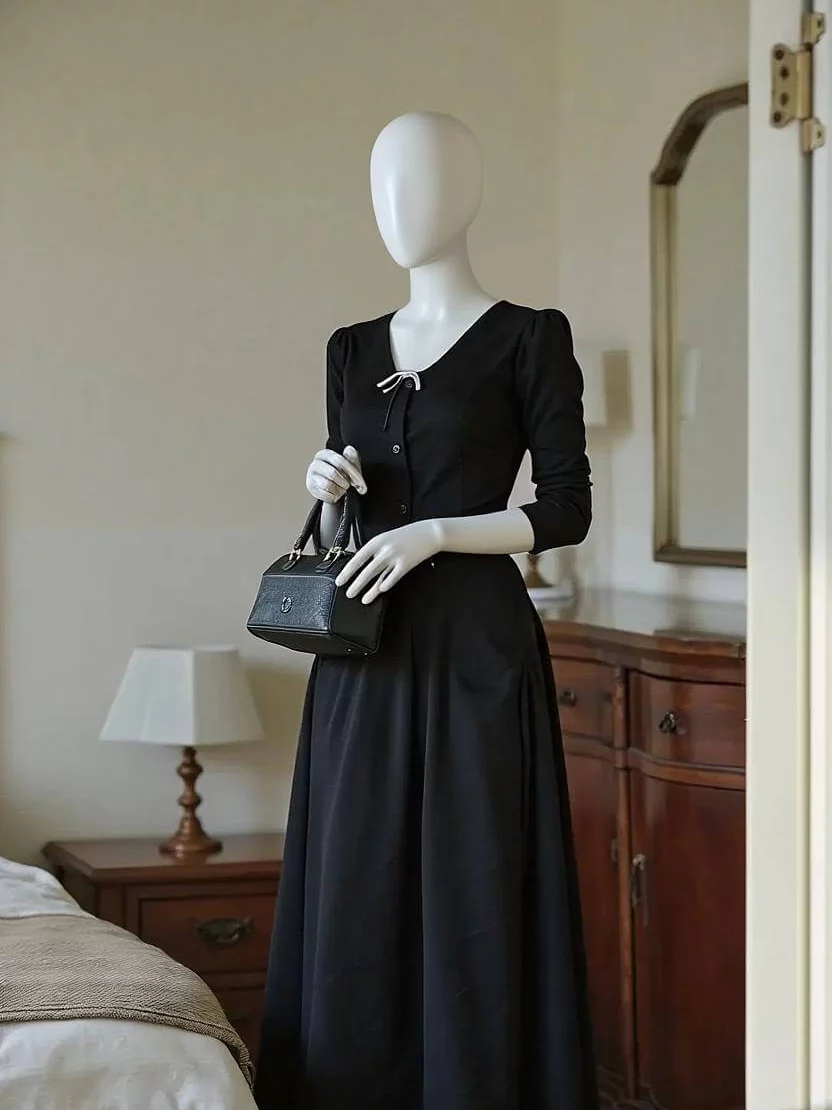
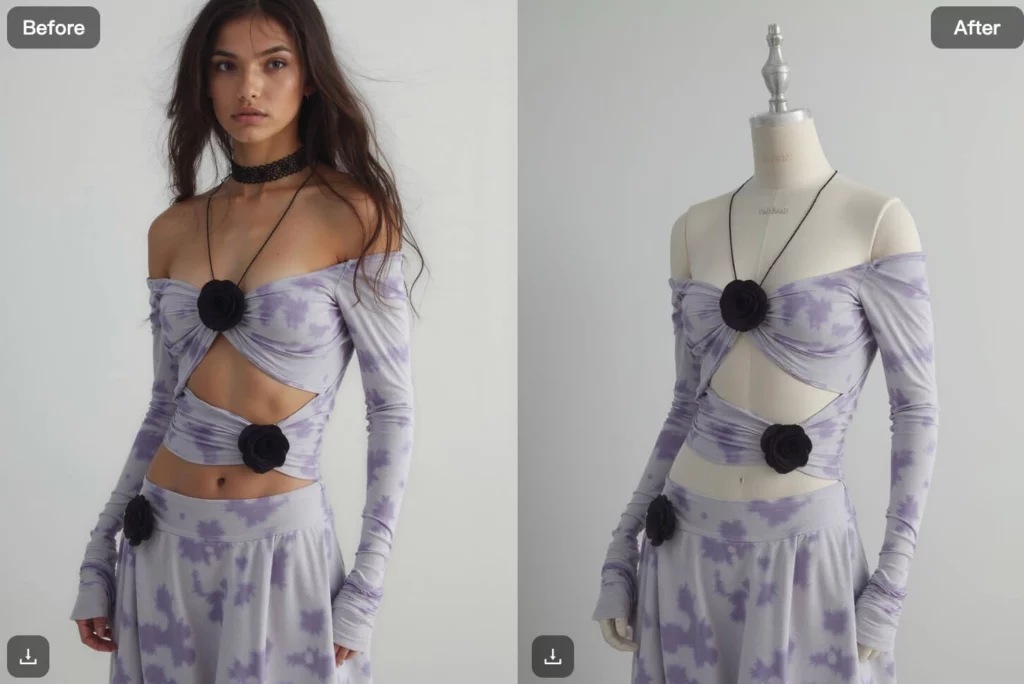
With To Mannequin, WeShop AI converts real model photos into professional mannequin-style images. The garment shape stays accurate, while distractions disappear.
This feature works especially well for:
- Marketplace listings
- Product detail pages
- Technical or fit-focused views
As a result, brands get clean fashion ecommerce images without physical mannequins or heavy retouching.
Product Recoloring: Expand Fashion Ecommerce Images in Minutes
Color variants are essential in fashion ecommerce. However, shooting every color separately wastes time and budget.
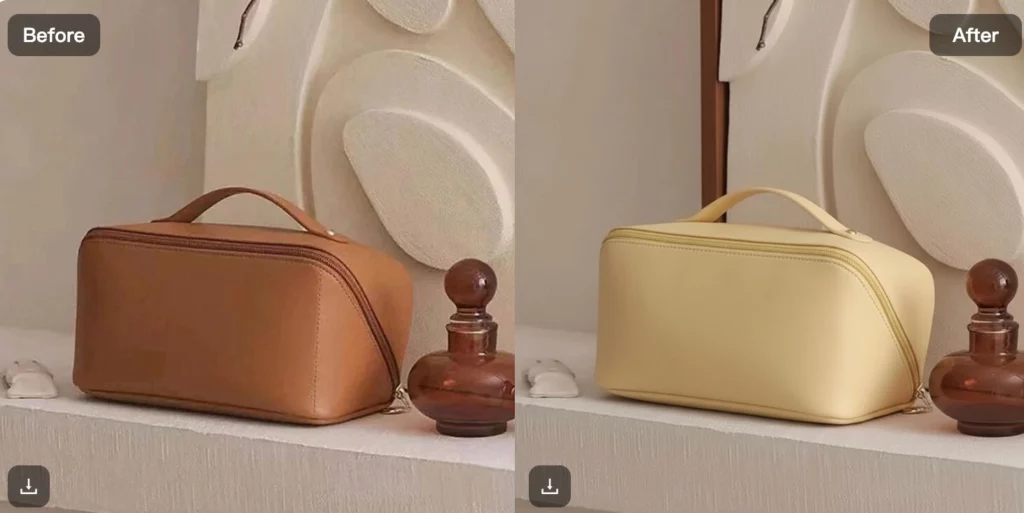
WeShop AI’s Product Recoloring tool lets brands generate realistic color variations from a single image. Textures, shadows, and lighting remain natural.
This means brands can:
- Launch faster
- Show complete color ranges
- Avoid mismatched visuals
Instead of guessing colors in Photoshop, teams create accurate fashion ecommerce images at scale.
Change Pose: Add Movement Without New Photoshoots
Static images limit storytelling. But reshooting products just to change poses is expensive.
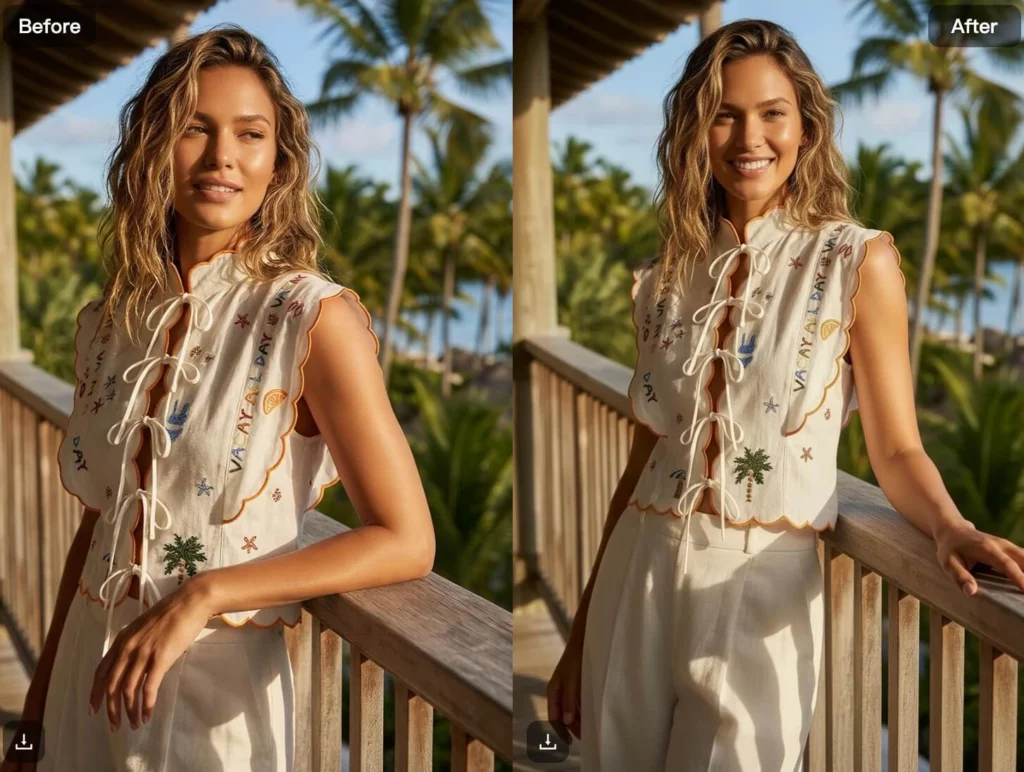
With Change Pose, WeShop AI allows brands to adjust how models stand, walk, or move—while keeping the clothing intact.
This feature is especially useful for:
- Lookbooks
- Social media assets
- Campaign visuals
As a result, fashion ecommerce images feel more dynamic, without additional production work.
How Fashion Brands Combine These Tools in Real Workflows
In reality, brands don’t use just one feature. They combine several.
A common workflow looks like this:
- Start with Virtual Try-On for fitting and styling
- Apply AI Models for collection consistency
- Generate mannequin shots for marketplaces
- Add color variants with Product Recoloring
- Create motion with Change Pose
This approach replaces fragmented tools with one unified system for fashion ecommerce images.
Who Benefits Most From These Fashion Ecommerce Image Tools?
WeShop AI supports many different users, including:
- Fashion ecommerce brands
- Independent designers
- Online boutiques
- Marketing and content teams
- DTC brands launching frequently
Whether you manage a small shop or a global catalog, AI tools help you produce more fashion ecommerce images—without scaling costs.
Why WeShop AI Works Better Than General Image Editors
Many design tools offer basic image editing. However, they often miss fashion-specific needs.
WeShop AI focuses on:
- Garment structure
- Model realism
- Ecommerce-ready outputs
- Batch-friendly workflows
Because of this focus, it fits naturally into real fashion production pipelines—not just design experiments.
The Future of Fashion Ecommerce Images
Fashion ecommerce images are no longer static assets. They are flexible, adaptive, and continuously evolving.
AI tools like WeShop AI allow brands to respond faster to trends, test visuals before launch, and scale content without friction. Instead of choosing between quality and speed, teams now get both.
Conclusion
Creating high-quality fashion ecommerce images no longer requires endless photoshoots or slow workflows. With the right AI tools, brands can move faster, stay consistent, and scale visual content with confidence.
By combining Virtual Try-On, AI Models, mannequins, recoloring, and pose control, WeShop AI offers one of the most complete solutions for fashion ecommerce images today.
For brands that want to grow without slowing down, AI-powered fashion visuals aren’t a nice-to-have anymore. They’re the new standard.