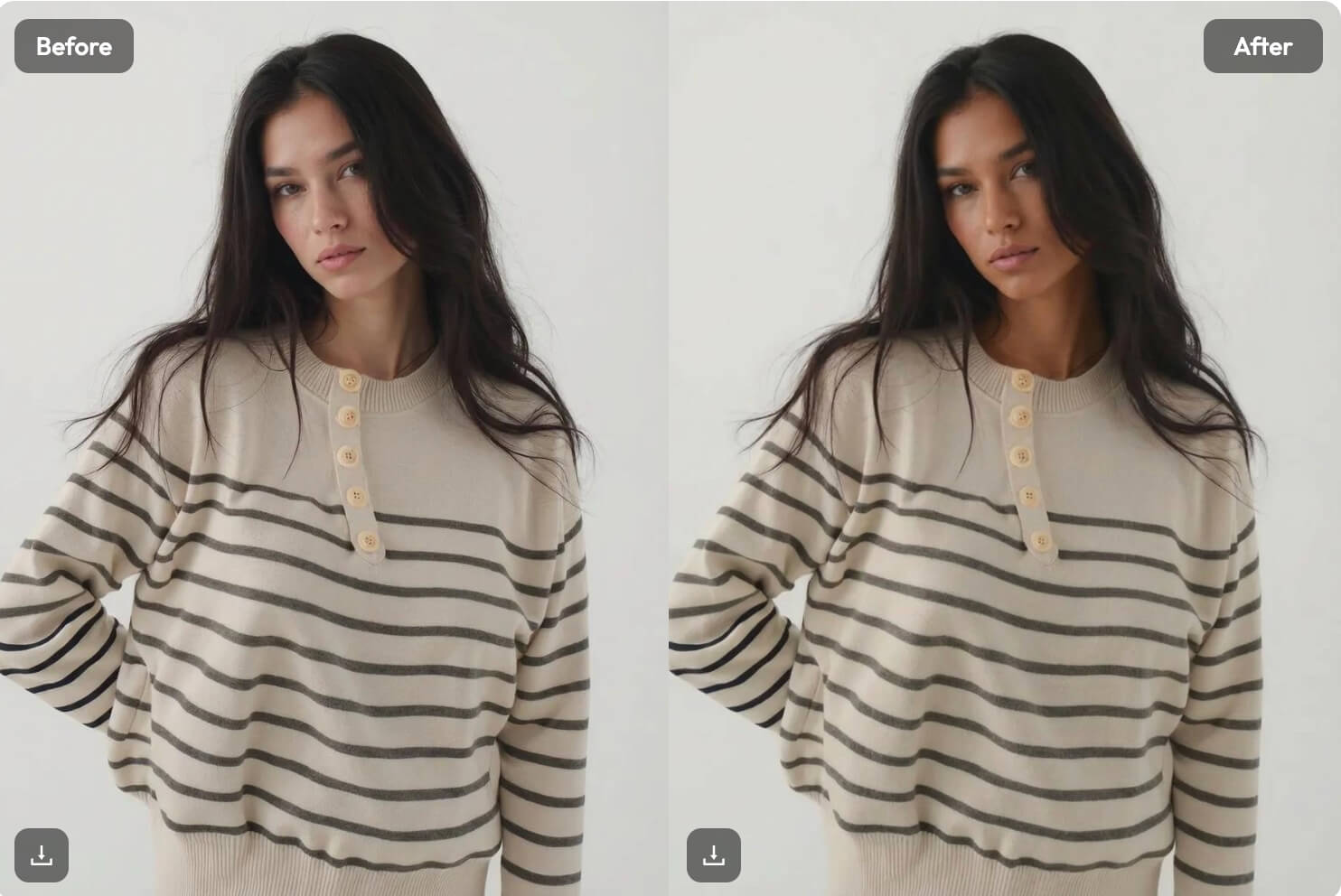
Walk into any major marketing headquarters in 2026, and the conversation has shifted. It’s no longer just about who can produce the most content, but who can produce the most representative content. For years, the fashion industry struggled with a “representation gap”—the massive distance between a brand’s global customer base and the limited diversity seen in their product photography. Closing that gap used to require million-dollar budgets and logistical nightmares involving international model scouting. Today, the AI Skin Color Changer has effectively demolished those barriers, turning inclusive marketing from a high-cost luxury into a scalable standard for brands of all sizes.
The Shift from Performative to Proactive Diversity
For a long time, inclusivity in e-commerce felt a bit like a checkbox exercise. A brand might hire one or two diverse models for a high-profile campaign but revert to a “default” look for the thousands of product pages that actually drive daily sales. Consumers, particularly Gen Z and Alpha, noticed this inconsistency immediately. They don’t just want to see diversity in a billboard; they want to see themselves reflected in the specific item they are about to put in their shopping cart.
This is where the AI Skin Color Changer changes the narrative. It allows brands to move beyond “tokenism”—the practice of making only a symbolic effort to be inclusive. By using AI to adapt model imagery across an entire catalog, a brand can ensure that a shopper in Lagos, a shopper in London, and a shopper in Seoul all see a version of the product that resonates with their own identity. This isn’t just about social responsibility; it’s about meeting the psychological needs of a global audience that demands to be seen.
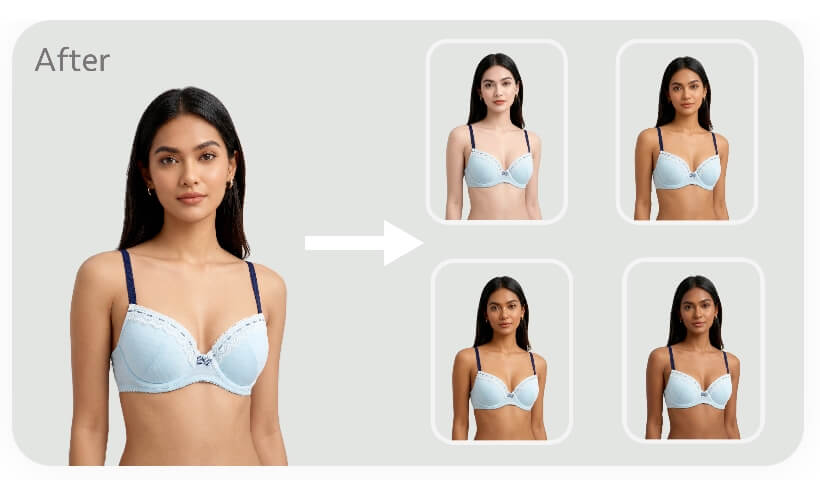
How the AI Skin Color Changer Redefines Brand Equity
In the modern digital economy, brand equity is built on trust and relatability. If a customer has to “guess” how a shade of emerald green or a specific nude tone will look against their skin, you’ve already created a point of friction. Friction is the enemy of conversion. By implementing a Skin Color Changer into the post-production workflow, fashion labels can provide a seamless visual experience.
When a brand consistently presents a full spectrum of skin tones, it sends a powerful message: We designed this for you, specifically. This level of personalization used to be impossible to scale. Now, a single photoshoot can be transformed into a global campaign. This technology ensures that the visual language of the brand remains premium and consistent, regardless of the ethnic diversity being showcased. The AI doesn’t just “paint” over an image; it understands sub-surface scattering, lighting physics, and skin textures, ensuring the final result looks like a high-end editorial shot rather than a digital edit.
The ROI of Inclusivity: Measuring the Impact of the Skin Color Changer
Marketing directors often ask: “Does inclusivity actually pay off?” The data in 2026 says a resounding yes. According to recent e-commerce benchmarks, product listings that feature diverse model representation see an average 15-20% increase in Click-Through Rates (CTR) and a significant reduction in “color-related” returns.
The Skin Color Changer provides a direct boost to the bottom line by:
- Lowering Customer Acquisition Costs (CAC): Ads that reflect the local demographic of the target audience perform better, lowering the cost per click.
- Improving Lifetime Value (LTV): Customers who feel represented by a brand are more likely to become repeat buyers and brand advocates.
- Efficiency Gains: Instead of spending $50,000 on a multi-ethnic photoshoot, a brand can spend a fraction of that on AI credits, achieving the same—or better—visual variety in hours instead of weeks.
Authenticity in the Age of AI: Best Practices for Using a Skin Color Changer
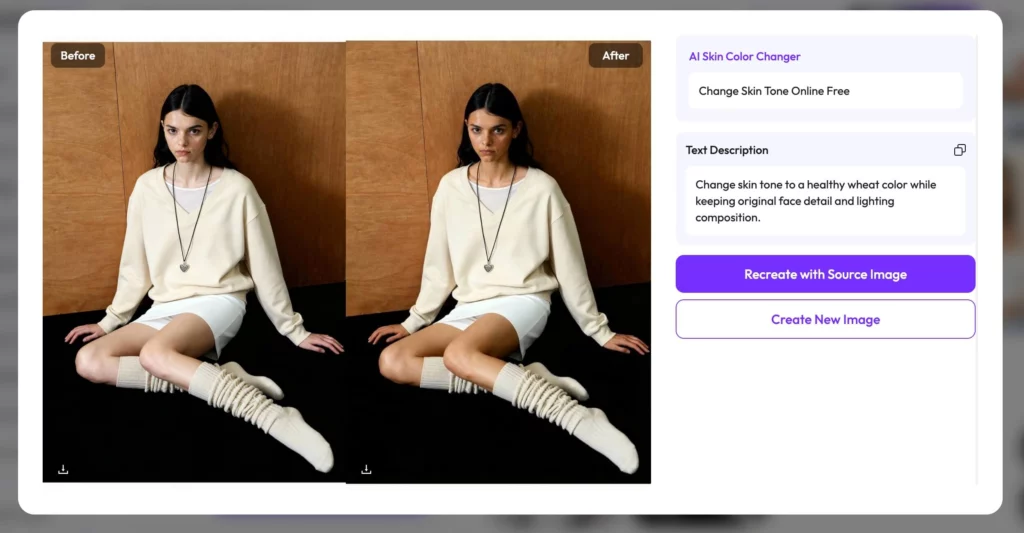
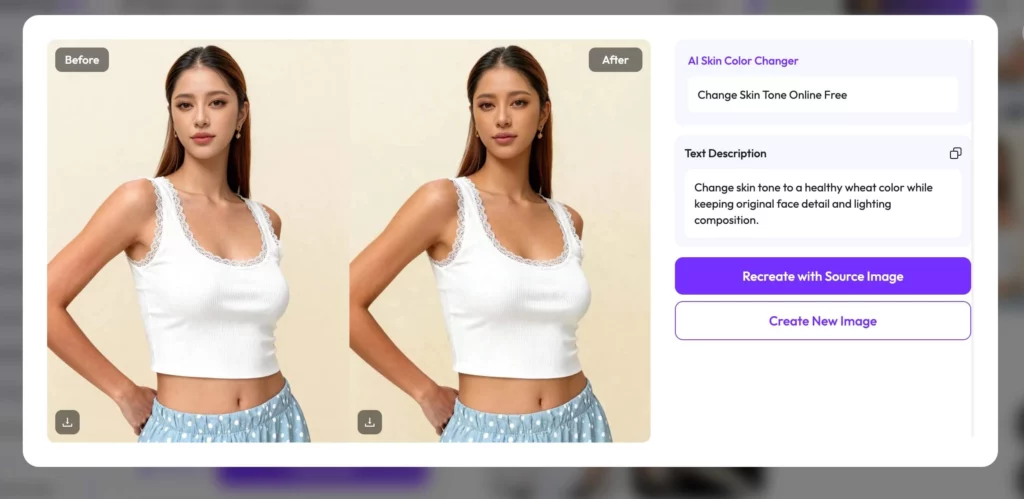
One of the biggest fears brands have when adopting AI is losing “the human touch.” We’ve all seen AI images that look too smooth, too perfect, or just “off.” To lead the market in 2026, authenticity must be the priority. The goal of using an AI Skin Color Changer is not to create a fake person, but to authentically represent a human spectrum.
To maintain this authenticity, leading brands are following a few golden rules:
- Keep the Pores: Ensure the AI preserves the natural texture of the skin. A “plastic” look will alienate customers immediately.
- Match the Lighting: The Skin Color Changer must account for how different skin tones reflect light. Darker skin tones have different specular highlights than fair skin tones; a high-quality AI tool like WeShop AI handles these physics-based nuances automatically.
- Diverse Foundations: Start with high-quality original photography. The better the “base” model and lighting, the more realistic the AI-driven variations will be.
Scaling Global Operations with an Integrated Skin Color Changer Workflow
For global fashion conglomerates, the challenge is often operational. How do you manage thousands of SKUs across 50 different countries? Integrating a Skin Color Changer into the digital asset management (DAM) system is the answer.
Imagine a workflow where a photographer uploads a master set of images from a shoot in Milan. The AI then automatically generates regional variants: a set for the North American market with a diverse mix of tones, a set for the Middle Eastern market with deeper complexions, and a set for the Nordic markets. This level of automated localization allows a lean team to manage a massive global footprint without burning out or compromising on the brand’s visual standards.
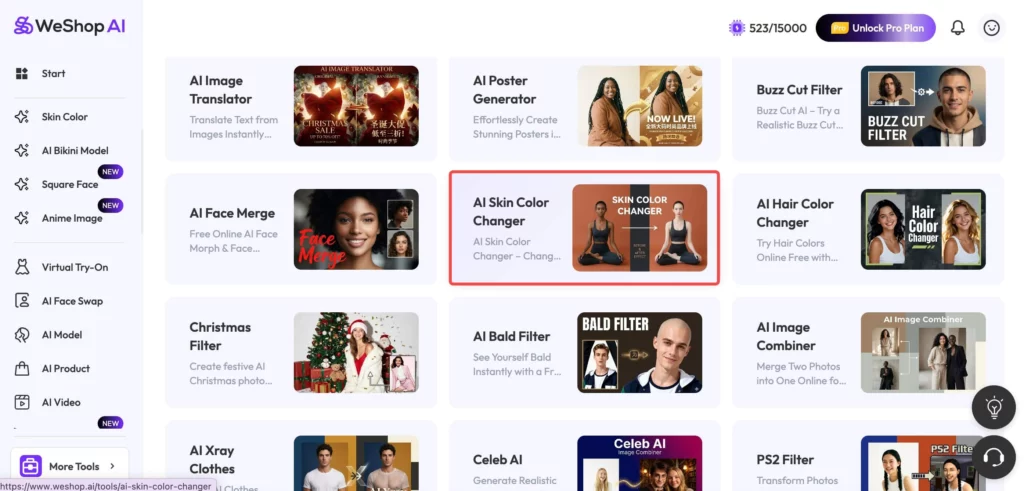
The Future of Ethics and Representation in AI Fashion
As we look toward the future, the conversation around the Skin Color Changer also involves ethics. It is vital for brands to use these tools as a way to expand representation, not to replace the need for diverse talent in the industry. The most successful brands in 2026 use a hybrid approach: they hire diverse models for their hero shots and brand films, and then use AI to scale that diversity across the thousands of deep-link product pages and social media variations that would otherwise be impossible to shoot manually.
This balanced approach respects the artistry of modeling and photography while leveraging the power of technology to ensure that no customer is left out of the brand’s visual story.
Transforming Your Brand with the WeShop AI Skin Color Changer
The “New Standard” in fashion isn’t about the clothes alone—it’s about the connection between the garment and the person wearing it. As markets become more localized and consumers become more discerning, the ability to adapt your visual identity at the click of a button is no longer a “nice-to-have.” It is a survival trait.
WeShop AI has developed a suite of tools that prioritize the needs of the modern e-commerce professional. Our Skin Color Changer is built on the philosophy that high-end fashion imagery should be accessible, inclusive, and, above all, incredibly easy to produce. By removing the financial and logistical barriers to diversity, we are helping brands tell a better story—one where everyone is invited to the party.
Conclusion: Embracing the AI Revolution for a More Inclusive World
In 2026, the brands that win are the ones that listen. They listen to the global demand for representation, and they use the best tools available to meet that demand. The AI Skin Color Changer is more than an editing shortcut; it is a bridge to a more inclusive, more profitable, and more authentic future for fashion.
If your brand is still relying on a single-model strategy for a multi-cultural world, it’s time to evolve. The tools are here, the technology is flawless, and the market is waiting to see itself in your products.