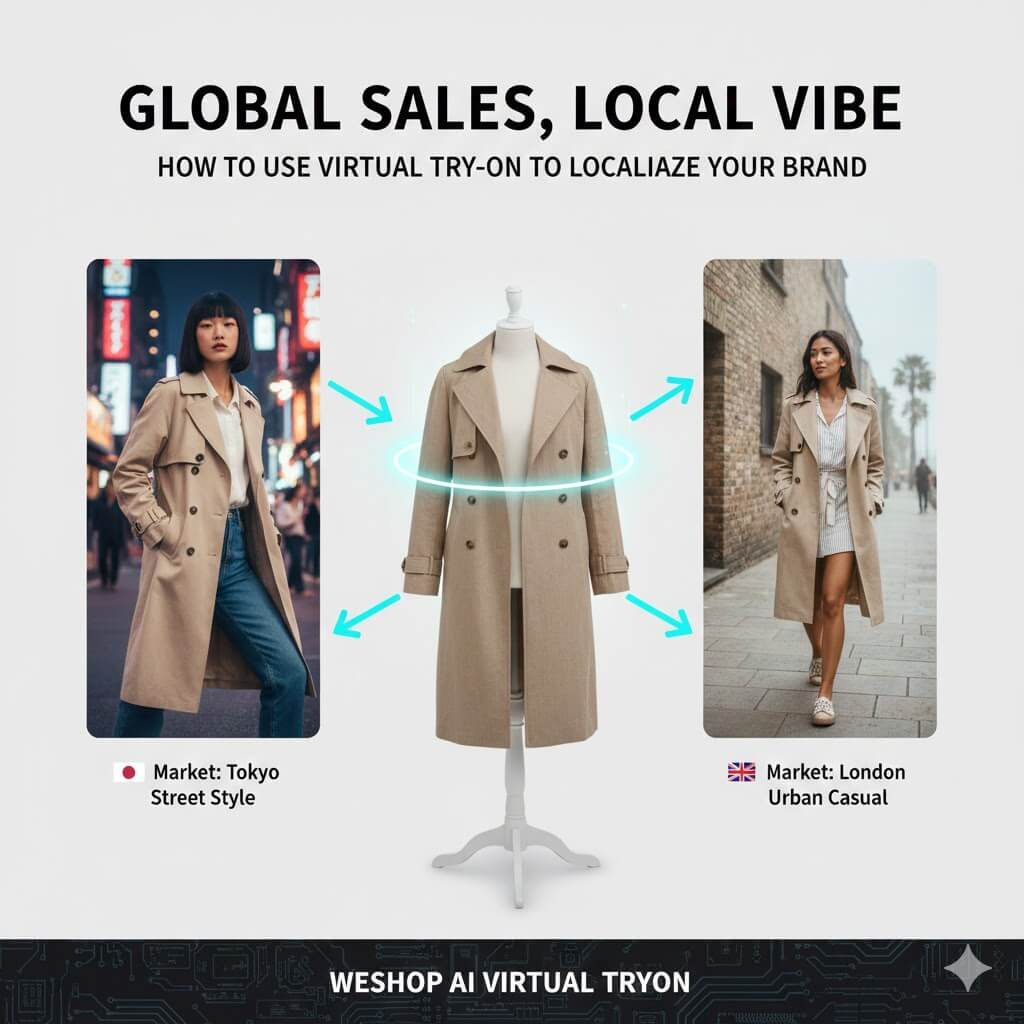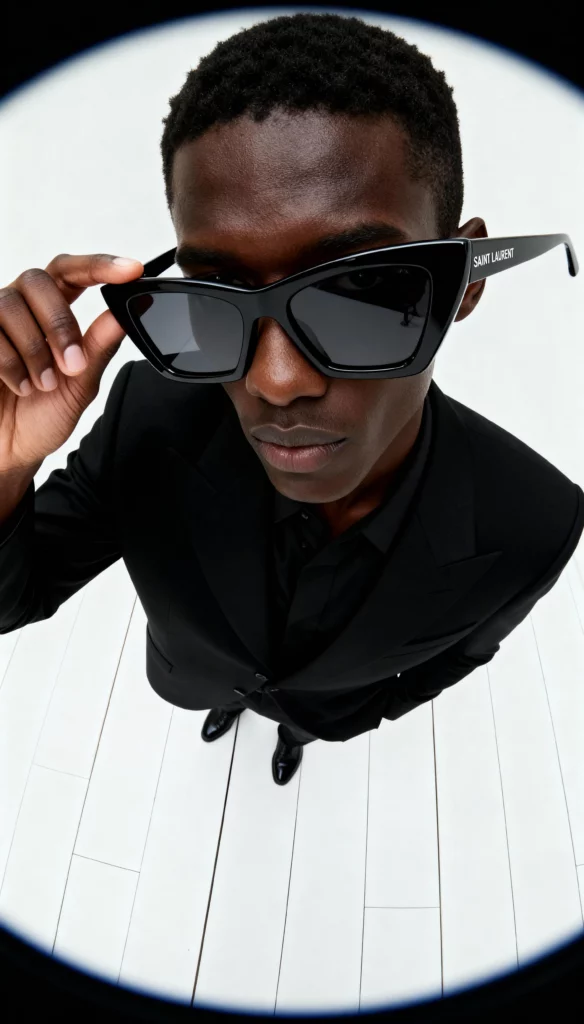
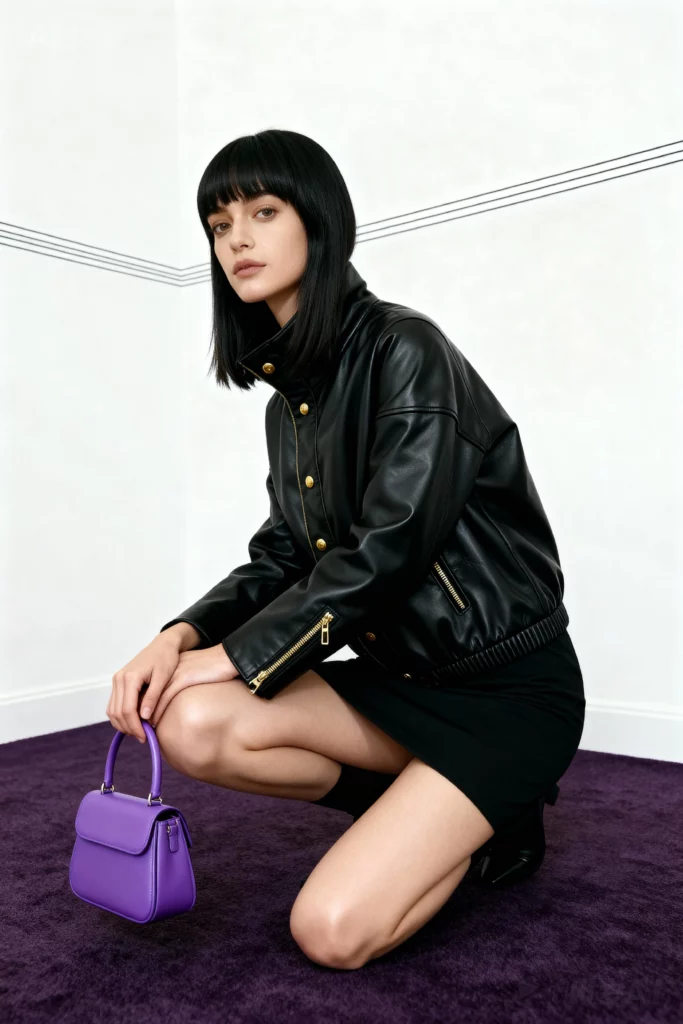
Virtual try-on has become one of the most important tools in fashion ecommerce. As online shoppers can’t physically try on clothing, they rely heavily on visuals to decide fit, style, and overall look. That’s why many fashion brands now search for the best AI tool for virtual try-on—not as a novelty, but as a core part of their ecommerce strategy.
However, not all virtual try-on tools are built the same. Some focus on technical accuracy, while others prioritize visual presentation. For fashion ecommerce, the real challenge is finding a tool that balances realism, speed, and scalability.
Why Virtual Try-On Matters in Fashion Ecommerce
Fashion ecommerce faces a unique problem. Customers want confidence before buying, but traditional product photos often fall short.
Flat images don’t show fit. Mannequins feel impersonal. And repeated photoshoots slow everything down. As a result, shoppers hesitate, and return rates increase.
Virtual try-on helps bridge this gap. By showing how clothing looks on a real body—through AI—brands can give customers a clearer visual reference. This often leads to longer time on page, higher conversion rates, and fewer returns.
What Makes a Virtual Try-On Tool “Best” for Fashion Brands
Not every AI try-on tool fits fashion ecommerce needs. The best tools share a few important traits.
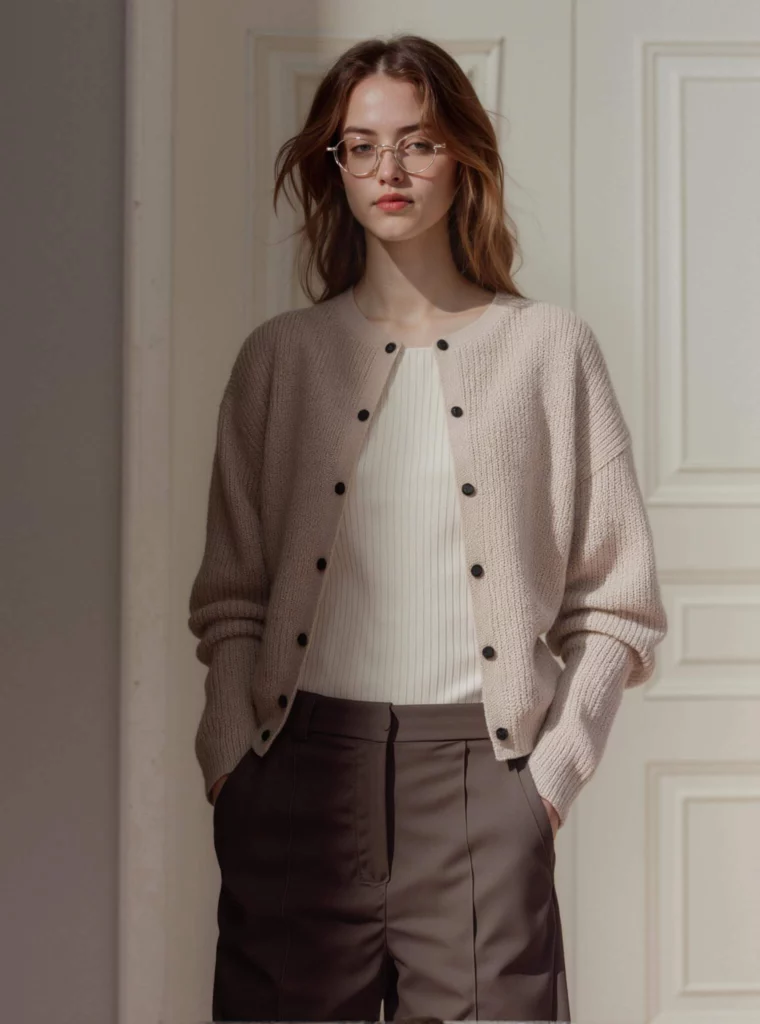
First, they focus on visual realism, not just overlays. Clothing should follow the body naturally, with believable proportions and lighting.
Second, they support multiple use cases. Fashion brands need try-on images for product pages, campaigns, and social media—not just one format.
Third, they scale. A good virtual try-on tool should handle many SKUs, styles, and models without breaking the workflow.
Finally, they fit into existing ecommerce processes instead of replacing them.

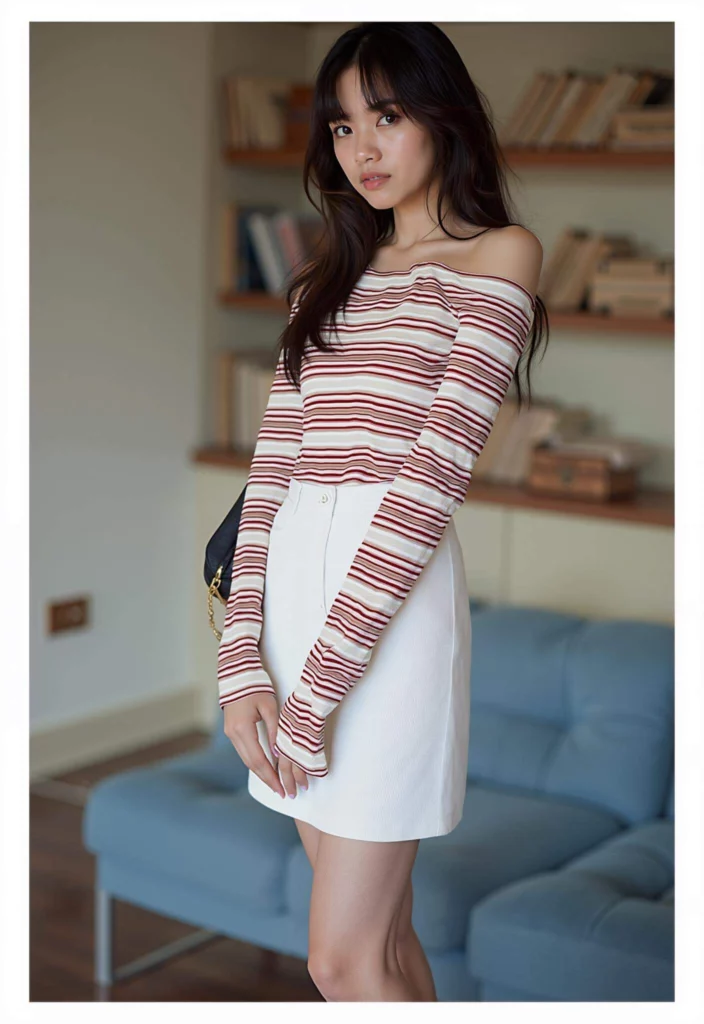
Common Virtual Try-On Tools in the Market
Several AI tools offer virtual try-on features today.
Some platforms focus on 3D fit simulation and sizing accuracy. These tools work well for size recommendations but often require complex setup and integrations.
Other tools focus on creative visualization. They generate eye-catching try-on images but may lack consistency or commercial readiness.
Design platforms sometimes offer mock try-on features as well. However, these usually rely on manual placement rather than true AI-driven try-on.
For many fashion ecommerce teams, these options either feel too heavy—or too limited.
Why WeShop AI Works Well for Fashion Virtual Try-On
WeShop AI approaches virtual try-on from a fashion ecommerce perspective.
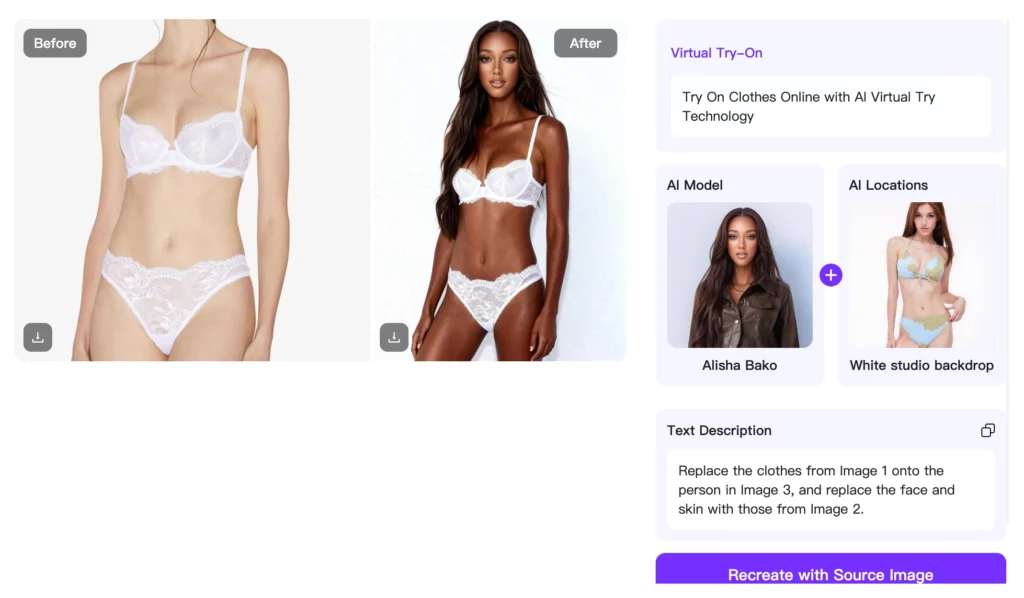
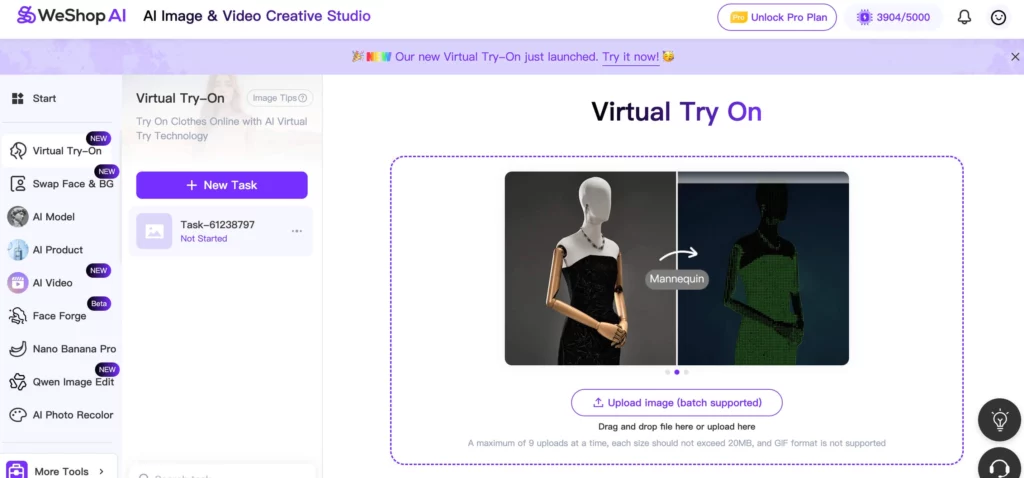
Instead of treating try-on as a technical experiment, it treats it as a visual production workflow. Brands can upload clothing images, choose models—or use their own—and generate try-on visuals that look clean and usable.
Because WeShop AI supports prompts, teams can control pose, camera angle, and overall style. This makes it easier to align try-on images with brand identity.
At the same time, the tool supports batch generation, which is critical for fashion catalogs. Brands can create try-on visuals for entire collections instead of working item by item.
Virtual Try-On Beyond Product Pages
In fashion ecommerce, virtual try-on isn’t limited to product listings.
Brands also use try-on images for:
- Campaign visuals
- Lookbooks
- Social media content
- Pre-launch previews
WeShop AI supports these scenarios by allowing flexible scene and model choices. This helps brands reuse try-on visuals across multiple channels without redoing the work.
Speed and Cost Efficiency
Traditional try-on methods—whether physical fittings or photoshoots—require time and coordination.
Virtual try-on with AI reduces that overhead. Once a brand has clothing images, it can generate new visuals without scheduling models or locations.
Over time, this saves both time and budget. More importantly, it allows fashion teams to respond quickly to trends and inventory changes.
When WeShop AI Is the Best Choice
WeShop AI is especially effective when:
- Brands manage many SKUs or seasonal collections
- Speed matters more than perfect physical accuracy
- Visual consistency is a priority
- Teams want flexibility without complex setup
In these cases, WeShop AI offers a practical balance between realism and usability.
Combining Virtual Try-On with Other Fashion Visual Tools
Most fashion brands don’t rely on a single tool.
A common approach is to:
- Use WeShop AI for virtual try-on and model visuals
- Use design tools for final layouts and text
- Use analytics to test which visuals convert best
This layered workflow keeps production efficient while preserving creative control.
Final Thoughts
There’s no single virtual try-on solution for every fashion brand. However, for ecommerce teams that care about speed, scalability, and usable visuals, WeShop AI stands out as one of the best AI tools for virtual try-on in fashion ecommerce.
It doesn’t try to replace everything. Instead, it fits naturally into how fashion brands already work—helping them create better visuals, faster.
As virtual try-on becomes standard in online fashion retail, choosing the right AI tool will play a major role in how brands compete and grow.