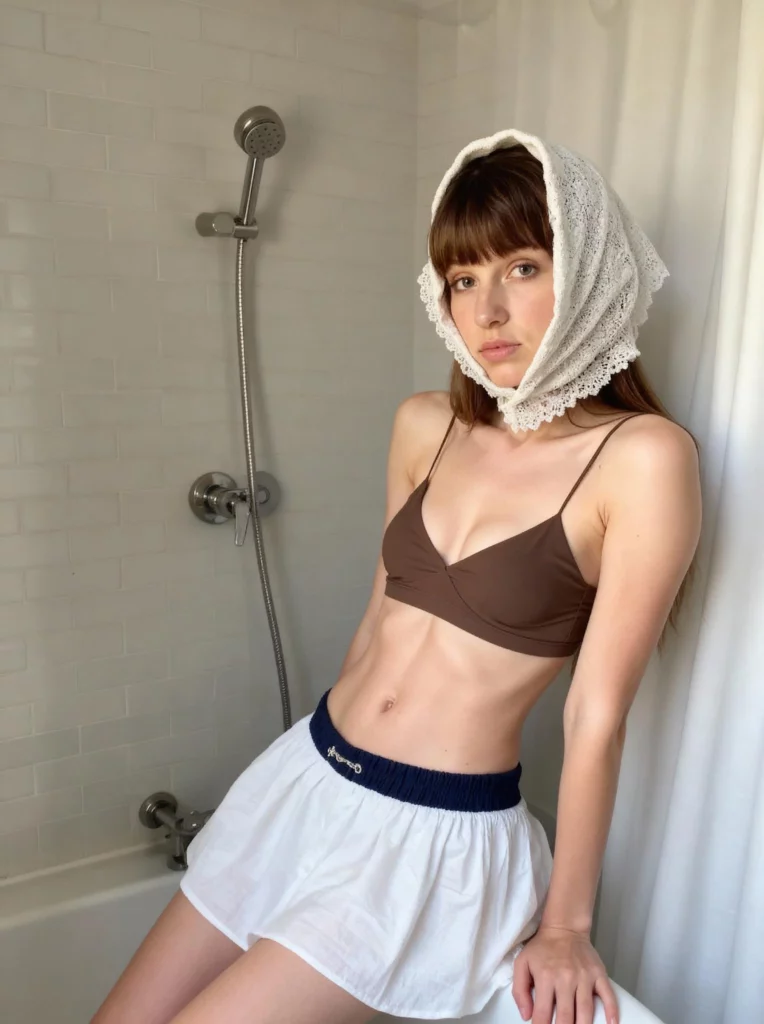
AI pose change for lingerie models has become one of the most valuable capabilities in fashion ecommerce. Instead of reshooting models for every angle, brand, or SKU, teams now rely on AI to generate natural-looking pose variations that preserve fit, fabric detail, and visual consistency.
In this article, we focus specifically on pose change—not general AI image editing. We compare how WeShop AI and several specialized competitors approach pose transformation for lingerie and apparel models, highlighting where each tool shines and where limitations may appear.
What “AI Pose Change for Lingerie Models” Really Means
Before comparing tools, it’s important to clarify what AI pose change for lingerie models actually involves.
This is not the same as general pose manipulation or fashion model swapping.
For lingerie, pose change must handle:
- Sensitive garment structures (straps, lace edges, underwire)
- Accurate body proportions, especially around hips, bust, and waist
- Natural tension and fabric behavior when the body moves
- Consistency across multiple poses for the same product
In other words, changing a lingerie model’s pose is not just about moving arms or legs.
It’s about preserving how the product fits and feels—while still creating visual variety.
That’s why many general AI image tools struggle here. Tools built for AI pose change for lingerie models need training data, templates, or workflows that understand intimate apparel specifically.
WeShop AI: Built for Scalable AI Pose Change for Lingerie Models
WeShop AI approaches AI pose change for lingerie models with scale and consistency in mind.
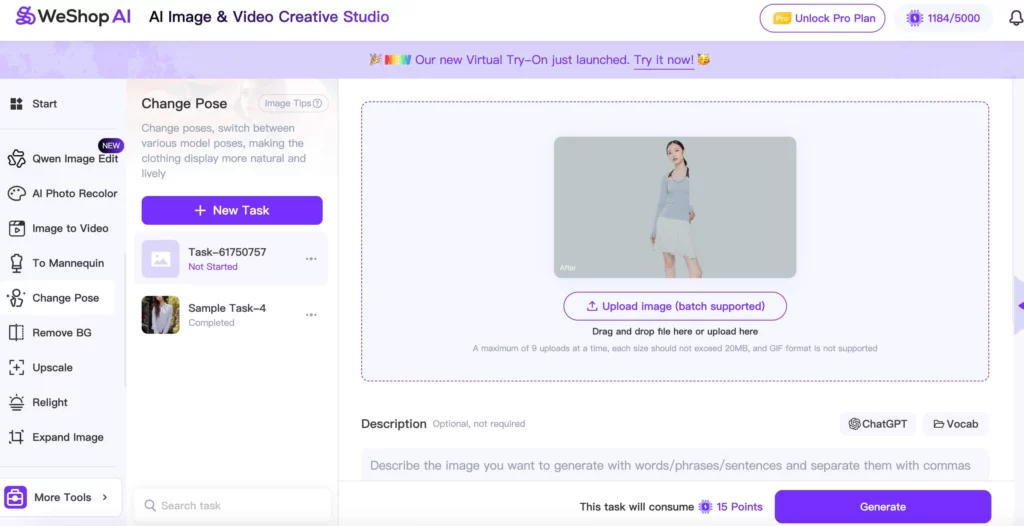
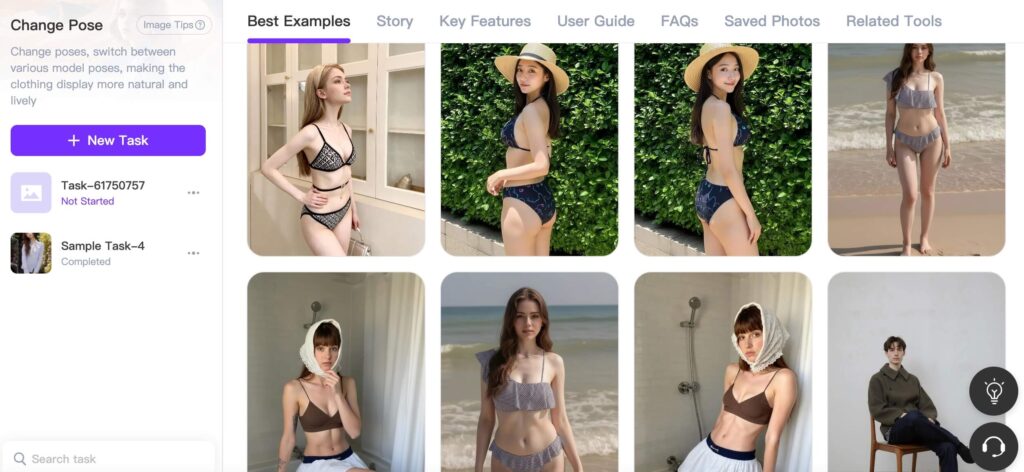
Instead of asking users to manually describe every movement, WeShop AI provides ready-made lingerie pose templates. These templates are designed around real ecommerce needs—standing poses, slight turns, seated positions, and natural movement that keeps the lingerie structure intact.
What stands out is how the system handles production:
- Batch upload support allows brands to process entire lingerie collections at once.
- Custom output count makes it easy to generate multiple poses per product.
- Prompt assistance powered by GPT helps refine pose descriptions without trial-and-error.
- Pose consistency stays stable across all generated images.
For lingerie brands producing hundreds or thousands of SKUs, this workflow reduces manual work while maintaining visual accuracy. In the context of AI pose change for lingerie models, WeShop AI focuses on repeatability and speed—two things ecommerce teams care about most.
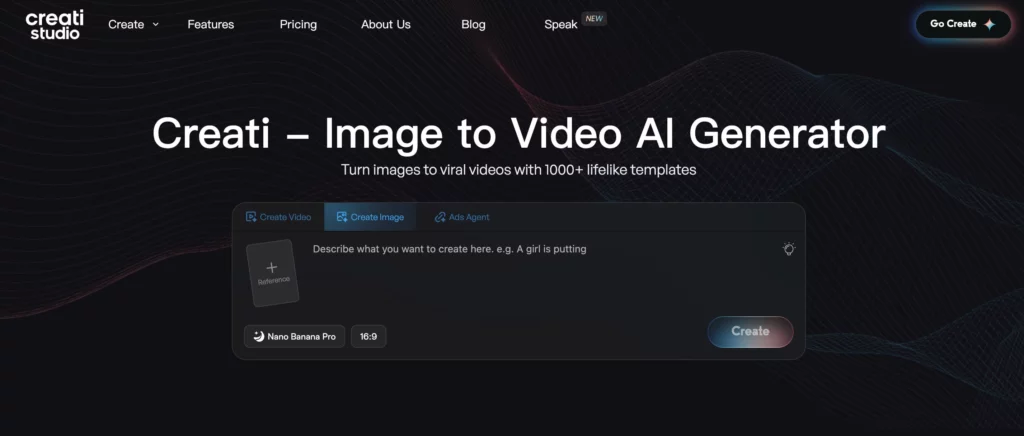
Creati: Reference-Driven Pose Control for Lingerie
Creati takes a more reference-based approach to AI pose change.
Instead of relying on preset templates, users can guide pose changes by uploading reference images. This gives designers more control over subtle posture shifts, which can be useful for lingerie campaigns that need a specific aesthetic or mood.
In terms of AI pose change for lingerie models, Creati works best when:
- You are generating small batches of visuals
- You want creative control over body posture
- You’re comfortable spending time refining references
The trade-off is scale. Creati’s workflow favors precision over volume. For large lingerie catalogs, this can slow production. Still, for editorial or campaign visuals, its pose flexibility is a strong advantage.
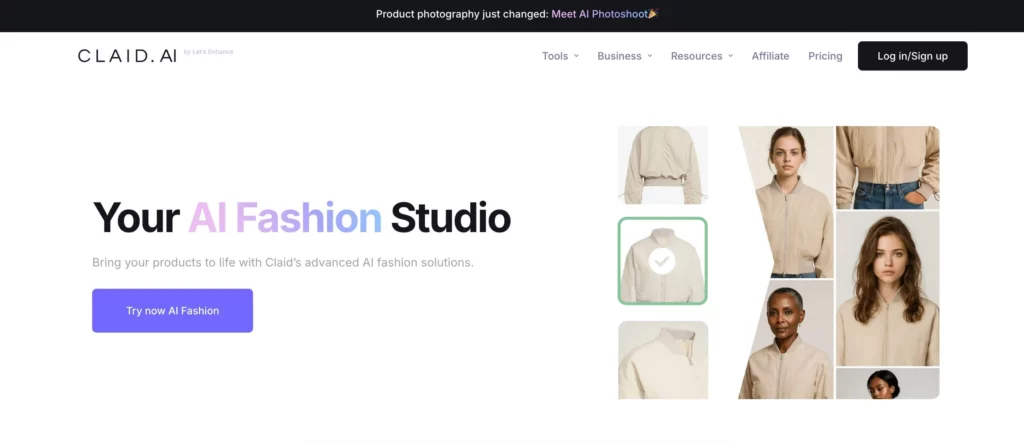
Claid.ai: Structured Lingerie Poses for Clean Product Pages
Claid.ai focuses on product photography consistency, and that philosophy carries into its pose change features.
Rather than offering complex pose variations, Claid.ai supports a limited set of structured, ecommerce-friendly lingerie poses. These typically include front, side, and slightly angled views that work well on product pages.
For AI pose change for lingerie models, Claid.ai is useful when:
- The goal is clean, standardized imagery
- You need poses that highlight fit, not movement
- Speed matters more than creative variety
However, because pose options are more constrained, brands looking for lifestyle or expressive lingerie shots may find the system limiting.
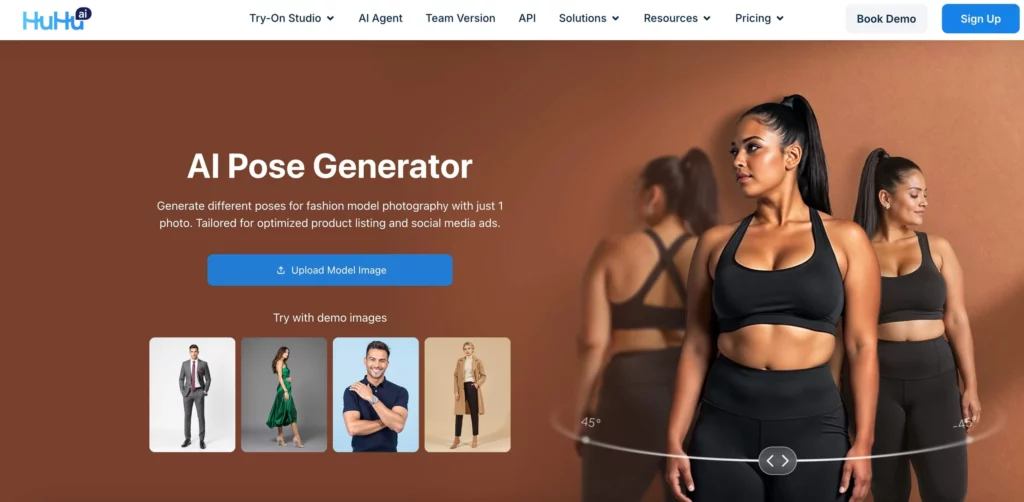
Huhu.ai: Basic Pose Variation for Lingerie Displays
Huhu.ai offers pose variation as part of its broader AI model workflow.
Its strength lies in quick pose switching rather than detailed body articulation. For lingerie, this means you can generate different angles and simple posture changes, but without fine-grained control.
In the context of AI pose change for lingerie models, Huhu.ai works best for:
- Fast testing of multiple viewing angles
- Lightweight ecommerce visuals
- Early-stage product previews
That said, complex lingerie poses—such as walking or seated positions—may require additional editing or refinement.
TapNow: Manual Action Swap for Lingerie Models
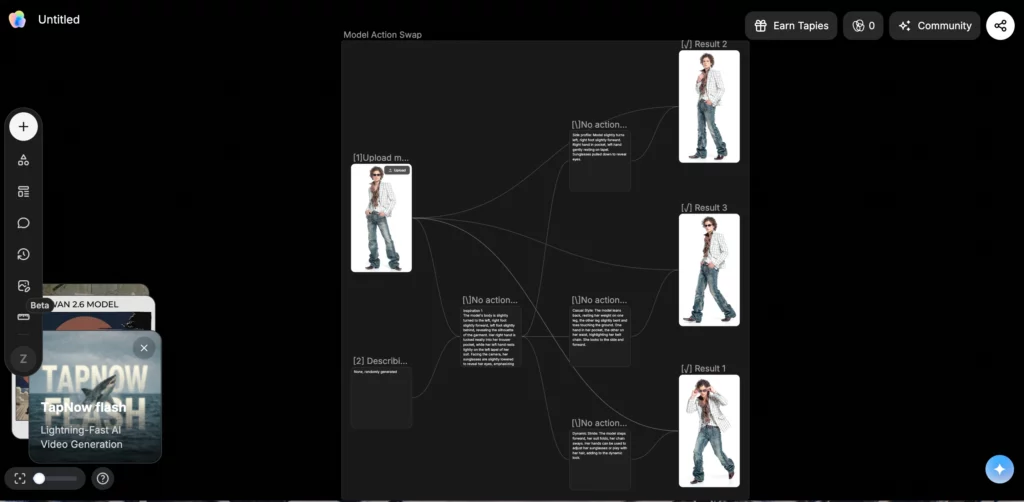
TapNow takes a very different approach.
Instead of templates or presets, TapNow uses a node-based workflow that allows users to manually define actions and pose transitions. This gives creators a high degree of freedom when changing lingerie model poses.
For AI pose change for lingerie models, TapNow offers:
- Highly customizable pose control
- Flexible action descriptions
- Support for batch generation (but not batch uploads)
The downside is usability. TapNow requires more hands-on setup and visual thinking. For ecommerce teams under tight timelines, this manual approach can feel heavy. For advanced users or creative studios, however, the freedom is appealing.
Comparing AI Pose Change for Lingerie Models Across Tools
Looking across platforms, a clear pattern emerges:
- WeShop AI prioritizes scalable, repeatable pose generation for ecommerce
- Creati emphasizes creative, reference-driven pose refinement
- Claid.ai focuses on standardized, product-safe poses
- Huhu.ai delivers quick, simple pose variation
- TapNow offers maximum control with higher manual effort
None of these approaches is inherently “better.”
What matters is how well each tool aligns with your lingerie workflow.
Who Benefits Most from AI Pose Change for Lingerie Models
AI pose change is especially valuable for:
- Lingerie ecommerce brands managing large catalogs
- Marketing teams testing multiple visuals for ads
- Designers exploring how garments behave across poses
- Studios producing campaign imagery without reshoots
If your team needs consistency and speed, template-based systems work best. If your focus is experimentation and art direction, manual or reference-based tools may be a better fit.
Final Thoughts
AI Pose Change for Lingerie Models solves a very specific problem—and not every AI tool is built to handle it.
As lingerie visuals become more dynamic, brands need tools that respect garment fit, body proportion, and pose realism. Whether you choose a scalable ecommerce platform like WeShop AI or a more hands-on system like TapNow, the key is understanding how pose change fits into your production pipeline.
When done right, AI pose change doesn’t replace photography—it extends it. And for lingerie brands, that extension can make all the difference.