Inside the most comprehensive catalog of use cases for WeShop’s flagship model—and what it reveals about the architecture underneath
When a community independently documents 99 distinct methods for using a single AI model, that’s not enthusiasm—it’s signal. It means the tool’s latent capability space is large enough to sustain taxonomic exploration, the kind of systematic categorization that typically only happens with platforms, not features.
Nano Banana 2, WeShop’s second-generation AI image synthesis model, has reached that inflection point. What began as a focused image generation tool has evolved into something closer to a visual computation engine—one whose method space is broad enough that users are still discovering new application vectors months after launch.
This article is an attempt to map that space. Not all 99 methods (that would require a small book), but the taxonomic structure that organizes them—the categories, the architectural principles that enable each category, and the engineering constraints that define the boundaries of what’s currently possible.
The Science Behind Nano Banana 2’s Multi-Domain Generation Architecture
Before cataloging what Nano Banana 2 can do, it’s worth understanding why it can do so many things. Most image generation models excel in narrow domains—photorealism, illustration, or abstract art—because their training distributions are optimized for specific output spaces. Nano Banana 2’s architecture takes a different approach.
The model employs what researchers call a “domain-agnostic latent space”—a representation layer that doesn’t privilege any single visual style or content type. Instead of encoding separate pathways for photography versus illustration versus 3D rendering, it learns a unified representation that can be steered toward any domain through prompt conditioning alone.
This is why the same model can produce photorealistic product shots, anime-style character designs, architectural visualizations, and abstract art without switching modes or loading different weights. The 99 methods aren’t 99 hacks—they’re 99 natural expressions of a deliberately broad architecture.
The key innovation is in the conditioning mechanism. Nano Banana 2 processes style tokens and content tokens through separate attention heads before merging them in the final generation layers. This separation means you can specify “what” and “how” independently without one corrupting the other—a persistent problem in earlier generation models where requesting “watercolor style” would subtly shift the content of the scene itself.

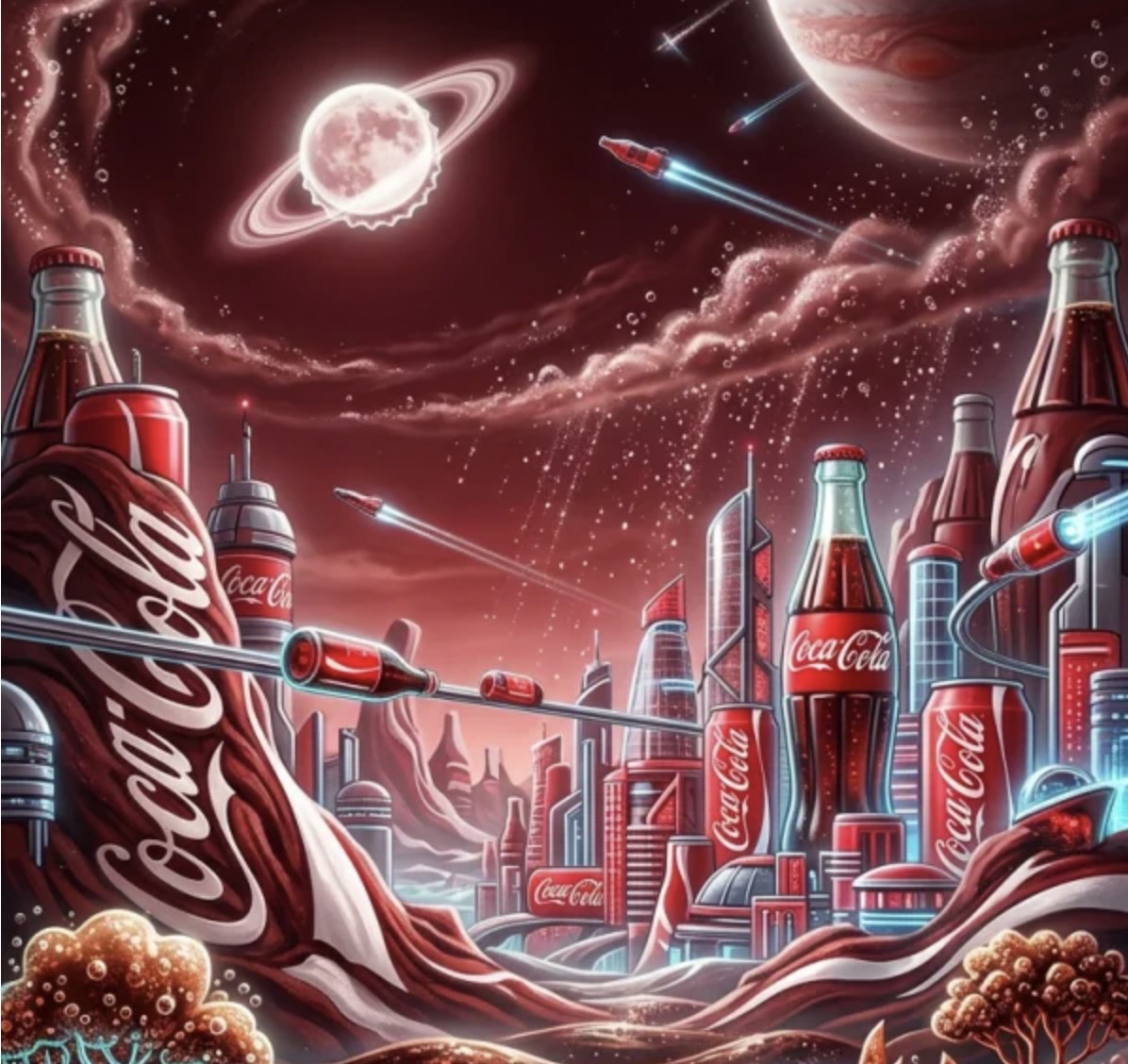
The generation above illustrates this domain flexibility in a single frame—the model handles material textures, lighting physics, and compositional balance simultaneously, each governed by separate conditioning channels rather than competing for the same representational bandwidth.
Taxonomy Level 1: Commercial and Professional AI Image Generation Methods
The largest cluster in the 99-method taxonomy falls under commercial applications. This makes sense: commercial use cases have the tightest specifications, which means they’re the most sensitive to model capability. If a model can’t hit exact requirements, professionals move on. That Nano Banana 2 has accumulated dozens of distinct commercial methods suggests it clears the professional threshold consistently.
E-Commerce Product Visualization With AI-Generated Scenes
Product photography is the most demanding commercial application because it requires both technical precision (accurate color, material rendering, proper shadow physics) and creative flexibility (lifestyle contexts, seasonal variations, platform-specific compositions). The method space here includes flat-lay compositions, in-context lifestyle shots, 360-degree product views, and hero banner compositions—each requiring different prompt architectures but all leveraging the same underlying material rendering capabilities.
The workflow efficiency compounds when you chain Nano Banana 2 outputs with WeShop’s image enhancer, which upscales generated images to print-resolution quality. This pipeline—generate at speed, enhance for final delivery—eliminates the traditional trade-off between iteration velocity and output quality.
Fashion Lookbook and Editorial AI Image Generation
Fashion applications occupy their own taxonomic branch because they require something most AI models struggle with: fabric physics. How cloth drapes, wrinkles, catches light, and responds to movement is computationally expensive to simulate and historically unreliable in generative models. Nano Banana 2’s training on high-resolution fashion photography gives it unusually strong fabric rendering—silk reads as silk, denim reads as denim, and the difference between matte cotton and satin finish is preserved even at lower resolutions.
Methods in this branch range from basic lookbook poses to complex editorial scenarios: multiple garment layers, environmental interaction (wind, water, motion blur), and accessory integration. Each method builds on the model’s core fabric physics but applies it under different constraints.
Architectural Rendering and Interior Design Visualization
Architecture is where AI image generation gets interesting from an engineering perspective. Unlike fashion or product photography—where the subject exists and the model creates a representation—architectural visualization often asks the model to generate something that doesn’t exist yet. The method space here includes exterior rendering (building facades, landscape integration, time-of-day studies), interior visualization (material studies, lighting scenarios, furniture layout), and detail work (texture close-ups, material comparisons, fixture specifications).
The challenge is geometric consistency. A generated building needs to obey basic architectural rules—load-bearing walls can’t float, windows need frames, rooflines need to resolve logically. Nano Banana 2 handles this better than most models because its training included substantial architectural photography, giving it implicit knowledge of structural logic even though it has no explicit physics engine.
Taxonomy Level 2: Creative and Artistic AI Image Generation Techniques
The second major cluster covers creative applications—use cases where the goal isn’t to represent reality but to depart from it in controlled ways.
Character Design and Concept Art With AI Tools
Character design methods split into two sub-branches: realistic character creation (for games, film pre-visualization, and marketing) and stylized character creation (for animation, illustration, and graphic novels). The prompt architectures differ significantly. Realistic characters require anatomical specificity, consistent lighting, and material accuracy. Stylized characters require adherence to an aesthetic system—consistent line weight, color palette rules, and proportional relationships that define a “style.”
Nano Banana 2’s separate style and content conditioning makes it particularly strong at stylized characters. You can define a style once (“Studio Ghibli aesthetic, soft watercolor edges, muted earth tones”) and then iterate on character variations within that style without drift. The style stays locked while the content varies—a capability that earlier models achieved only through fine-tuning or LoRA adapters.
For characters that need pose variations after generation, WeShop’s AI pose generator enables repositioning without regenerating from scratch—preserving the character’s visual identity while exploring different compositions.
Abstract and Fine Art AI Generation Methods
Abstract art is the taxonomic category that reveals the most about a model’s latent space. When there’s no “correct” output to constrain generation, the model’s aesthetic biases become visible. Nano Banana 2’s abstract outputs show a strong sense of compositional balance—golden ratio adherence, complementary color relationships, and resolution of visual tension—suggesting that its training distribution included substantial fine art photography and gallery documentation.
Methods in this branch include texture generation, pattern design, color field compositions, geometric abstractions, and procedural art—each exploiting different aspects of the model’s learned aesthetic grammar.
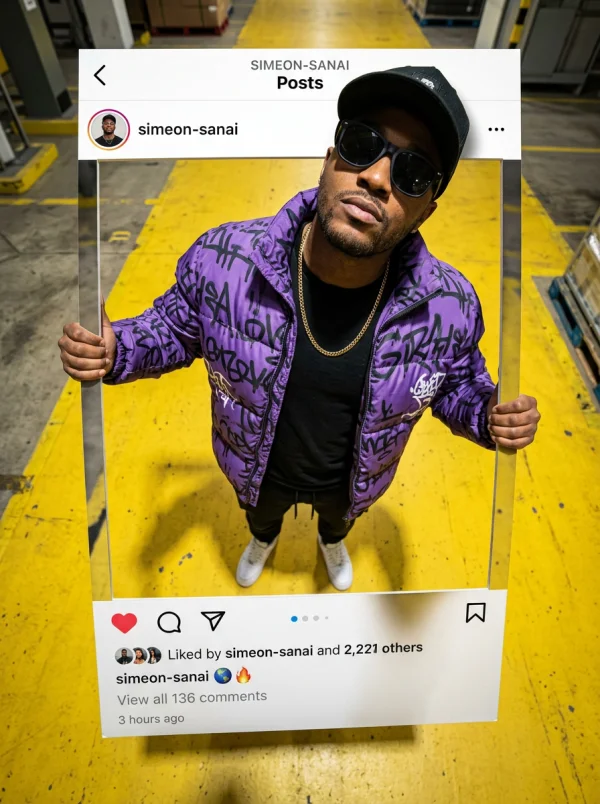
This generation demonstrates the model operating in creative territory where photographic accuracy is irrelevant—what matters instead is compositional coherence, tonal harmony, and the kind of intentional detail placement that separates generative noise from generated art. The model’s aesthetic training shines precisely when freed from representational constraints.
Actionable Scene Guide: Implementing the Most Impactful Methods
Taxonomy is useful for understanding capability. Implementation guides are useful for doing work. Here’s how to execute the highest-impact methods from the 99-method catalog.
Method 1: The Cinematic Still — AI-Generated Movie Poster Quality Images
This is the single most versatile method in the taxonomy. The prompt formula: [Character description] + [dramatic action or pose] + [cinematic environment] + [specific film lighting reference] + [camera and lens specification]. Example: “A weathered detective standing at the edge of a rain-soaked rooftop at night, neon signs reflecting in puddles below, Blade Runner 2049 lighting, anamorphic lens flare, ARRI Alexa, 40mm Cooke S4, shallow depth of field.” The film lighting reference is the key differentiator—it gives the model a precise aesthetic target drawn from its training on film stills.
Method 2: The Material Study — Close-Up Texture and Surface Generation
Invaluable for designers, architects, and game developers who need texture references. The formula: [Material type with specificity] + [lighting angle and type] + [scale reference] + [macro photography specifications]. Example: “Aged brass door handle with verdigris patina, raking light from the left at 15 degrees, extreme close-up showing individual corrosion crystal formations, macro photography, Laowa 100mm 2:1, f/5.6, focus stacking.” The scale reference and macro specs force the model into a detail regime that produces genuinely useful texture references.
Method 3: The Environment Plate — Background Generation for Compositing
Environment plates are backgrounds designed for compositing—they need to be beautiful but also technically compatible with foreground elements that will be added later. The formula: [Environment description with spatial depth] + [lighting that matches intended composite] + [empty space for subject placement] + [lens matching target composite]. This method pairs naturally with WeShop’s AI Background Changer, which can seamlessly place existing subjects into generated environment plates.
Method 4: The Style Transfer — Applying Artistic Movements to Modern Subjects
This method maps historical art movements onto contemporary subjects. “A modern Tokyo intersection rendered in the style of Ukiyo-e woodblock printing, with contemporary cars and pedestrians depicted using traditional flat perspective and bold outlines.” The tension between modern content and historical style produces outputs that are visually striking and commercially distinctive—particularly effective for branding and editorial illustration.
Method 5: The Technical Diagram — Infographic and Explanatory Visualization
Perhaps the most surprising entry in the taxonomy. Nano Banana 2 can generate credible technical diagrams, exploded views, and infographic-style visualizations when prompted with engineering-specific language. The key is specifying the visual convention: “Isometric exploded view of a mechanical watch movement, technical illustration style, clean white background, numbered callouts, cross-hatching for cut surfaces, engineering drawing conventions.” This works because technical illustration has its own strong visual grammar that the model has internalized from training data.
Technical Foresight: Where Nano Banana 2’s Method Space Is Expanding
The 99 methods documented today represent the model’s current capability frontier, but several vectors suggest where the method space will grow next.
Video keyframe generation is the most obvious expansion. The model’s strong temporal coherence within single frames—consistent lighting, material continuity, logical spatial relationships—suggests it could maintain coherence across frame sequences. Several community members have already experimented with generating sequential frames and interpolating between them, producing crude but recognizable animations.
Interactive prompt refinement represents another frontier. Current methods treat generation as a one-shot process: write prompt, generate image, evaluate. Future iterations will likely support iterative refinement—”make the sky warmer,” “move the subject left,” “add fog to the background”—transforming the generation process from prompt engineering into conversational design.
Multi-image consistency is perhaps the most commercially significant frontier. The ability to generate multiple images of the same subject in different contexts—the same character in different poses, the same product in different environments—without visual drift would transform virtually every commercial application. Early experiments with seed locking and prompt templating show promising results, but native multi-image coherence would be transformative.
Engineering Challenges: The Hard Problems in AI Image Generation at Scale
A thorough taxonomy must include boundaries—the things the model can’t do yet, and why those limitations exist at an engineering level.
The Text Rendering Problem in AI-Generated Images
Legible text in generated images remains the industry’s most visible failure mode. Nano Banana 2 handles short text strings (1-3 words) reasonably well, but longer text degrades into plausible-looking but nonsensical letterforms. The root cause is architectural: diffusion models process images at a spatial resolution where individual letters occupy very few pixels, making it difficult to maintain the precise geometric relationships that distinguish “R” from “P” from “B.” Solving this likely requires either higher-resolution generation pipelines or specialized text-rendering modules that operate independently of the main diffusion process.
Consistent Identity Across Multiple AI Image Generations
Generating the same person, character, or object across multiple images with perfect visual consistency is technically unsolved at the generative model level. Current workarounds—seed manipulation, detailed prompt engineering, reference image conditioning—approximate consistency but don’t guarantee it. The engineering challenge is fundamental: the model generates from a probability distribution, and slightly different prompts sample slightly different regions of that distribution, even when the intended subject is identical.
Physical Accuracy in Complex Scene Generation
The model has no physics engine. Its understanding of gravity, fluid dynamics, light transport, and material interaction is entirely learned from training images. This means it handles common physical scenarios well (water reflects, shadows fall downward, glass refracts) but fails on unusual physics (non-standard gravity, exotic materials, complex multi-bounce lighting). For applications requiring physical accuracy, generated images should be treated as starting points rather than ground truth.
Computational Cost and Accessibility of High-Resolution AI Images
Higher resolution means exponentially higher computational cost. Generating a 4K image takes roughly 16 times the compute of generating a 1K image, because diffusion models operate on the full pixel grid. This creates an accessibility tension: professional applications demand high resolution, but high resolution demands expensive hardware. Pipeline solutions—generate at lower resolution, enhance with dedicated upscaling—offer the best current trade-off between quality and cost.
Frequently Asked Questions About Nano Banana 2 AI Image Generation Methods
How many distinct use cases does Nano Banana 2 actually support?
The community has documented 99 distinct methods, organized into commercial, creative, technical, and experimental categories. However, this number likely understates the true method space—each documented method has numerous sub-variations, and new applications are being discovered regularly as users explore the model’s capabilities in domain-specific contexts.
Do I need technical knowledge to use advanced Nano Banana 2 methods?
Basic methods (portraits, product shots, simple scenes) require no technical knowledge—just clear descriptive prompts. Advanced methods (cinematic stills, material studies, technical diagrams) benefit from domain knowledge in the relevant field. A photographer will write better photography prompts; an architect will write better architectural prompts. The model amplifies expertise rather than replacing it.
What is the best prompt length for complex Nano Banana 2 generations?
Complex methods typically require 60-120 word prompts to fully specify subject, environment, style, and technical parameters. Prompts under 40 words lack the specificity needed for precise control, while prompts over 150 words tend to dilute attention and produce muddled results. The optimal range provides enough information for each of the model’s conditioning channels without creating conflicts between competing instructions.
Can Nano Banana 2 replace professional photography and illustration?
For certain applications—concept exploration, rapid prototyping, social media content, and placeholder visuals—it already has. For final deliverables requiring pixel-perfect precision, brand-specific consistency, or legally defensible image provenance, professional creation remains necessary. The most productive workflows use Nano Banana 2 for exploration and iteration, then bring in professional refinement for final delivery.
How does Nano Banana 2 compare to other AI image generation models for versatility?
Nano Banana 2’s domain-agnostic architecture gives it broader versatility than models optimized for specific output types. Where specialized models may produce slightly better results in their target domain (e.g., a photorealism-focused model for product photography), Nano Banana 2’s ability to operate competently across all 99 documented methods without switching models or loading adapters makes it the more practical choice for creators who work across multiple visual domains.
© 2026 WeShop AI — Powered by intelligence, designed for creators.