In the world of visual commerce, where a single image can determine whether a customer scrolls past or stops to buy, the gap between “good enough” and “exceptional” has always been measured in budget. Until now.
Nano Banana 2 is quietly changing the economics of beautiful imagery — and the brands paying attention are already reaping the returns.
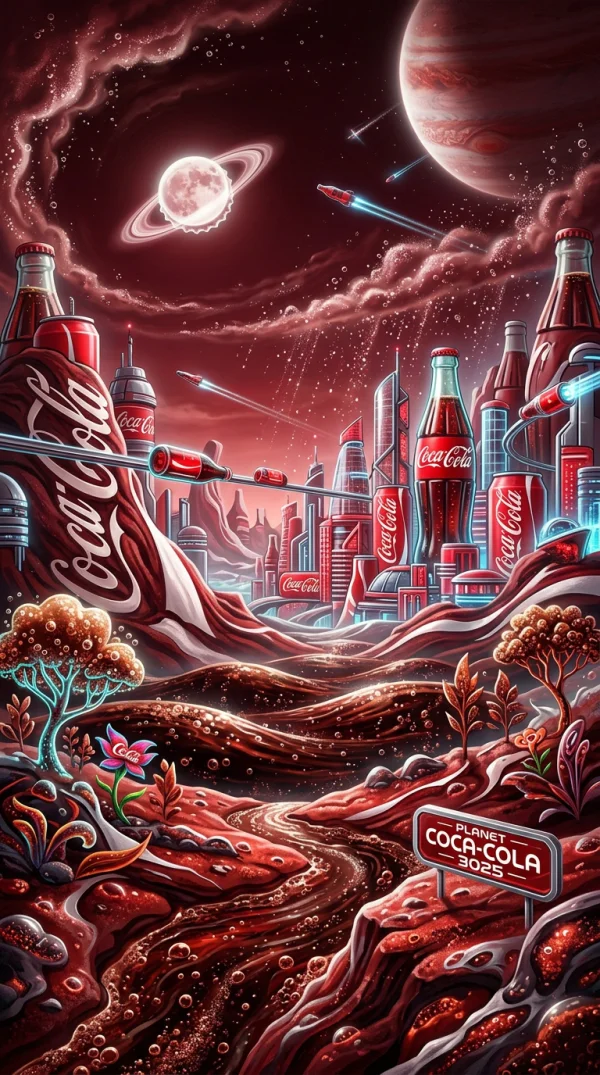
Nano Banana 2 output: editorial-grade visual assets, generated in seconds.
Why Luxury Brands Are Turning to AI-Generated Visual Content
There’s a quiet revolution happening in the studios and creative departments of forward-thinking brands. The conversation has shifted from “Can AI produce imagery we’d actually use?” to “How quickly can we integrate this into our content calendar?”
The economics are impossible to ignore. A traditional editorial product shoot — photographer, stylist, studio rental, post-production — runs anywhere from $2,000 to $15,000 per day, depending on the market and the talent involved. That’s before you account for the time cost: scheduling, logistics, revision cycles, and the inevitable reshoot when the creative direction shifts mid-campaign.
Nano Banana 2 collapses this entire process into something that feels almost unfairly efficient. Upload a product image, describe the world you want it to inhabit, and receive output that matches — and in many cases exceeds — the quality of traditional studio work. The lighting is nuanced. The surfaces behave like real materials. The compositions feel intentional rather than algorithmic.
This isn’t about replacing creative vision. It’s about democratizing execution. The brand with a $500 monthly content budget can now produce imagery that holds its own next to the brand spending $50,000. That kind of leveling doesn’t happen often, and when it does, the early adopters define the new standard.
The Science Behind Nano Banana 2’s Photorealistic AI Image Quality
What separates Nano Banana 2 from the sea of AI image generators is something you feel before you understand it: the images just look right. There’s a coherence to the lighting, a physicality to the materials, a spatial logic to the compositions that most AI tools still struggle to achieve.
This quality comes from advances in how the underlying diffusion model processes visual information. Rather than treating an image as a flat grid of pixels to be filled in, Nano Banana 2 works with a layered understanding of the scene — foreground and background are processed with different levels of detail, lighting is calculated as a global property rather than applied locally, and material surfaces are rendered with awareness of how they interact with light sources.
The practical result is that a silk blouse in a generated image actually catches the light like silk. A glass bottle produces the correct refraction patterns. A matte cosmetics compact absorbs light rather than reflecting it. These are subtle distinctions, but they’re precisely the distinctions that separate professional commercial photography from amateur attempts — and they’re precisely what makes Nano Banana 2’s output usable for brands that care about visual quality.
The model also excels at what designers call “visual hierarchy” — the natural ordering of elements that guides the viewer’s eye through an image. In a well-composed product shot, your gaze should land on the product first, then move to the contextual elements that tell the brand story. Nano Banana 2 consistently produces compositions that follow this principle, suggesting the model has internalized these aesthetic rules from its training data.
Actionable Scene Guide: Creating Elevated Brand Imagery with Nano Banana 2
How to Generate Editorial-Quality Product Photography for Fashion E-Commerce
Fashion imagery lives and dies by its ability to communicate aspiration. The product isn’t just a garment — it’s a lifestyle, a mood, an identity. This is where Nano Banana 2’s scene generation capabilities become genuinely powerful for fashion brands.
Start with clean product photography. This doesn’t require an expensive studio setup — good natural light and a neutral background are sufficient. What matters is capturing accurate color and enough detail for the AI to understand the material. A well-lit iPhone photo of a cashmere sweater will produce better results than a poorly lit DSLR shot, because the model needs to “read” the fabric’s texture to render it convincingly in a new context.
When crafting your scene prompt, think like a creative director rather than a photographer. Instead of describing technical parameters (f-stop, focal length), describe the feeling of the image you want:
- “Morning light through linen curtains, Mediterranean terrace, whitewashed walls, olive branch shadow” — for resort and summer collections
- “Moody editorial, concrete gallery space, single dramatic spotlight, architectural shadow play” — for avant-garde or minimalist labels
- “Golden hour rooftop, warm city skyline blurred in background, casual luxury” — for contemporary streetwear and lifestyle brands
The specificity of your atmospheric descriptions directly correlates with the quality of the output. Nano Banana 2 has an impressive ability to translate mood language into visual reality — “casual luxury” and “formal elegance” produce meaningfully different results.
For brands building seasonal lookbooks, pair Nano Banana 2 with WeShop’s AI Pose Generator to create model-styled compositions without the cost and complexity of a traditional fashion shoot. The combination allows you to test creative directions rapidly before committing to a full production.
Beauty and Skincare: How to Create Luxurious Product Visuals with AI
Beauty photography has always been about surface — the way light plays across glass, the luminosity of a cream, the precise gradient of a liquid foundation. It’s a genre where imperfection is immediately visible and unforgivable.
Nano Banana 2 handles these demands with remarkable sophistication. When generating scenes for beauty products, the model pays particular attention to reflective surfaces and translucent materials — two of the hardest elements to render convincingly in any context, AI or otherwise.
The key to exceptional beauty imagery lies in the prompt details that most users overlook:
- Surface material: Specify “rose gold cap” rather than just “gold” — the model distinguishes between metallic finishes.
- Background texture: “Veined Calacatta marble” produces dramatically different results from “white marble” or just “marble.”
- Lighting temperature: “Warm candlelit glow” versus “cool clinical studio light” completely changes the mood and perceived product positioning.
For final polish on beauty imagery, WeShop’s Image Enhancer can refine surface details and ensure the luminosity and clarity that beauty brands demand.
Home and Lifestyle: AI-Generated Visual Storytelling for Interior Brands
Lifestyle imagery for home brands presents a unique challenge: the product needs to feel like it belongs in a space, not like it was placed there for a photograph. This is the difference between catalog imagery and editorial content — and it’s the difference between content that sells and content that inspires.
Nano Banana 2’s spatial reasoning excels here. Upload a candle, a throw blanket, a ceramic vase, and describe the room you want it in. The model generates not just a plausible placement but a convincing integration — shadows that match the room’s light sources, reflections that correspond to nearby surfaces, a color palette that feels harmonious rather than accidentally juxtaposed.
For brands that need to show products in different interior styles — Scandinavian minimal, Parisian apartment, desert modern — this capability eliminates the need for multiple styled sets. One product image becomes the foundation for an entire visual narrative across aesthetic contexts.
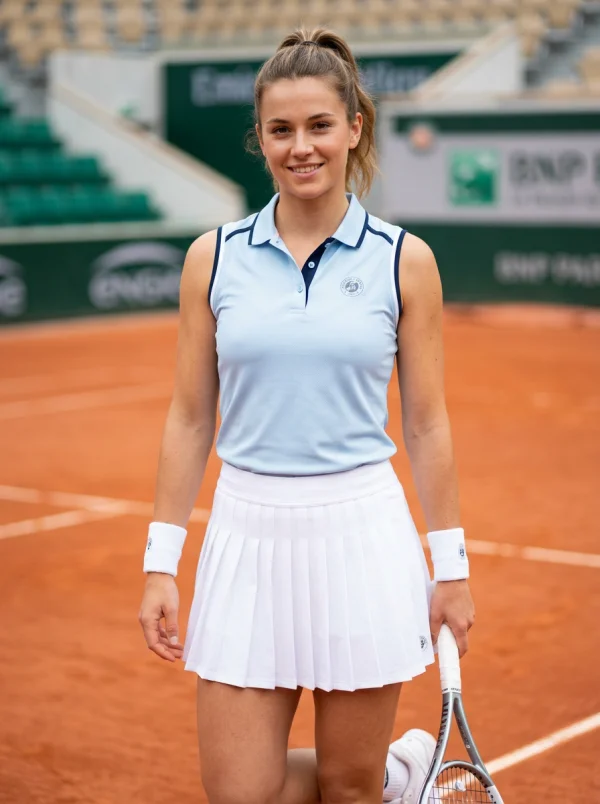
Elevated visual storytelling: a single product photo transformed into aspirational lifestyle content.
Jewelry and Accessories: Capturing Sparkle and Detail in AI-Generated Images
Jewelry is perhaps the ultimate test of any image generation system. The way light interacts with precious metals and gemstones follows complex physical rules — caustic reflections, spectral dispersion, subsurface scattering in pearls. Get any of these wrong and the result looks immediately fake.
Nano Banana 2 doesn’t always nail this perfectly (honesty compels me to say that diamonds and highly faceted gemstones remain challenging), but for gold, silver, and simpler metallic accessories, the results are remarkably convincing. The model seems to understand that reflective surfaces require environmental context — a gold necklace on a plain background looks flat, but the same necklace on a dark velvet surface with soft side lighting suddenly comes alive with realistic reflections.
For precise background control with jewelry imagery, WeShop’s AI Background Changer provides fine-tuned options that complement Nano Banana 2’s scene generation.
The E-Commerce ROI of AI-Generated Brand Photography
Let’s talk numbers, because beautiful imagery without business impact is just art.
The conversion lift from high-quality product imagery is well documented. Studies consistently show that professional-grade product photos increase conversion rates by 20-40% compared to amateur photography. The problem has always been the cost of achieving that quality at scale — until now.
Consider a typical direct-to-consumer brand with 200 SKUs. Traditional product photography for that catalog — assuming 3-5 images per SKU across different contexts — represents a five-figure investment in annual content production. With Nano Banana 2, the same catalog can be generated, iterated, and refreshed seasonally for a fraction of that cost.
But the real ROI isn’t just in cost reduction — it’s in velocity. The brand that can produce high-quality visual content in hours rather than weeks can respond to trends faster, test creative directions more aggressively, and maintain a fresh visual presence across channels without the production bottleneck that constrains traditional approaches.
For seasonal businesses, this speed advantage is especially significant. A swimwear brand that can produce its summer campaign imagery in February rather than scheduling shoots in November has a flexibility advantage that translates directly to more relevant, more timely content.
Expert FAQ: Nano Banana 2 for Professional Brand Visual Content
How does Nano Banana 2 ensure color accuracy for brand-sensitive product imagery?
Color accuracy depends primarily on the quality of your input image. If your source photo accurately represents the product’s true colors under neutral lighting, Nano Banana 2 will maintain that accuracy in the generated scene while adapting appropriately to the described lighting conditions. For brands with strict Pantone requirements, I recommend shooting reference images under calibrated D50 lighting and verifying the output against physical samples before publishing at scale.
Can Nano Banana 2 generate consistent visual themes for a complete brand campaign?
Yes, with intentional prompt design. Develop a “visual brief” as a prompt template — consistent descriptions for lighting style, color palette, atmospheric mood, and surface materials — and apply it across all generations for a campaign. The model responds reliably to consistent prompt language, producing outputs that feel cohesive as a collection even though each image is generated independently. Think of it as art directing by language rather than by physical set design.
What is the ideal input image quality for luxury-grade AI-generated product photography?
Aim for sharp, well-exposed images with accurate color representation. Resolution should be at least 1000px on the longest side — higher is better, as the model extracts more surface detail from higher-resolution inputs. Even, diffused lighting is preferable to dramatic lighting, because the model will generate scene-appropriate lighting in the output. A clean or transparent background helps the model isolate the product more precisely, leading to cleaner edge integration in the final scene.
How many image variations should brands generate per product for optimal e-commerce performance?
Industry best practice suggests 4-6 distinct images per SKU: one clean product shot, two lifestyle context images, one detail or texture close-up, and one or two alternative angle or styling variations. Nano Banana 2 makes it economically viable to produce all of these from a single source image, where traditionally you’d need multiple setups and shoots. I recommend generating 8-10 options per concept and curating down to the strongest performers.
Is Nano Banana 2 output suitable for print-quality brand materials like catalogs and packaging?
For digital-first applications (web, social media, email marketing), Nano Banana 2’s native output quality is excellent as-is. For print applications requiring 300 DPI at larger sizes, you’ll want to run outputs through the upscaling pipeline, which maintains detail quality at higher resolutions. For luxury print materials — think heavy-stock brand catalogs or large-format retail displays — I recommend generating at the highest available resolution and verifying a test print before committing to a full run. The quality is there; you just want to confirm it meets your specific print specifications.
The New Aesthetic Standard
What strikes me most about Nano Banana 2 isn’t the technology itself — it’s what the technology makes possible for brands that previously couldn’t afford to compete on visual quality. The independent jeweler in a home studio can now produce imagery that stands beside Cartier’s on a Google Shopping carousel. The emerging skincare brand can build a visual identity with the polish of an established luxury house.
This isn’t the end of professional photography — the best photographers bring a creative vision and directorial sensibility that AI supplements rather than replaces. But it is the end of beautiful imagery being a privilege of budget. And in a visual-first commercial landscape, that shift matters enormously.
The brands that understand this moment — that recognize AI-generated imagery as a creative amplifier rather than a replacement — will define the next chapter of visual commerce. The tools are here. The quality is undeniable. The only question remaining is how boldly you’re willing to reimagine your visual identity.
© 2026 WeShop AI — Powered by intelligence, designed for creators.