At first glance, compare replace face in video online free looks like a very practical search term. But the real reason people search it is more interesting than that. They are usually not chasing a gimmick. They are trying to answer a question about how much a face changes the meaning of a video. That is why this topic matters: it sits at the intersection of content creation, media trust, and AI workflow. Regulators and standards groups are now treating AI impersonation, deepfakes, provenance, and watermarking as serious issues, not niche experiments. The FTC has warned that AI-generated deepfakes can be used to defraud consumers, and the ITU has been pushing standards work around multimedia authenticity and watermarking.
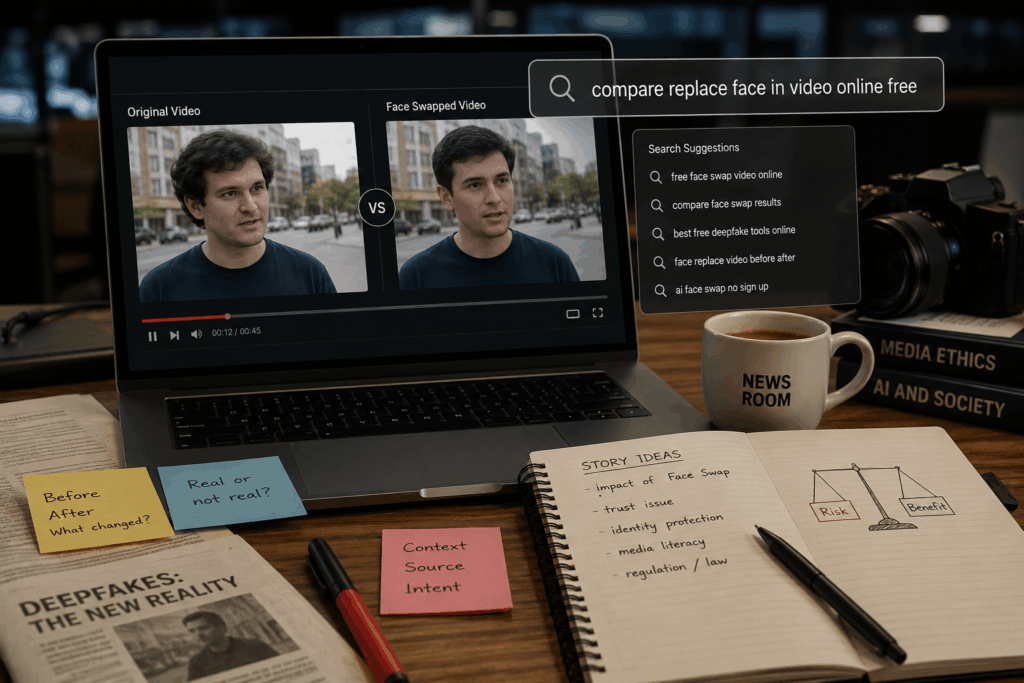
Compare is the real keyword
The most important word in the search phrase is not “replace.” It is compare. People are not only asking whether a face can be changed. They are asking what changes when it is changed: Does the clip still feel believable? Does the person still look like the same speaker? Does the message become stronger, weaker, clearer, or more suspicious? That kind of comparison is becoming more relevant as video is used less like pure entertainment and more like proof, explanation, or identity. The ITU’s recent work maps the current standardization landscape around content provenance, trust, rights declarations, and watermarking, which shows how central authenticity has become.
This is also why the topic keeps surfacing in public discussion. In a Hacker News thread about a face-swapping tool, one commenter questioned what “ethical” deepfaking even means and what legitimate use case it was supposed to serve. Another user argued that deepfake technology should be discussed openly so people learn to stop trusting faces too quickly. The debate itself is revealing: people are not just reacting to the tool; they are reacting to the social meaning of video realism.
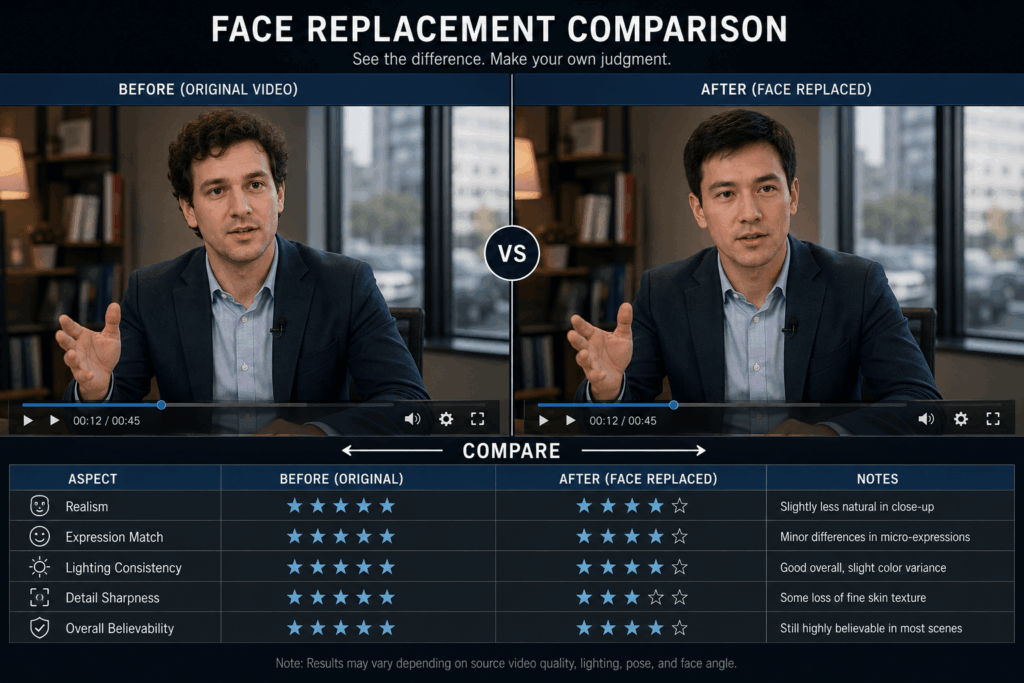
Why “free online” matters
The “free online” part is not just a pricing detail. It tells you who this tool is for. Free browser-based tools lower the barrier for students, small creators, editors, and anyone who needs to test an idea quickly. They make it possible to explore a concept without buying software or building a full post-production pipeline. In practice, that means face replacement is no longer restricted to high-budget production teams; it has become something that ordinary users can evaluate, discuss, and experiment with. The broader policy conversation reflects that shift: deepfake and authentication issues are now being handled as public-information and consumer-safety issues, not only as special-effects questions.
What people actually use this for
1. Fast visual testing
For many users, the point is to see how much a face changes the feel of a clip. In short-form video, even a small change in identity can alter tone, attention, and trust. That makes face replacement useful as a testing tool. Content teams can quickly ask: Which version feels more natural? Which one looks more distracting? Which one is better for a presentation, demo, or creative mockup? These are ordinary workflow questions, but they now sit inside a much larger authenticity problem.
2. Identity protection
Face replacement is also used in legitimate protective workflows. In a Reddit discussion among editors, one commenter suggested changing a participant’s face and voice with the help of an experienced VFX person, while another emphasized that the audience should be told early why the change exists. That is a very different use case from deception. Here, the point is not to fake a person; it is to hide a person for safety, privacy, or sensitivity reasons.
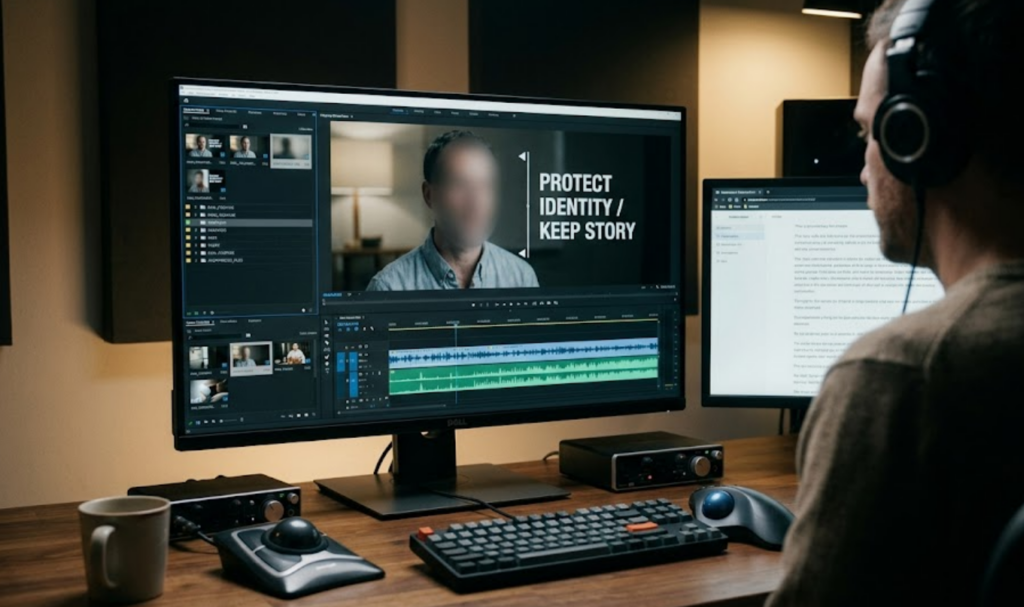
3. Media literacy
Students should care about this topic for a simple reason: video is easier to alter than many people assume. The old habit of treating visuals as automatically trustworthy is weakening. Reuters reported that an ITU-backed report called for stronger global measures, including verification tools and multimedia authentication standards, because deepfakes can influence elections and enable fraud. That means the issue is not only technical. It is also about how people learn to judge what they see.
Why people argue about it so much
1. It touches identity
Faces are not neutral. They carry identity, emotion, and credibility. When a face is altered, the meaning of the video changes with it. That is why the public reaction is so mixed. Some people see a useful editing tool. Others see a direct threat to trust. The FTC’s move to strengthen rules around AI impersonation makes clear that regulators consider the risk real, especially when manipulated media can be used to defraud consumers.
2. It can be used for both harm and protection
That tension is exactly why the topic resists simple labels. A face replacement tool can be used to mislead viewers, but it can also be used to anonymize sensitive footage or help creators test visual ideas before production. One Hacker News commenter even suggested that if deepfakes make people less willing to trust a face automatically, that could have a social benefit. Another commenter noted that face-replacement techniques are closely related to broader person-replacement and de-aging workflows, which means the technology is part of a larger visual-editing family rather than a single isolated trick.
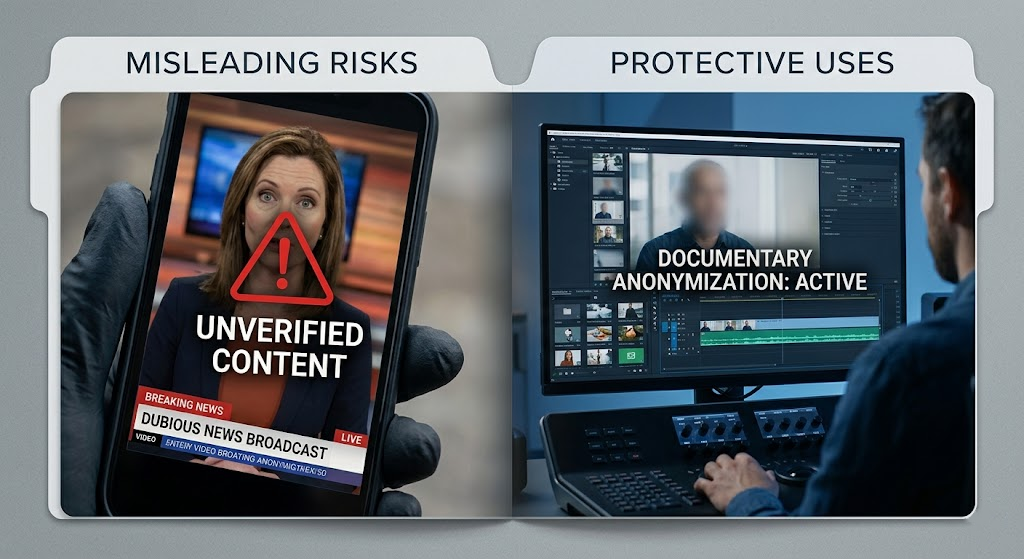
What this means for the video industry
1. Video is becoming something we verify, not just watch
That is the biggest shift behind this search term. Video used to feel trustworthy because it looked convincing. Now, the industry is moving toward a world where authenticity has to be shown through provenance, verification, and watermarking. The ITU’s standards work breaks this into concrete areas: content provenance, trust and authenticity, asset identifiers, rights declarations, and watermarking. This is not just an abstract policy list. It is a sign that the next phase of video will be shaped by verification infrastructure as much as by editing tools.
2. The real issue is governance
The tool itself is not the final question. The real questions are: When is it acceptable? How should it be labeled? Who is responsible for the result? And how do we prevent misuse without blocking legitimate work? That is the conversation running through the FTC’s anti-impersonation efforts and the ITU’s authenticity work. The technology is already here. The unresolved part is the social contract around it.
A few honest user reactions
Not every reaction online is fearful. Some are practical, some are skeptical, and some are openly philosophical. In one Hacker News thread, a commenter argued that deepfakes should become common enough to make people less willing to trust appearance too quickly. In the same discussion, another user asked what “ethical” deepfaking was supposed to mean in practice. In a Reddit editors thread, a commenter recommended straightforwardly explaining anonymization early in the film rather than pretending the change is invisible. Together, these responses show a real split: users want either stricter safety boundaries or clearer legitimate use cases.
Final takeaway
So the reason people search compare replace face in video online free is not just that they want to swap a face. They want to compare impact, reduce friction, test ideas, and understand a world where video can be changed more easily than ever. That makes the topic bigger than a tool review. It becomes a question about how we judge truth, how we use AI responsibly, and how much trust we should place in what appears on screen. The search term may sound narrow, but the issue behind it is wide.
Go to WeShop AI For Exploration: