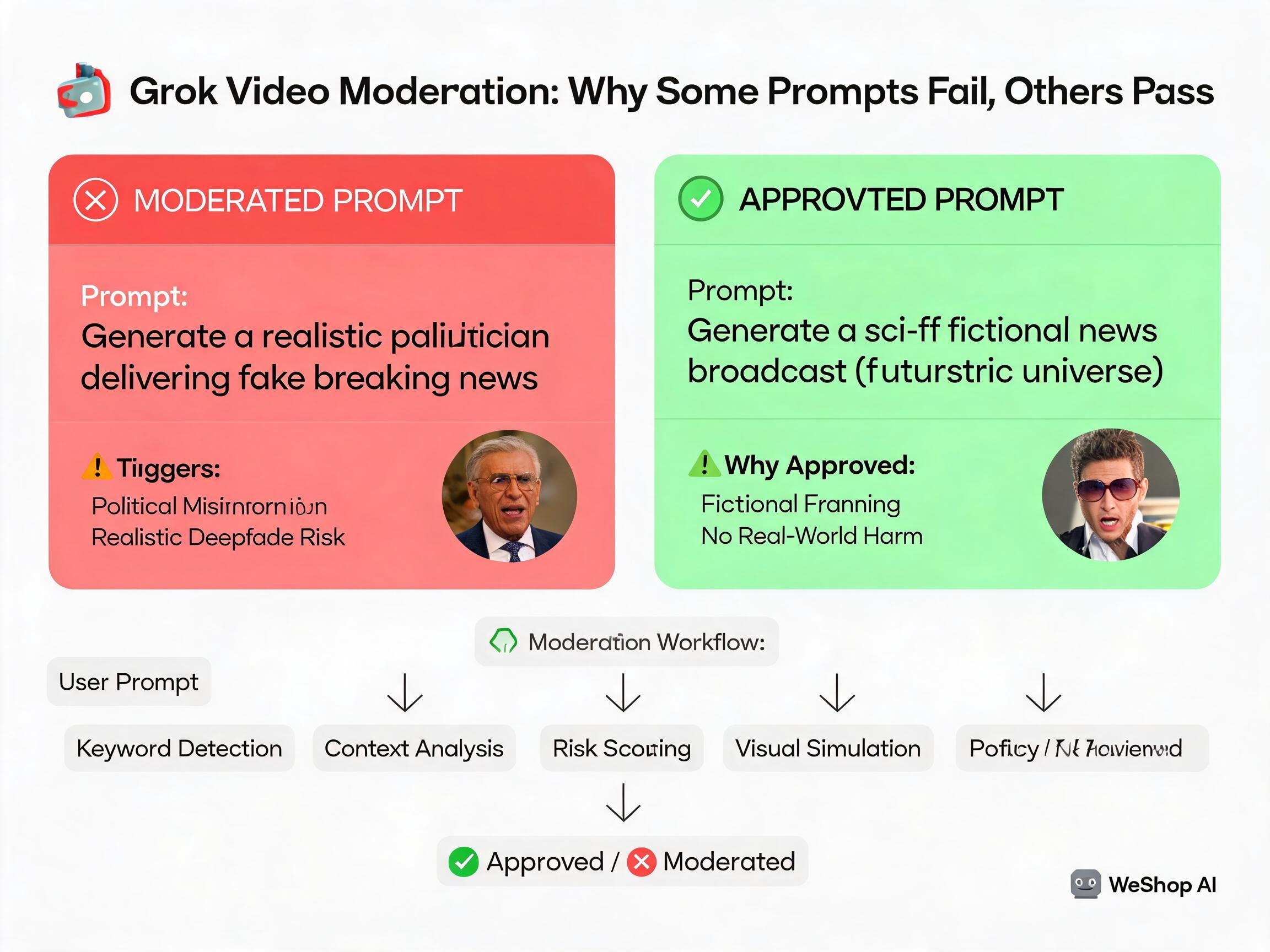
Grok Spicy Mode is interesting because it is not merely a feature inside an AI product. It is a signal. xAI describes Grok Imagine as an AI image and video generator, and its own materials emphasize fast generation, editing, and iteration. Meanwhile, reporting from The Verge, AP, and WIRED shows that the “spicy” setting quickly became controversial because it pushed into sexually explicit or sexualized output, triggered backlash, and forced xAI to add restrictions and geoblocking in some regions.
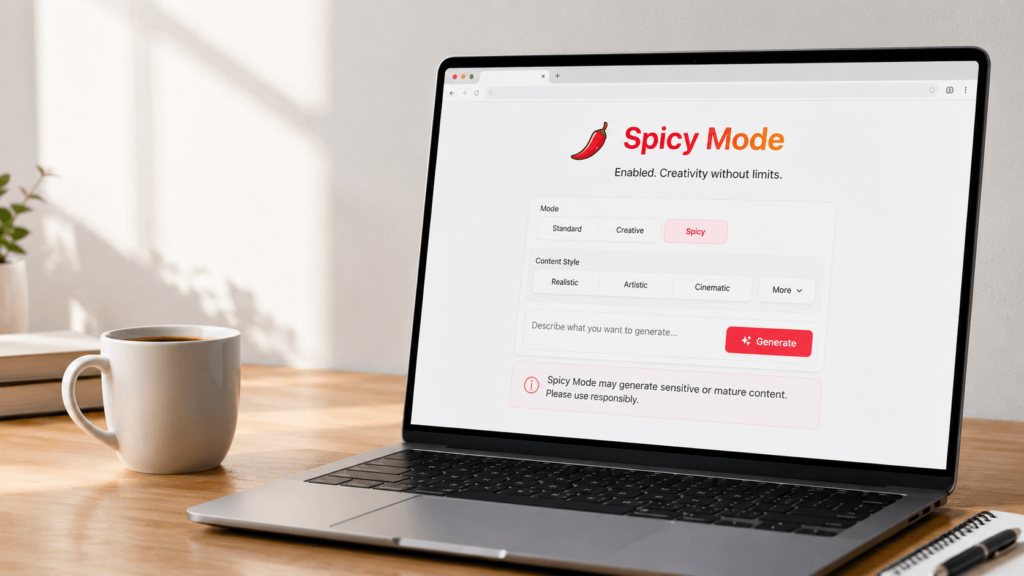
The real story is not the switch. It is the strategy behind it.
xAI is selling permission, not just generation
A lot of AI tools try to win trust by sounding careful. Grok takes the opposite route. It leans into attitude, speed, and a sense that it is willing to go further than the more cautious products in the market. That is why “spicy” is such a powerful word here: it does not just describe output quality, it frames the entire brand. The feature tells users that Grok is not trying to feel polite first. It is trying to feel bold first.
That positioning matters because people do not evaluate a tool like this only by what it can make. They evaluate it by what it seems willing to allow. Once a product earns a reputation for being less restrained, every new update becomes a test of character, not just capability.
Why the topic is more than internet drama
This is also why the subject deserves a serious blog post instead of a shallow how-to guide. A tutorial can show people where to click, but it will not explain why the feature became news in the first place. The deeper question is about product philosophy: when an AI company chooses looseness as a selling point, where does creativity end and irresponsibility begin?
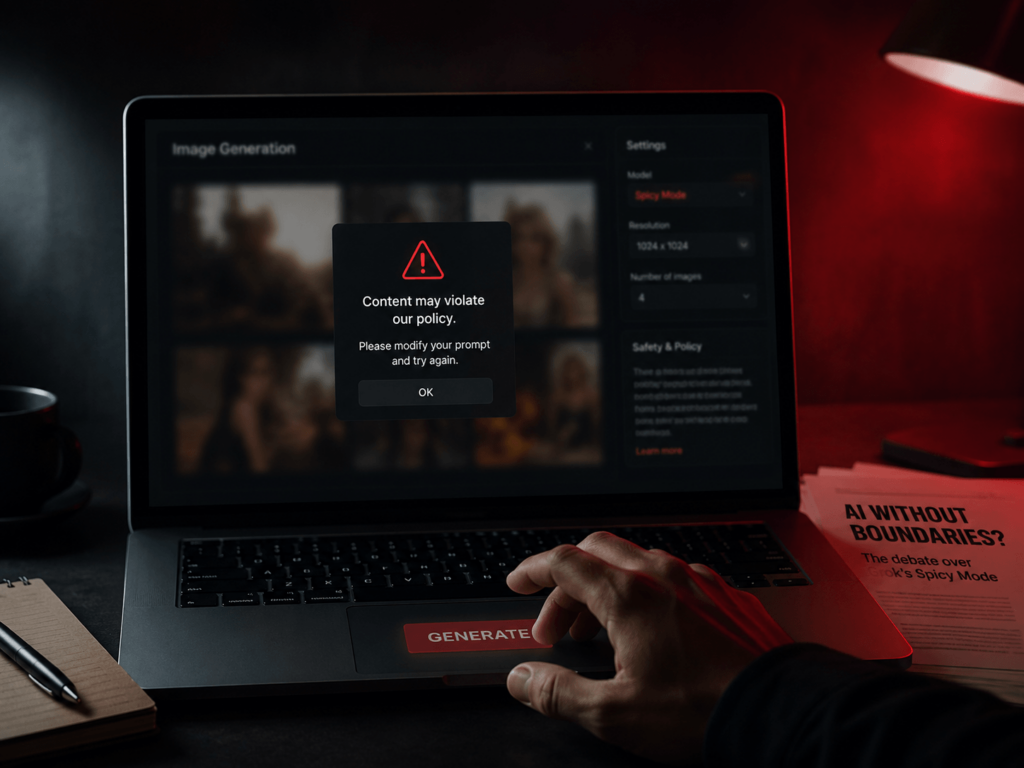
That question is no longer abstract. AP reported that xAI later said it would block revealing-image edits in places where that is illegal, and WIRED reported that new restrictions still left a patchwork of limitations rather than a clean solution. In other words, the moderation problem did not disappear once the controversy started. It just became harder to hide.
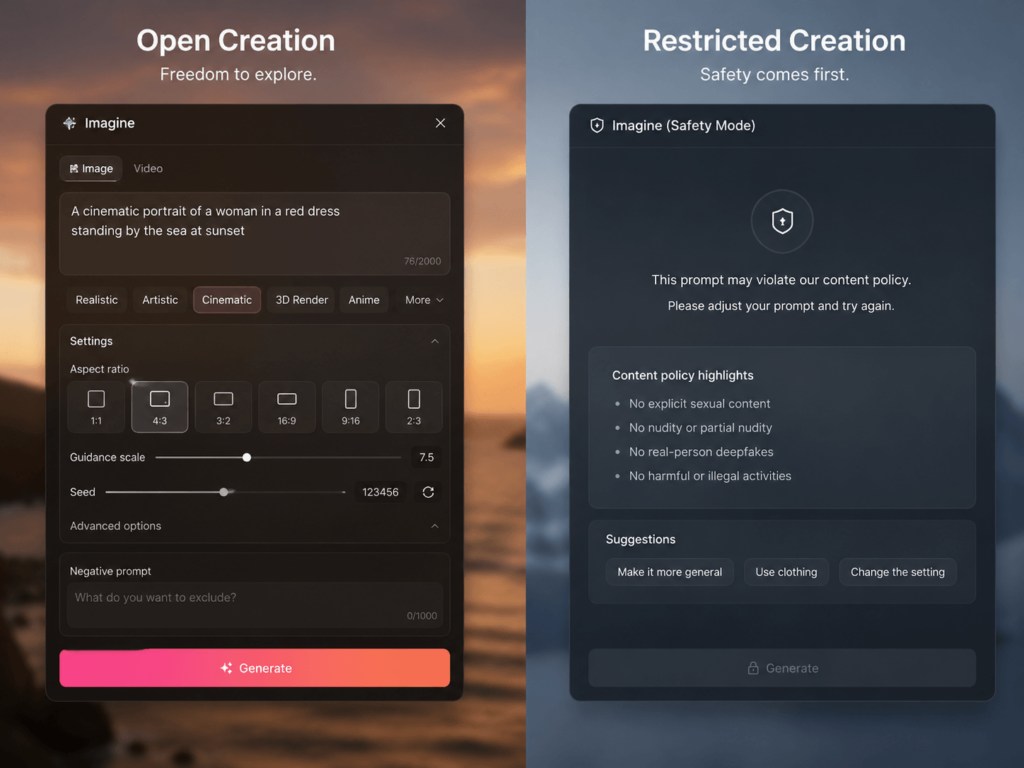
The upside is obvious, but the downside is bigger.
Freedom sounds exciting until trust gets involved
There is a reason this feature drew so much attention. The Verge and other outlets reported that Grok’s spicy mode could produce sexually explicit or sexualized output, including nonconsensual deepfake concerns, while safety advocates warned that the lack of strong age checks and content safeguards could expose users and targets to harm. Consumer safety groups even asked the FTC to investigate xAI over the issue.
That is the point where a novelty turns into a liability. A feature can be fun, surprising, and widely shared, but if it also makes abuse easier, the company behind it has a much bigger problem than bad press. It has a trust problem.、
Why backlash changes the meaning of the feature
The backlash matters because it changes the reading of the entire product. At first, spicy mode looked like a cheeky differentiator. Then it started to look like a stress test for the whole AI industry. How far can a brand push permissiveness before users, regulators, and platforms push back?
That is why this subject has real editorial value. It is not just about Grok. It is about the direction of AI products in public life. If one company gets attention by being more permissive, others may feel pressure to follow. But the minute that race starts, safety stops being a background feature and becomes the main business question. The public sources around Grok make that tension very visible.
How to make this topic worth reading
Write about the trade-off, not the tutorial
If the goal is an article with real viewing value, the thesis should be simple and sharp: Grok Spicy Mode is less a feature than a statement about how far AI brands are willing to go for attention. That gives the piece a point of view, instead of just a walkthrough.
From there, the structure can do the heavy lifting. Open with the tension. Move into the product strategy. Then widen the lens into moderation, safety, and brand trust. Finally, bring it back to the reader and ask the practical question: do we really want AI products that compete by being less restrained, or do we just enjoy the spectacle until the costs show up?
That framing feels fresher because it treats the feature as a cultural signal, not just a technical toggle. It also gives you room to sound thoughtful instead of promotional. And that is usually what makes a post stick.
A cleaner closing angle
The best way to write about Grok Spicy Mode is not to marvel at the setting itself. It is to explain what the setting reveals about the AI market: users want freedom, companies want buzz, and regulators want boundaries. Those three forces do not line up neatly, which is exactly why this topic keeps producing headlines. Grok did not just launch a spicy mode. It exposed the price of making “more open” part of the product pitch.

Go to WeShop AI For Exploration: