A solo Amazon seller shared the exact workflow behind their product images — the ones that competitors assumed required a professional studio. The post earned 2,720 likes because the secret was absurdly simple: a foldable light box from Temu, a smartphone, and an AI enhancement tool that turned adequate photos into listing-ready assets. Total equipment cost: under $40. Total processing time per image: 30 seconds.


Left: Smartphone capture in foldable light box | Right: AI-enhanced to Amazon listing standard
The Science Behind Product Photo AI Enhancement
Product photography AI enhancement operates under different constraints than portrait or landscape enhancement. The primary objective isn’t aesthetic appeal — it’s information fidelity. A product photo must accurately represent texture, color, dimension, and material. Enhancement that makes a product look better than reality creates returns; enhancement that makes a product look clearer at reality creates sales.
The neural networks used for product enhancement are typically fine-tuned on e-commerce image pairs: the same product photographed with consumer equipment versus professional studio setups. This training teaches the model specifically what “professional product photography” looks like — even lighting, neutral color temperature, crisp edge definition, and clean backgrounds — without introducing aesthetic biases from portrait or landscape photography.
The $40 Studio: Why Hardware Minimalism Works Now
A $30 foldable light box with built-in LED panels produces surprisingly uniform illumination — the kind of diffused, shadowless lighting that AI enhancers perform best with. Add a $10 phone tripod for consistent framing, and the physical setup is complete. The AI handles what previously required expensive equipment: resolution upscaling replaces high-megapixel cameras, edge sharpening replaces premium lenses, and color normalization replaces calibrated studio lighting.
This isn’t a compromise — it’s a workflow optimization. The AI doesn’t need a perfect input. It needs a consistent input. A light box produces consistent lighting across hundreds of product photos, and consistency is what allows batch AI processing to deliver uniform results. A seller shooting 50 SKUs in an afternoon gets 50 listing-ready images with one enhancement pass.
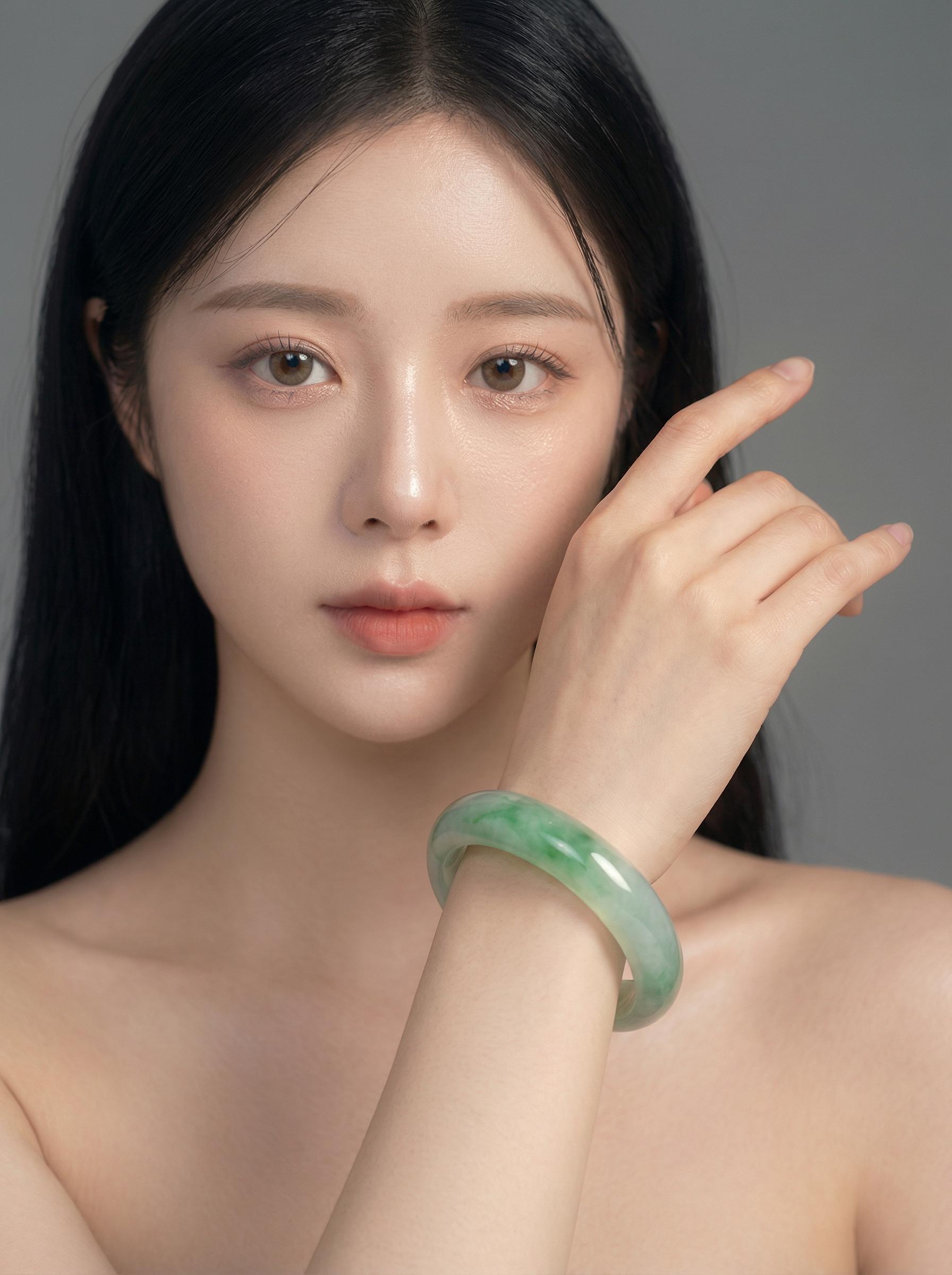
The precision in the texture rendering here tells the product story without words. Every surface characteristic — the matte finish, the subtle grain, the edge chamfer — is rendered with enough clarity that a customer can make a material assessment from the photo alone. This level of product detail is what separates listings that convert at 3% from those converting at 8%.
Actionable Scene Guide: The Solo Seller Enhancement Workflow
Phase 1: Capture Setup (15 Minutes, Once)
Set up the foldable light box on a stable surface. Position the phone on a tripod at the box opening. Enable your camera’s timer mode (2-second delay eliminates shake). Set to maximum quality JPEG or RAW if available. Shoot one test image and verify focus by zooming to 100% — if the product’s primary texture is sharp at 100%, the setup is ready.
Phase 2: Batch Shooting (30 Seconds Per SKU)
For Amazon, you need 7 images per listing: 1 hero (white background, product only), 3-4 feature detail shots, 1-2 lifestyle/context images. Shoot all 7 angles for each SKU before moving to the next. This prevents setup variation between shots of the same product. For the hero shot, fill 85% of the frame with the product (Amazon’s requirement), leaving minimal background.
Phase 3: Batch Enhancement (5 Minutes Per 50 Images)
Upload all hero shots as a batch. Enhance at 2× with default settings. Download. Upload all detail shots as a second batch. Same settings. Download. Review each enhanced image at 100% zoom for 3 seconds — you’re checking for two things: (1) no visible artifacts on the product surface, and (2) the white background is actually white (not grey). Fix any grey backgrounds with a quick levels adjustment.
Phase 4: Amazon Compliance Check
- Hero image: Pure white background (RGB 255,255,255), product fills 85%+ of frame, no text/badges/watermarks, minimum 1600px on longest side
- Detail images: May include text callouts, comparison graphics, lifestyle context
- File format: JPEG or PNG, under 10MB per image
- Color space: sRGB (most AI enhancers output sRGB by default)
Expert Consulting FAQ
Q1: Will Amazon reject AI-enhanced product photos?
No. Amazon’s image policy prohibits misleading images (adding features the product doesn’t have, changing the product’s color), not quality enhancement. AI upscaling, sharpening, and color normalization are equivalent to professional photo editing — standard practice for every top seller on the platform. The line to avoid: don’t enhance product images so aggressively that the texture or color no longer matches the physical product.
Q2: Should I enhance the hero image more aggressively than the detail shots?
Slightly, yes. The hero image appears as a thumbnail in search results and needs maximum visual impact at small sizes. A slightly higher sharpness setting for the hero image makes product edges pop in thumbnail view. Detail shots are viewed at larger sizes where aggressive sharpening becomes visible — keep these at default settings. The difference should be subtle; dramatic quality variation within a listing looks unprofessional.
Q3: How do I handle reflective or metallic products that AI tends to over-enhance?
Reflective surfaces are the hardest category for AI enhancement because specular highlights contain genuinely zero detail — they’re pure white. The AI sometimes attempts to “recover” detail in these highlights, introducing grey artifacts in what should be pure reflections. Solution: shoot with slightly reduced lighting to keep highlights below pure white, enhance, then boost highlights back to pure white in post-processing. This gives the AI a signal to work with in reflective areas while maintaining the final reflective look.
Q4: Can AI enhancement compensate for poor lighting in my product photos?
Partially. AI can sharpen details obscured by dim lighting, reduce noise from high ISO settings, and normalize color temperature. What it cannot do: create shadows and highlights that proper lighting would produce. A flat, evenly lit light box photo enhanced by AI will always look better than an unevenly lit photo enhanced by AI, because the enhancement amplifies whatever lighting information exists. If the lighting is flat, the enhanced result is sharp but flat. If the lighting has dimensionality, the enhanced result is sharp and dimensional.
Q5: What’s the ROI of investing in AI enhancement versus hiring a product photographer?
For a solo seller with 50-200 SKUs: AI enhancement costs effectively nothing (free tools or $10-20/month for premium), while a product photographer charges $15-50 per image. At 100 SKUs with 7 images each (700 images), the photographer costs $10,500-35,000. AI enhancement: $0-240/year. The quality gap has narrowed enough that the ROI calculation is straightforward for most product categories. Exceptions: luxury goods, jewelry, and food photography still benefit significantly from professional human photographers.
Published by the WeShop Visual Intelligence Team
© 2026 WeShop AI — Powered by intelligence, designed for creators.