“They just swapped the model’s face. What’s the point?” That single comment on a Chinese e-commerce forum captured the frustration of millions. When Taobao rolled out its AI virtual try-on feature, shoppers expected to see themselves in that silk blouse. Instead, they got the same catalog model with a slightly different jawline. The backlash was instant — and it revealed a fundamental misunderstanding about what AI virtual try-on technology can and cannot do in 2026.
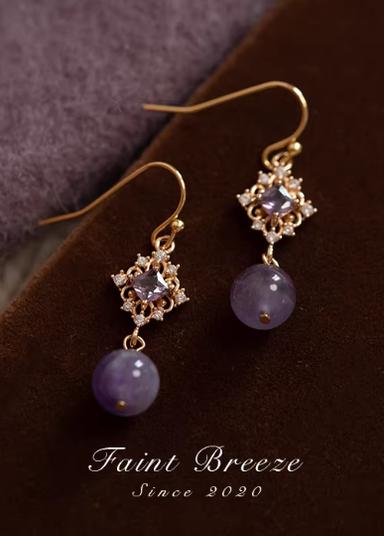
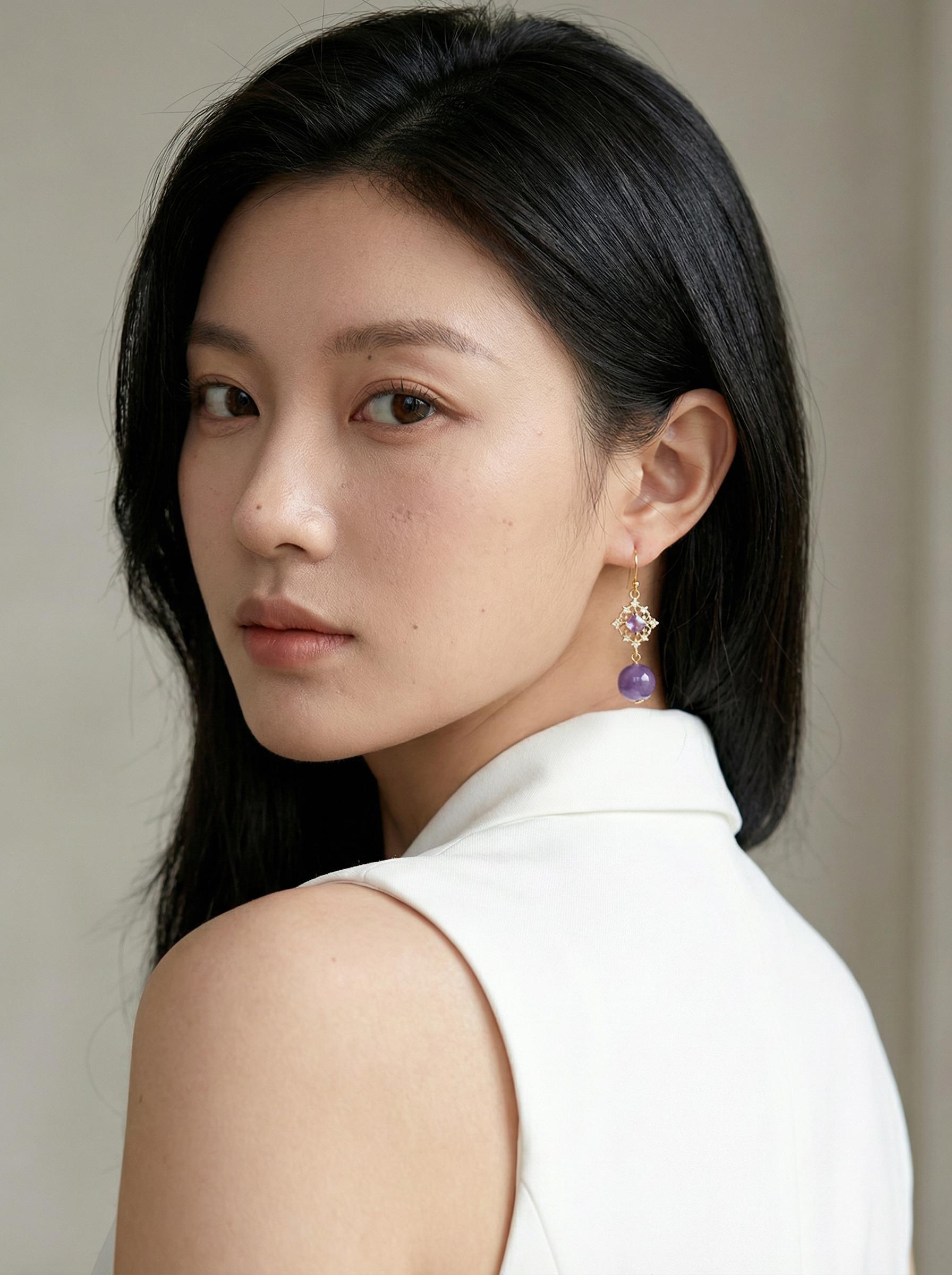
Left: Original flat-lay garment | Right: AI-generated model photo via virtual try-on
The Anatomy of a Failed Launch: Why Consumers Rejected Early AI Try-On
The core complaint wasn’t really about the technology — it was about the promise. Shoppers were told they could “try on clothes virtually,” which implied personalization: their body, their proportions, their style. What they received was generative model replacement — a diffusion-based system that could render any garment on a preset model with reasonable fidelity, but couldn’t map to an individual consumer’s body without significant additional computation.
This disconnect between marketing language and technical reality has haunted the virtual try-on space since its inception. The technology works brilliantly for a different use case entirely: enabling sellers to generate model photos from flat-lay garment images without hiring photographers, stylists, or models. That’s where the real revolution is happening — not in the consumer fitting room, but in the product photography studio.
The Science Behind AI Virtual Try-On: Diffusion Models Meet Garment Topology
Modern virtual try-on systems rely on a pipeline of specialized neural networks working in concert. Understanding this architecture explains both the technology’s remarkable capabilities and its persistent limitations.
Stage 1: Garment Parsing and Semantic Segmentation
The first network analyzes the input garment image — whether a flat-lay photograph, a mannequin shot, or an image of someone wearing the item. It identifies the garment’s boundaries, classifies regions (collar, sleeve, hem, button placket), and extracts a semantic mask. This parsing must handle occlusion (a folded sleeve), wrinkles (which distort printed patterns), and varying photography angles.
Stage 2: Body Pose Estimation and Mesh Construction
A separate network estimates the target model’s body pose using keypoint detection (typically 18-25 joints). From these keypoints, the system constructs a 3D body mesh — usually based on parametric models like SMPL — that defines the surface onto which the garment will be draped. The accuracy of this mesh directly determines how naturally the fabric will conform to the body.
Stage 3: Geometric Warping via Thin-Plate Spline Transformation
The garment image is geometrically transformed to align with the target pose using thin-plate spline (TPS) interpolation. This step handles the spatial deformation: stretching sleeves to match arm positions, curving a hemline around hips, adjusting collar geometry for different neck angles. TPS provides smooth deformation but can introduce artifacts at extreme pose differences.
Stage 4: Diffusion-Based Appearance Synthesis
The warped garment is fed into a latent diffusion model (often based on Stable Diffusion or proprietary architectures like Kolors) along with the target model image. The diffusion process generates the final composite, synthesizing realistic fabric draping, shadow casting, and color interaction between the garment and the model’s skin and environment. This is where the magic happens — and where most failures occur.
The Consistency Problem: Why Patterns Break
The fundamental challenge is texture fidelity. Solid-color garments survive the pipeline almost perfectly because the diffusion model only needs to generate plausible folds and shadows on a uniform surface. But complex patterns — floral prints, geometric designs, branded logos — require the model to reconstruct high-frequency spatial details after geometric warping. Current architectures lose information during this process, producing patterns that are “spiritually similar” but not pixel-accurate.
This is precisely why professional tools have diverged from consumer try-on. A seller generating catalog photos needs the garment to look plausible and attractive, not necessarily identical to a specific SKU’s exact print. The tolerance for creative reinterpretation is much higher in product marketing than in personal shopping.
Technical Frontiers: What’s Changing in 2026
Three architectural innovations are pushing accuracy forward. First, attention-based garment encoders that preserve local texture patches during warping. Second, multi-view consistency loss functions that enforce pattern coherence across different body angles. Third, reference-guided diffusion that conditions the generation process on a high-resolution crop of the original garment texture, anchoring the output to ground truth.
Engineering Challenges Ahead
Even with these advances, two problems remain unsolved at production scale. Real-time inference — current systems take 5-15 seconds per generation, far too slow for a live shopping experience. And size-accurate draping — making an XS garment look different from an XL on the same body frame, which requires physics-based cloth simulation that most diffusion pipelines cannot yet integrate.
Where Virtual Try-On Actually Works: The E-Commerce Photography Revolution
While consumers debate whether AI try-on “works,” e-commerce sellers have quietly adopted the technology for a different purpose entirely. A garment manufacturer in Shenzhen recently shared that their team produces hero images and detail pages for new listings in under 20 minutes — a process that previously required a full-day photoshoot with models, stylists, and photographers.
The economics are staggering. A typical product photo shoot costs $500-2,000 per SKU when you factor in model fees, studio rental, hair and makeup, and post-production retouching. An AI virtual try-on tool generates equivalent output for pennies per image. For a seller listing 50 new products per week, that’s a potential savings of $25,000-100,000 monthly.
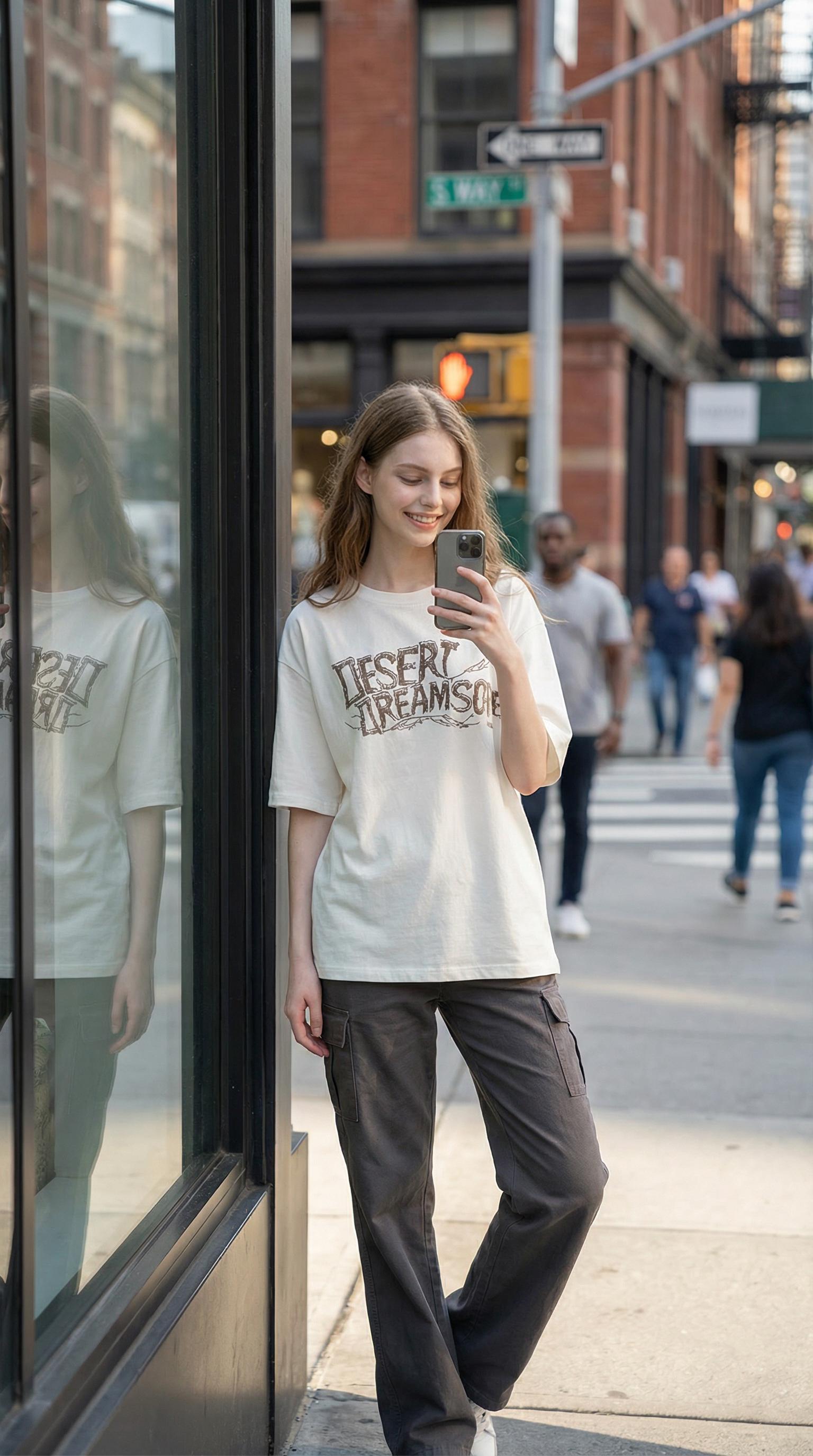
The flat-lay-to-model pipeline has become particularly powerful. Sellers photograph garments laid flat on a white surface — a process requiring no special equipment — and feed these images into AI systems that generate multiple model variations: different ethnicities, body types, poses, and background scenes. A single garment photo can yield dozens of marketing assets within minutes, each tailored to a specific market or platform.
Actionable Scene Guide: Getting the Best Results From AI Virtual Try-On
Flat-Lay Photography Tips for Maximum AI Accuracy
- Lighting: Use diffused, even lighting from above. Harsh shadows confuse garment parsing algorithms and create artifacts in the final output.
- Background: Pure white or light gray backgrounds produce the cleanest segmentation. Avoid textured surfaces.
- Layout: Spread the garment naturally — don’t stretch it flat. Leave sleeves slightly bent. This gives the AI more geometric information about how the fabric behaves.
- Resolution: Shoot at minimum 2000×3000 pixels. Higher resolution means more texture detail survives the warping stage.
Choosing the Right Model Parameters
- Pose matching: Select a model pose that complements the garment type. A flowing dress needs a walking pose; a structured blazer needs a standing pose.
- Ethnicity and body type: Match your target market. Cross-border sellers should generate versions for each demographic — this is where AI’s scalability truly shines.
- Background scene: Urban street scenes work for casual wear; studio-white for formal; outdoor for activewear. The background should reinforce the garment’s intended use case.
Common Failure Modes and Fixes
- Pattern distortion: If a printed garment loses its pattern, try uploading a close-up crop of the pattern as a reference image alongside the full garment photo.
- Color shift: Monitor-calibrate your source photos. AI models trained on sRGB data will shift colors from Adobe RGB inputs.
- Sleeve artifacts: If sleeves look unnatural, re-photograph the garment with sleeves fully extended rather than folded.
Expert Consulting FAQ: AI Virtual Try-On in 2026
Q1: Can AI virtual try-on completely replace product photography?
For standard catalog imagery — hero shots, color variants, and basic lifestyle scenes — yes, it already has for many sellers. However, editorial-quality campaign photography with complex styling, movement, and narrative still benefits from real shoots. The sweet spot is using AI for 80% of your SKU coverage and reserving real photography for hero products.
Q2: How accurate is the fabric texture in AI-generated try-on images?
Solid colors and simple patterns (stripes, checks) achieve 90%+ fidelity. Complex prints (florals, abstract graphics) hover around 70-80% — recognizable but not identical. Sheer and translucent fabrics remain the hardest category, as the diffusion model must synthesize skin visibility through the material.
Q3: Will consumers trust AI-generated product photos?
Consumer surveys consistently show that shoppers care about accuracy more than authenticity. If the AI-generated image accurately represents how the garment looks when worn, consumers are satisfied regardless of whether a real model wore it. The key is not whether the photo is AI-generated, but whether it’s truthful.
Q4: What resolution and file format should I use for AI virtual try-on input?
PNG or high-quality JPEG at minimum 2000px on the longest edge. Avoid compressed web images — the artifacts from JPEG compression compound through the AI pipeline. If your source material is low-resolution, run it through an AI upscaler first.
Q5: How does AI virtual try-on handle size representation across different body types?
Current systems can generate images across a range of body types — from XS to XXXL — by varying the underlying body mesh parameters. This is actually an area where AI outperforms traditional photography: generating a full size range costs nothing extra with AI, while real photoshoots rarely cover more than 2-3 sizes due to model availability and budget constraints.