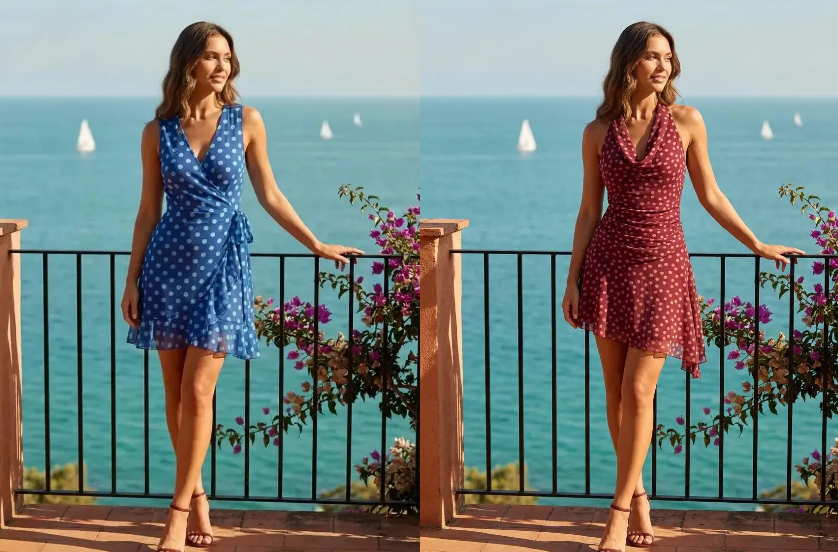
A lot of people search for “dress remove prompt” because they want better AI image editing results. However, most users quickly realize something frustrating: random prompts usually create terrible outputs. The AI may distort the body, break the clothing structure, generate strange anatomy, or completely ignore the original image style. That is why learning how to write a proper dress remove prompt matters much more than people expect.
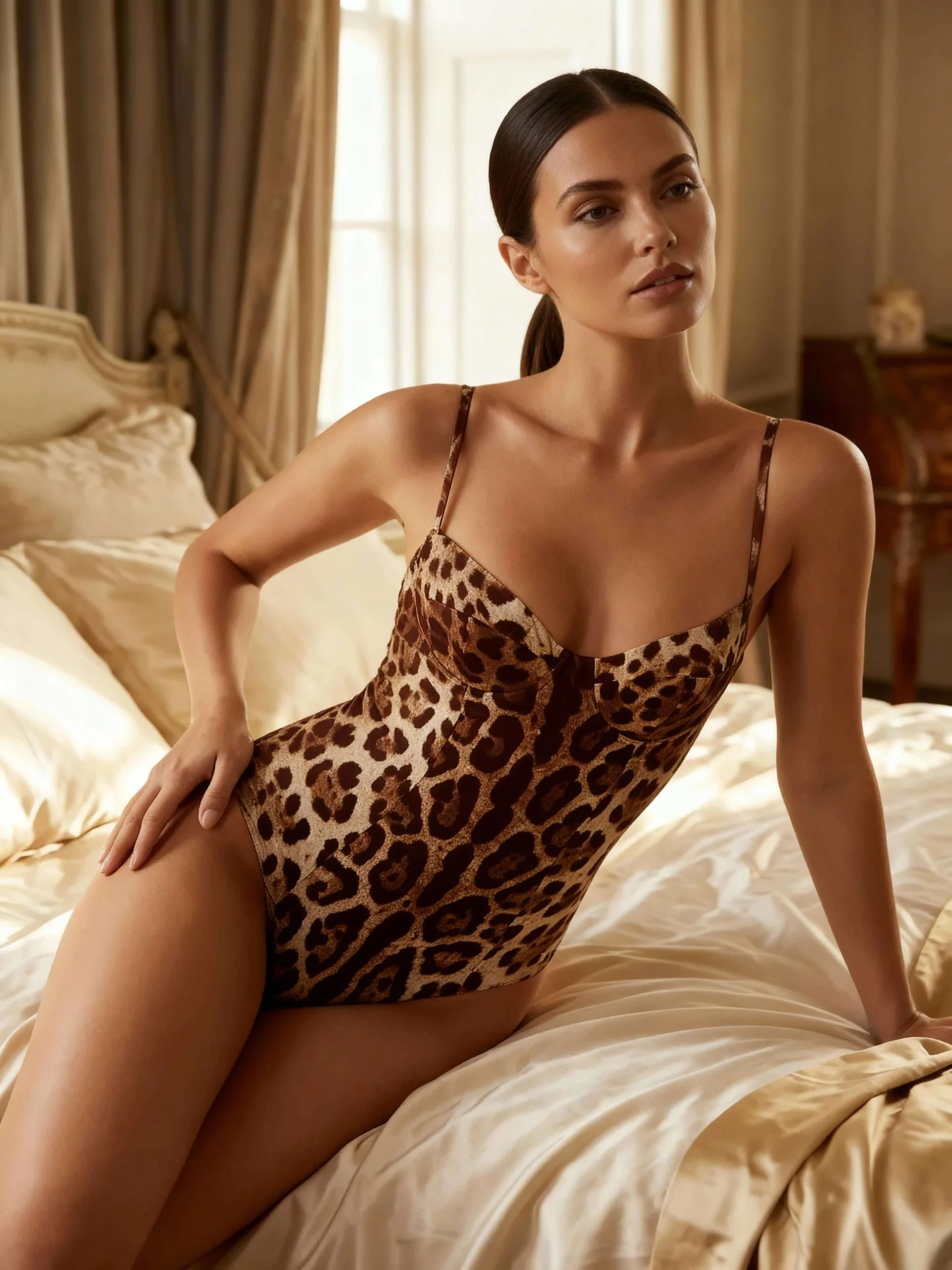
Modern AI image systems are becoming far more advanced, especially tools connected to OpenAI, Google, and other multimodal AI platforms. Still, even powerful image models depend heavily on prompt quality. Small wording changes can completely change the final result. In many cases, the difference between a realistic AI edit and a broken nightmare image is simply better prompt structure 😭
✍️ Why Most Dress Remove Prompts Fail
One of the biggest mistakes users make is writing prompts that are too short, too vague, or too aggressive. Many people type something like:
“remove dress”
and expect cinematic AI magic instantly.
Unfortunately, AI models do not work that way. Most image generation systems need context. They need to understand lighting, body positioning, fabric details, image realism, camera angle, and editing style simultaneously. Without enough information, the AI starts guessing. And honestly, those guesses often become cursed 💀
That is why better dress remove prompts usually focus less on “removing” clothing and more on describing the final visual outcome clearly.
🧠 A Better Way to Write a Dress Remove Prompt
Instead of writing extremely direct commands, experienced users usually describe the full scene naturally. The goal is to guide the AI toward realistic editing rather than chaotic image generation.

For example, stronger prompts often include details like:
- lighting style
- realistic skin tones
- pose consistency
- natural anatomy
- fashion photography aesthetics
- clean image editing
- cinematic realism
The AI performs much better when it understands the visual environment instead of only the clothing action itself.
A cleaner structure often looks something like this:
Realistic fashion photo edit with natural body proportions, soft cinematic lighting, clean skin textures, accurate anatomy, and professional photography realismNotice how the prompt focuses on image quality and realism rather than only one editing action. That makes a huge difference.
📸 Why Realism Matters So Much
AI image editing becomes much more convincing when the prompt prioritizes realism first. Many low-quality prompts accidentally push the AI toward:
- overprocessed skin
- broken limbs
- unrealistic shadows
- melted fabric
- distorted hands
- strange proportions
That is exactly why many viral “AI fail” images happen online 😭
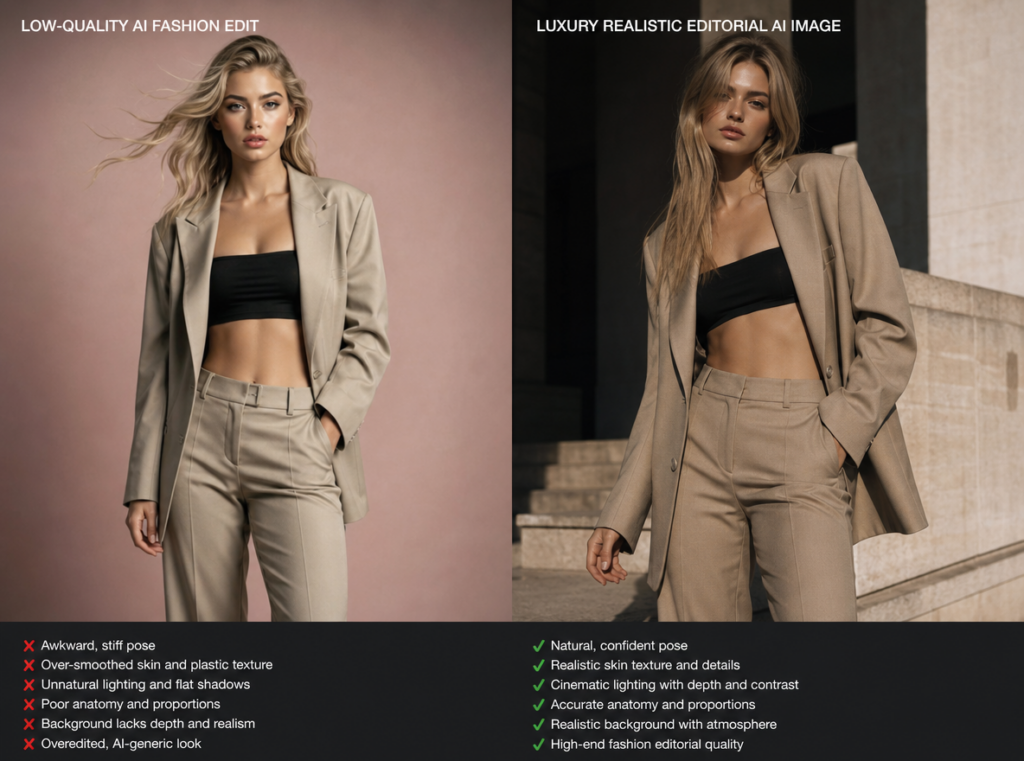
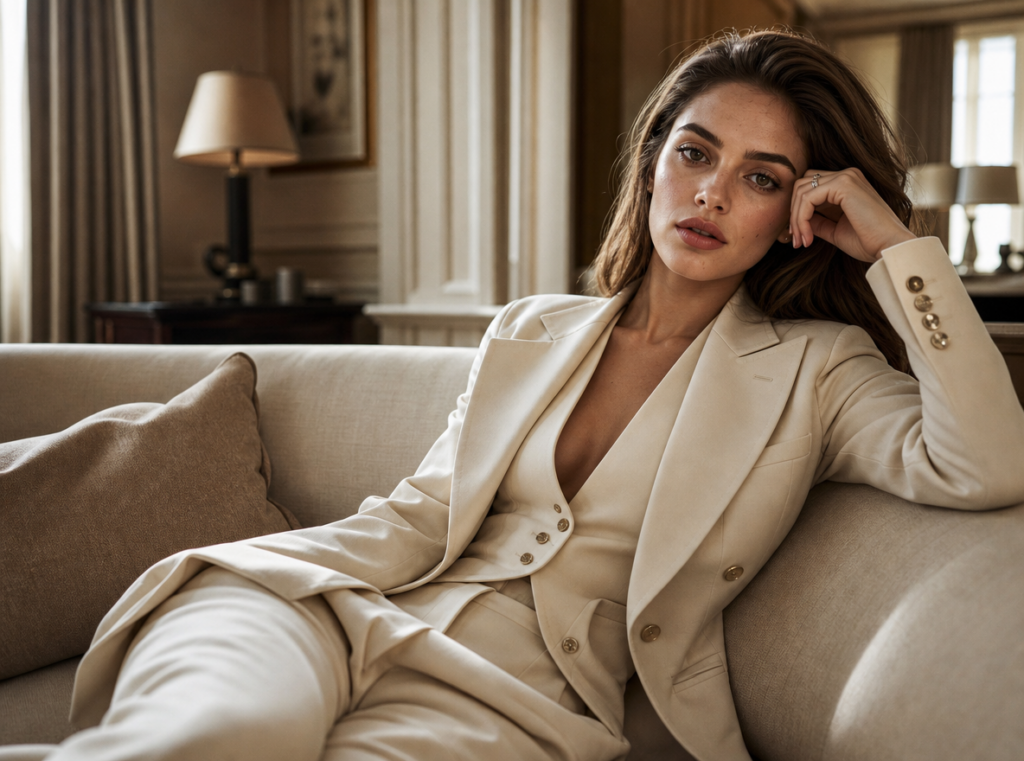
Comparison between unrealistic AI fashion edit and realistic luxury editorial AI photography
The best dress remove prompts usually sound closer to professional photography instructions than simple commands. In other words, users should think more like a creative director and less like a search engine.
⚡ The Importance of Camera and Lighting Descriptions
One thing many beginners completely ignore is lighting. However, lighting consistency is one of the biggest factors affecting AI realism.
For example, prompts that include phrases like:
- soft studio lighting
- cinematic shadows
- natural daylight
- fashion editorial lighting
- realistic skin reflections
often produce cleaner results immediately.
Camera angles also matter heavily. AI models handle front-facing fashion photos much more reliably than extremely complicated poses or unusual perspectives. That is why simple compositions often outperform overly ambitious prompts.
🎨 Why Fashion Language Improves AI Results
Interestingly, fashion-related vocabulary often helps AI systems generate more stable images. Instead of using purely technical editing instructions, many users now describe images using fashion and photography language.
For example:
- luxury editorial aesthetic
- Pinterest fashion vibe
- influencer photography
- Vogue-style composition
- ecommerce model lighting
These descriptions help guide the AI toward cleaner visual outputs.
And honestly, modern AI image prompting is starting to feel surprisingly similar to directing a real photoshoot 👀
🤖 Which AI Tools Handle Prompt Adherence Best?
Different AI image models respond very differently to prompts. Some prioritize creativity, while others focus more heavily on realism and instruction-following.
Popular tools often discussed in AI editing communities include:
- OpenAI image workflows
- Midjourney cinematic visuals
- Runway editing workflows
- Canva AI design tools
Some models create beautiful artistic results but weaker realism. Others follow prompts more accurately but produce less dramatic visuals. That is why experienced users often test multiple workflows instead of relying on one AI tool exclusively.
🚀 Why Prompt Writing Is Becoming a Real Skill
As AI image generation improves, prompt writing itself is becoming surprisingly valuable. People are slowly realizing that the most powerful users are not necessarily the best artists or photographers. Instead, they are often the people who can describe visuals most clearly.
That is a major shift.
A few years ago, image editing required complex software skills. Today, users increasingly control visual generation through language itself. That changes how people think about creativity online.
⚠️ Common Problems AI Still Struggles With
Even advanced AI image systems still have major weaknesses. Difficult body positions, overlapping objects, reflective materials, and complex clothing layers can still confuse the model badly.
AI also struggles when prompts become too overloaded. Adding too many instructions at once often creates visual conflicts. In many cases, shorter but clearer prompts actually work better than giant paragraphs.
That is why experienced AI users constantly simplify, refine, and test their prompts repeatedly.
Final Thoughts
Learning how to write a better dress remove prompt is really about learning how AI image systems interpret visual instructions 👗
The best prompts focus on realism, lighting, anatomy, composition, and photography quality instead of relying only on direct editing commands. As AI image generation continues improving, users who understand prompt structure will consistently get cleaner, more realistic, and more usable results.
And honestly?
Good prompting is starting to feel like a completely new creative skill online.
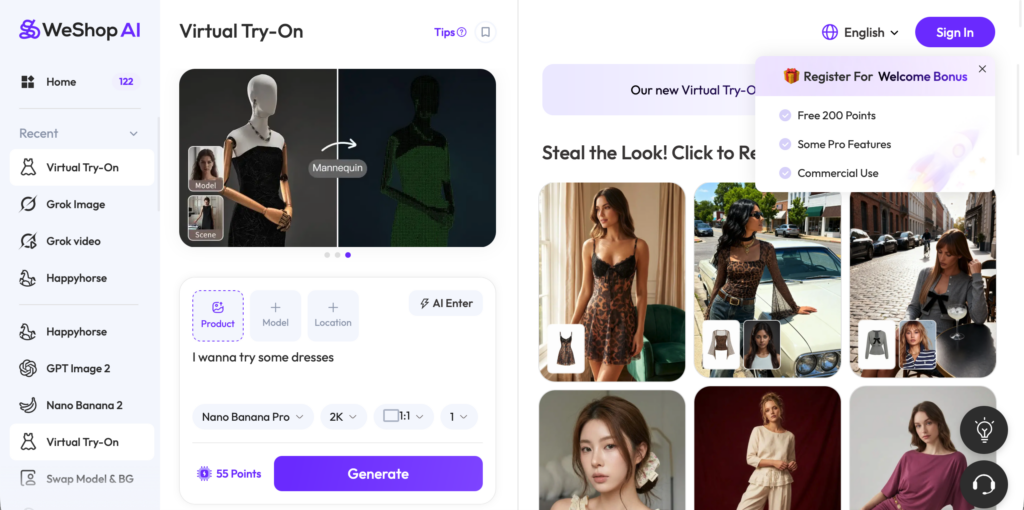
Go to WeShop AI For Exploration: