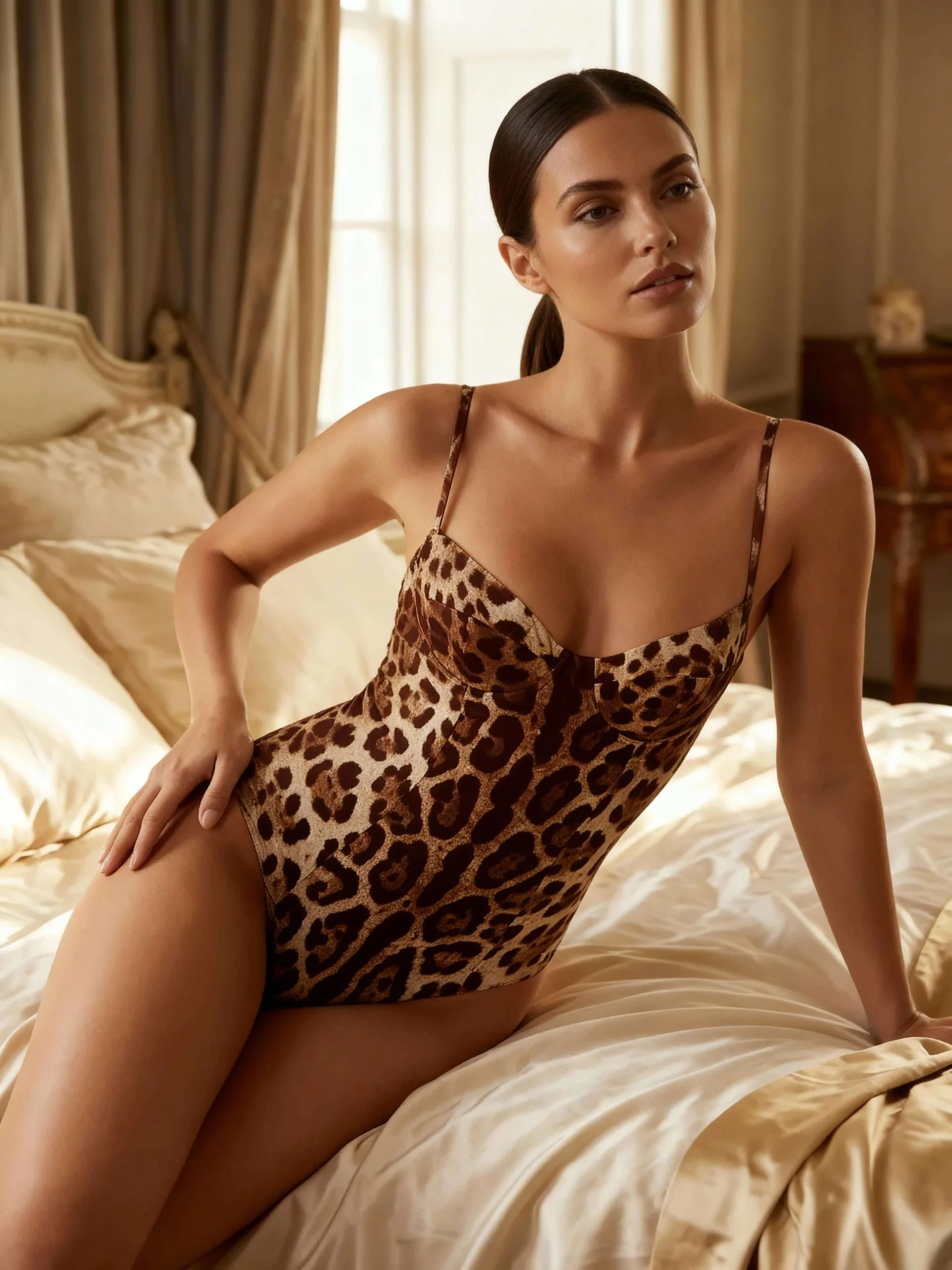

The Growing Problem of Outfit Production
In the current digital landscape, the demand for fresh visuals is insatiable. Whether for an Instagram fashion influencer, a scaling e-commerce brand, or a professional updating their LinkedIn profile, the pressure is always the same: you need new photos, and you need them often.
However, maintaining a constant stream of outfit photos and fashion content is logistically draining. The traditional approach requires owning the clothes, physically wearing them, and setting up a shoot. This leads to “outfit fatigue”—the exhaustion of constantly styling, shooting, and editing just to keep social media visuals relevant.
For many creators and businesses, the bottleneck isn’t creativity; it’s the physical limitation of how many times you can change clothes and take photos in a single day.
Why Traditional Photoshoots No Longer Make Sense at Scale
While high-end editorial shoots will always have their place, they are becoming unsustainable for daily content needs.
Consider the workflow of a typical fashion photoshoot: sourcing garments, booking models, renting locations, managing lighting, and handling post-production. This process is expensive and slow. For an e-commerce seller needing to test 50 different t-shirt designs, or a content creator needing a week’s worth of posts, the traditional method simply doesn’t scale.
The industry has been waiting for a solution that decouples the “outfit” from the “photo.” This is where content production is shifting toward digital solutions.
What Is an AI Clothes Changer?
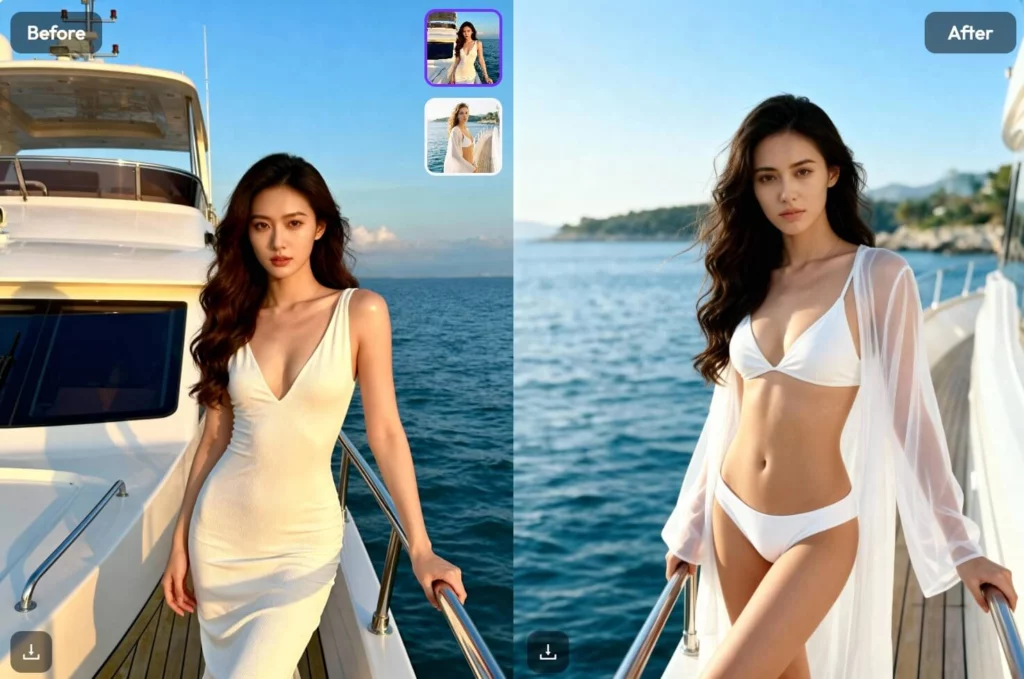
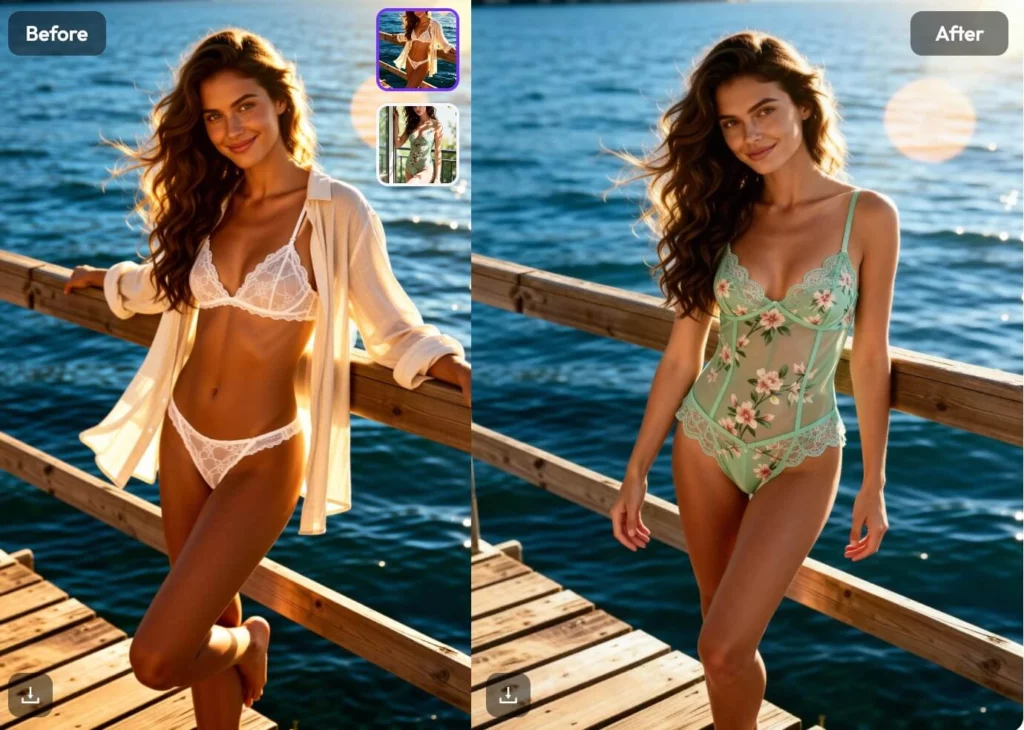
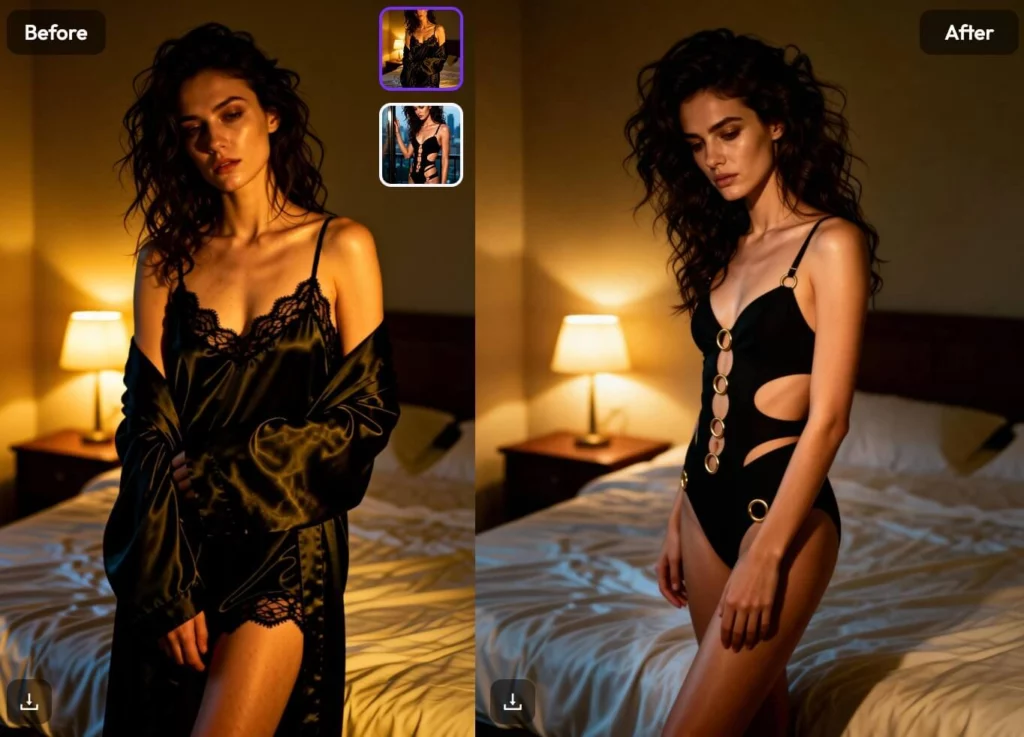
An AI clothes changer is a specialized digital tool powered by generative artificial intelligence. It allows users to change clothes in photos instantly by detecting the original outfit and seamlessly generating a new one in its place.
Unlike traditional photo editing, which involves manually pasting images or adjusting colors, an AI clothes changer uses deep learning models to understand the context of the image. It recognizes the human form, the pose, and the environment.
This technology often overlaps with virtual try-on AI, a feature that lets users visualize how a specific garment would look on their own body without physically wearing it.
How AI Clothes Changers Work
To the average user, the process feels like magic, but the logic is grounded in advanced computer vision.
When an image is uploaded, the AI first performs “segmentation,” identifying exactly where the person is and where the clothing ends. Once the user selects the area to change, the AI generates new pixels to fill that space based on a text prompt (e.g., “red silk dress”) or a reference image.
Why does it look real? The key difference with modern AI is its understanding of physics and light. The AI doesn’t just slap a flat image onto the body. It analyzes the body’s posture to create natural fabric folds, shadows, and highlights that match the original lighting of the photo. This ensures the result preserves the realistic integrity of the original portrait.
What Makes Modern AI Clothes Changers Different from Old Photo Editors
In the past, changing an outfit in a photo required advanced Photoshop skills. You had to manually cut out the dress, warp it to fit the body, and dodge and burn shadows to make it look somewhat believable. It was a 2D process applied to a 3D subject.
AI photo editing and clothing replacement AI have fundamentally changed this.
Context Awareness: AI understands 3D volume. It knows that a sleeve goes around an arm, not just on top of it.
Speed: What used to take an hour of manual retouching now takes seconds.
Accessibility: No design degree is required. If you can type a prompt or click a button, you can use the tool.
Practical Use Cases of AI Clothes Changers
The adoption of these tools is spreading across various sectors:
Social Media Content Creation
Creators can take one high-quality portrait and generate dozens of variations. A single coffee shop photo can feature a casual hoodie for a morning story, a blazer for a professional post, and a trendy jacket for an evening update.
E-commerce & Online Stores
For dropshippers and apparel brands, AI outfit changers are a cost-saving revolution. Instead of printing samples and shooting every color variant, merchants can shoot one base model and digitally generate the entire catalog.
Virtual Try-On for Shoppers
Shoppers use these tools to reduce purchase anxiety. By uploading their own photo, they can preview how a style suits their body type before buying, which significantly helps in reducing return rates.
Personal Branding & Profiles
Professionals can update their headshots without booking a studio. A casual photo can be transformed into a corporate-ready image by simply swapping a t-shirt for a suit using AI.
How to Change Clothes in Photos with AI (Step-by-Step)
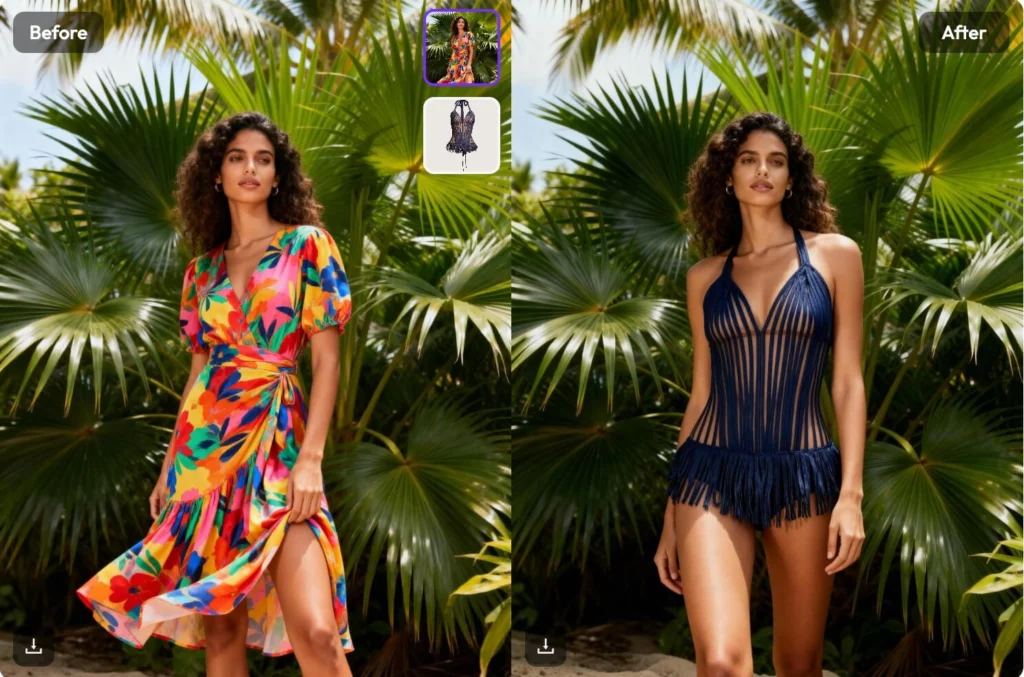
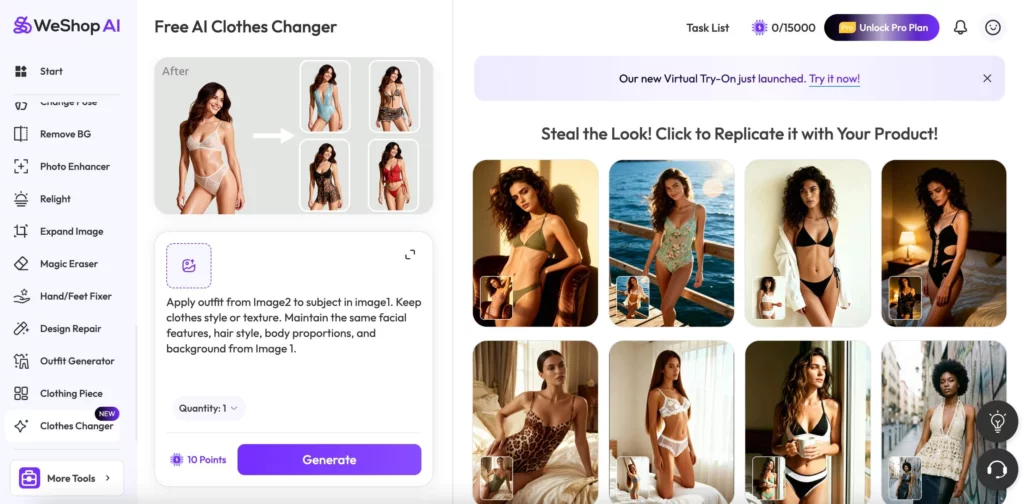
For those new to the technology, here is the professional workflow for using a high-end AI outfit changer online. This “reference-based” method ensures the new clothing looks exactly like the item you want to showcase.
Step 1: Upload Your Base Model Photo
Start by uploading a high-resolution photo of yourself or a model. This serves as your foundation. For the best virtual try-on results, choose an image with good lighting and a relatively simple pose where the original clothing is clearly visible.
Step 2: Upload the Target Clothing Image
Instead of just relying on text, you now upload an image of the specific garment you want to “wear.” This could be a flat lay image, a product shot from a website, or a photo of a piece of clothing you saw online. This tells the AI exactly which textures, patterns, and styles to replicate.
Step 3: Refine with Instructions (Prompting)
Once both images are uploaded, you can refine the final look by modifying the text instructions. For example, you might add prompts like “tucked in,” “oversized fit,” or “match the lighting of the original photo.” This step gives you granular control over how the new outfit interacts with the model’s body.
Step 4: Generate and Download
Click the “Generate” button. The AI processes the request by analyzing the dimensions of the target garment and the posture of the model. In seconds, it produces a high-resolution image of the model wearing the new item with a realistic fit. You can then download the result or regenerate to see different styling variations.
Key Features to Look for in an AI Clothes Changer
Not all tools are created equal. When choosing a platform, look for these specific capabilities:
Realistic Fit and Fabric Details: The AI should handle folds and textures naturally.
High-Resolution Output: Essential for printing or professional social media use.
Online & Browser-Based: The convenience of using the tool directly in a browser without downloading heavy software.
No Editing Skills Required: The interface should be intuitive for beginners.
Privacy-Focused Photo Processing: Ensure the platform processes images securely.
Is AI Clothes Changer Free and Safe to Use?
Many users wonder about the cost and safety of these tools.
Cost: Yes, there are free AI clothes changer options available. Many platforms operate on a freemium model, allowing users to generate a certain number of outfits for free before needing a subscription for premium features or higher resolution.
Safety: Reputable platforms prioritize AI photo privacy. They process images via secure servers and typically do not store user photos permanently without permission. Always check the privacy policy to ensure your data is handled responsibly.
Why Tools Like WeShopAI Are Gaining Popularity
In the competitive landscape of AI fashion tools, platforms like WeShopAI are gaining traction because they solve the “accessibility” problem.
By offering a browser-based solution that combines high-quality generation with a user-friendly interface, these tools bridge the gap between professional editing software and casual mobile apps. Users appreciate the ability to get studio-quality results without the learning curve of complex design software.
AI Clothes Changer vs. Traditional Fashion Workflows
When we compare the new AI-driven approach to traditional workflows, the advantages become clear across several key areas:
In terms of efficiency, traditional photoshoots often take days—if not weeks—to move from planning to final edits. In contrast, an AI clothes changer delivers professional-grade results in minutes.
From a financial standpoint, the difference is even more stark. A physical shoot requires a budget for models, photographers, and stylists, whereas digital clothing replacement often requires only a small subscription fee or is completely free.
Finally, there is the matter of flexibility. Physical shoots are limited by the wardrobe you have on hand. With AI, you have infinite scalability; you can test any style, color, or fabric instantly, making it the superior choice for high-volume content production.
The Future of Digital Fashion and Virtual Clothing
It is important to note that AI clothes changers are not intended to replace physical clothing entirely. Instead, they represent a shift in how we view digital identity.
In the future, “wearing” a garment for a digital photo might become distinct from wearing it in physical reality. This technology democratizes fashion, allowing anyone to experiment with high-fashion styles, bold colors, or trends they might not be ready to purchase physically. It turns fashion into a tool for visual expression rather than just a material necessity.
Final Thoughts: Creating More Visuals with Less Effort
The era of “one outfit, one photo” is fading. With the rise of AI tools, the barrier to entry for high-quality fashion content is lower than ever.
Whether you are looking to streamline your e-commerce workflow or simply want to experiment with your personal style, AI clothes changers offer a powerful, efficient, and cost-effective solution.
If you haven’t explored this technology yet, now is the time to test it. You might find that your next best outfit is one you never actually had to put on.