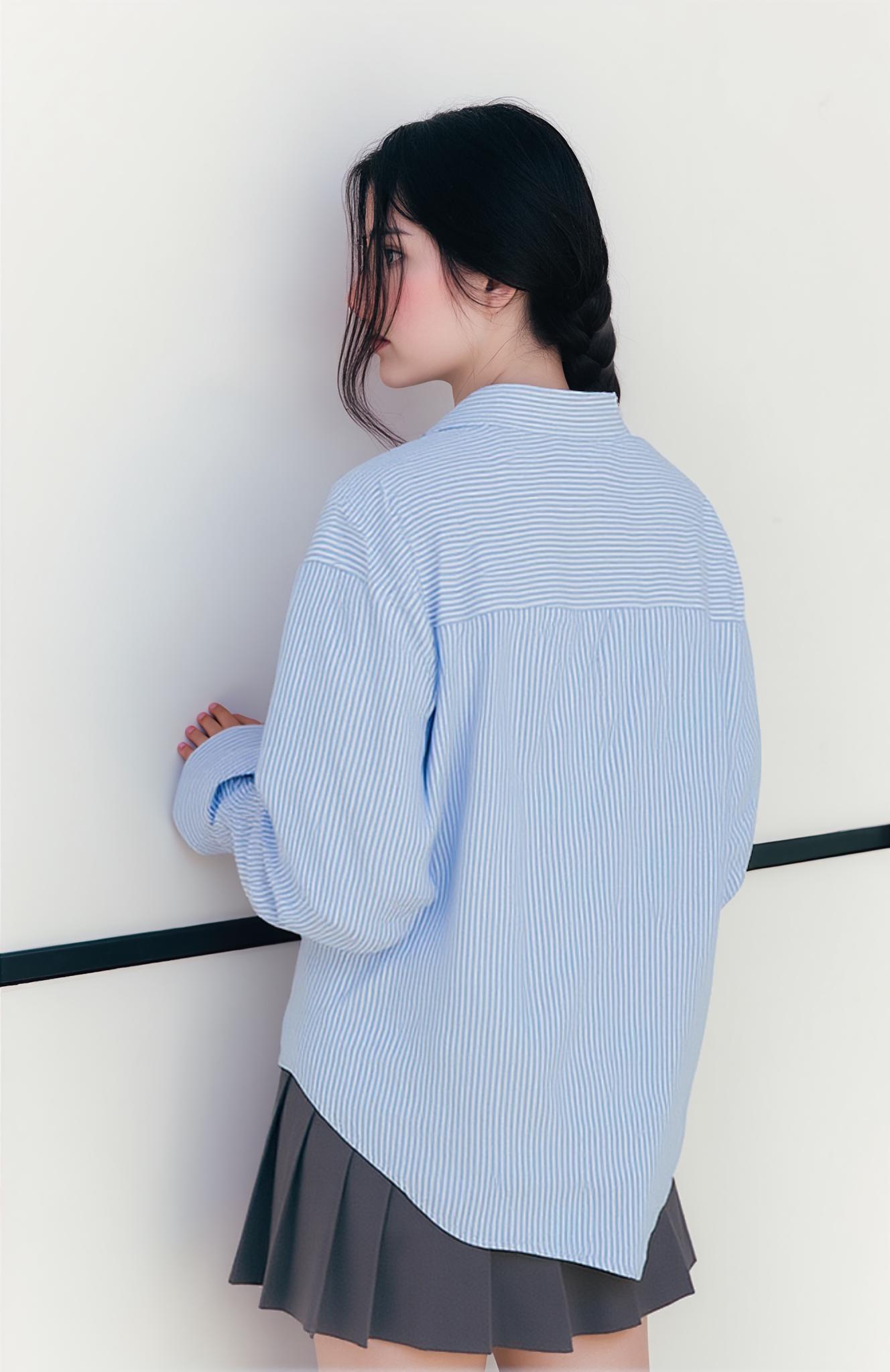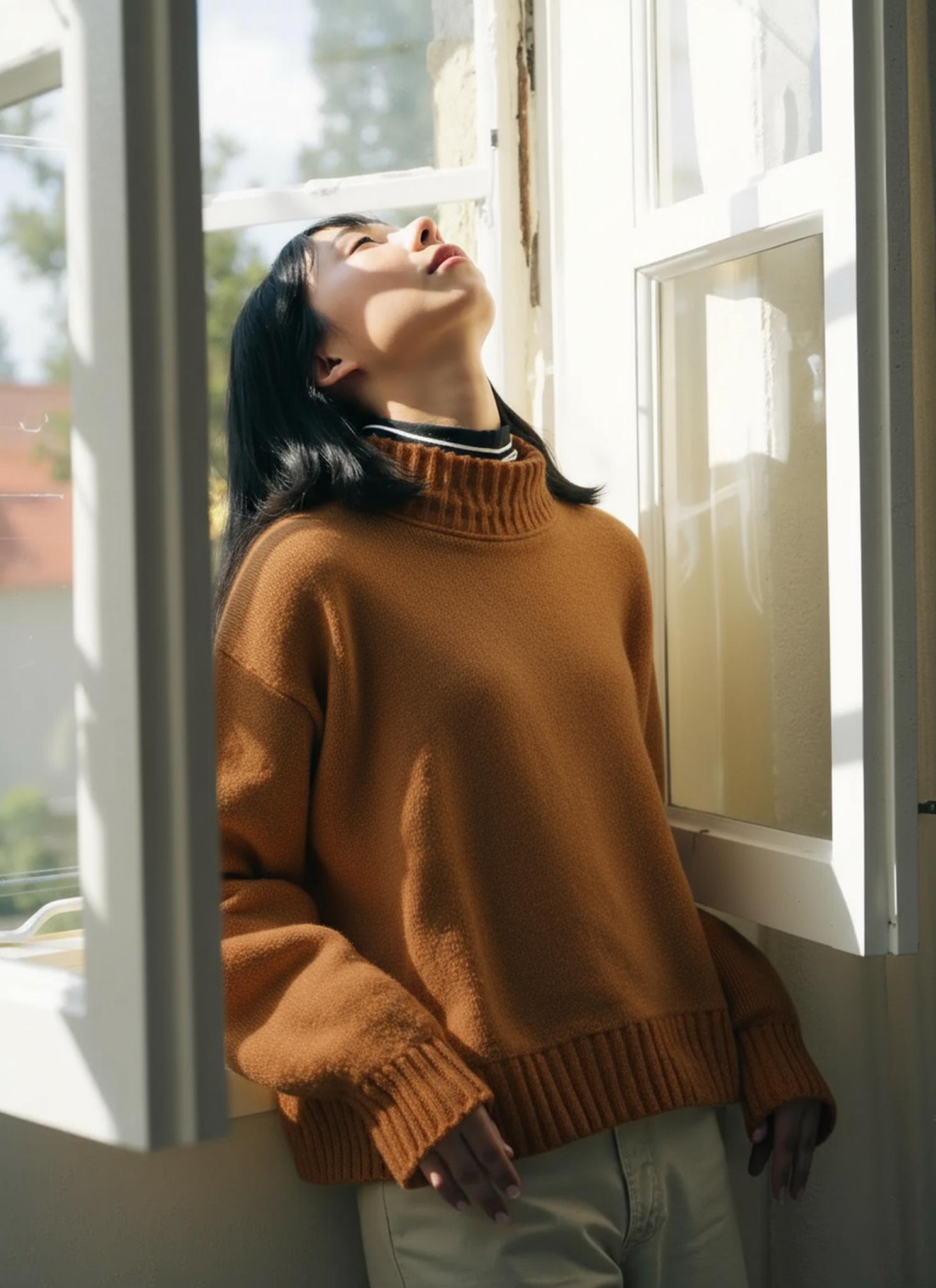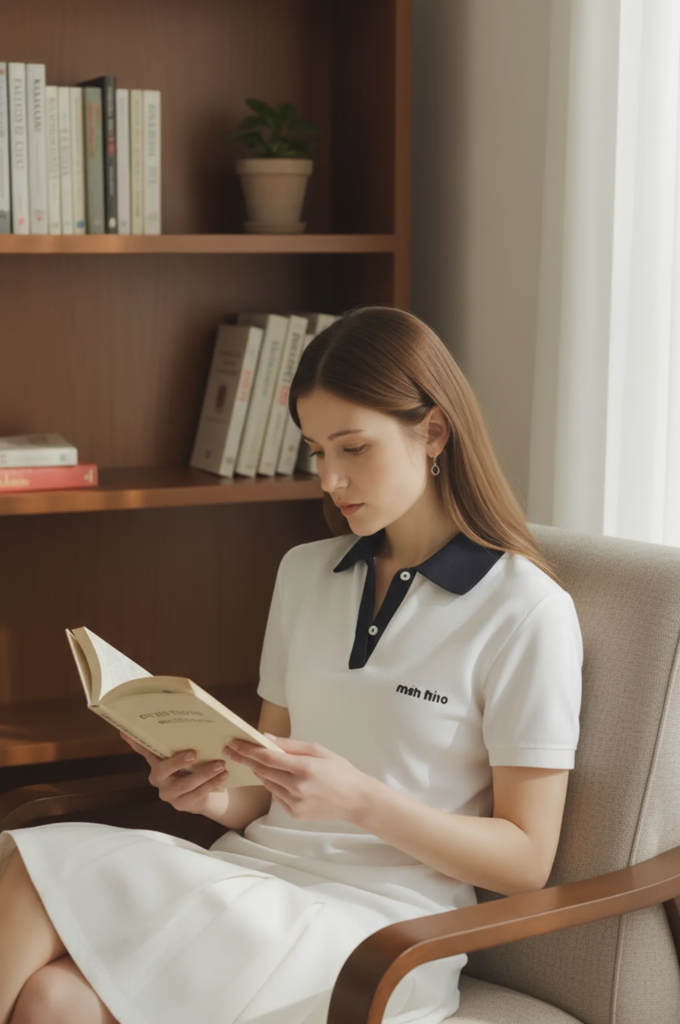
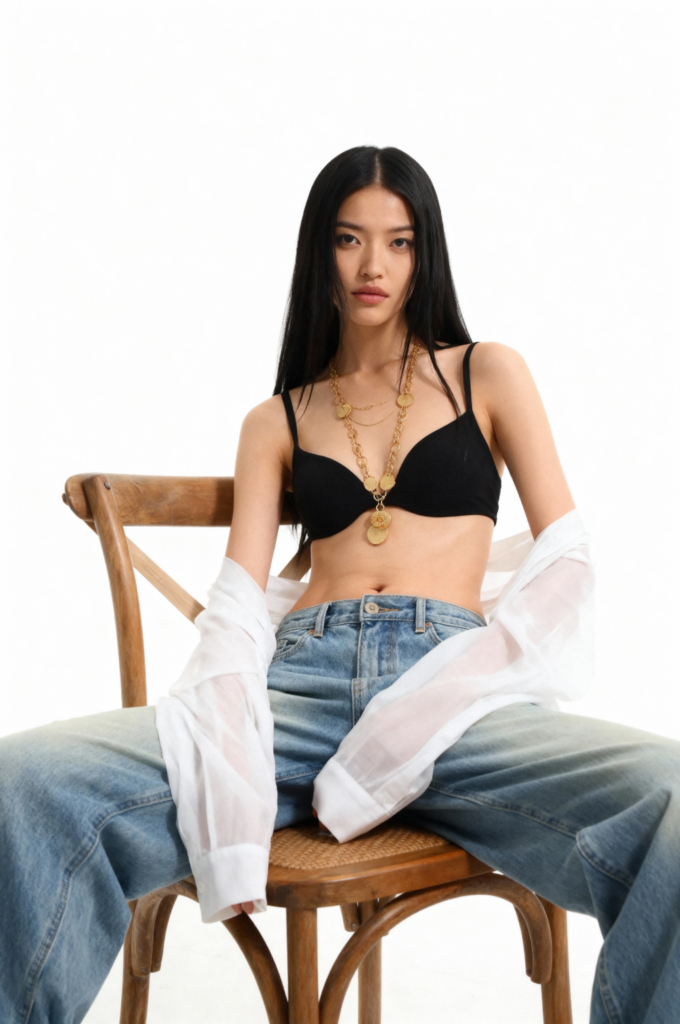
An AI sitting pose can make a fashion image feel calm, close, and editorial. It also shows products in ways that a standing photo cannot. Trousers bend at the knee. A dress settles across the seat. Shoes move closer to the camera. However, a seated pose is harder to create well. The body must connect with a chair, stool, sofa, or floor.
For ecommerce teams, the goal is not simply to make a model sit. Instead, they need a usable image. It must protect the garment, the model’s identity, and the campaign style. This guide shows how to build that result with WeShop AI’s AI Pose Generator. Then, it explains how to check the image before it reaches a product page, lookbook, or social post.
Why Sitting Changes the Way a Product Is Read
A standing pose gives buyers a clear view of length and shape. However, a seated pose reveals other details. It shows how fabric folds and where a waistband sits. It also shows how a jacket moves at the hip. In addition, buyers can see whether the shoes remain clear in a lifestyle image.
The mood changes too. For example, a model on a studio stool can look clean and modern. The same model leaning into a sofa can feel relaxed. Meanwhile, a low step can create a streetwear tone. Therefore, the seat and body position should support the campaign idea. They should not look like extra props added by the generator.
An AI sitting pose is especially useful for:
- adding a seated frame to a standing-only lookbook;
- creating a more varied carousel without changing the featured product;
- testing formal, relaxed, and editorial pose directions;
- preparing a hero still for a short social video;
- showing trousers, dresses, shoes, bags, or jewelry from another body angle.
What a Strong AI Sitting Pose Must Preserve
A convincing result has two jobs. First, the anatomy must make sense. Second, the product must still be trustworthy. One without the other is not enough for commercial use.
First, inspect the hips, knees, ankles, and hands. Then, check where the body meets the seat. The hips should look supported, and the feet should sit firmly on the floor. Also, hands must not merge into the clothing or chair. Finally, the contact shadow should match the light.
Next, compare the result with the source image. Check the color, print, logo, buttons, seams, hem, and texture. A new fold is natural when the model sits. However, a missing pocket or changed pattern is not. As a result, a side-by-side check is more useful than viewing the new image alone. new fold is natural when the model sits, but a missing pocket or altered pattern is not. This source-to-result comparison is more useful than judging the generated image alone.
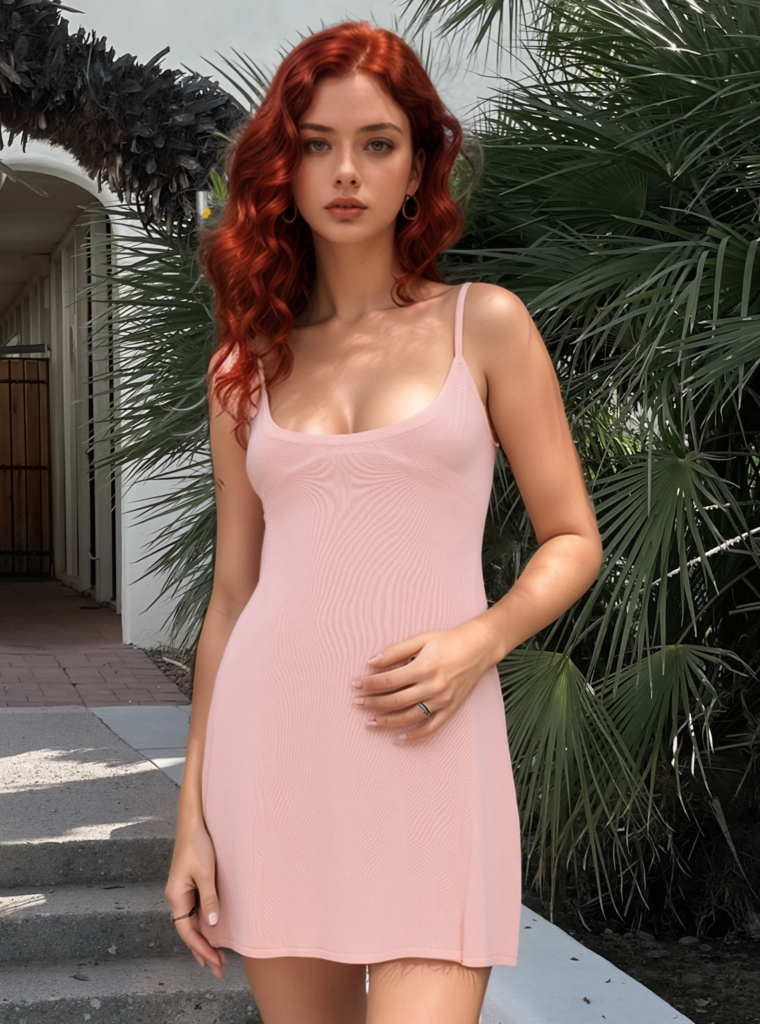
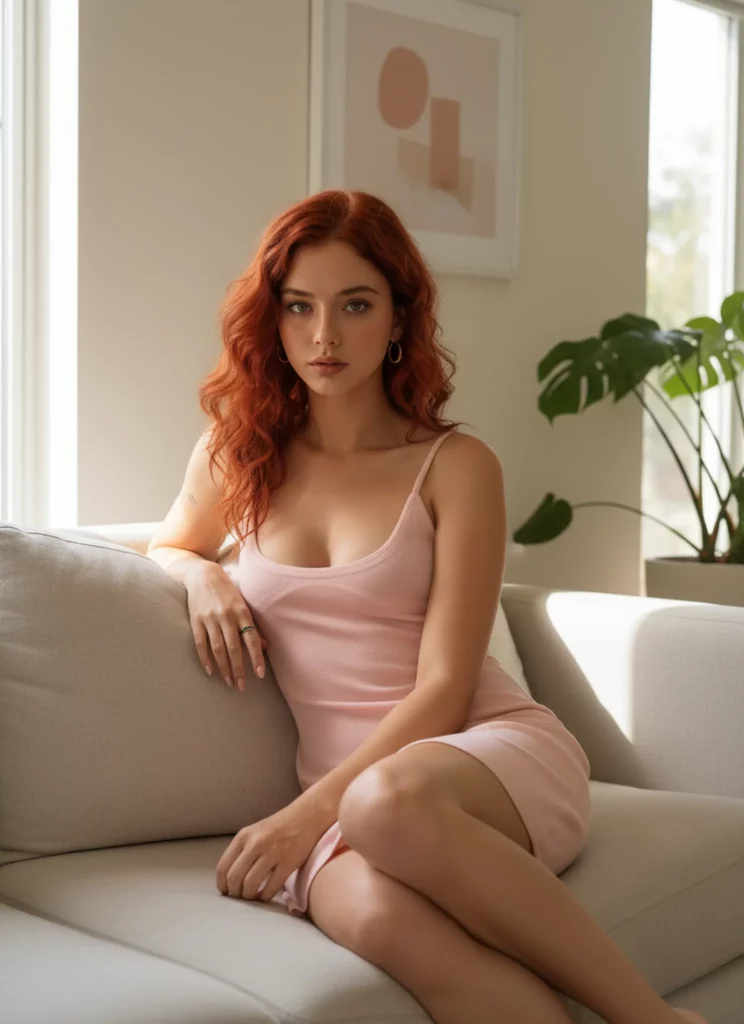
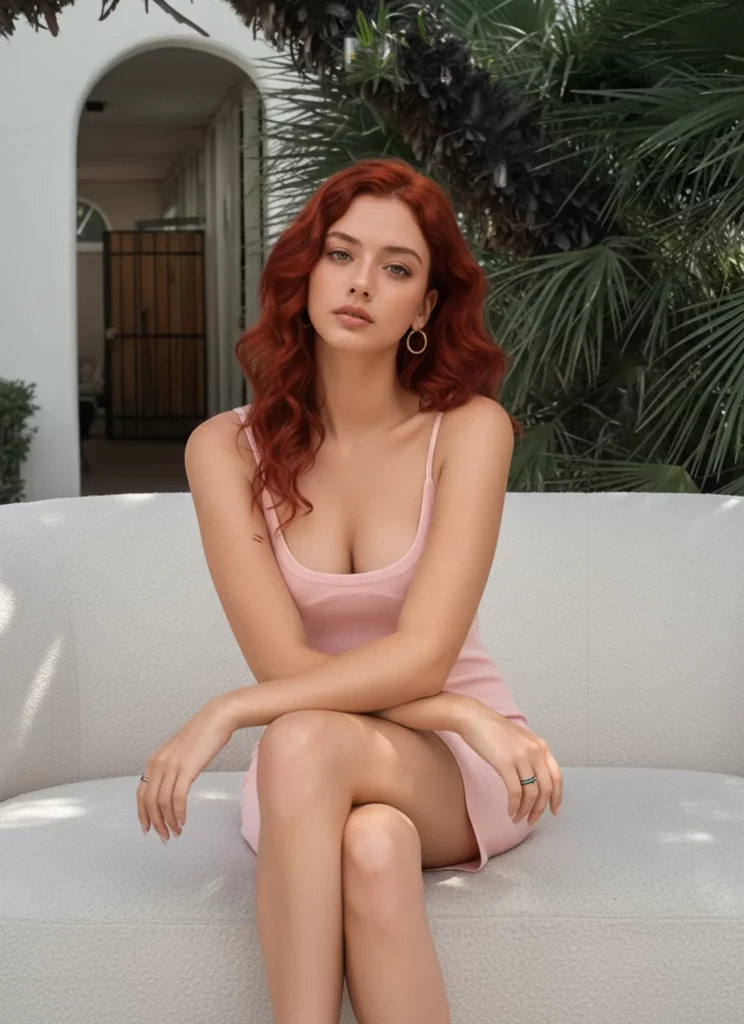
The comparison above should be read as a visual case, not as a performance claim. Look at what changes between the source and the two seated directions. Then check what should remain stable: the person, the outfit, and the overall image style. If a result changes a product detail that buyers rely on, regenerate or repair it before use.
Build the Pose Brief Around Five Anchors
Vague prompts such as “make her sit naturally” leave too many decisions to the model. A better brief names five anchors:
seat + torso + legs + hands + continuity
For example:
Change the model to a seated pose on a simple studio stool. Keep the torso upright with a slight turn to camera. Place both feet naturally on the floor and rest the hands separately on the thighs. Preserve the model’s face, outfit color, print, lighting direction, and camera framing.
This structure works because it describes the body’s support points. It also tells the generator what matters beyond the pose.
AI Sitting Pose Prompts for Different Campaign Moods
Use the examples as starting points, then adapt them to the source image and product.
| Campaign direction | Prompt direction | Best suited to |
|---|---|---|
| Clean catalog | Seat the model upright on a plain stool, shoulders relaxed, knees slightly apart, feet flat, hands resting separately on the thighs; preserve the outfit and neutral studio light. | Denim, knitwear, jackets, footwear |
| Relaxed lifestyle | Place the model naturally on the front edge of a sofa, one leg slightly forward, one hand beside the hip, soft expression; keep the same face, styling, and color palette. | Loungewear, bags, beauty, home-lifestyle campaigns |
| Fashion editorial | Seat the model on a low block with an asymmetrical leg position, elongated torso, one elbow lightly resting on one knee; preserve garment construction and use the original camera angle. | Lookbooks, campaign covers, social carousels |
Avoid packing several conflicting ideas into one prompt. “Relaxed,” “powerful,” “symmetrical,” and “in motion” can pull the body in different directions. Choose one pose intention and describe it physically.
A Practical AI Sitting Pose Workflow
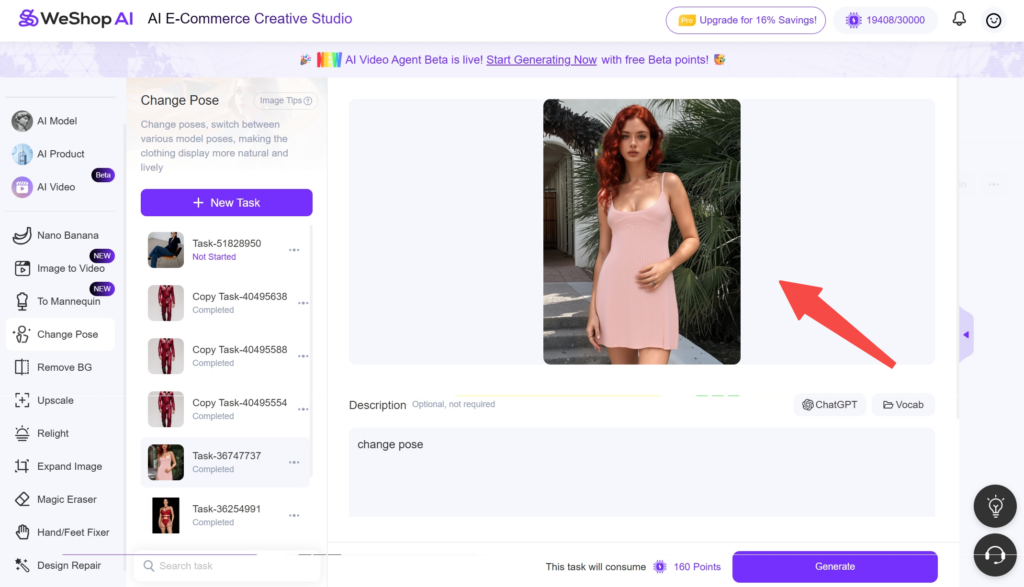
This workflow is organized around decisions rather than a fixed number of clicks. The current WeShop AI Pose Generator is designed for model and fashion images and supports sitting as one of its pose directions. Interface labels may evolve, so follow the visible pose and upload controls in the current workspace.
Source Image: Protect the Product Before Changing the Pose
Choose a sufficiently large image with the model clearly visible. Full-body or three-quarter frames are usually easier to evaluate because the knees, feet, and seat contact can remain inside the composition. Avoid heavy foreground objects, crossed limbs that hide the garment, or a crop that removes the feet if the final pose needs them.
Before uploading, note the details that cannot change. For a printed dress, that may be the print scale, neckline, sleeve shape, and hem. For jeans, it may be the wash, pocket placement, rise, and leg shape. This short fidelity list becomes your review standard.ase. Avoid extreme arm positions or cropped frames that could confuse the AI.
Pose Direction: Describe Contact, Balance, and Camera
Write a prompt or use a compatible pose reference. If you use a reference, choose one with a similar camera angle and body framing. A low-angle reference paired with an eye-level source can force unnecessary changes to the body and scene.
For an AI sitting pose, specify the seat type and height whenever they affect the silhouette. “High stool” keeps the legs longer and more open. “Low bench” creates deeper knee bends. “Floor seated” requires clear instructions for leg placement and visible hands.
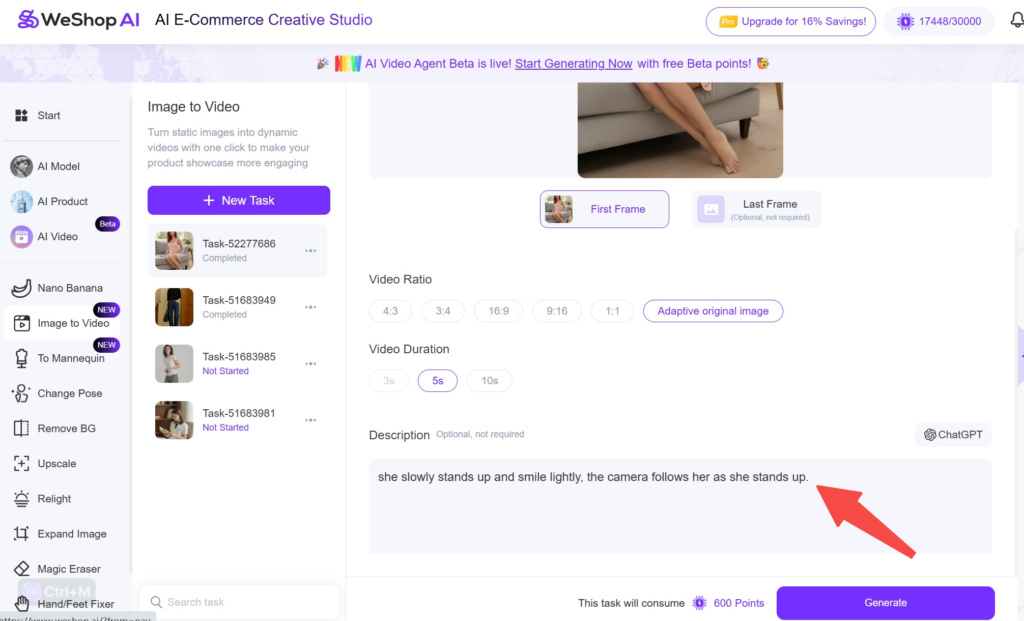
Review: Start at the Contact Points
Once the result appears, do not begin with the face. First, inspect the places where objects meet: hips and seat, shoes and floor, fingers and clothing, elbow and knee. These small areas reveal whether the seated posture has real weight.
Then review the image in this order:
- Body balance and joint direction
- Hands, feet, and facial identity
- Garment shape, print, logo, and accessories
- Chair edges, shadows, and background geometry
- Framing and safe space for the final channel
Keep the strongest base result, even if it needs one small correction. A visually dramatic output with several product errors is usually a poor starting point.
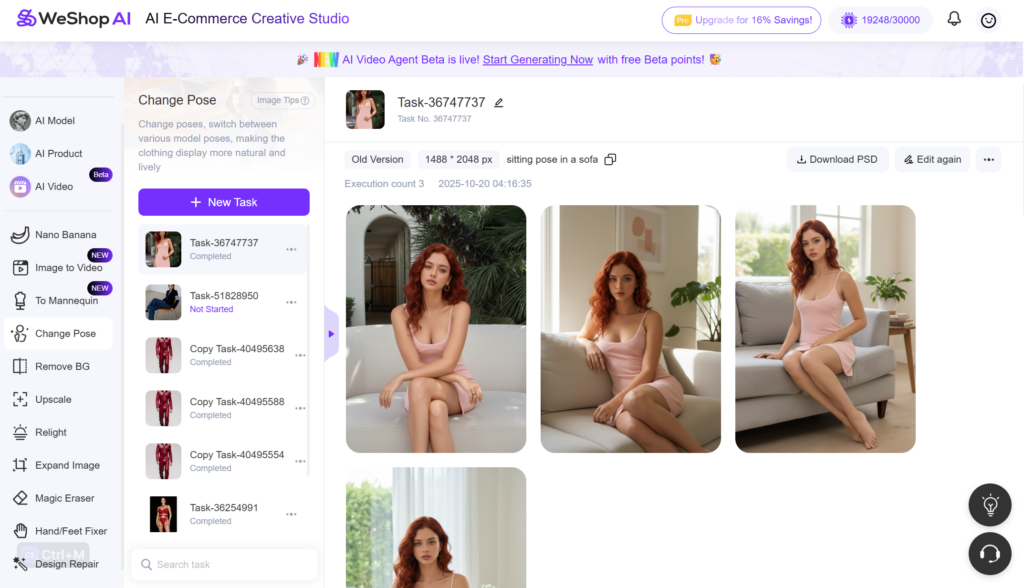
Repair Only the Area That Failed
Use the narrowest follow-up tool for the problem. Hand/Feet Fixer is appropriate when anatomy is the only issue. Design Repair can target a selected area when a garment edge or contact point needs reconstruction from a reference. Magic Eraser can remove a small unwanted artifact. Relight is useful only when the new pose no longer matches the scene’s light. AI Photo Enhancer should come after structural checks, since sharpening cannot fix incorrect anatomy or product details.
When the AI Sitting Pose Looks Wrong
Failures are easier to correct when the prompt names the physical problem.
| Visible problem | Likely cause | Better correction |
| The model appears to float above the seat | The support point is unclear | Name the furniture, seat height, hip contact, and contact shadow. |
| Knees or ankles twist unnaturally | The leg instruction is too complex | Use a moderate leg position and state where both feet should rest. |
| Fingers blend into the garment | The hand placement is hidden or ambiguous | Keep each hand visible and assign it to a separate surface. |
| A print, logo, or seam changes | The pose demands too much garment reconstruction | Use a simpler seated angle and explicitly preserve the critical product details. |
| The chair perspective feels wrong | The source and pose reference use different camera angles | Choose a compatible reference or keep the original camera height and framing. |
| The face or styling changes | The prompt overemphasizes a new scene | Reduce scene instructions and restate identity, styling, and lighting continuity. |
Regeneration is often the right choice when several failures appear together. Local repair is better when the overall AI sitting pose already works and only one defined area needs attention.
Turn a Seated Still Into More Campaign Assets
A finished seated image can support several outputs. Crop it for a product-page lifestyle module, place it beside a standing view in a lookbook, or use it as the first frame for a subtle image-to-video clip. For motion, keep the direction small and compatible with the body: a slight head turn, a gentle posture shift, or a small hand movement is usually easier to control than asking the model to stand up or cross both legs.
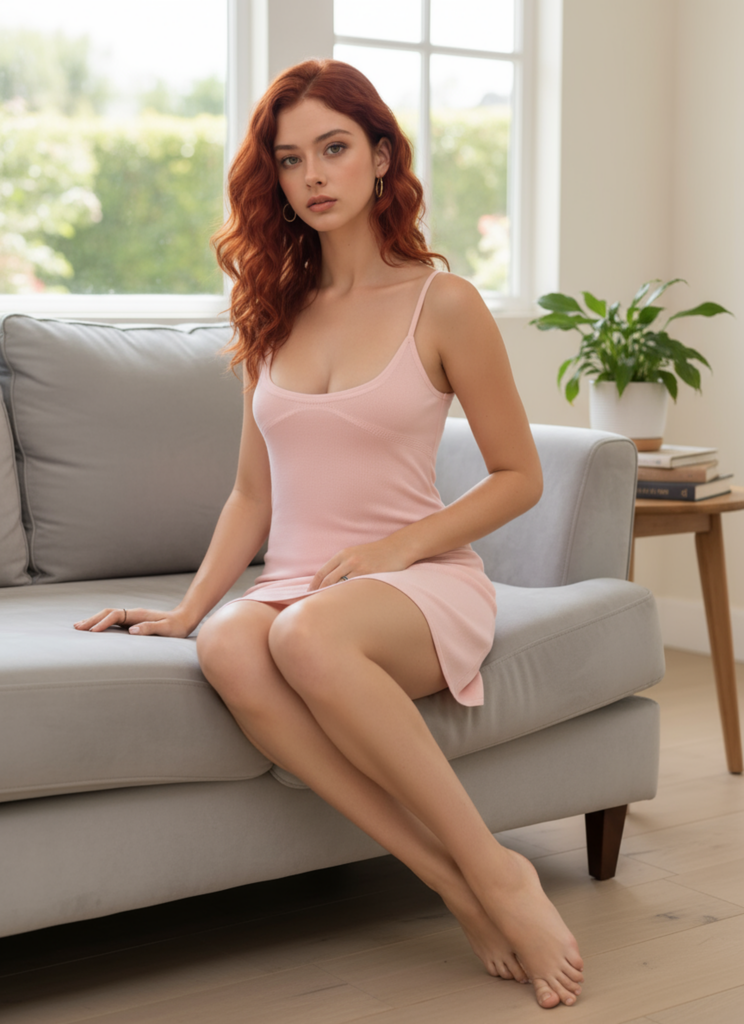
Match the final crop to its destination. A marketplace listing may need a clean, product-led frame. A vertical social creative needs safe space around the face, hands, and on-screen text. Meanwhile, a wide campaign banner may require background expansion rather than a tighter crop.
Read the Second Case as a Consistency Test
The final image group uses another source photo followed by two generated seated versions. Again, the value is in comparison. Check whether both results still belong to the same campaign and whether the product remains recognizable across pose changes. One version may be better for a product page, while the other may create stronger rhythm in a carousel.
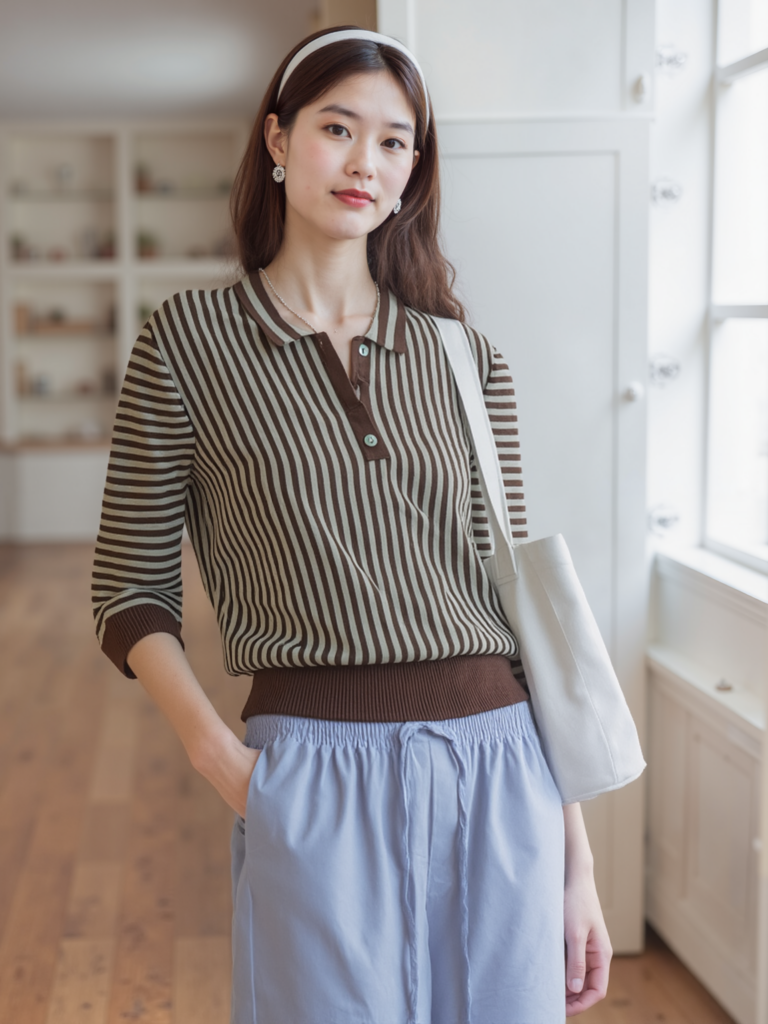
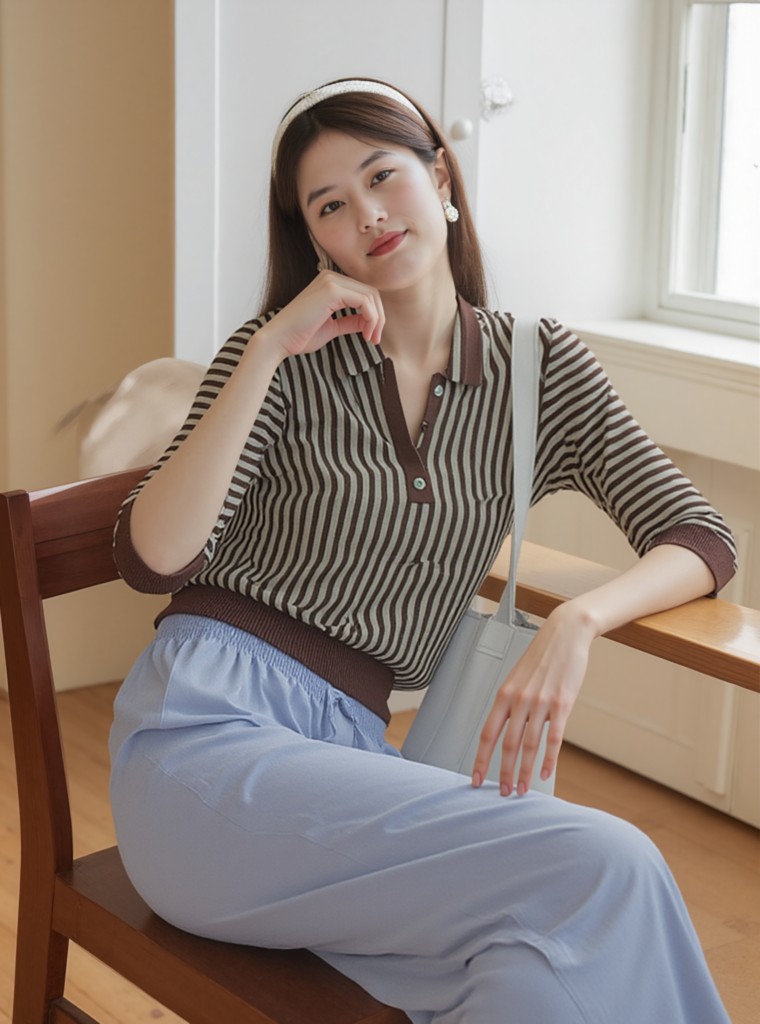
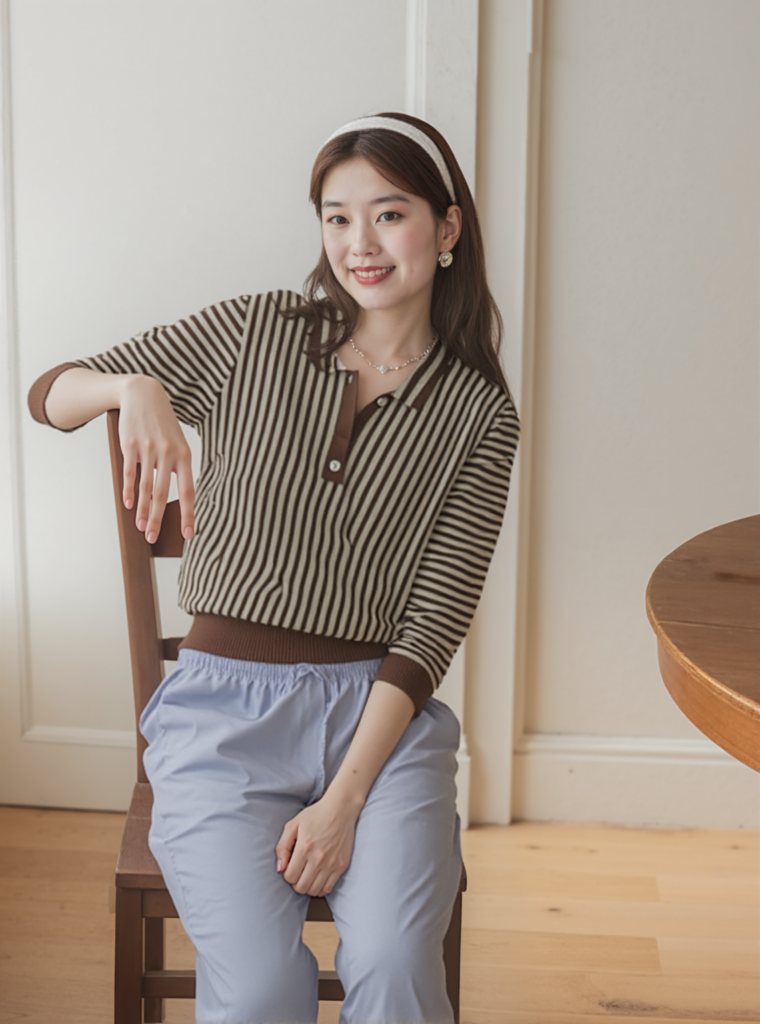
Do not choose between these results by novelty alone. Select the image that best protects the product, fits the page layout, and adds useful visual variety. If neither passes the same fidelity checks, revise the pose brief and generate again.
Create the Pose Your Campaign Actually Needs
A useful AI sitting pose begins with a clear commercial purpose. Decide what the seated frame must show, describe how the body is supported, and protect the details that make the product accurate. Then review contact points before polishing the image.
With that discipline, WeShop AI’s AI Pose Generator becomes more than a way to change posture. It becomes a practical option for expanding a fashion image set, testing new art direction, and preparing seated visuals for product pages, lookbooks, ads, and social content—without treating the first generation as the final answer.
Go to WeShop AI For Exploration: