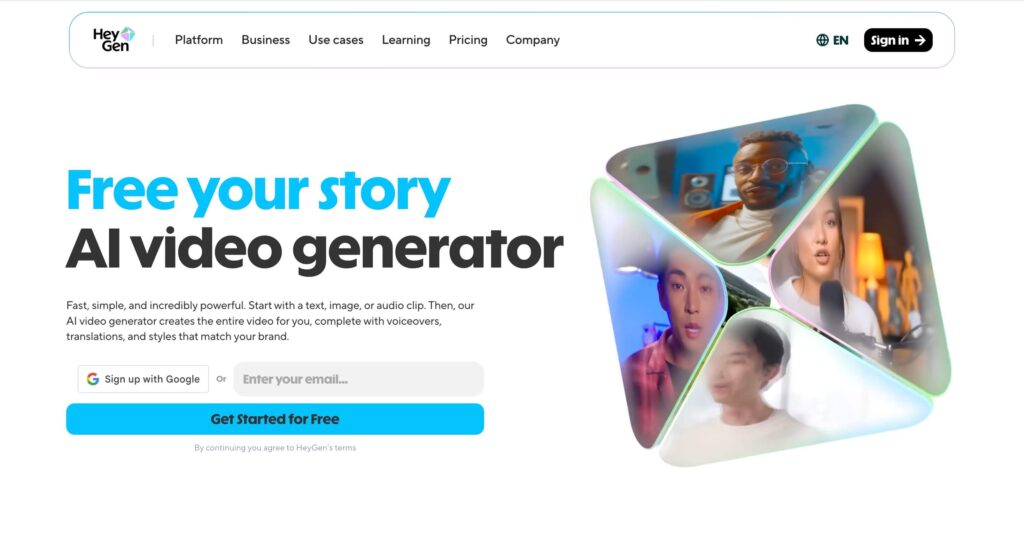
Traditional video production used to be a logistical nightmare involving camera crews, expensive lighting, and multiple takes. In February 2026, that era feels like ancient history. The rise of “presenter-led” AI content has moved from a novelty to a necessity, and HeyGen remains the undisputed heavyweight champion in this space.
While competitors like Synthesia focus on rigid corporate training and Runway explores cinematic world-building, HeyGen has double-downed on the “Digital Twin”—the idea that you can scale yourself across 175+ languages without ever stepping in front of a lens again. I’ve spent the last month stress-testing the 2026 updates, and in this HeyGen review, we’ll see if the platform’s “Avatar IV” model finally bridges the gap between AI and human emotion.
HeyGen Review 2026: The New Standard for AI Presenters
In 2026, the biggest shift in the platform isn’t just “better resolution”; it’s the intelligence of movement. The platform has transitioned from a simple lip-syncing tool into a full-scale performance engine.
Avatar Memory: A Game-Changer for HeyGen Users
One of the most requested features of the last two years was the ability to reuse motion. Previously, every time you generated a video, the AI would “re-think” how the avatar should move, often wasting credits on awkward gestures. With the new Avatar Memory, you can now save specific high-quality motion clips—like a signature wave or a specific hand gesture—and reuse them across multiple videos.
This update effectively makes your “Unlimited” avatar videos truly unlimited. By combining saved motion clips with new scripts, the generation speed is 50% faster, and the stability of 10-minute long-form videos has drastically improved.
Mastering Voice Consistency with the Voice Doctor
One persistent issue in earlier AI models was the “emotional disconnect” between the voice and the face. HeyGen’s 2026 Voice Doctor tool solves this by allowing for granular control over pitch, pace, and—most importantly—emotional inflection. If your script is meant to be a high-energy sales pitch, you can “inject” excitement; if it’s a somber apology, the AI adjusts the micro-expressions and vocal fry to match.
The Technology Behind HeyGen Avatar IV
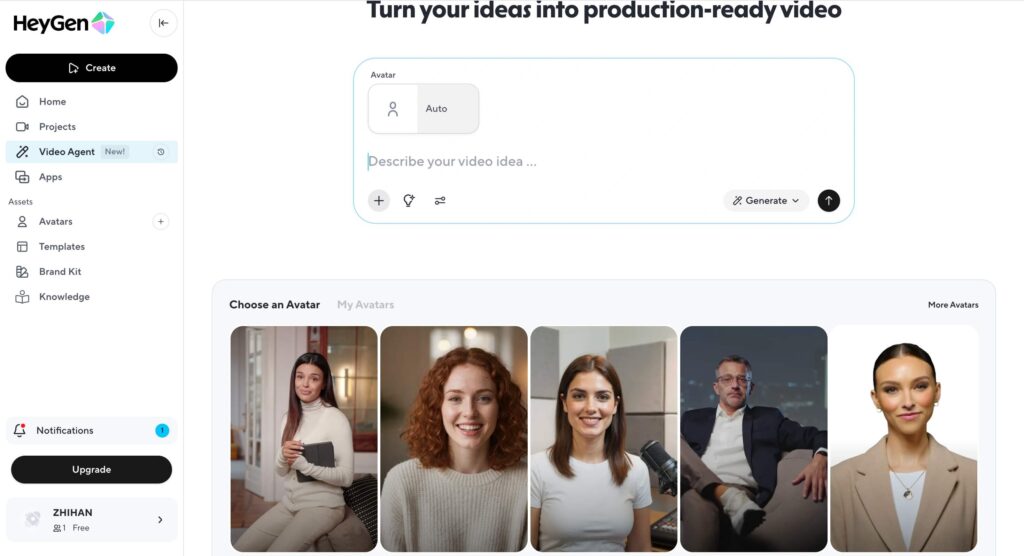
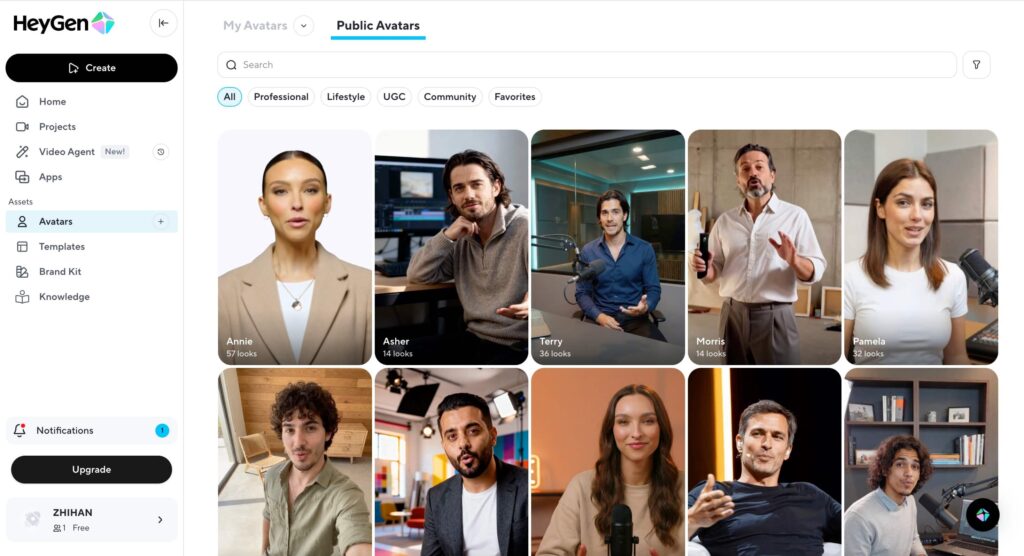
To stay ahead of the pack, the 2026 engine is built on Avatar IV, a multimodal model that learns from video and audio simultaneously. This isn’t just a mouth moving on a static face; it’s a holistic simulation of human behavior.
- Dynamic Timing: Unlike the repetitive “swaying” of 2024, Avatar IV understands when to pause for emphasis and when to perform a gesture based on the meaning of the words.
- 4K Native Rendering: For Business and Enterprise users, the clarity of skin texture and hair fibers is now indistinguishable from a Sony A7S III recording.
- Video Translation 3.0: The “Translate” feature now handles regional dialects (e.g., Swiss German vs. High German) with perfect lip-syncing that preserves the original speaker’s vocal characteristics.
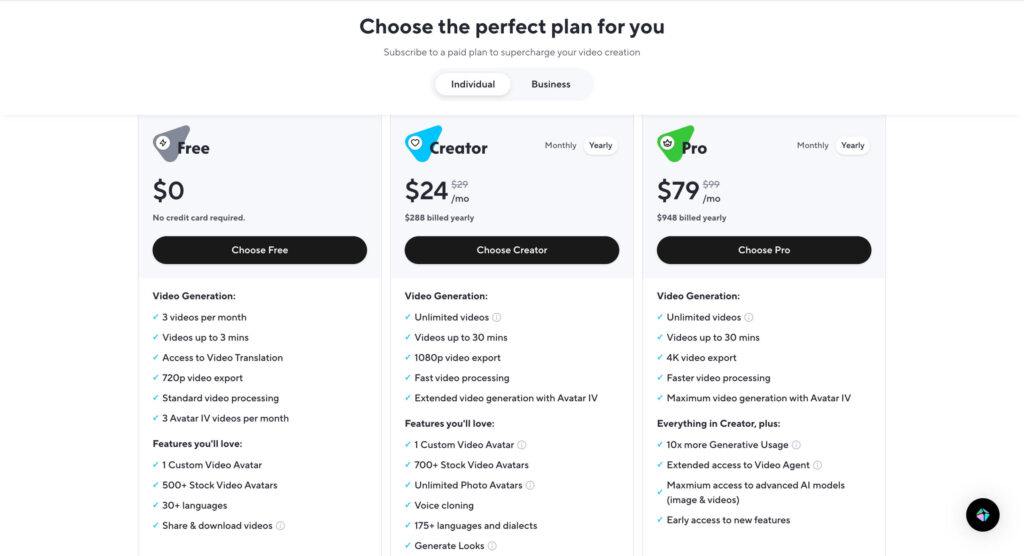
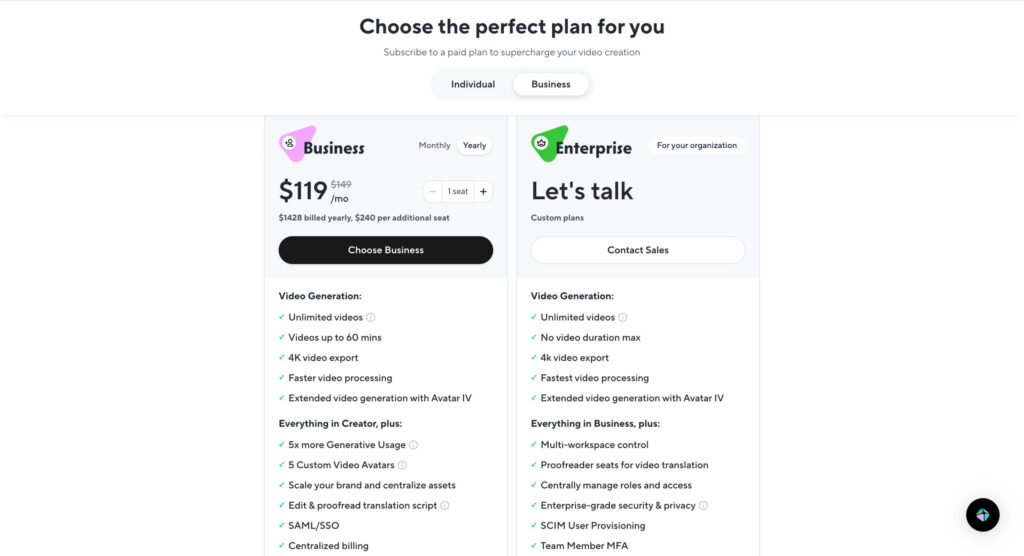
Understanding HeyGen Pricing and the Credit Economy
Let’s get real about the cost. In 2026, HeyGen has shifted away from the confusing “credits per minute” and toward a more seat-based model with “Generative Credits” for high-end features.
| Plan | Price (Annual) | Best For | Included High-Lights |
| Free | $0 | Testing | 3 videos/mo, 720p, Watermarked |
| Creator | $24/mo | Solo Influencers | Unlimited Avatar videos, 1080p, 1 Voice Clone |
| Business | $149/mo | Small Teams | 4K Export, 5 Custom Avatars, 200 GenCredits |
| Enterprise | Custom | Global Orgs | Unlimited everything, API access, SSO |
Is the $29 Creator Plan Enough for 2026?
For most independent creators, the answer is yes. The Creator plan now includes watermark-free downloads and unlimited standard avatar videos. However, you’ll need to watch your “Generative Credits.” Features like the Avatar IV High-Fidelity mode and Automatic Video Translation consume these credits. If you’re planning to localize 20 videos a month into 5 different languages, the Business plan becomes a necessity rather than a luxury.
Use Cases: Beyond the Simple Talking Head
While most users start with “explainer videos,” the 2026 version of the platform has enabled a few viral use cases that were previously impossible:
- Interactive Streaming Avatars: Use the HeyGen API to build 24/7 live-streaming sales agents on TikTok or Twitch that respond to comments in real-time.
- Amazon-to-Video: Paste an Amazon URL, and the AI automatically scans the product photos and reviews to generate a 60-second UGC-style video.
- Personalized Cold Outreach: Sync your CRM with HeyGen to send 1,000 personalized videos where the avatar says the prospect’s name and mentions their specific company pain points.
Final Verdict: Is HeyGen Still the Leader?
After this extensive HeyGen review, it’s clear that Google and OpenAI are closing in, but HeyGen still holds the crown for user experience and specialized avatar realism.
The Good:
- Unbeatable lip-syncing and gesture consistency.
- The most intuitive AI Studio interface in 2026.
- “Avatar Memory” significantly speeds up production workflows.
The Bad:
- High-end features (4K, Translation) are locked behind premium tiers.
- Credits can disappear quickly if you aren’t careful with “Quality Mode” renders.
Summary: If your brand relies on a human connection through video, HeyGen is the best investment you can make in 2026. It is the only platform that makes “faking it” look entirely, undeniably real.