











AI Product Ad Generator Builds Four Campaigns From One SKU
Can one product image support four different campaigns without losing its identity? This real GPT Image 2 test turns the same SKU into problem–solution, feature, travel, and brand ads, then checks the text, proportions, and product details that changed.
AI Product Ad Generator Builds Four Campaigns From One SKU
One product photo should not lock an ecommerce team into one advertising idea. In this controlled test, the AI Product Ad Generator had to turn the same fictional NORI fabric shaver into a problem–solution ad, feature explainer, travel visual, and brand-led image without creating a different SKU. We checked every result for product identity, copy accuracy, and commercial clarity.
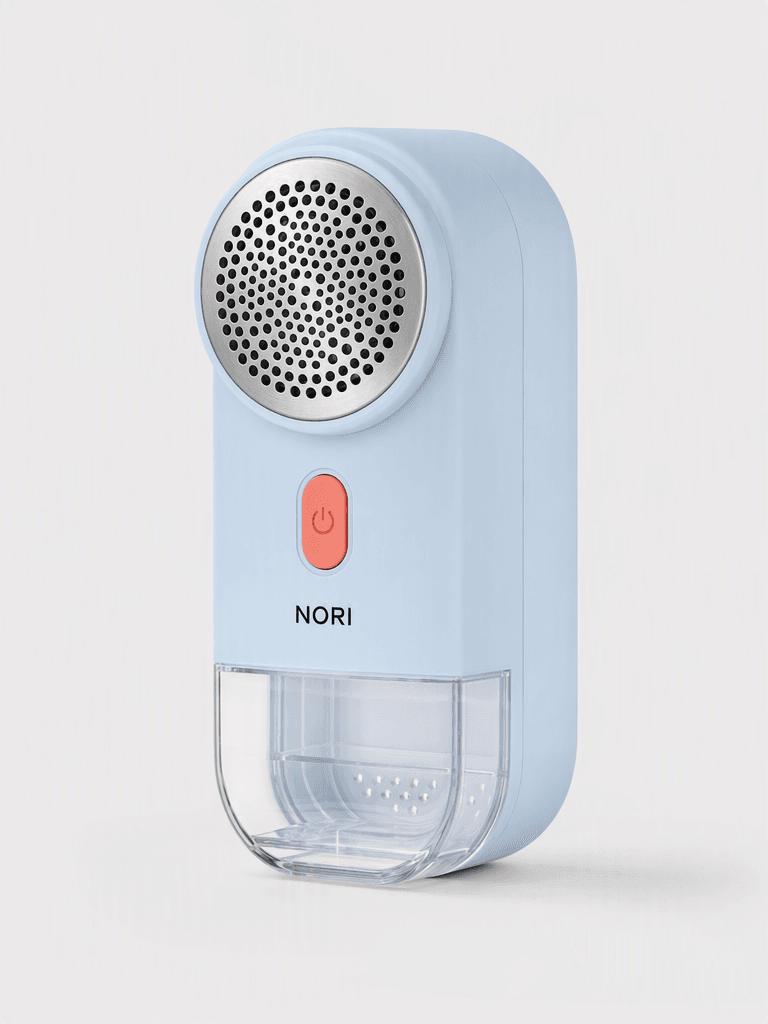
The reference image: one NORI fabric shaver with five identity anchors to preserve.
The Ecommerce Problem Behind This Test
A direct-response ad must make the problem obvious. A product-page graphic explains visible features. A travel campaign needs context, while a brand post relies more on mood. An AI Product Ad Generator is only useful when it can change these messages while keeping the product recognizable.
For this test, the reference established five fixed details:
- A pale sky-blue body
- A coral-red power button
- A circular metal shaving head
- A transparent lint container
- The black NORI wordmark
Every campaign was generated directly from the original. None of the results became the next reference, so small changes could not accumulate through chained edits.
Two Direct-Response Angles From the AI Product Ad Generator
The first pair tests two common ecommerce jobs. One image sells the outcome. The other explains what the customer is looking at.
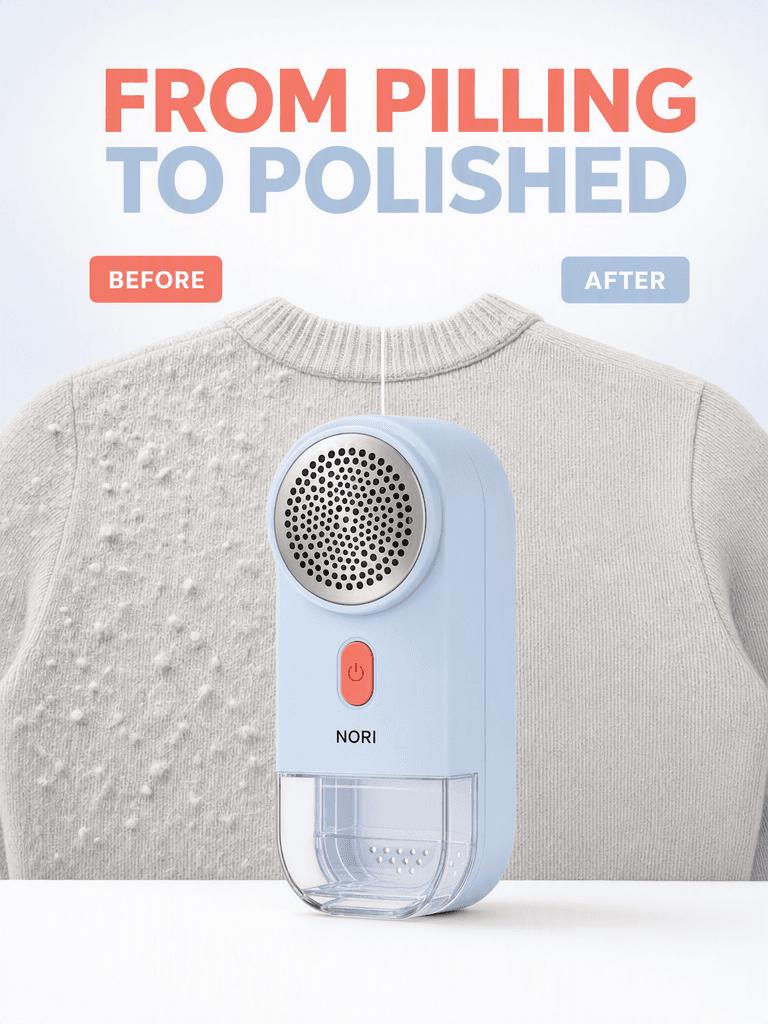
The product stays central while the knit texture carries the before-and-after message.
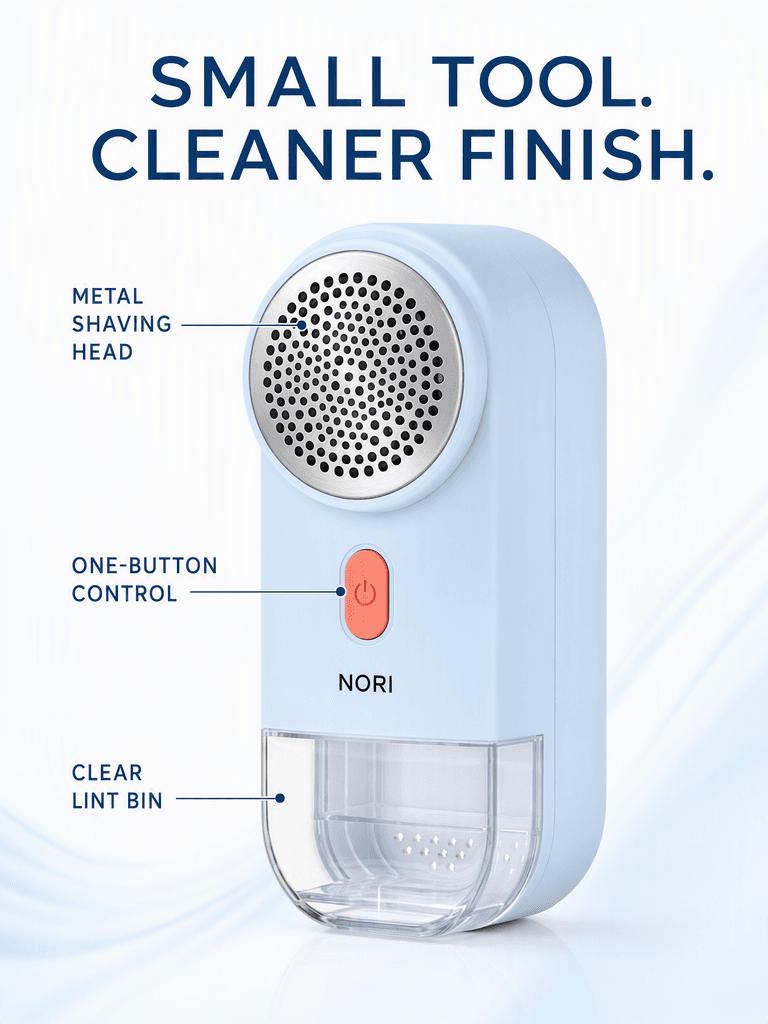
Three short callouts turn the packshot into a scannable product graphic.
AI Product Ad Generator Test 1 — Make the Problem Visible
The first prompt placed NORI in front of “Before” and “After” knit sections. “FROM PILLING TO POLISHED” is readable, both labels are correct, and the message lands immediately. However, the left-side pills are more dramatic than normal wear, while the product body becomes slightly narrower. For greater credibility, request “fine, naturally distributed surface pilling” and avoid treating an AI-made transformation as literal product proof.
AI Product Ad Generator Test 2 — Let Features Carry the Message
The feature explainer is the strongest direct-response result. The AI Product Ad Generator reproduced “METAL SHAVING HEAD,” “ONE-BUTTON CONTROL,” and “CLEAR LINT BIN” correctly, and each line points to the relevant component. The format suits product pages, marketplace galleries, launch posts, and retargeting creatives because it organizes visible facts instead of inventing statistics. Still, the transparent container changes slightly. Clear parts, ports, seams, and other small geometry need full-size inspection.
The Same SKU in Two Different Buyer Contexts
The next pair tests whether the AI Product Ad Generator can move the same object into a practical use case and then a softer brand message.
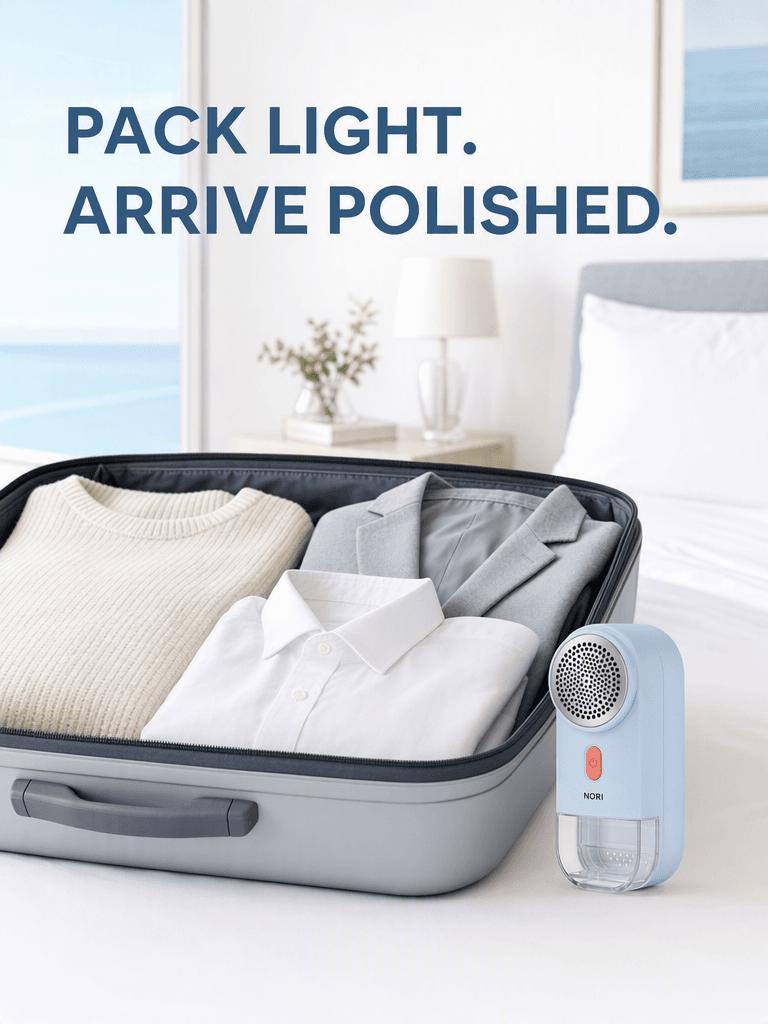
The suitcase answers where the product fits into the buyer's routine.
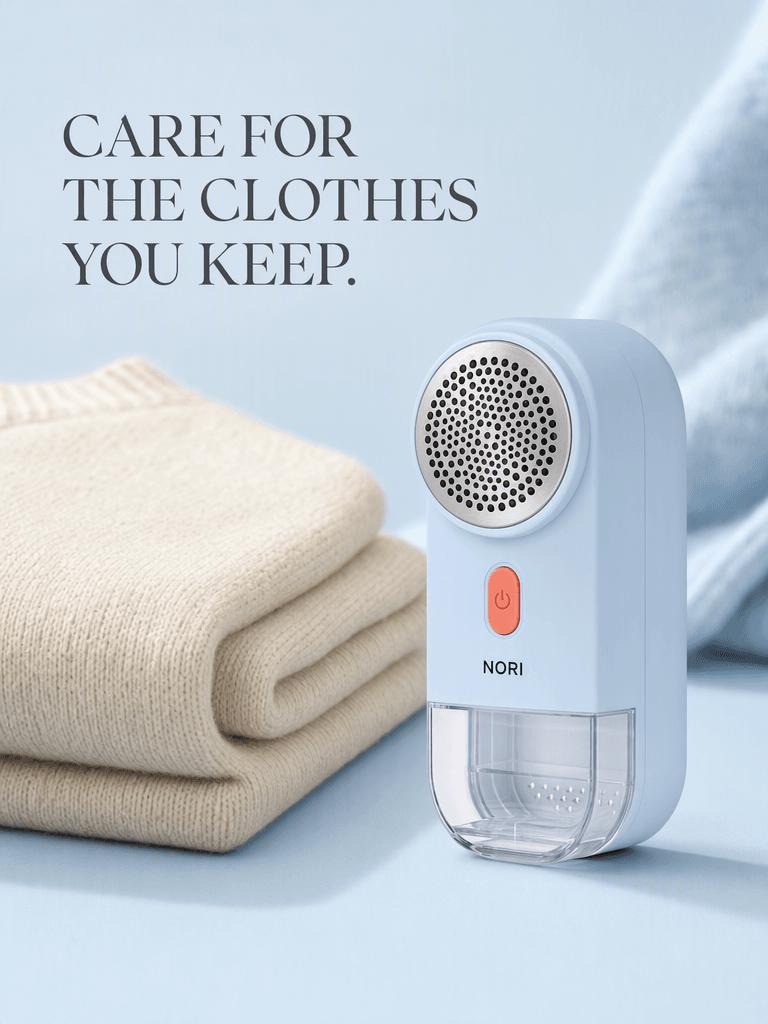
A quieter editorial composition changes the tone without changing the category.
Put the Same SKU Inside a Buyer Situation
“PACK LIGHT. ARRIVE POLISHED.” changes the selling angle immediately. The suitcase and clothing explain why someone might carry the device. The AI Product Ad Generator kept the NORI name, colors, button, metal head, and clear container, but the device became smaller, more front-facing, and slightly different in proportion. It also added a plant despite the exclusion. When scale matters, specify how much of the frame the product should occupy and inspect the background as carefully as the subject.
Move From Utility to Brand Feeling
“CARE FOR THE CLOTHES YOU KEEP.” moves the message from immediate problem solving to everyday garment care. The serif headline, folded knitwear, and pale-blue palette feel editorial rather than technical. This shows how an AI Product Ad Generator can extend one reference into a social post, email image, or brand-story asset. The new mood still connects to the product’s real purpose.
A Repeatable AI Product Ad Generator Workflow
The experiment suggests a simple process that ecommerce teams can reuse with other products.
- Start with one clean reference. Keep the full product visible and unobstructed.
- Write an identity lock. List the colors, logo, controls, materials, proportions, and parts that cannot change.
- Give each image one job. Choose a problem, feature, use case, audience, season, or brand story.
- Return to the original. Never turn one generated ad into the reference for the next.
- Keep copy short and factual. Use one headline and only verified labels or claims.
- Inspect at 100%. Check text, logos, buttons, edges, clear parts, shadows, and proportions.
- Scale only after approval. Create more ratios after the base creative passes review.
What This Four-Angle Test Actually Proved
All four images remained recognizably NORI, and every requested headline and label was correct. However, “recognizable” is not pixel-perfect. Head-to-body ratios changed, the clear compartment was reinterpreted, and the travel image adjusted product scale and angle. An AI Product Ad Generator can extend one reference into commercially distinct ideas, but every result still needs a product-level review before publication.
Ready to test your own SKU? Upload one clean product image in the GPT Image 2 panel on the right, choose a campaign angle, and see how far the same reference can travel without losing its identity.