












Z-Image AI Image Generator for Film Concept Art: Turn a Script into a Cinematic Frame
Learn how to turn a screenplay scene into a cinematic keyframe with Z-Image, using a structured prompt for near-future film concept art and preproduction reviews.
A screenplay can define the character, location, and action without giving the director, cinematographer, and production designer the same mental image. Before scouting, set construction, or filming begins, the team often needs one visual that makes the space, camera language, lighting, and mood concrete.
This AI image generator for film concept art workflow uses Z-Image to turn an original near-future Shanghai scene into a single 21:9 cinematic keyframe. The goal is not to generate a complete storyboard. It is to create one visual anchor for a director's lookbook, pitch deck, cinematography discussion, or early production-design review.
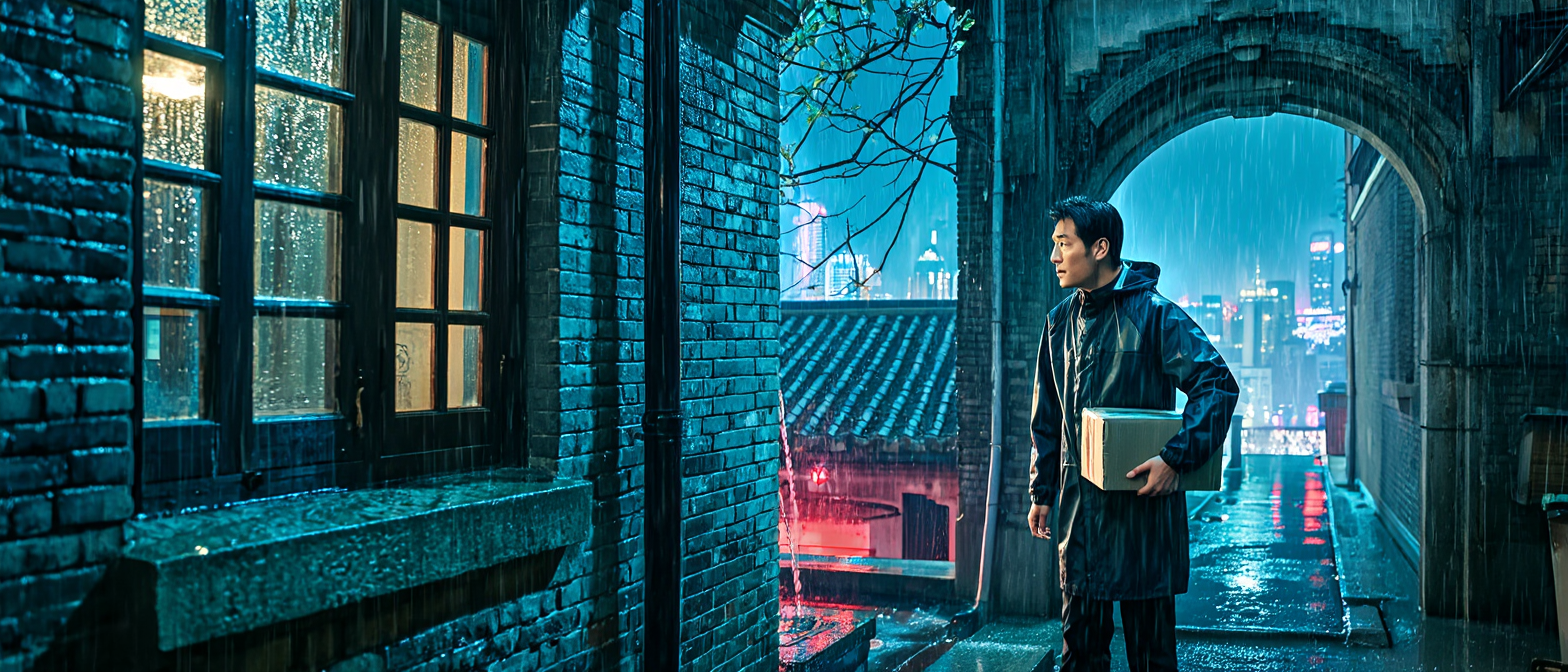
Generated keyframe: The raw Z-Image output created from the exact cinematic prompt below.
The Film Preproduction Problem This AI Image Generator Use Case Solves
Film development often creates a communication gap. The writer focuses on story, the director on blocking, the cinematographer on lenses and light, and the art department on space and materials. If the team relies only on prose, each person may imagine a different scene.
This use case does not attempt to visualize an entire screenplay. It converts one important scene into a film concept frame that helps the team answer specific creative questions:
- Is the time and place immediately readable?
- Does the character's position carry narrative meaning?
- Do old Shanghai architecture and near-future elements feel balanced?
- Do rain, neon reflections, and warm interior light create one coherent mood?
- Can the frame act as a visual reference for the wider project?
Creative Deliverable
One photorealistic 21:9 keyframe that establishes story, production design, camera language, and lighting for a near-future Shanghai scene.
Original Script Scene
EXT. SHIKUMEN ALLEY, SHANGHAI — RAINY NIGHT

A young courier in a dark waterproof coat stands beneath a weathered Shikumen archway. The courier has completed the final delivery of the night but does not leave. Instead, they turn back toward the depths of the alley.

Rainwater runs down the old brick walls. Beyond the tiled rooftops, near-future towers rise through the mist. Red neon reflects across the wet pavement, while a weak warm light glows through the window of an old house.
The scene already contains narrative information, but it does not define shot size, camera height, spatial layers, lighting hierarchy, or the degree of science-fiction design. Those decisions must be translated into visible film language.
Why Z-Image Fits Early Film Concept Development
Z-Image in WeShop is a text-to-image model, so filmmakers can begin with a script and visual idea instead of uploading an actor, location, or style reference. That makes it useful during early concept development, before casting, scouting, and final production design have been locked.
This scene combines a realistic human figure, Chinese urban architecture, aged materials, atmospheric weather, and cinematic lighting. A structured prompt can define how those elements should coexist in one frame.
However, one concept frame is not a complete storyboard. Maintaining the same character, wardrobe, environment, and light across multiple shots is a separate challenge. Without multi-shot evidence, this workflow should not be presented as a method for guaranteed character continuity or full storyboard production.
Translate the Script into a Cinematic Image
| Visual layer | Information from the script | Prompt direction |
|---|---|---|
| Story subject | One courier turns back after a delivery | Define one adult character, wardrobe, action, and gaze direction |
| Location | A Shanghai Shikumen alley | Specify old brick, stone archway, narrow lane, and wooden windows |
| Time and weather | Rainy night | Add wet pavement, visible rain, mist, and reflections |
| Time contrast | Historic buildings against a near-future skyline | Keep the old alley dominant in the foreground and towers distant |
| Camera language | Let the environment tell the story | Select 21:9, then use a 35mm anamorphic look and low wide establishing shot |
| Lighting | Cold isolation with a trace of human warmth | Balance cyan rain light, red reflections, and one warm window |
| Constraints | Avoid a crowded cyberpunk poster | One character, no flying cars, weapons, readable text, logos, or poster typography |
Ready-to-Copy Z-Image Film Concept Art Prompt
Open Z-Image AI Image Generator in WeShop and paste the following prompt:
A photorealistic cinematic concept frame set in near-future Shanghai on a rainy night. One adult Chinese courier wearing a dark charcoal waterproof coat stands beneath a weathered Shikumen stone archway after completing the final delivery of the night. The courier holds one compact unbranded parcel at their side and turns back to look into the narrow alley, creating a quiet sense of uncertainty. Foreground: rain-soaked old brick walls, worn stone threshold, dark wooden window frames, and water running through shallow street channels. Midground: the solitary courier under the archway. Background: a restrained near-future Shanghai skyline rising above tiled rooftops through mist, with subtle red neon reflections on wet pavement and one warm tungsten window glowing from an old house. Wide cinematic establishing shot, low waist-height camera, 35mm anamorphic lens look, deep spatial layering, ultrawide horizontal composition designed for a 21:9 frame, cool cyan-blue rainy ambient light balanced by warm window light and restrained red reflections, realistic rain, natural human proportions, grounded science-fiction production design, detailed aged materials, atmospheric depth, sophisticated film color grading, realistic feature-film still, no crowd, no extra character, no flying cars, no weapon, no readable signs, no logo, no watermark, no poster typography.
The prompt preserves the scene's narrative core while adding camera position, spatial depth, production design, and lighting. Instead of relying on vague terms such as “epic” or “stunning,” it defines visible conditions the creative team can evaluate.
Generate the Cinematic Keyframe
Generate the first frame with Z-Image and select 21:9 from the Aspect Ratio menu. This is the available ultrawide option for the cinematic composition used in this case.
You can try it directly using the tool on the right.
Save the original output with the exact prompt. The image placed in this article should be the raw result from this Z-Image workflow, not a frame regenerated by another model.
Evaluate Whether the Keyframe Works
The concept frame should be reviewed as a preproduction asset, not simply as an attractive AI image.
1. Can You Read the Story Without the Script?
The frame should contain only one courier, captured between leaving and turning back. The character should not pose toward the camera. Even without the screenplay, the image should suggest hesitation or a discovery inside the alley.
2. Does the Frame Have Foreground, Midground, and Background?
Old brick and the stone archway create the foreground, the courier occupies the midground, and the future skyline remains in the distance. If one layer disappears, the frame may become a character poster or lose the contrast between historic Shanghai and the future city.
3. Are the Future Elements Restrained?
The scene is not designed to showcase cyberpunk technology. Towers, mist, and limited neon should suggest the period without overwhelming the Shikumen setting. Flying cars, dense signage, and excessive machinery would weaken the grounded location.
4. Does the Lighting Support the Narrative?
Cool rain light creates isolation, red reflections guide the eye, and the warm window keeps a trace of ordinary life in the scene. If every light source is equally bright, the frame will lose visual hierarchy.
5. Does It Read as a Film Frame Rather Than a Poster?
The courier should exist inside the environment instead of filling the center of the image. The 21:9 composition should allow the alley, archway, and skyline to participate in the storytelling.
Refine One Cinematic Variable at a Time
Change only one major variable in each new generation so the creative team can understand what altered the frame.
| If the output has this problem | Add or strengthen this instruction |
|---|---|
| It looks like a generic cyberpunk poster | restrained near-future design, historically grounded Shikumen foreground, no dense neon signage |
| The character lacks a story action | turning back toward the alley, body facing away, head turned, quiet tension |
| The skyline overwhelms the old alley | distant skyline partially obscured by mist, old brick architecture dominates the foreground |
| The scene is too crowded | one solitary character, quiet empty alley, minimal background activity |
| It looks illustrated or game-like | photorealistic live-action feature-film still, natural materials, restrained film color grading |
| The framing feels like a portrait | wide environmental composition, subject occupying less than one third of the frame |
| The rainy scene is unreadably dark | soft cyan ambient rain light, one warm practical window light, readable shadow detail |
Where This AI Image Generator for Film Concept Art Fits
| Good fit | Not a good fit |
|---|---|
| Director's lookbook | Replacing final filmed footage |
| Film or series pitch deck | Guaranteeing character continuity across multiple shots |
| Cinematography and lighting discussion | Reproducing a specific actor's identity |
| Early production-design exploration | Serving as a construction drawing or measured set plan |
| Visual proposal for one key scene | Claiming that a complete storyboard has been produced |
A useful film concept frame should help the team make the next creative decision: keep the Shikumen location, move the character, change the lens language, reduce the futuristic elements, or rebalance the cold and warm light. Its value is turning an abstract discussion into one image everyone can evaluate.
Create the First Keyframe from Your Script
Turn one written scene into a visual decision.
Open Z-Image, select 21:9, paste the cinematic prompt, and generate the first concept frame for your lookbook or pitch deck.
Try Z-Image AI Image Generator