












Create a Consistent Six-Panel Storyboard with Nano Banana 2.1
Turn one three-character lineup into a six-panel storyboard with Nano Banana 2.1, then fix duplicate characters and unwanted panel labels.
A character can look perfect in one image and still drift as soon as the camera, pose, and setting change. A useful storyboard has to do both jobs at once: move the story forward while preserving the cast's faces, proportions, colors, clothing, and signature details.
We tested a two-step Nano Banana 2.1 workflow with three original characters. First, we created one clean reference lineup. Then we reused that image as the only reference for a six-panel adventure. The final sheet kept all three characters recognizable across rear, close, action, and interior views—but reaching that result also exposed a useful boundary: asking one character to transform can produce a duplicate, even when the prompt specifies an exact count.
Tested workflow
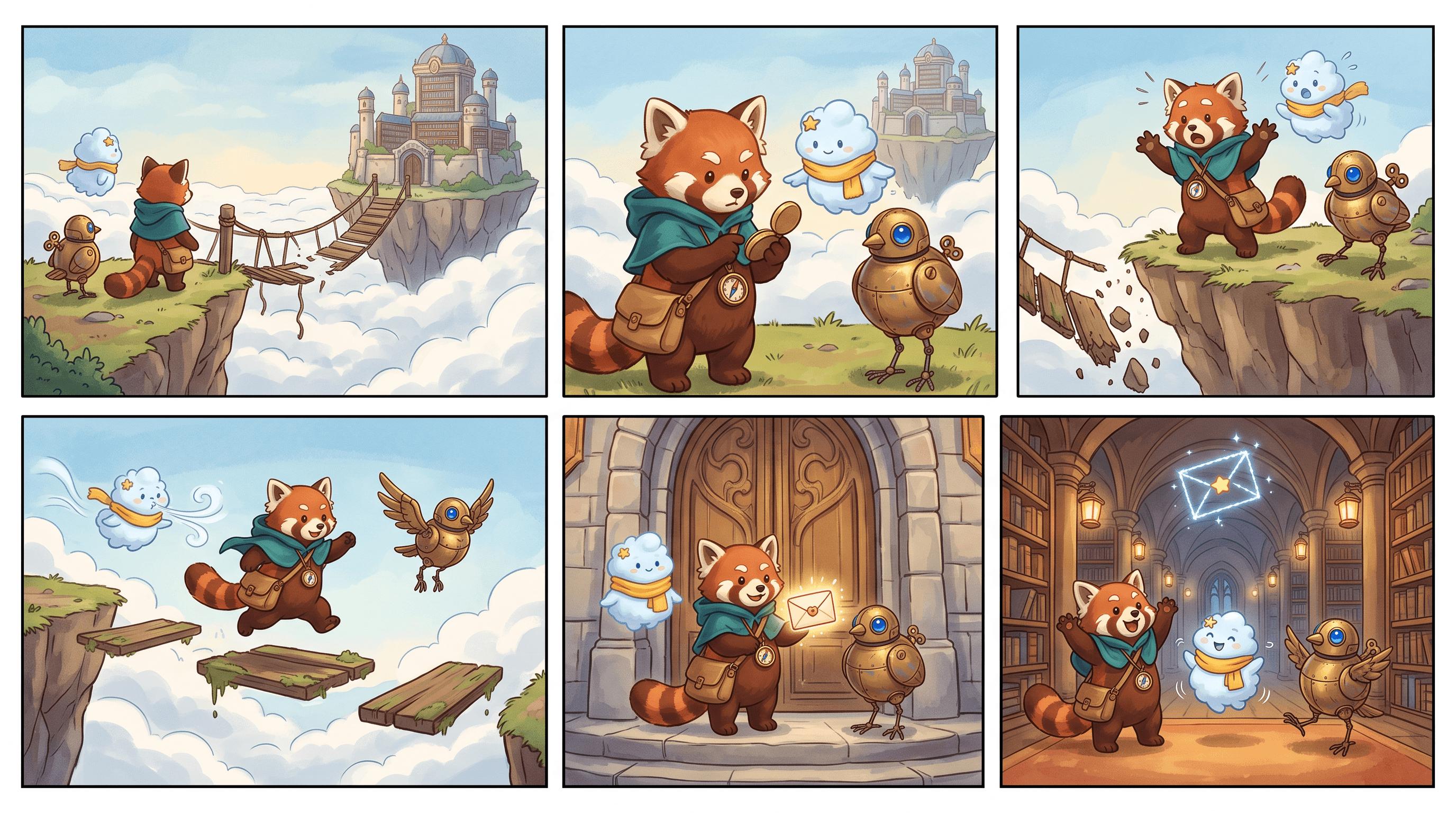
One three-character lineup became a 3×2 storyboard. Three runs show how reference anchors preserved identity—and why rewriting an ambiguous action worked better than adding more counting rules.
Why a clean character lineup comes first
We designed a cast with deliberately different silhouettes and color anchors:
- Rhea: a rust-red panda courier with a teal hooded cape, tan satchel, and brass compass.
- Nimbus: a pale-blue cloud spirit with a yellow scarf and star-shaped hair clip.
- Tock: a brass bird robot with a cobalt-blue eye and winding key.
The first generation was not a story scene. It was a neutral, full-body lineup with generous space between the characters and no labels or extra props. This gives the model a simple visual contract before it has to solve six settings and actions at once.
| Setting | Character lineup | Storyboard |
|---|---|---|
| Tool | WeShop Nano Banana | WeShop Nano Banana |
| Model | Nano Banana 2.1 | Nano Banana 2.1 |
| Input | Text prompt | One lineup image + prompt |
| Aspect ratio | 16:9 | 16:9 |
| Image size | 2K | 2K |
| Quantity | 1 | 1 |
| Delivered dimensions | 2752 × 1536 | 2752 × 1536 |
Google describes Gemini Nano Banana 2.1 as an image-generation and conversational-editing model with improved prompt adherence and multi-turn character consistency. Its DeepMind model card includes single- and multi-character consistency in the evaluation coverage, but also warns that character consistency is not always perfect. This test focuses on one practical workflow rather than a broad model review.
Step 1: generate one auditable reference image
Use a plain background, ask for full-body front views, and give every character two or three details that can be checked later. Avoid story action in this step; it adds variables before the designs are stable.
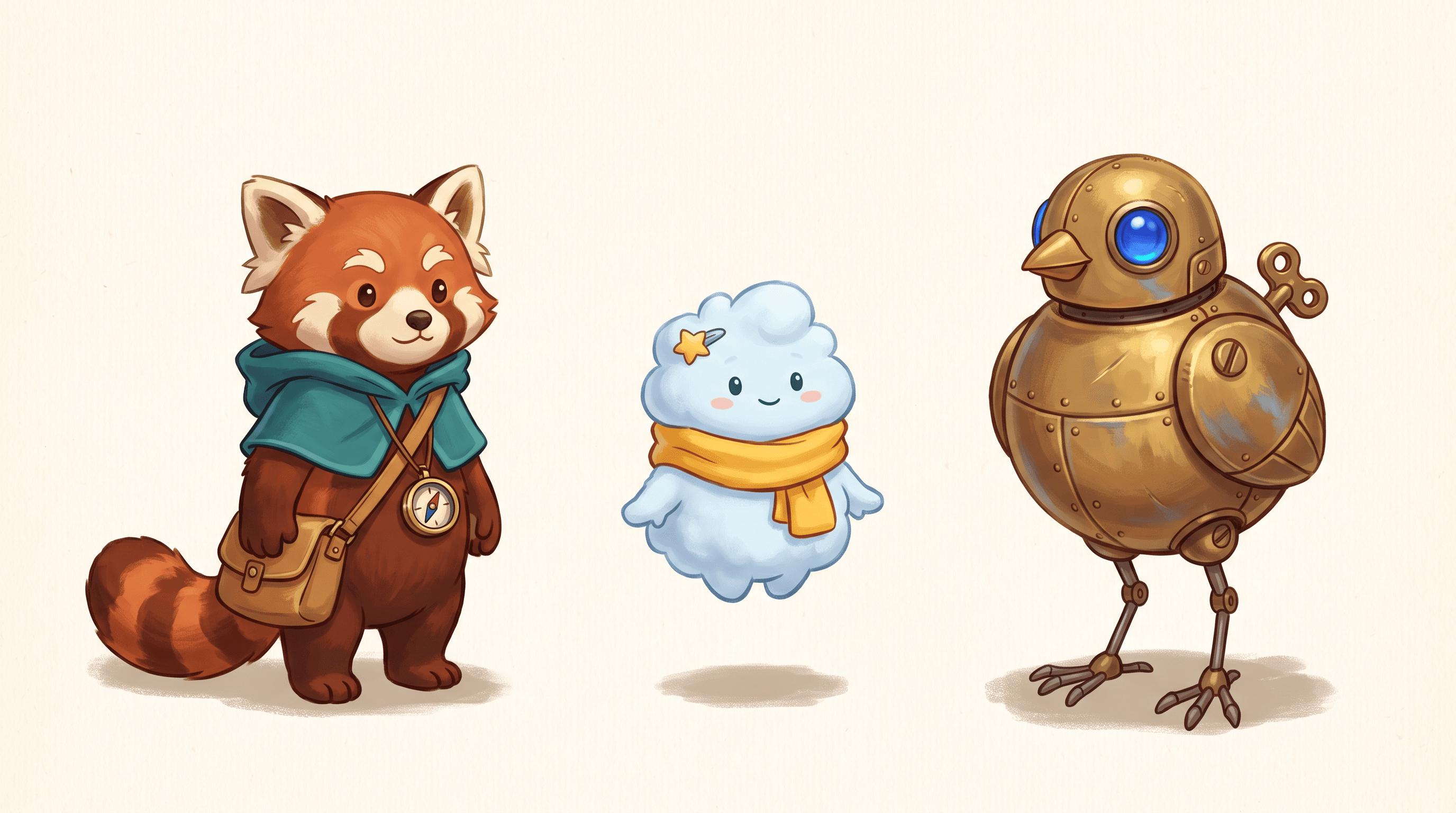
Before continuing, check the lineup as if it were a model sheet. Count the characters, verify the named accessories, and reject any extra label or stray object. A mistake here can propagate through every panel.
Step 2: combine identity locks with an ordered shot list
Upload the lineup as the reference image. In the next prompt, first state that the uploaded image is the exact design reference, then restate the identity anchors. Describe the panels in reading order, and finish with layout and exclusion rules.
Our story sends the trio across a broken bridge to deliver a glowing letter to a floating sky library. The first prompt asked Nimbus to transform into a cloud platform in panel 4. That wording became the most important part of the test.
First pass: strong identity, two structural failures
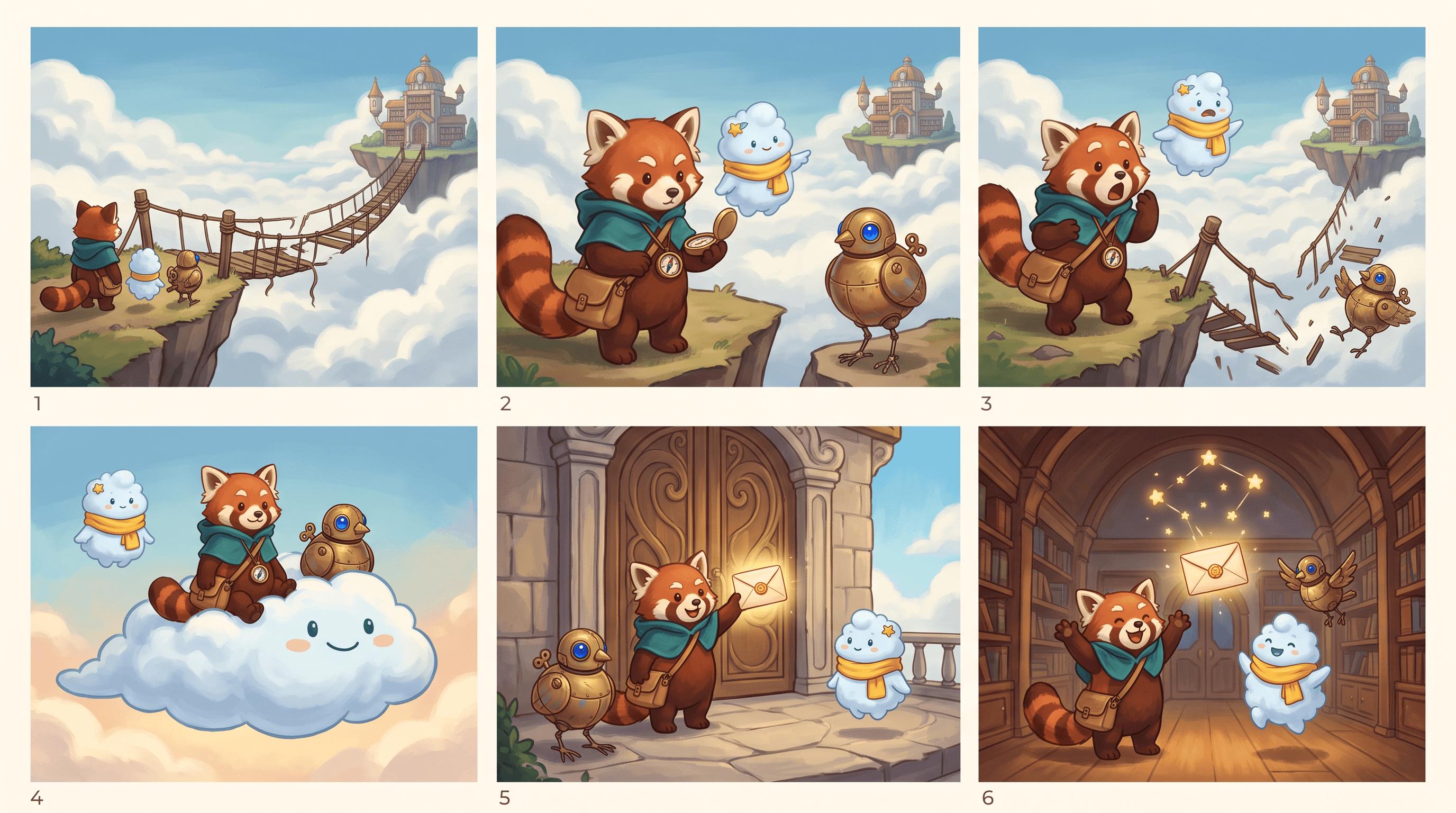
The first sheet told the story in the correct order and preserved the main identity anchors. It also ignored two explicit constraints:
- The white gutters contained the numbers 1–6 despite the no-text rule.
- Panel 4 showed both the small Nimbus and a second, larger cloud platform with a face.
This is not simply a counting mistake. The phrase “Nimbus expands into a soft cloud platform” asks the model to represent one identity in two visual states inside a panel. The image generator kept the original character and added the transformed state.
Second pass: tighter counting fixed the labels, not the duplicate
The next prompt made the gutters “completely blank,” prohibited panel numbers, and required exactly 18 character appearances across the six panels. It also said not to show a small Nimbus alongside the large platform.
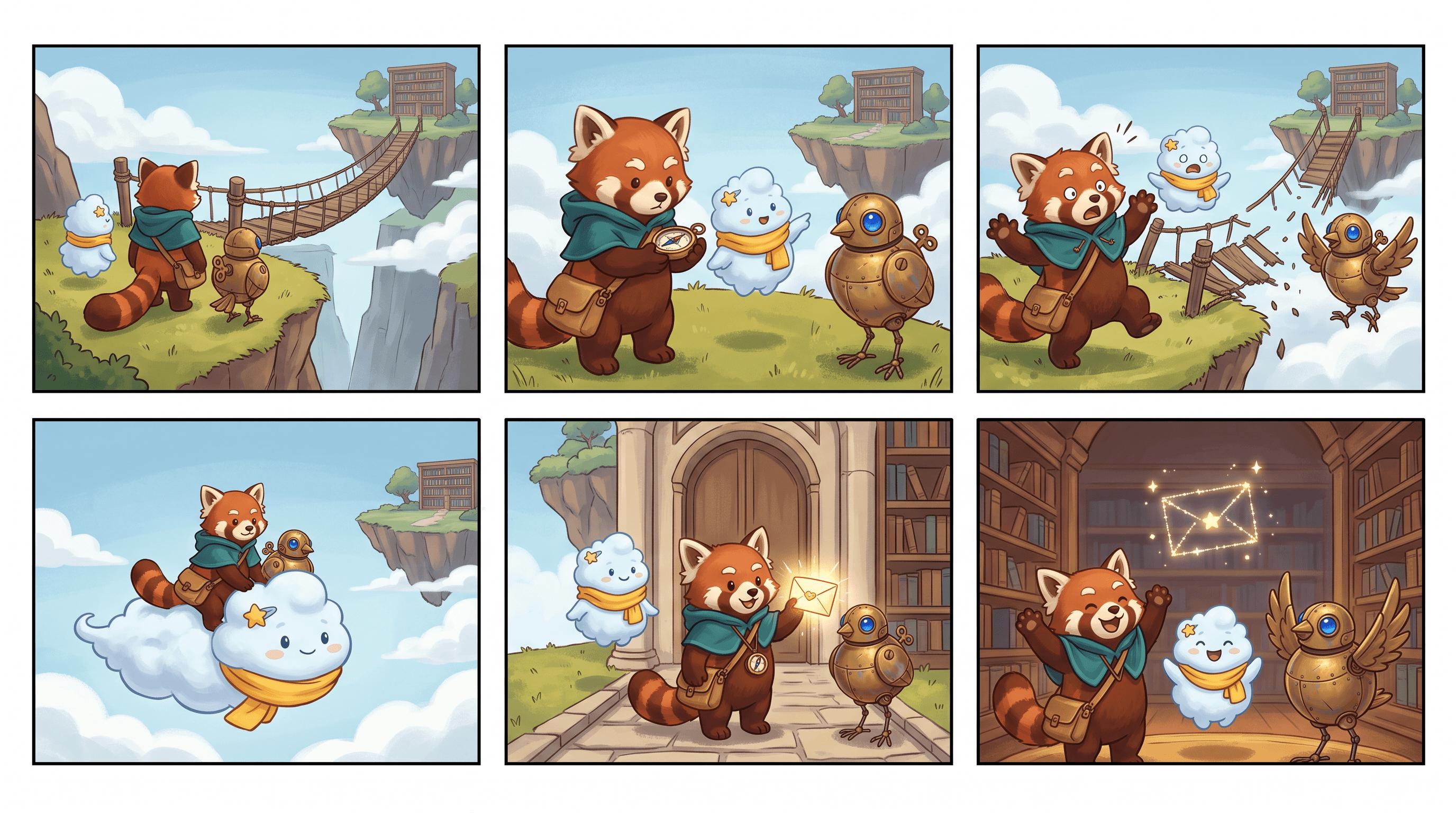
The blank-gutter instruction worked. The duplicate did not. Adding arithmetic did not resolve the semantic ambiguity, which is the more useful lesson: when a visual beat contains two forms of one character, an exact-count sentence may lose to the requested transformation.
Final pass: rewrite the action instead of stacking constraints
For the third run, we removed the transformation. Panel 4 now asks the same three characters to leap across the gap using floating wooden planks, with Nimbus blowing a gust of wind. We also prohibited duplicating, transforming, merging, or replacing a character.
The final output solved the duplicate and kept the gutters blank. Each panel contains one instance of each character. Rhea's cape and satchel, Nimbus's scarf and star, and Tock's brass body and blue eye remain identifiable through different poses and viewpoints.
One smaller variation remains: Tock's winding key is not visible from every angle, and the three planks appear as part of the crossing rather than one platform beneath each character. Those changes do not break identity or story order, but they show why the final sheet still needs a panel-by-panel review.
Use this checklist before approving a storyboard
| Check | What to verify | Result in the final pass |
|---|---|---|
| Cast count | One instance of every required character per panel | Passed in all six panels |
| Identity | Face, body material, main colors, clothing | Preserved |
| Signature anchors | Cape, satchel, compass, scarf, star, blue eye | Preserved; winding key is angle-dependent |
| Story order | Each panel advances the planned beat | Preserved |
| Layout | Six panels, readable left to right, blank gutters | Preserved |
| Extra text | No labels, captions, logos, or watermark | None visible |
| Action detail | Requested staging and props | Mostly preserved; plank placement varies |
If a panel fails, change one source of ambiguity rather than adding a long stack of negative rules. Rewriting the action often gives the model a cleaner visual problem than repeating “exactly one” several times.
The practical takeaway
Nano Banana 2.1 turned one three-character lineup into a coherent six-panel narrative while keeping the cast recognizable through location, pose, scale, and camera changes. That makes the workflow useful for storyboard drafts, animation preproduction, comic planning, and character-led social content.
The main risk is not only visual drift; it is object logic. A character transformation can be interpreted as two drawable states, producing a duplicate even when the count is explicit. Lock the designs first, describe panels in order, audit every instance, and replace ambiguous transformations with actions that keep each character separate.
Try the workflow in the WeShop Nano Banana generator: build the lineup first, reuse it as the reference, and treat the first storyboard as evidence to refine—not as the finished asset.