












How to Create an AI Drama Heroine Character Sheet with Nano Banana AI Image Generator
Learn how to use WeShop Nano Banana to create a consistent four-view AI comic drama heroine sheet with close-up, front, side, and back views.
How to Create an AI Drama Heroine Character Sheet with Nano Banana AI Image Generator
One heroine, four camera angles, one consistent identity.
For an AI comic drama, generating an attractive protagonist is only the beginning. The more difficult task is keeping her face, hairstyle, body proportions, and clothing consistent when she appears from different angles.
With WeShop Nano Banana, you can turn a detailed character description into a clean model sheet containing a facial close-up, front view, side profile, and back view. This gives you a stable visual reference before producing storyboards, character images, or individual scenes.
AI Heroine Character Sheet Examples
The examples below show how the same model-sheet structure can support different heroine identities, outfits, and page formats.
| Portrait Character Sheet | Dark-Haired Heroine | Blonde Heroine |
|---|---|---|
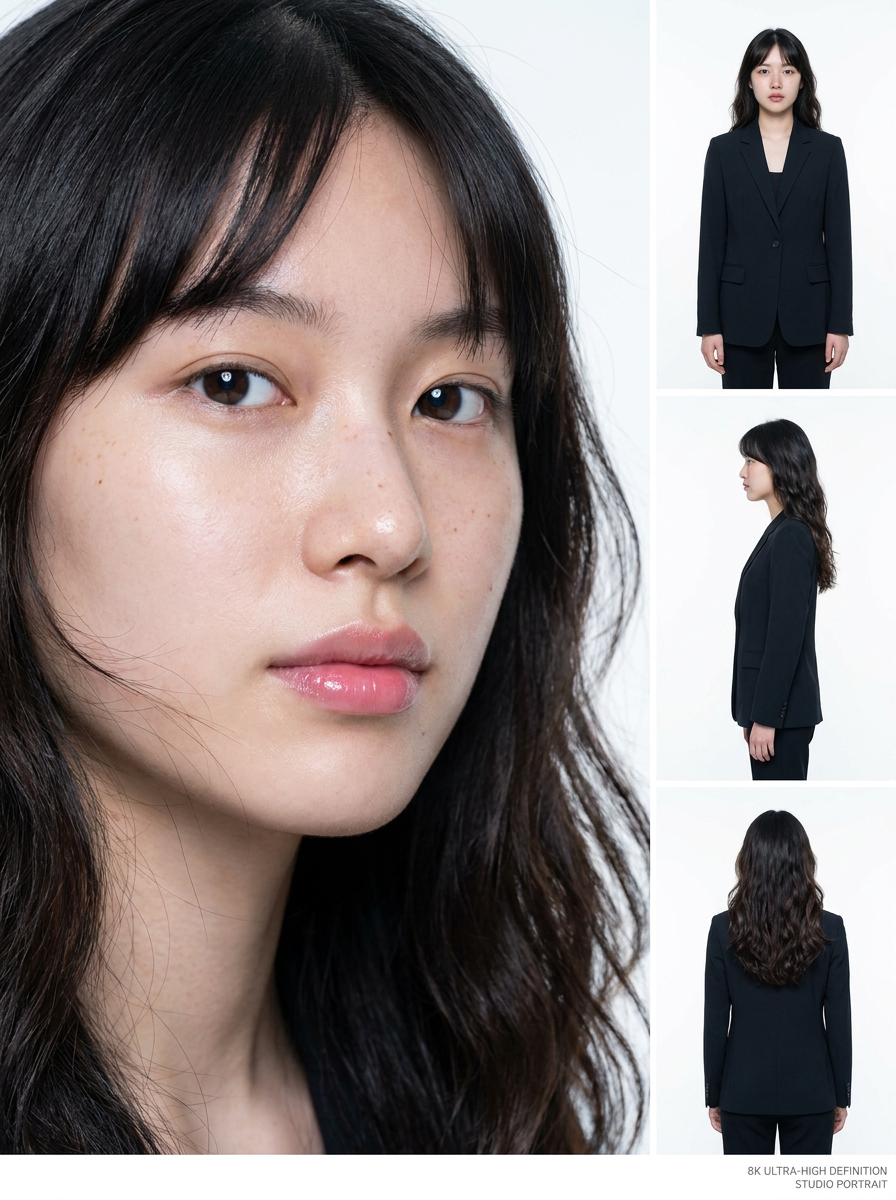 | 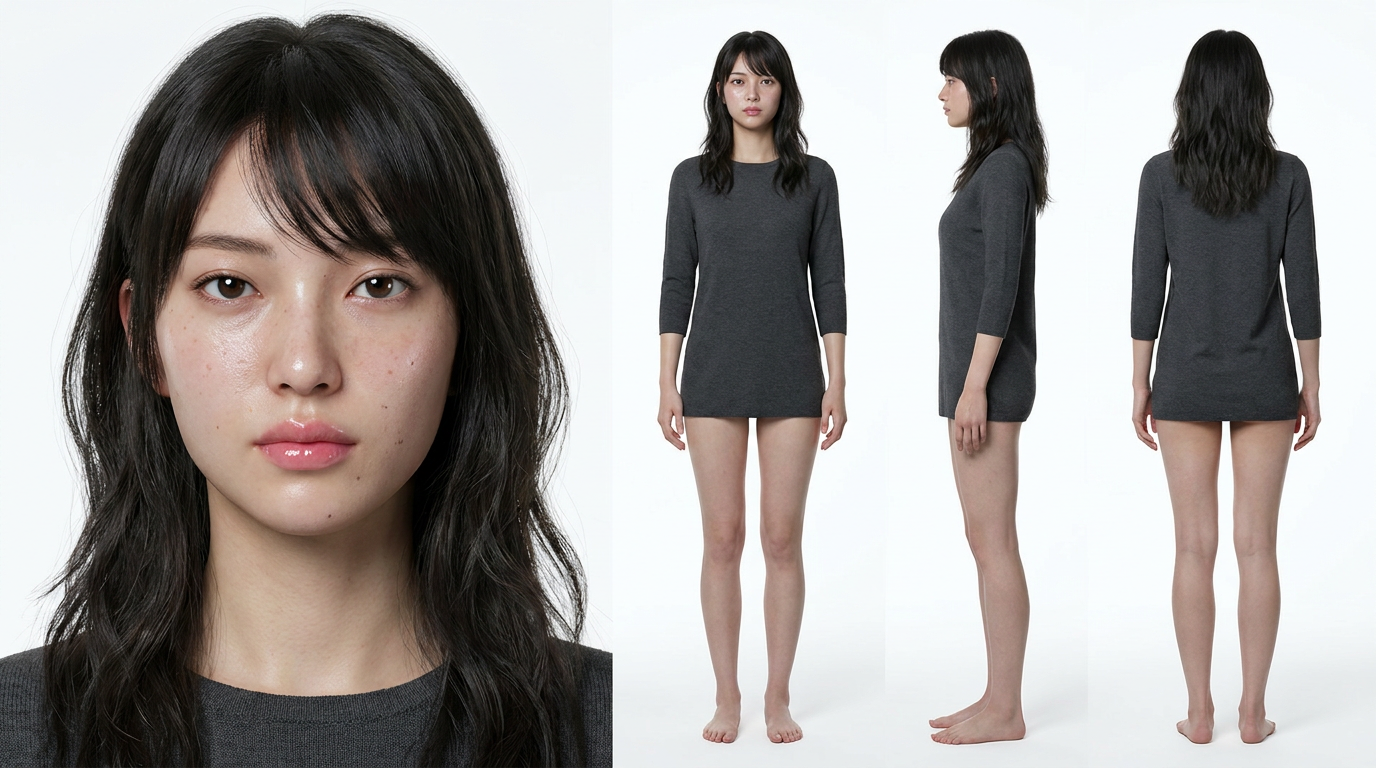 | 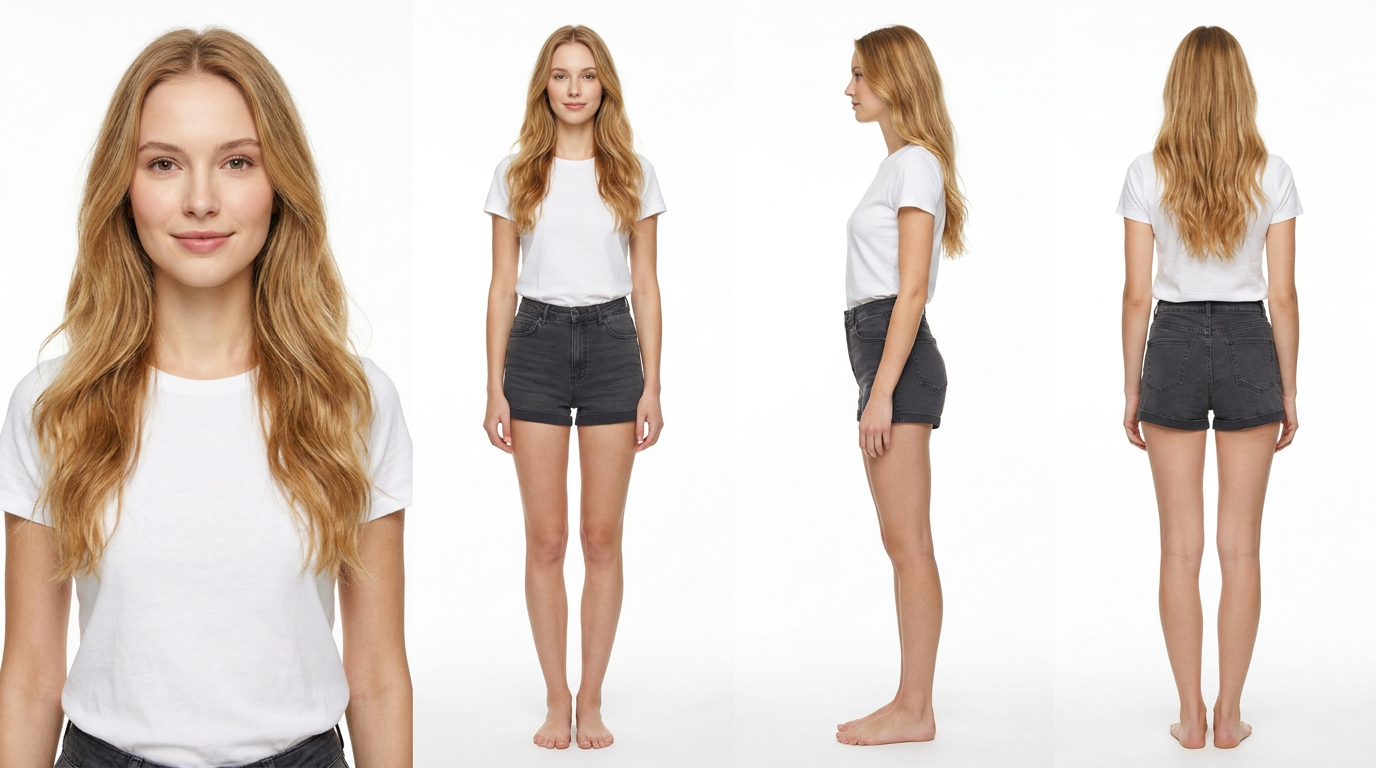 |
| A portrait-oriented reference sheet combining a large facial close-up with front, side, and back views. | A horizontal four-view sheet showing how one dark-haired character can remain recognizable across multiple angles. | A 16:9 model sheet generated from the workflow and prompt provided below. |
These examples are not fixed character templates. You can change the heroine’s ethnicity, facial characteristics, hairstyle, outfit, and overall visual direction while retaining the same four-view layout.
What the Final Character Sheet Should Contain
A practical AI comic drama character sheet should include four clearly separated views:
-
Head-and-shoulders close-up
Establishes the heroine’s facial structure, eyes, skin texture, hairstyle, makeup, and default expression. -
Full-body front view
Defines her body proportions, outfit silhouette, garment length, color combination, and neutral standing posture. -
Full-body side profile
Provides a clear reference for the face profile, hairstyle volume, posture, and side construction of the outfit. -
Full-body back view
Shows the back of the hairstyle, clothing fit, garment construction, and overall silhouette.
Every view must represent the same adult character. The face, hair length, hair color, body proportions, and clothing should not change between panels.
Before You Generate
Prepare these four decisions before writing the prompt:
| Element | What to Define |
|---|---|
| Character identity | Age range, ethnicity, facial structure, eye color, expression, and overall presence |
| Hairstyle | Color, length, parting, curl pattern, volume, and loose strands |
| Clothing | Garment type, fit, fabric, colors, footwear, and prohibited accessories |
| Model-sheet layout | Image ratio, view order, spacing, background, lighting, and cropping rules |
The stronger these definitions are, the easier it is for the AI image generator to preserve the heroine’s identity across every view.
Step 1: Lock the Heroine’s Identity
The most important part of the prompt is not simply describing a beautiful character. It is identifying which visual properties must remain unchanged.
Use explicit consistency instructions for:
- Facial structure and individual features
- Eye shape and eye color
- Skin tone and natural skin texture
- Hairstyle, length, parting, and curl pattern
- Body proportions and limb length
- Clothing design, fit, and colors
- Makeup and default expression
Phrases such as “the same adult female model” and “completely consistent facial features, hairstyle, skin tone, body proportions, and clothing details” help establish a single character rather than four similar-looking people.
Step 2: Define the Four-View Layout
Describe the arrangement from left to right instead of asking only for a generic character sheet.
For this example, the order is:
| Position | Required View | Composition Rule |
|---|---|---|
| 1 | Head-and-shoulders close-up | Large enough to reveal facial and hair details |
| 2 | Full-body front view | Complete figure from head to soles |
| 3 | Full-body left-side profile | Neutral standing pose with a clear silhouette |
| 4 | Full-body back view | Complete hairstyle and outfit visible from behind |
Also specify that the figures must not overlap and that each full-body view must include the feet. This reduces the risk of cropped limbs or crowded positioning.
Step 3: Use This Nano Banana Prompt
The following prompt creates a photorealistic blonde heroine with a white T-shirt, dark high-waisted shorts, and a clean four-view studio layout.
16:9 horizontal aspect ratio, 4K ultra-high definition, photorealistic photography, seamless pure-white background, and professional fashion studio lighting. Create a four-view character styling sheet.

Arrange the four views from left to right as follows: a large head-and-shoulders close-up, a full-body front view, a full-body left-side profile, and a full-body back view. Every view must show the same adult female model, with completely consistent facial features, hairstyle, skin tone, body proportions, and clothing details. Each full-body view must show the complete figure from the top of the head to the soles of the feet, without cropping or overlapping. The model should stand naturally in a neutral presentation pose.

The subject is a young European or North American female model, approximately 20–25 years old, with a tall, slender, naturally balanced figure, long limbs, and relaxed posture. She has an oval face, soft and refined facial contours, clear and expressive eyes, naturally light-colored irises, a defined yet natural nose bridge, and soft dusty-pink lips. Her expression is calm and peaceful, with a clear, gentle, non-aggressive gaze. Her overall presence should feel clean, relaxed, warm, and contemporary.

She has voluminous, long blonde hair styled in large, soft waves. The hair is a natural warm blonde with realistic tonal variation, dimension, and shine. It falls naturally over her shoulders and down her back, with a few lightweight strands framing her face. She wears no hair accessories. The length, curl pattern, parting, and color of her hair must remain identical in all four views.

Her makeup is fresh, sheer, and natural: subtle light-brown eye makeup, softly defined eyes with minimal eyeliner, individually visible eyelashes, a gentle pink blush, and hydrated natural-looking lips. Preserve authentic skin texture, visible pores, minor imperfections, and natural variations in skin tone. The complexion should appear clean and luminous without excessive smoothing, plastic-looking skin, or exaggerated influencer-style makeup.

Outfit: a minimalist solid-color fitted short-sleeve T-shirt paired with simple high-waisted shorts. The T-shirt is made from soft, fine cotton with a clean silhouette that follows the body without appearing overly tight. The shorts have a minimal, tailored design and an appropriate length that clearly shows the waistline and natural leg proportions. Use a white T-shirt with black or dark-gray shorts. Do not include patterns, prints, text, brand logos, elaborate pockets, or decorative details. The model is barefoot and wears no jewelry, hat, belt, or accessories.

Keep the subjects centered and evenly spaced in a clean, structured layout. The composition should feel full while maintaining enough separation between each view. Use a seamless pure-white background with no horizon line, scenery, furniture, props, text, or borders. Apply soft, even professional studio lighting that clearly reveals facial features, clothing construction, and fabric texture. Include only subtle, natural shadows beneath the feet.

The final image should resemble a premium commercial fashion portrait and a professional model styling reference sheet, featuring photorealistic detail, accurate anatomy, authentic skin texture, clearly defined individual hair strands, and rich fabric details. Identity consistency across all four views is essential.

Avoid: inconsistent identities, different faces, changes in hairstyle or body proportions, inconsistent clothing colors or designs, excessive skin smoothing, plastic skin, cartoon or anime aesthetics, exaggerated curves, distorted anatomy, extra limbs, missing hands or feet, cropped full-body views, overlapping figures, complicated poses, colored backgrounds, text, logos, and watermarks.
Step 4: Generate the Character Sheet in WeShop Nano Banana
- Open WeShop Nano Banana.
- Start a new image-generation task.
- Select a horizontal 16:9 canvas when an aspect-ratio option is available.
- Paste the complete prompt into the instruction field.
- Generate the image.
- Inspect the close-up, front, side, and back views before choosing the final result.
Do not evaluate the image only by how attractive the close-up looks. Check whether all four panels still represent the same heroine.
You can try it directly using the tool on the right.
Step 5: Check the Generated Result
Use the following checklist before approving the model sheet:
| Check | What a Successful Result Looks Like |
|---|---|
| Facial identity | The close-up, front view, and side profile clearly depict the same person |
| Hairstyle | Length, color, parting, volume, and wave pattern remain consistent |
| Body proportions | Height, shoulder width, waistline, and limb length do not shift |
| Clothing | The same T-shirt and shorts appear in every full-body view |
| View accuracy | The sheet contains one front view, one left profile, and one back view |
| Full-body framing | Every full-body figure is visible from the top of the head to the soles |
| Separation | Figures are evenly spaced and do not overlap |
| Background | The background remains seamless white without scenery, borders, or text |
| Realism | Skin, hair, fabric, and shadows retain photographic texture |
How to Adapt the Prompt for a Different Heroine
The layout does not have to change when you design a new protagonist. Replace only the character-specific sections while keeping the four-view and consistency rules intact.
| To Change | Replace These Details | Keep Unchanged |
|---|---|---|
| Character identity | Ethnicity, facial shape, eye color, age range, and expression | The requirement that all views show the same adult character |
| Hairstyle | Hair color, length, texture, bangs, and parting | Identical hair details across every view |
| Outfit | Garment type, silhouette, fabric, and color palette | The same outfit in the front, side, and back views |
| Visual style | Photorealistic, cinematic, period-inspired, or another defined direction | Clear anatomy, neutral poses, and consistent identity |
| Canvas | Horizontal or portrait format | Complete views, readable spacing, and non-overlapping figures |
For example, the dark-haired heroine examples use a different face, hair color, and clothing direction from the blonde heroine. The core model-sheet logic remains the same: one identity, several controlled angles, and a simple background that makes inconsistencies easy to detect.
Common Generation Problems
The Four Views Have Different Faces
Strengthen the identity-locking language near the beginning of the prompt. State that every view must depict the same adult female model with identical facial structure, eyes, nose, lips, skin tone, and hairstyle.
The Feet Are Cropped
Repeat that each full-body figure must be visible from the top of the head to the soles of the feet. Ask for more separation between the figures and a clean 16:9 composition.
The Hairstyle Changes in the Back View
Define the exact hair length, color, parting, texture, and curl pattern. Then state that all five properties must remain identical across the close-up, front, profile, and back views.
The Outfit Changes Between Angles
Describe the clothing as one fixed outfit. Lock the garment type, sleeve length, waist position, fabric, color, and absence of decorative details.
The Skin Looks Artificial
Request authentic skin texture, visible pores, minor imperfections, and natural tonal variation. Explicitly exclude excessive smoothing and plastic-looking skin.
Final Result
A strong AI comic drama heroine sheet is more than a collection of attractive portraits. It is a production reference that defines exactly how one character should look from the angles needed for future visual development.
By combining a tightly controlled identity description with an explicit four-view layout, WeShop Nano Banana can generate a clean visual foundation for a consistent heroine. Once the face, hair, proportions, and outfit are stable, the same character direction can be carried into later scene creation with far less ambiguity.