







Kling 4.0 Travel Video: Qinghai–Gansu and Dunhuang Memories
Create a Qinghai–Gansu and Dunhuang travel video with Kling 4.0 Reference. Use eight human-viewpoint scenes, a style-reference clip and the original prompt.
An AI travel video can show beautiful places and still feel as though nobody was there. This Kling 4.0 travel video uses a different brief: an eight-second journey through the Qinghai–Gansu Great Loop and Dunhuang, filmed from positions a traveler could actually occupy.
A railing at the lake, a sneaker on the ground, a car window and a companion walking ahead give the montage a human viewpoint. The supplied WeShop case uses Kling 4.0 Reference with one video for style and editing guidance, then describes a new destination sequence in text. The result is an AI-generated travel interpretation, not footage documenting a real trip.
AI-generated Qinghai–Gansu travel montage
Give the reference an editing role, not a destination role
The input clip contains holiday scenes such as tropical water, palms, sunsets, lanterns and balloons. Those are not the places requested for the new video. The prompt tells Kling to use the clip for its vacation feeling and editing approach, while replacing its destinations with northwest China.
That separation is the core of this workflow. Without it, a reference full of beaches and palms can compete with a Dunhuang desert brief. Here, the prompt excludes tropical scenery and asks for eight distinct moving shots with hard cuts approximately every second.
Style and editing reference
Generated northwest China interpretation
This request includes one reference video and no reference photos. It is a video-guided generation workflow, rather than a photo-to-video example or a faithful restoration of actual Qinghai–Gansu footage. To build a record of your own trip, keep your real footage as the evidence for the places you visited and clearly distinguish generated additions.
Plan eight human-viewpoint scenes across Qinghai–Gansu and Dunhuang
The place names below are the prompt's intended destinations. They explain the brief; they are not independent verification that the generated landscape matches a real viewing location.
| Requested time | Destination in the prompt | Human viewpoint cue | What the selected output shows |
|---|---|---|---|
| 0–1s | Qinghai Lake | Lakeside railing and a companion's sleeve | Blue water, distant mountains, railing and an arm at the edge |
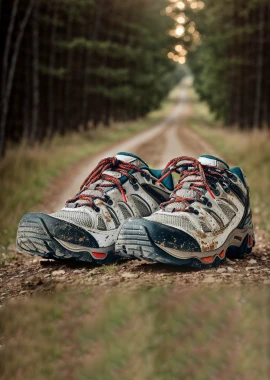
| 1–2s | Chaka Salt Lake | Looking down at one's own step | A close view of sneakers and pale wet-looking ground; the requested mirror reflection is not clearly established |
| 2–3s | Qaidam Gobi | Passenger-seat side window | Car interior framing, dry terrain and distant mountains |
| 3–4s | Zhangye Danxia | Visitor boardwalk and railing | Layered reddish ridges seen beyond a wooden observation platform |
| 4–5s | Dunhuang Mingsha Mountain | Walking behind a companion | A backpacked companion moving ahead across sunlit dunes |
| 5–6s | Dunhuang desert | Standing beside passing camels | A close camel flank and a receding caravan in warm light |
| 6–7s | Dunhuang evening market | A cup passed between hands | A paper cup and hands against lantern-lit visitors; a vendor's role is not clearly established |
| 7–8s | Crescent Lake / Yueyaquan | Path-edge railing and a companion | Curved oasis-like water, reeds, a small pavilion and dunes |
The sequence alternates wide views with close details, so the location changes do not all feel like distant landscape postcards. The selected output broadly follows the requested order. Exact cut boundaries, landmark geometry and every small movement were not measured frame by frame.
Replace “cinematic travel” with a camera position
The most concrete instruction in the original brief is ground-level human camera positions only. Each shot then explains what anchors the camera: standing at a railing, looking down at shoes, sitting inside a car or following someone on foot.
Notice the difference between a top-down view of your own shoes and a bird's-eye landscape. Both can point downward, but only the first has the physical position of a traveler. A prompt that bans all downward angles would remove that useful detail along with the unwanted aerial shots.
For your own montage, define three things per scene: where the traveler stands or sits, what appears immediately in front of the lens, and how the camera or subject moves. Keep the movements short enough for the requested shot length. A gentle lean, one step or a small pan gives a one-second shot a clearer job than several competing actions.
Recreate the travel montage in WeShop Kling
- Open Kling 4.0 on WeShop and select Kling 4.0 Reference.
- Attach a travel montage as Video 1 and confirm its thumbnail. This case uses the video for style and editing guidance, without adding a portrait or destination photo.
- State that role at the beginning of the prompt. Name the replacement region and describe which scenery from the source should be excluded.
- Write the scene sequence with a location, viewpoint, foreground object and simple motion for each shot.
- Match this task's recorded settings: 8 seconds, 9:16, 1080p, one output. Set duration in the control; mentioning eight seconds in text does not replace that setting.
- Generate and review every cut for the intended viewpoint, scenery, motion and unwanted carryover from the reference.
The WeShop model page distinguishes Reference from Image to Video and explains that reference inputs guide a result rather than guarantee exact preservation. Check the current generation quote in the tool before running your version.
Copy the original Qinghai–Gansu travel prompt
The full prompt below produced the selected result. Its opening mentions an earlier aerial-heavy version as context for the correction. This article evaluates the supplied revised output; it does not present a controlled comparison against that earlier version.
Make an 8-second vertical 9:16 travel memory montage of the Qinghai-Gansu Great Loop and Dunhuang, China. The provided video is a STYLE/EDITING reference only: recreate the feeling of a person actually being on vacation, holding a phone and looking out from a boat, a terrace, a beach or a doorway, with immediate foreground objects and occasional human presence. Replace its places with northwest China. The user's MOST IMPORTANT correction is that the previous film was all aerial landscapes and felt impersonal. This new version must use ONLY GROUND LEVEL HUMAN CAMERA POSITIONS. ZERO drone shots, ZERO aerial shots, ZERO overhead bird's-eye shots, ZERO crane ascents, ZERO floating aerial camera. Even landscape wide shots must be taken with feet on the ground. Keep the horizon near human eye level, foreground evidence of a person being there, slight natural handheld sway, ordinary holiday immediacy, not a distant tourism helicopter commercial.Eight distinct shots, hard cuts approximately every second, each a genuine short MOVING video clip: 0.0-1.0: Qinghai Lake from a lakeshore visitor's standing eye level, rippling blue lake with plateau mountains beyond; a wooden railing close across the lower edge, a companion's jacket sleeve and hand resting briefly on the railing at frame edge. The camera leans forward slightly as though looking at the view. Big beautiful sky, vibrant natural blue, no high viewpoint. 1.0-2.0: First person looking DOWN at their own two normal sneakers taking a single gentle step onto wet white salt flats at Chaka Salt Lake. A thin film of mirror water reflects clouds and the person's legs, ripples move from the shoe. Immediate intimate phone travel detail, not an overhead drone. Anatomically normal feet and legs. 2.0-3.0: From the PASSENGER SEAT of a moving car looking out an open SIDE window at the Qaidam Gobi, the window frame and side mirror in the immediate foreground; nearby dry scrub moves laterally past, distant mountains remain stable, sunshine, no unsafe driving, no camera floating outside the vehicle. 3.0-4.0: Zhangye Danxia viewed by a person STANDING on a visitor observation boardwalk, wooden railing in the near foreground, layered red and ochre ridges at the horizon. A relaxed handheld pan a few degrees right, visitors' shoulders softly visible near frame edge, ordinary human height, not looking straight down at hills. 4.0-5.0: Dunhuang Mingsha Mountain at golden hour, walking behind a young adult companion wearing a light sand-colored shirt and a small backpack, at shoulder-height a few steps behind. The companion walks up a gentle sandy path, footprints and wind-brushed sand in foreground; natural short bob from the camera operator's footsteps. Warm candid holiday feeling, real moving person, no posed model stare. 5.0-6.0: At HUMAN EYE LEVEL beside a desert path, a small camel caravan walks laterally past the camera, nearest camel's flank and saddle in the foreground, other camels and a guide receding behind; dust glows in sunset backlight. Ground-level side-on tourist viewpoint. Natural camel gait and anatomy, no overhead view. 6.0-7.0: Candid Dunhuang evening night-market moment, from a visitor's chest-height phone, a vendor passes a small paper cup of hot tea into a traveler's hand, faces mostly outside the crop, warm lanterns and softly blurred strolling visitors in background, gentle steam and lively warm light. Human interaction, no readable shop text or logos, no commercial product closeup. 7.0-8.0: Crescent Lake / Yueyaquan seen from a visitor's standing eye level at the edge of the permitted viewing path: reeds and a low wooden railing in the near foreground, curved oasis water at middle distance, a traditional pavilion beside the water and immense glowing sand dunes towering BEHIND the lake, NOT a bird's-eye view. A companion's relaxed silhouette at one edge looks toward the water. Subtle handheld settle, beautiful sunset, end on the experience of being there.
Travel observation, tactile moments, close and medium foregrounds alternating with human-height landscape views. Keep the lake, desert and dunes photorealistic; preserve dynamic forward/sideways human motion, realistic natural skin/hands, calm gestures, realistic camels, not stock corporate aerial video. Beautiful but credible holiday colors, warm/cool contrast, organic photographic texture, foreground depth, occasional soft flare. No floating geography, no morph transitions, no tropical palms/ocean/balloons/fireworks from the reference. No generated words, subtitles, English phrase, labels, watermarks or logos: clean image for independently added small centered Chinese titles. Do not put a static end card. If audio is made, quiet location ambience, no speaking or singing.
If adapting this to another place, replace the destination list and the visible landscape details together. Keeping a Qinghai lake description while changing only its label to another destination can produce an attractive but geographically misleading scene.
Review location cues before sharing the video
The output gives the requested visitor-height sequence a recognizable form, but some details remain approximate. The salt-flat shot does not clearly deliver the cloud-and-leg mirror reflection described in the prompt. The market shot communicates a handoff without establishing the requested vendor interaction. A lake curve and pavilion are visual cues, not proof of Crescent Lake's exact layout.
Check hands, feet and camel movement at normal playback speed, especially near cuts. The visible sample frames support the broad composition and sequence, not flawless anatomy throughout. Quiet location ambience was requested, but audio quality was not independently reviewed for this article.
This eight-second montage is also not a driving itinerary: its edit order does not establish travel times, access, permitted paths or current conditions. Label it as AI-generated travel imagery. If adding location captions, verify the names separately and avoid implying that synthetic views are firsthand footage. The prompt requests clean frames for titles added later; this task does not demonstrate a separate title-editing step.
Try a more personal AI travel memory
Use the loaded Qinghai–Gansu and Dunhuang example to start, then replace the reference or rewrite the scene list for your own destination. Keep one clear viewpoint per shot and compare the result with the brief before sharing.
You can try it directly using the tool on the right.