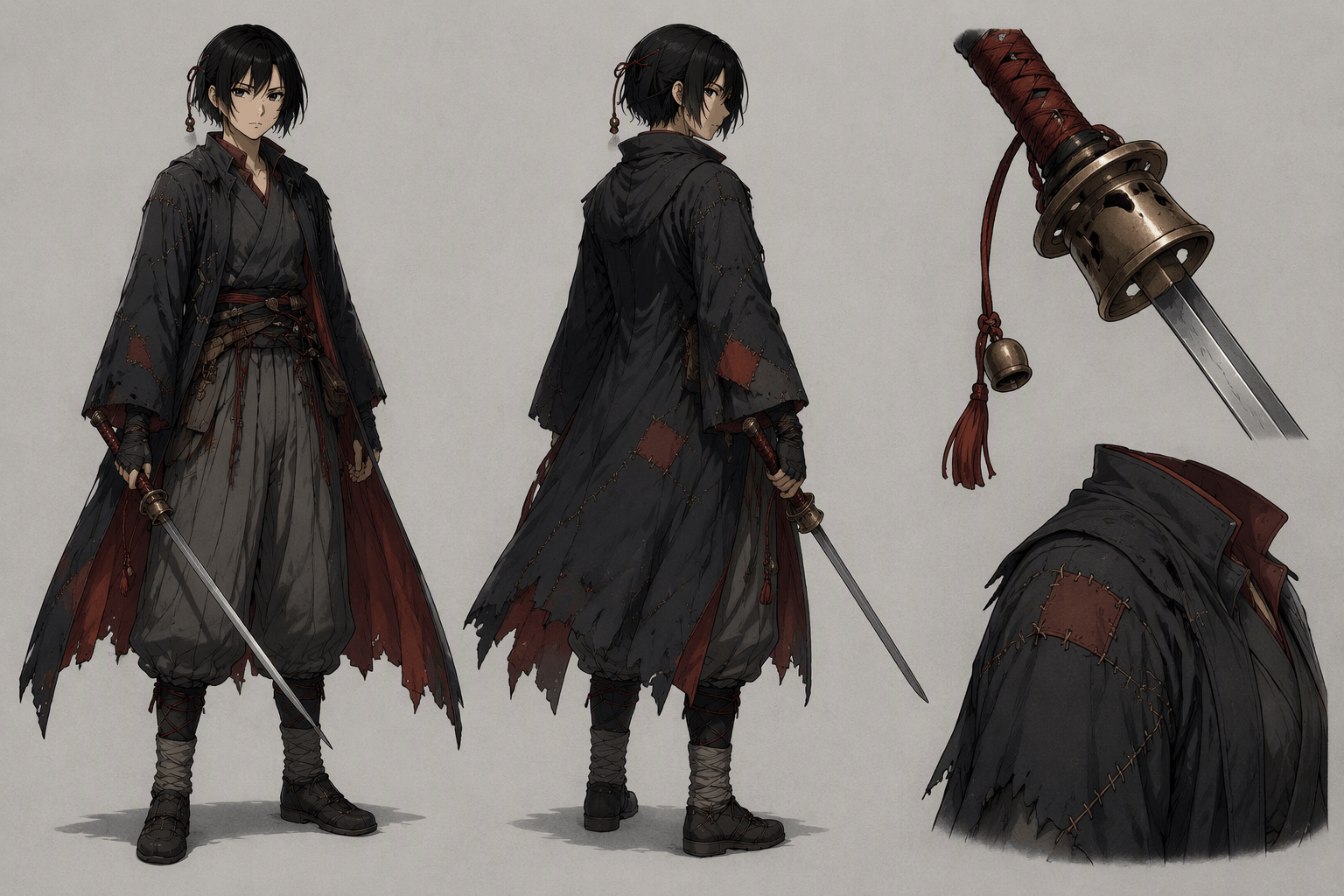
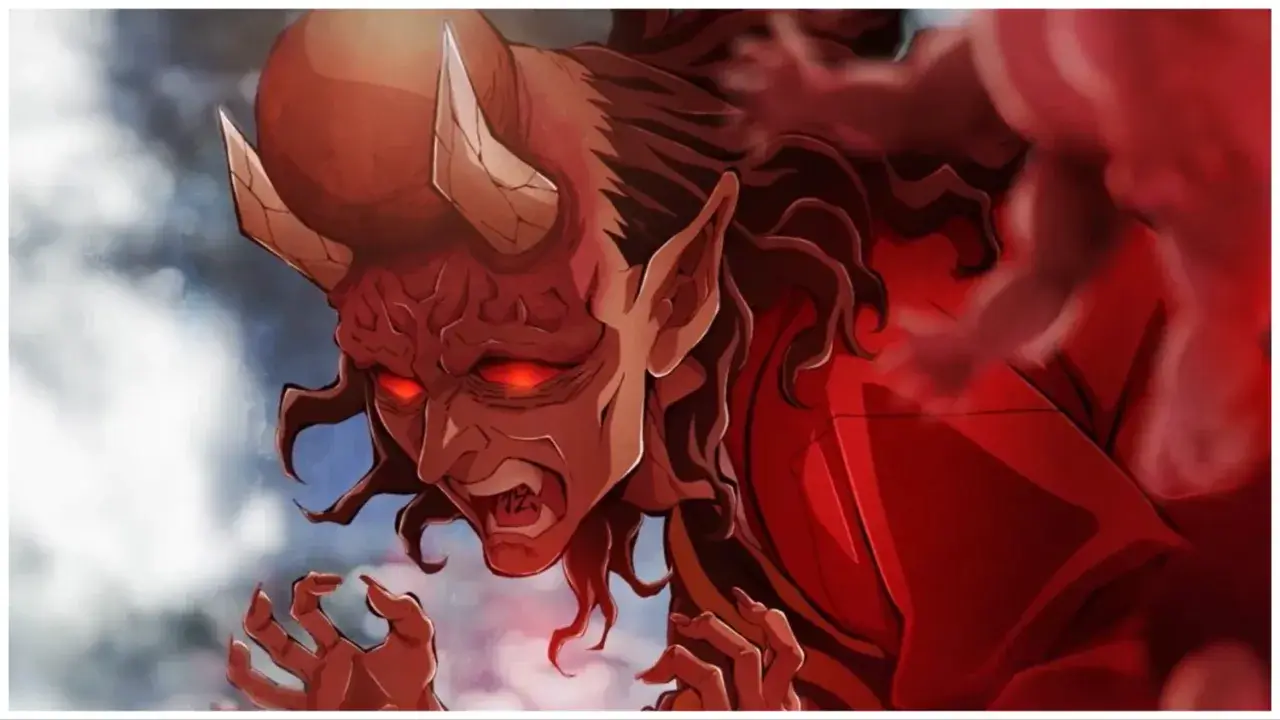
A Demon Slayer OC Maker can change a portrait into an anime swordsman, but a new costume is the easy part. The real test is recognition. Does the result still carry the hair, expression, age, and facial details that identify the person?
That question gives this transformation a useful limit. The image should not copy the source photo pixel for pixel. However, it should not erase the person and replace them with a generic anime face either. A convincing self-OC sits between those two failures.
Here, “self-OC” means an original character developed from a portrait with permission. The face guides identity. Meanwhile, the role, clothing, weapon, palette, and setting should be new.
Use a Demon Slayer OC Maker as a Translator
A portrait and an OC design answer different questions. The portrait shows who the person is. By contrast, the character design explains who that person might become inside a fictional world.
For that reason, split the transformation into two groups. Identity features include the hair silhouette, face shape, brows, expression, skin tone, freckles, beard, glasses, and visible age cues. Design features include the uniform, outer layer, weapon, materials, color system, and environment.
The Demon Slayer OC Maker should translate the first group rather than discard it. Then it can invent the second without borrowing a complete costume or signature detail from an existing character. This division keeps the result both personal and original.
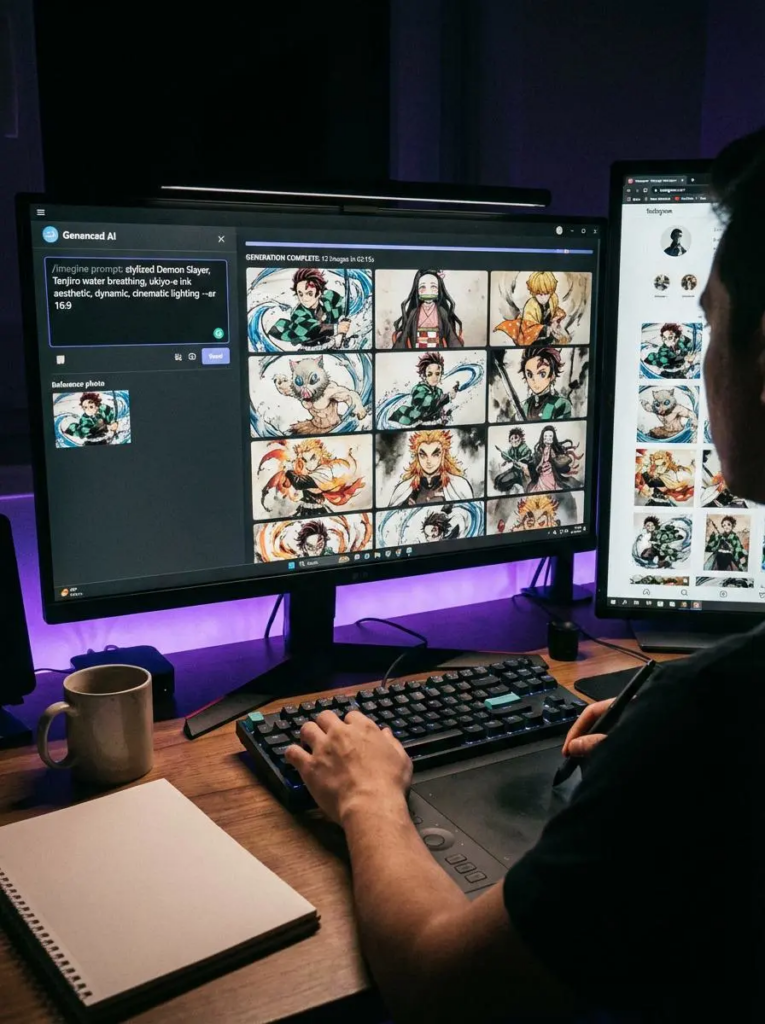
Choose a Photo for Recognition, Not Perfection
The most polished selfie is not always the best reference. Beauty filters may narrow the face, smooth age lines, alter skin tone, or enlarge the eyes before generation begins. Once those changes enter the source, the OC can drift further away.
Instead, use a clear portrait with even light and a visible hairline. A front or gentle three-quarter angle provides more information than a dramatic profile. Avoid hair, hands, sunglasses, or deep shadows over the features you want to keep.
Expression matters too. A familiar smile or raised brow may carry more identity than exact eye spacing. Choose the photo by what friends would notice first, not by which version looks most edited.
Expression Often Survives Better Than Exact Proportions
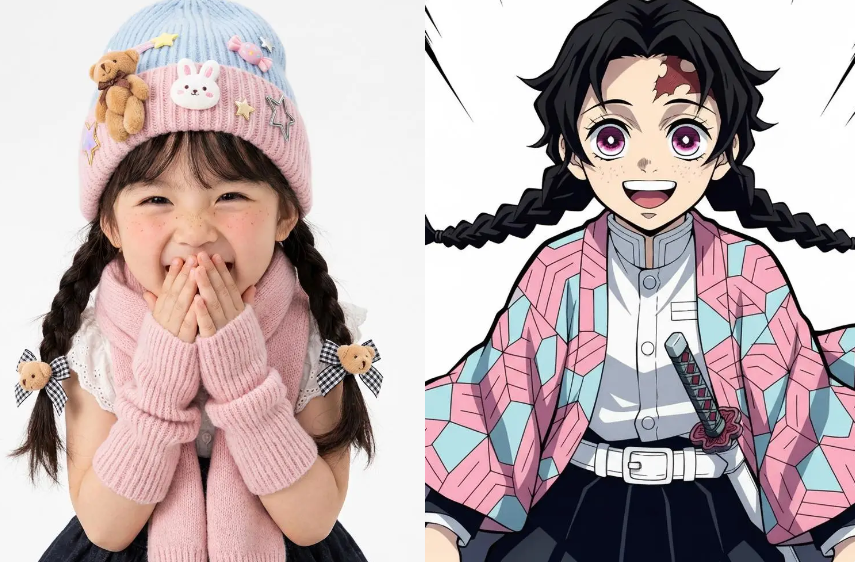
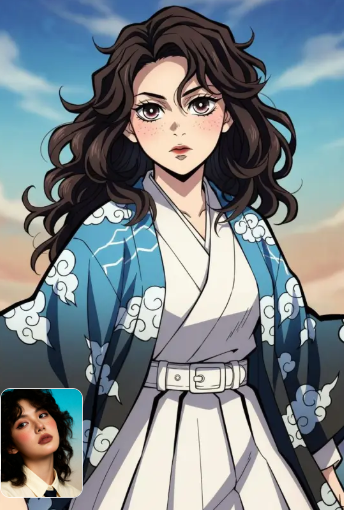
The laughing child example remains recognizable because the transformation carries over the broad smile, braided hair, and pink color cue. The face is simplified, as anime faces usually are. Even so, the emotional signal stays intact.
When exact facial geometry does not transfer well, preserve the expression, hairstyle structure, and one personal color cue first. Then let the costume change. If the source is a child, get a parent or guardian’s permission and avoid publishing identifying details.
Age and Texture Are Part of Identity
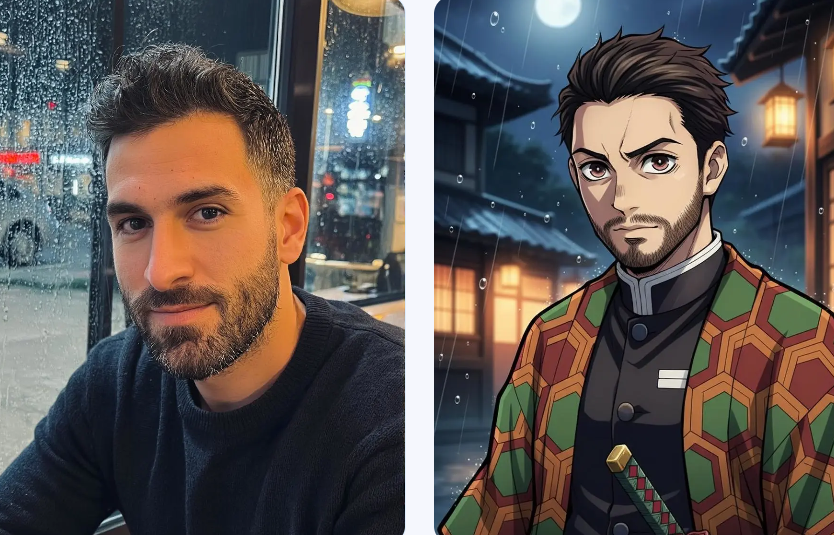
Anime generation often makes every subject younger and smoother. That weakens a self-OC when a beard, strong brow, mature face shape, or weathered expression carries the identity.
The bearded portrait depends less on color and more on age cues, facial hair, and a steady expression. Therefore, the prompt should state that these features must remain. Words such as “perfect” or “youthful” can work against that goal.
Style Can Move Further Than Identity
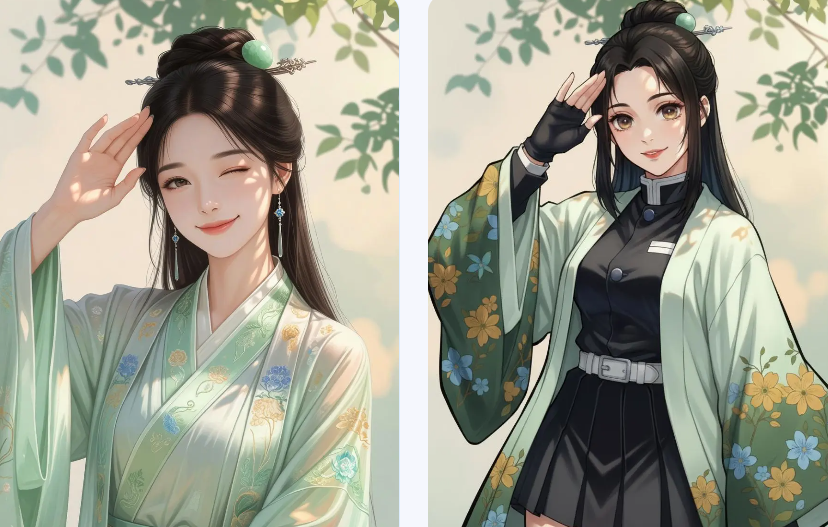
Not every transformation begins with a photograph. An existing avatar can also provide the identity. In that case, hair shape, palette, expression, and posture become stronger anchors than facial realism.
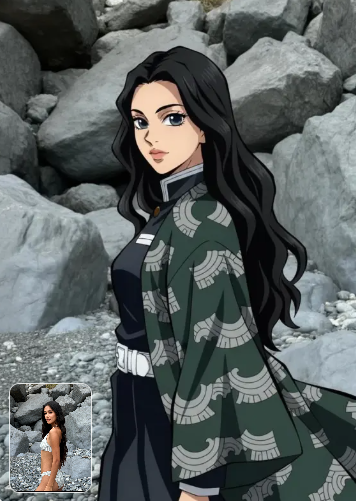
The green outfit example pushes the costume further than the face. Garment structure, layering, pattern scale, and setting can all change. However, a familiar franchise silhouette should not become an excuse to copy a named character’s coat, emblem, sword, or signature attack.
A Two-Layer Prompt for the Demon Slayer OC Maker
Long prompts are not automatically precise. A list of unrelated adjectives gives the generator too many ways to ignore the portrait. Instead, separate likeness from invention.
Start with one short preservation instruction:
“Use the uploaded portrait as an identity reference. Keep the adult subject’s short black curls, strong brows, round glasses, warm brown skin tone, and calm half-smile.”
Then add a separate OC direction:
“Reimagine the subject as an original mountain signal keeper in a hand-inked historical fantasy anime. Add a cropped slate-blue jacket, layered gray trousers, a woven signal cord, and a narrow copper-edged sword. Use amber and blue accents. Place the character beside a foggy watchtower at dawn. Do not copy existing characters, costume patterns, emblems, or weapons.”
The first part protects recognition. The second creates the fictional identity. If the face drifts, shorten the design direction. On the next attempt, correct one missing anchor rather than rewriting everything.
Run a Likeness Audit Before Judging the Costume
A dramatic background, attractive coat, or glowing effect can hide a weak transformation. Before choosing the final image, remove those distractions from the evaluation.
First, cover the outfit and background. Do the hair mass, face shape, expression, and age still point to the source? Next, ignore the face. Does the design use original materials and motifs, or does it lean on a canon character? Finally, compare skin tone and any identity detail the model quietly “corrected.”
A two-second test also helps. Show the result to someone who knows the subject without revealing the source first. If recognition comes only after seeing the original, the image relies on explanation rather than likeness.
When a Demon Slayer OC Maker Flatters You Into Someone Else
The most common failure is a polished stranger. The jaw narrows, the eyes become generic, the beard disappears, or the expression turns into the same serious anime stare used for every character.
Do not fix that with “more accurate” or “more realistic.” Name the lost feature: “keep the full beard,” “retain the rounded cheek shape,” or “preserve the wide smile.” Then leave the rest of the prompt unchanged.
Color can create false recognition. A pink hat may feel familiar even when the face has changed. Therefore, judge facial anchors before palette continuity. Clothing color should support identity, not replace it.
Personal Does Not Mean Public by Default
Use only a portrait you own or have permission to transform. For children, private individuals, or group photos, consent should come before generation and sharing.
Fan inspiration needs a boundary. Historical fantasy clothing, expressive sword action, inked linework, and elemental motion can establish the genre. Exact uniforms, emblems, named techniques, or costume patterns move closer to imitation. For use beyond personal fan creation, check the tool terms and applicable rights first.
Keep the Person and Invent the Character
A useful self-OC does not preserve everything. It preserves the right things. Hair, expression, age, skin tone, and one or two personal details keep the subject recognizable. Role, clothing, weapon, materials, and setting give the character somewhere new to belong.
This Demon Slayer OC Maker article is not another guide to inventing lore from nothing. It is a controlled translation from a real identity to an original anime persona. Start with a portrait you can use, protect a few identity anchors, and let the fictional design carry the transformation.