A Demon Slayer OC Maker can give an idea a face, outfit, and dramatic pose. The harder part is creating someone who feels like a character rather than a collection of familiar anime details.
That difference comes from logic. A strong OC has a reason for carrying a particular weapon. Their clothing reflects where they travel, while the palette hints at temperament or history. This guide builds those decisions first, then tests whether the design still works beyond one hero portrait.
The Demon Slayer OC Maker Works Better With a Character Problem
Hair color is not a personality. Neither is a sword. Instead, start with one tension that shapes the character’s behavior.
Suppose a courier hears danger before anyone else but panics at the sound of a bell. That conflict affects posture, expression, tools, clothing wear, and setting. Because of it, the generator has a clear idea to organize. A string of mood words cannot do the same job.
Start with one sentence:
Role + private contradiction + visual consequence
For example:
“A reserved mountain courier who navigates by sound but fears ceremonial bells. She wraps every metal fitting on her clothing in red thread.”
The line already suggests a silhouette, an accessory system, a mood, and a story. By contrast, “powerful, beautiful, mysterious, epic” gives the image plenty of style but no identity.
Demon Slayer OC Maker Case One: The Rain-Bell Courier
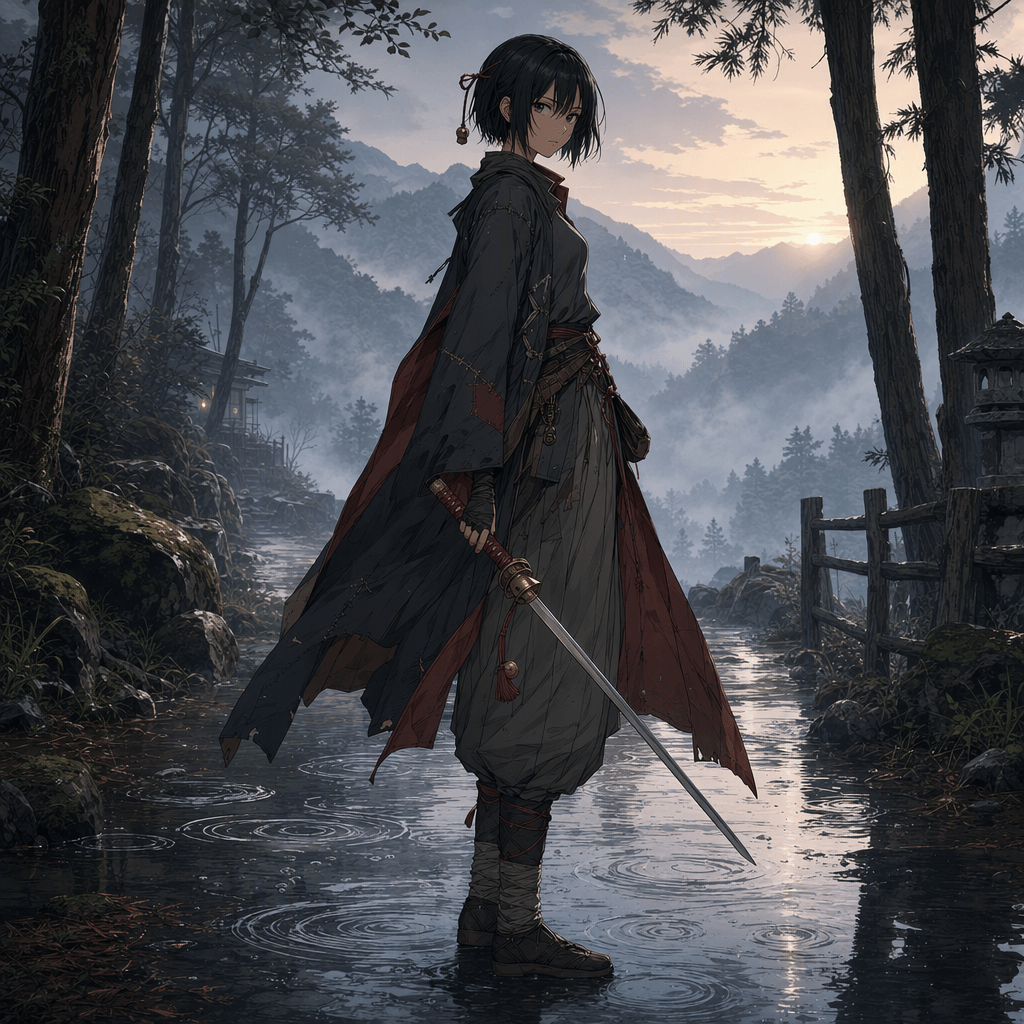
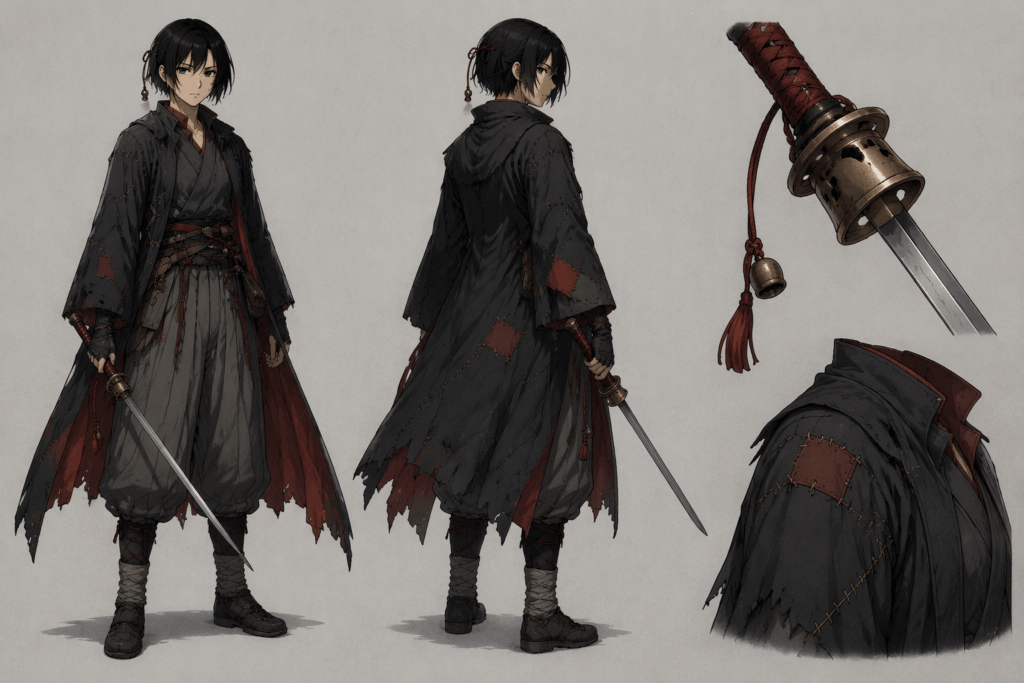
Mio Arakawa is a 22-year-old courier who carries sealed messages through stormy mountain routes. Her ability turns sound into rings across wet surfaces. Bells appear throughout her design, but she wraps them because they also make her uneasy.
Prompt to try:
“Create an original adult anime sword courier named Mio Arakawa, age 22. Give her short black hair, a weathered charcoal coat with rust-red lining, pleated trousers, wrapped boots, and a narrow sword with a bell-shaped guard. Sound forms rain rings around her feet on a wet cedar path at dawn. Refined ink lines, controlled cel shading, cool mist, restrained red accents. No existing characters, copied patterns, logos, or emblems.”
Lock Five Design Anchors Before You Generate
Once the idea works, lock five details. Otherwise, the generator will fill the gaps with familiar anime choices. Still, do not overload the prompt. Too many small rules can make the design lose focus.
Build the Anchors in a Useful Order
First, decide the silhouette. A long coat or an uneven shoulder line is easy to spot from a distance. Ten tiny accessories are not.
Next, choose materials that fit the role. Repaired wool and water-darkened leather reveal more about a courier than decorative trim.
Then define the weapon by shape and purpose. “A narrow straight sword built for enclosed paths” is clearer than “a legendary blade.”
After that, show how the ability changes water, dust, fabric, or light. The effect should alter the scene rather than hover nearby as random glow.
Finally, limit the colors. Pick one dominant color, one neutral, and one accent. This keeps the character easy to read.
Use a Photo as an Anchor, Not a Finished Identity
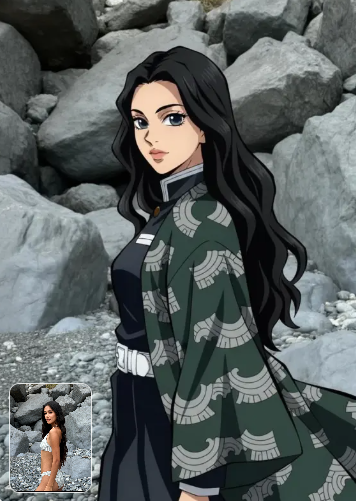
A reference photo can guide the face shape, hair length, or general proportions. However, it should not decide the OC’s role, clothing, weapon, and world.
First, choose a clear photo that you own or have permission to use. A simple angle is easier to read than a filtered selfie. Then tell the Demon Slayer OC Maker what must stay recognizable and what can change.
Keep only a few features, such as the face shape, eyebrow direction, and hair length. Next, replace the modern clothing and build a new setting. Above all, avoid celebrity or canon-character references. The aim is to develop an OC, not hide a copy.
Demon Slayer OC Maker Case Two: The Lantern Cartographer
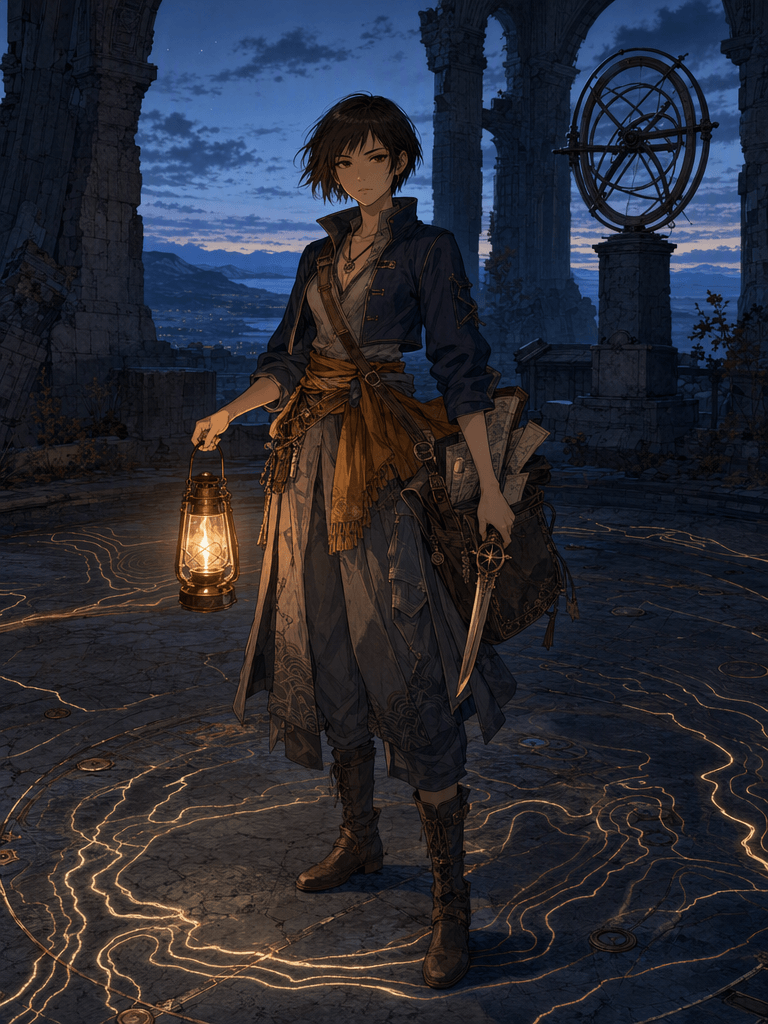
Hana Eno is a 25-year-old cartographer who records dangerous routes inside abandoned buildings. She is methodical indoors but afraid of open water. Her glowing contour lines spread across stone, then break apart at deep water.
Prompt to try:
“Create an original adult anime cartographer named Hana Eno, age 25. Give her cropped brown hair, a deep-indigo jacket, amber sash, gray skirt-trousers, map satchel, and a short blade with a compass-rose guard. Glowing contour lines travel from her lantern across a ruined observatory floor at blue hour. Warm lantern light, cool stone, fine ink detail, clean cel shading. No existing characters, copied uniforms, or recognizable emblems.”
Make the Character Survive Three Different Scenes
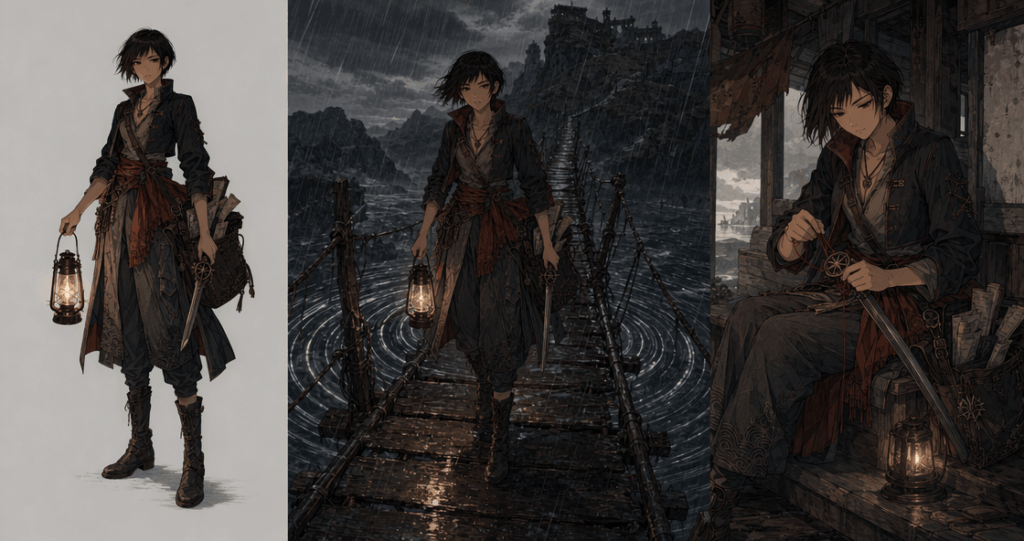
One attractive portrait can hide a weak design. Therefore, test every Demon Slayer OC Maker result in three situations.
The Three-Scene Test
First, create a neutral full-body view. It should reveal the outfit and weapon.
Next, make an action image. Here, the ability must affect the environment.
Finally, show a quiet story moment. It should reveal personality without combat.
Keep the same age, face, hair, garment layers, weapon, and palette each time. Change only the pose, camera, and situation. If the identity disappears, simplify the design. Then strengthen its clearest anchors.
Mio’s test includes a neutral design view, a storm-bridge action scene, and a quiet moment spent repairing her bell guard. Most importantly, the last image has no special effect to carry it. The character must remain specific on her own.
Read the Existing Transformation as Evidence
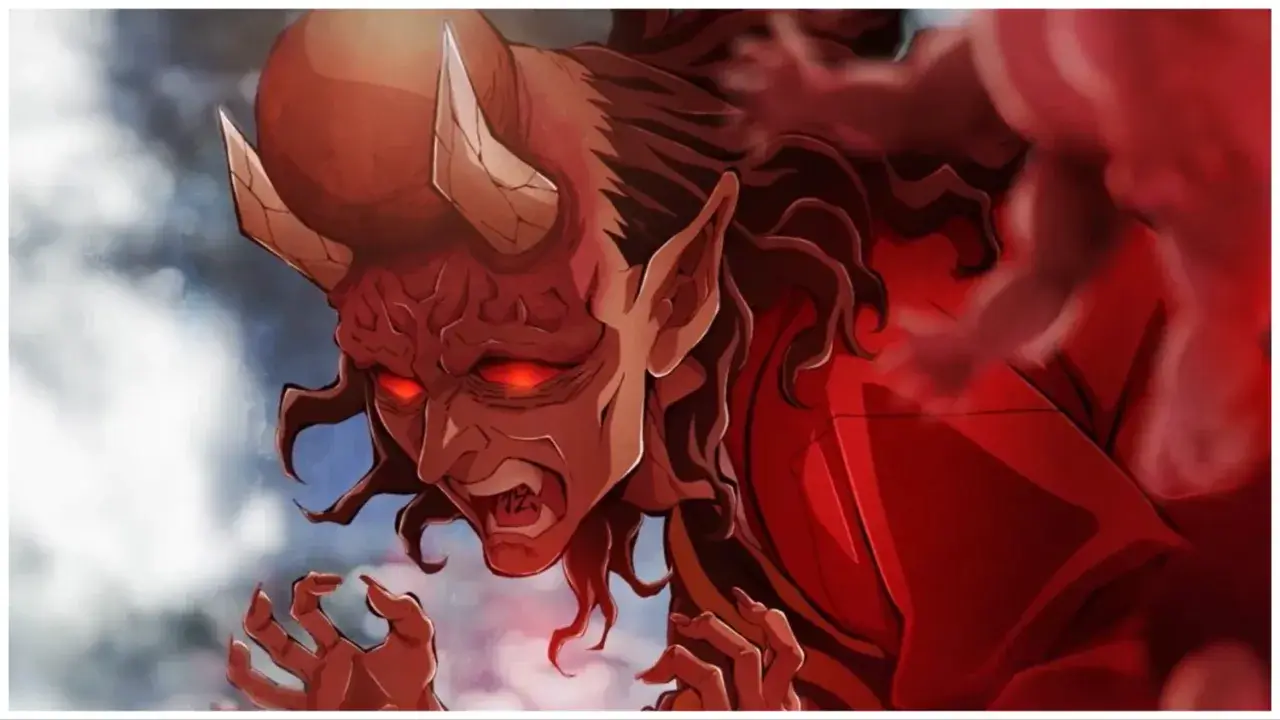
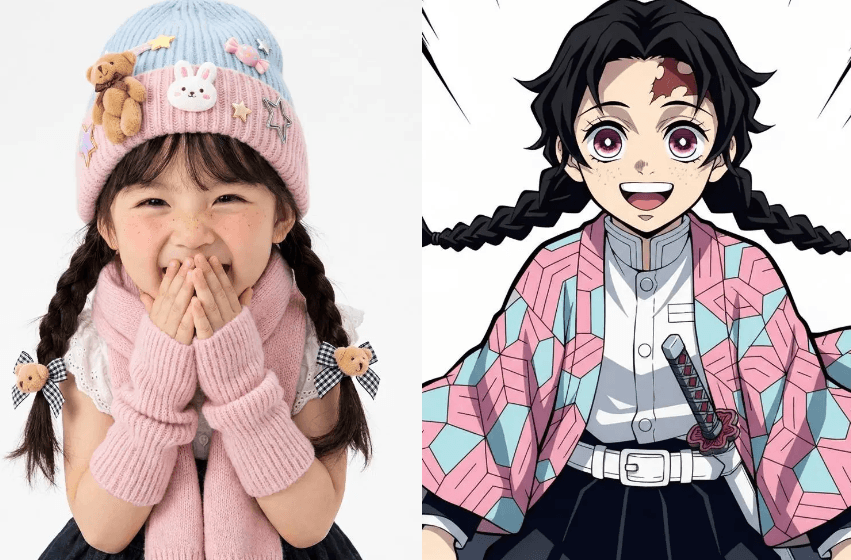
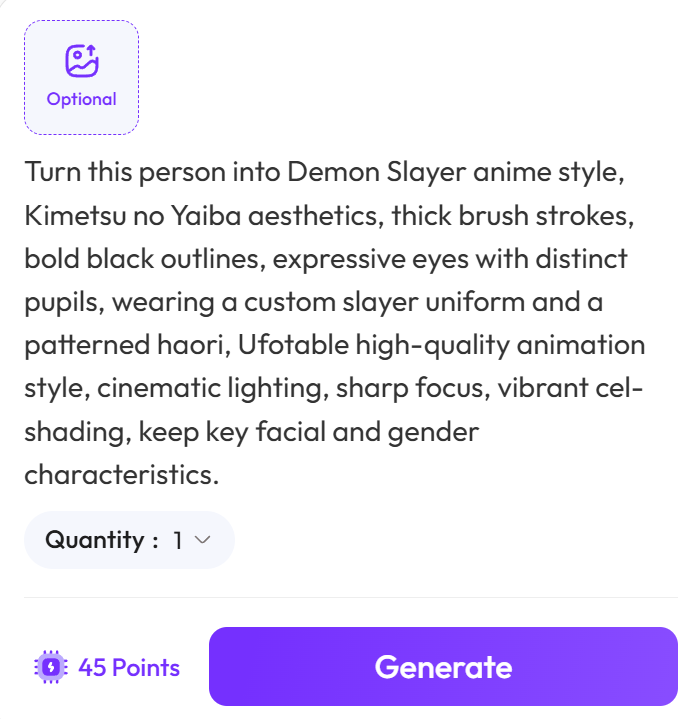
The two existing images below do not prove that any photo can become a perfect character at once. Instead, they show what the transformation kept and what it invented.
First, study the face shape, hair mass, camera angle, and pose. Next, inspect the new clothing, weapon, palette, and background. Any undefined choice leaves room for a generic result. Therefore, decide those details before the next generation.
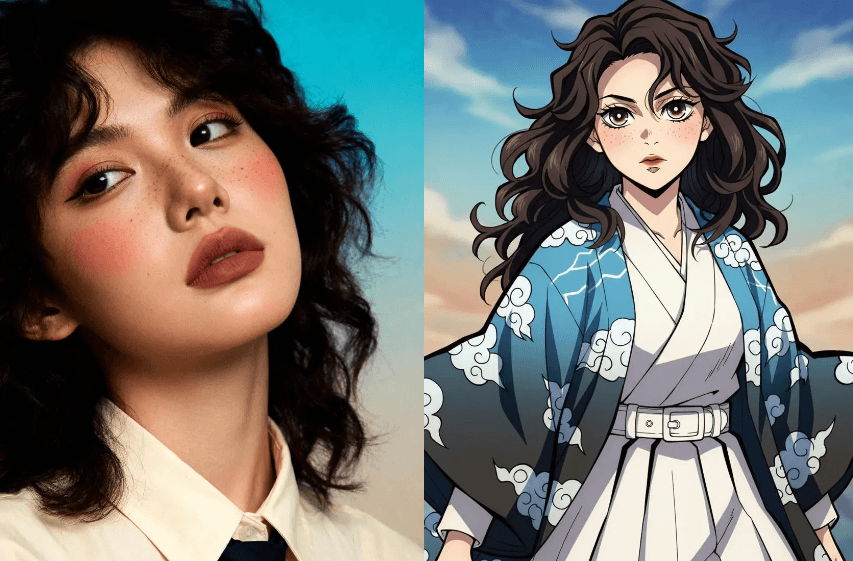
What a Demon Slayer OC Maker Should Not Copy
“Inspired by” should describe a broad world, not borrowed identifiers. Avoid a named character’s face, exact hairstyle, costume pattern, crest, weapon markings, or signature technique.
Instead, describe the principles you want. These may include historical fantasy clothing, disciplined sword combat, expressive linework, cel shading, elemental movement, or a tense night setting. Then add rules from your own character’s history.
For example, “blue-haired swordsman in a famous patterned coat” gives the generator a shortcut. “A flood-route scout in repaired indigo sailcloth whose blade leaves broken contour lines across wet stone” presents a real design problem. Therefore, the final character has a better chance of feeling original.
Turn the Final Image Into a Reusable Character File
Once the Demon Slayer OC Maker produces a strong result, record the choices behind it. Save the age, face, hair, silhouette, clothing layers, weapon shape, ability behavior, and palette. Also note three details that must never change.
For Mio, the limits are simple: no long hair, no polished coat, and no oversized weapon. These rules stop the next image from quietly redesigning her.
Finally, test the character file in a portrait, an action scene, and a quiet moment. A clear identity should survive all three. After that, use the Demon Slayer OC Maker to explore new scenes. Change only one story variable at a time.


Ready to explore more? Discover our full suite of innovative AI-powered tools to elevate your lifestyle and professional creativity: