A Polaroid Couple Photo arrives with a strange kind of proof.
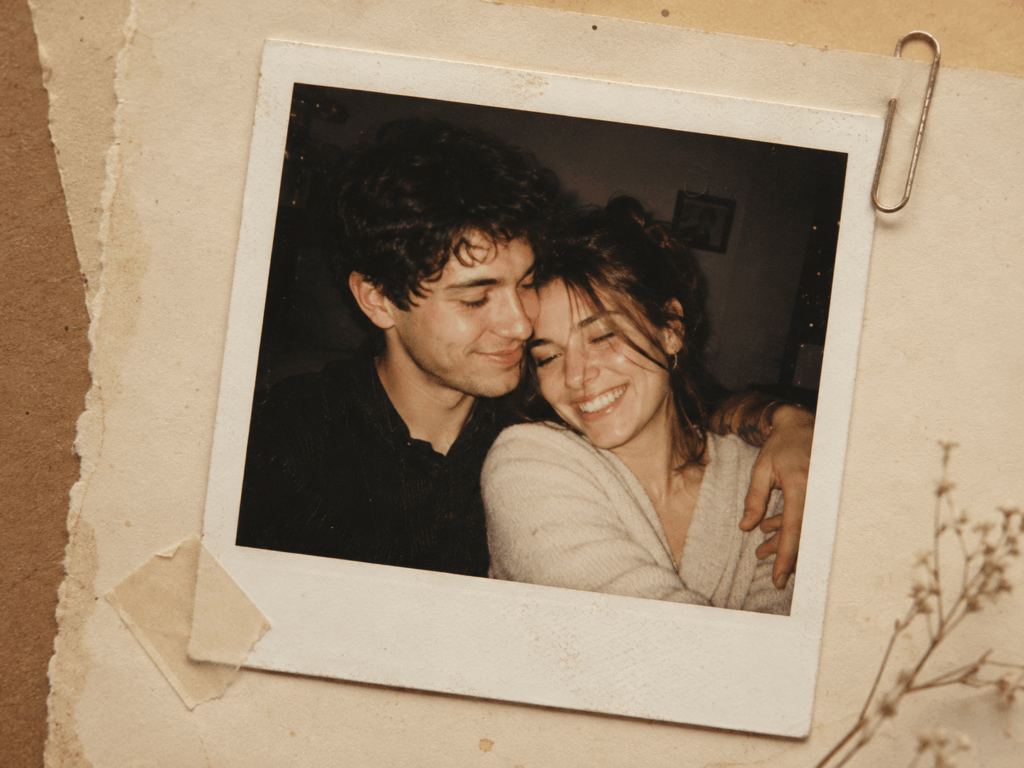
Two people now share one white-bordered frame. The flash says the room was dark. The blur suggests that someone moved. One shoulder coversdirect the other. Neither person seems fully ready.
Yet the moment never happened.
There was no camera between them. No party. No late-night sofa. Perhaps the two people were not even in the same country.
Still, the finished photograph can feel oddly familiar.
That is what makes it interesting.

The Photo That Should Not Exist
Imagine finding an old photograph inside a drawer.
The colors have faded slightly. One corner is soft. A bright flash has flattened the faces, while the room behind them disappears into shadow.
Two people stand close together.
One is smiling too late. The other appears to be turning toward the camera. Their pose is not elegant. However, it feels private.
You do not ask whether the lighting is professional.
Instead, you ask what happened that night.
A convincing AI couple image should create the same reaction. It should not announce its construction. It should quietly suggest a larger memory outside the frame.
That is why a flawless portrait often fails.
Perfect skin looks prepared. Balanced studio light feels planned. A centered pose suggests that both people knew exactly when the shutter would open.
Real snapshots rarely behave so well.
They interrupt people.


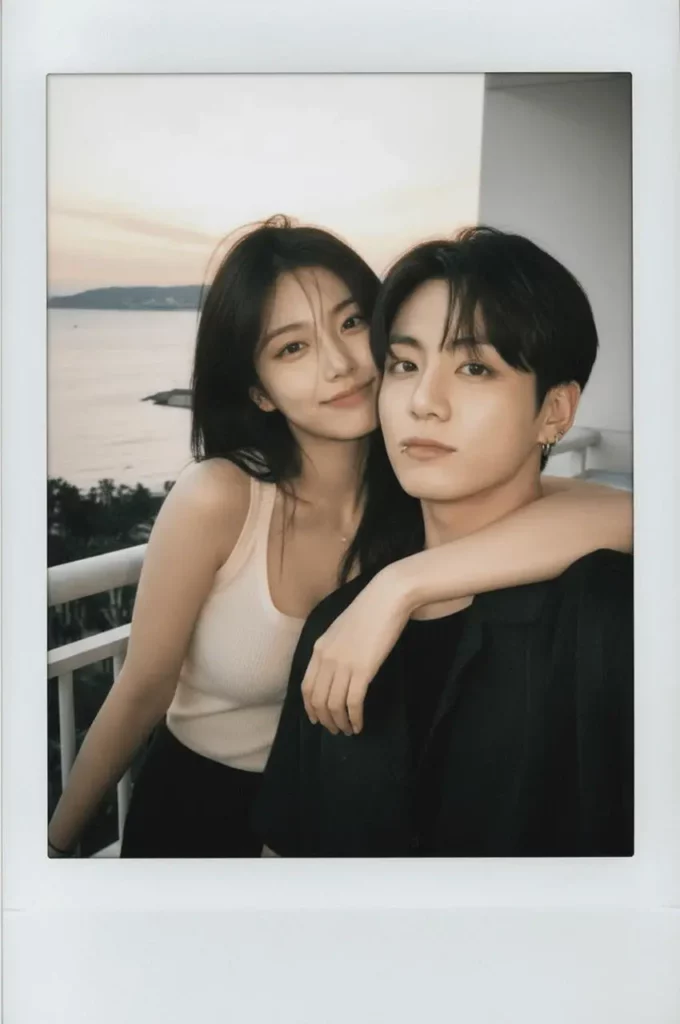
Why a Polaroid Couple Photo Feels Believable
A Polaroid Couple Photo does not look real because every detail is sharp.
It looks real because several small clues agree.
The flash comes from one direction. Both faces react to the same light. Their bodies share the same space. Hair overlaps clothing. One arm disappears naturally behind another person.
Meanwhile, the background supports the pose.
At a crowded party, other people may appear behind them. Meanwhile, a sofa scene should make their shoulders look more relaxed. Outside at night, direct flash should brighten the foreground while the distance falls into darkness.
Each clue is small.
Together, they create evidence.
WeShop AI’s Image Combiner rebuilds the complete scene rather than simply attaching one face to an existing body. Therefore, the new image can adjust the pose, light, expression, angle, and skin tone as part of one composition.
However, generation alone does not guarantee chemistry.
That still requires direction.
Cast Two People Who Belong in the Same Frame
The two source photographs do not need matching backgrounds.
They do need useful faces.
Think of them as casting photos. Their purpose is to tell the model who must appear in the final image.
Start With Honest Solo Portraits
Choose images with clear eyes, visible facial shapes, and natural skin detail.
Front-facing or slightly angled portraits usually provide the most useful information. Soft natural light also helps. In contrast, sunglasses, hands, masks, heavy bangs, and deep shadows may hide important features.
Strong beauty filters create another problem.
They may enlarge the eyes, narrow the jaw, or remove natural texture. Consequently, the final face can look polished but unfamiliar.
The original solution recommends clear solo portraits with visible facial features, natural light, and minimal obstruction for more stable identity reconstruction.
Do not worry if the source photo feels ordinary.
Ordinary input can produce a more believable memory.
Protect Identity in a Polaroid Couple Photo
A romantic pose is useless when one person no longer looks like themselves.
Therefore, identity instructions should come first.
Ask the model to preserve face shape, eye distance, eyebrows, nose structure, lip shape, cheek volume, jawline, skin tone, and natural asymmetry.
Then describe the new moment.
Avoid asking for a smaller face, sharper jaw, larger eyes, and different expression in the same brief. Those changes compete with identity preservation.
The goal is not to create two improved strangers.
It is to place two recognizable people inside one believable photograph.
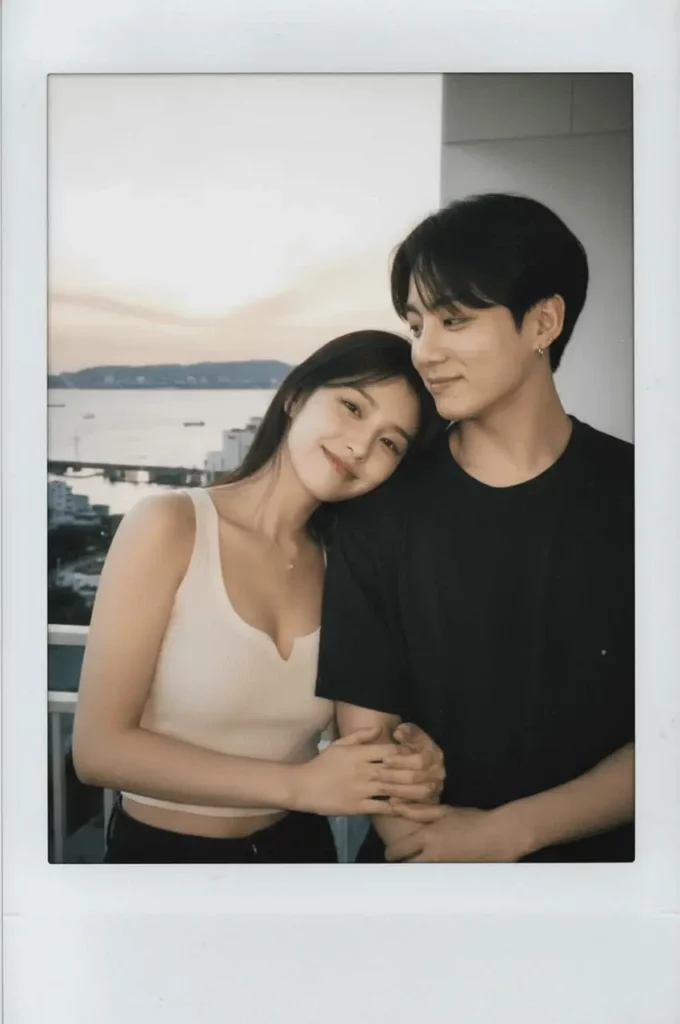
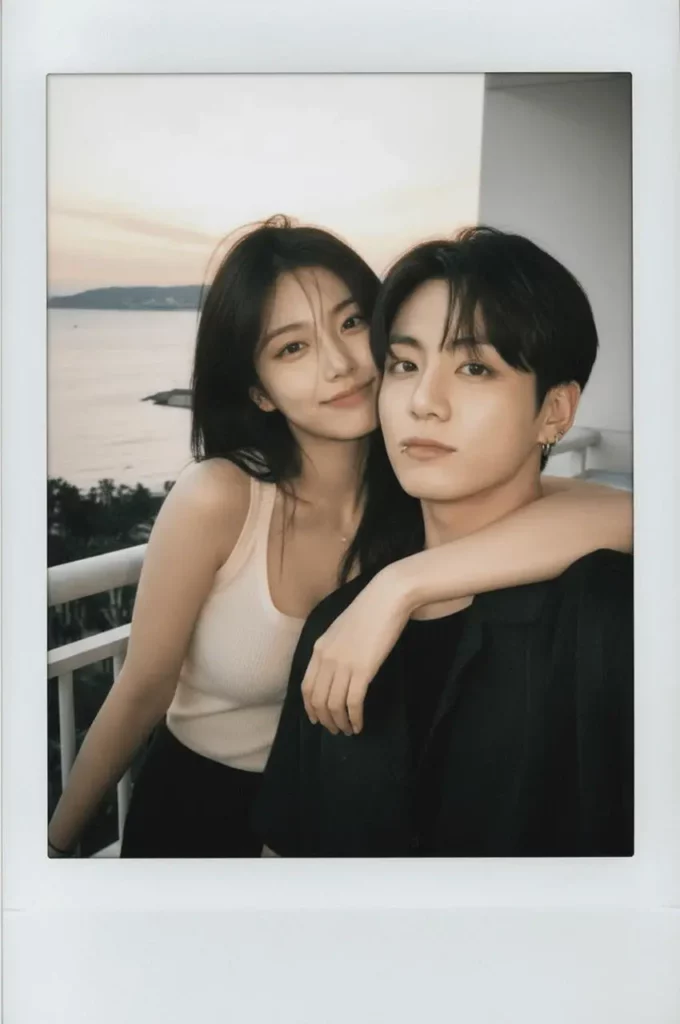
Build the Polaroid Couple Photo Like a Lost Memory
A Polaroid Couple Photo needs more than a white frame.
It needs a photographic accident.
Perhaps the camera moved. Maybe the flash fired too close. One person may have stepped into the frame at the last second. The crop could remove part of an arm or leave too much empty wall.
These flaws create history.
Direct Flash Makes a Polaroid Couple Photo Feel Accidental
Direct flash is not soft or flattering. However, that is exactly why it works. As a result, faces appear brighter, clothing catches harder highlights, and the background falls into shadow.
Reflective objects may shine too strongly. Skin can look slightly warmer or cooler than expected.
Most importantly, the flash gives both people one shared light source.
Without it, one face may look like it came from a sunny room while the other belongs to a dark bedroom.
The result then feels assembled.
Instead, let the flash spread across the entire foreground. Both faces, shoulders, hair, and clothing should react to it.
The original solution uses direct flash, low-light surroundings, slight movement, and a 3:4 composition to reproduce the feeling of a casual instant-camera photograph.
Blur Is Evidence of Movement
Blur should not cover the faces. Instead, keep it near the edges. For example, a hand can move slightly, hair can lose a little sharpness, and the background can soften.
This creates movement without destroying identity.
However, too much blur looks like a filter. It can also hide broken details rather than fix them.
Keep the eyes readable.
Let the rest of the scene breathe.
The Background Must Know Who Arrived First
When two solo portraits use different locations, choose which background controls the final scene.
Perhaps the first person is already at a party. The second person joins them there.
Maybe one person sits on a sofa. The other enters that room.
This decision helps the image feel grounded.
Otherwise, the model may blend two unrelated walls, light sources, and furniture layouts. The couple then appears to stand inside a place that has no physical logic.
Choose one setting.
Let the second person enter it.
A useful creative brief could read:
Combine the two people into one candid 3:4 instant-camera photograph. Keep both identities recognizable. Place them in the same low-light room. Use direct flash, slight movement, soft background blur, imperfect framing, and relaxed body language. The moment should feel accidental, warm, and privately remembered rather than professionally photographed.
The Polaroid Couple Photo Chemistry Test
A technically clean image can still feel emotionally empty.
That usually happens in the body language.
Two people may stand close together and still seem unaware of each other. Meanwhile, their faces share one frame, but their bodies tell separate stories. Therefore, chemistry must begin below the chin.
Chemistry begins below the chin.
Watch the Shoulders
Shoulders reveal whether two people share the same space.
They may lean inward. One shoulder can sit behind the other. Their bodies may turn toward the same camera or toward each other.
However, both people should not remain perfectly vertical.
That looks like two passport photographs placed side by side.
A slight lean creates connection. It also helps explain why their heads are close.
Hands Must Finish Their Gesture
Hands often reveal the construction first.
An arm may begin a hug but disappear before reaching the body. Fingers may merge with fabric. A hand can rest on a shoulder without creating any pressure or shadow.
Inspect every gesture.
First, trace where the arm begins and where it ends. Next, check whether the hand touches something. Finally, see whether the clothing reacts to that contact.
A believable hand does not need to appear elegant. It only needs to complete its action.
A Polaroid Couple Photo Needs Natural Height
A Polaroid Couple Photo should respect the relationship between two bodies.
If one person is taller, that difference should affect the shoulders, eye level, and position of the head. The original solution also allows height and placement details to be described in the prompt when proportions need more control.
Still, exact measurements are not always necessary.
Visual instructions may be enough:
“The top of her head reaches his chin.”
“They are similar in height.”
“One person sits while the other leans over the sofa.”
Clear relationships are easier to interpret than vague requests such as “make the pose natural.”
Change the Pose Without Losing the Night
One photograph rarely feels like a complete memory.
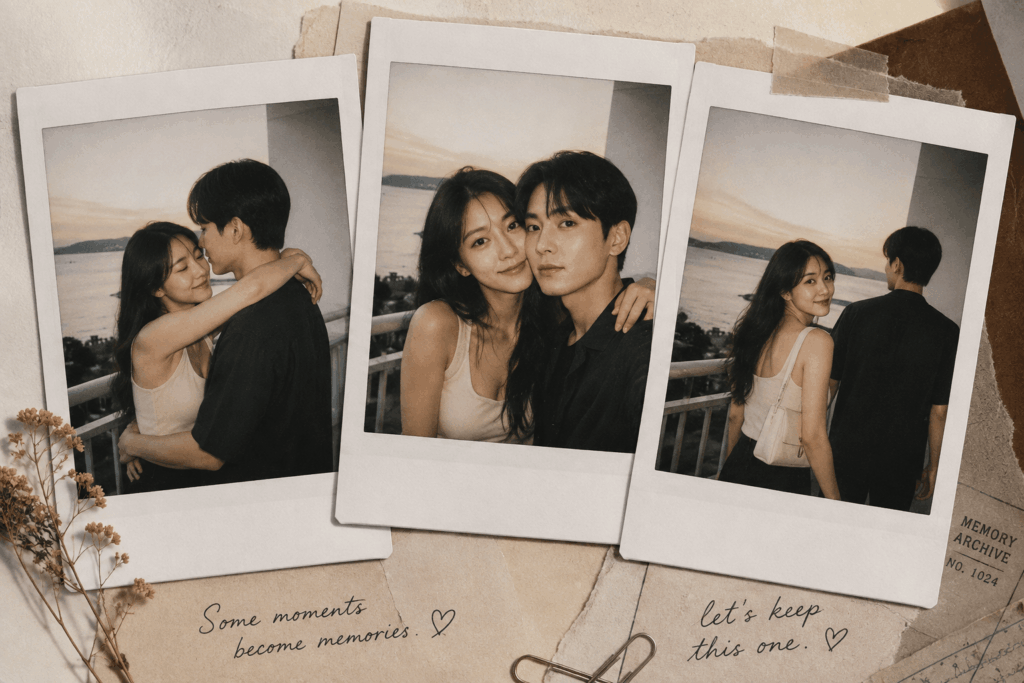
Perhaps the first result shows a hug. Next, create the moment just before they move closer. Afterward, show them sitting down once the party becomes quiet.
The setting remains the same.
Only the relationship changes.
WeShop AI’s Change Pose workflow is designed to retain the people, clothing, scene, and overall visual style while generating a new action or pose.
That makes it possible to build a small sequence rather than one isolated result.
The Intimate Hug
One person stands behind the other.
The arms should wrap naturally around the waist or shoulders. Both faces remain visible. Their bodies should share the same direction.
This pose feels warm, but it requires careful hand placement.
The Cheek-to-Cheek Frame
Both people lean toward the camera.
One face may sit slightly higher. Their expressions can be playful or tired. Direct flash makes the image feel like someone raised the camera without warning.
This works well for party scenes.
The After-Party Exit
The couple does not need to face the camera.
They can walk through a hallway, wait near an elevator, or leave a restaurant. One person may look back while the other continues forward.
This pose feels less like a portrait.
As a result, it can feel more like a memory.
When a Polaroid Couple Photo Looks Too Perfect
The easiest mistake is making the image too beautiful.
Both faces become flawless. Meanwhile, the flash turns soft and the crop becomes perfectly balanced. Moreover, every strand of hair sits neatly, and even the background looks styled.
The image may be attractive.
Yet it no longer feels found.
A real instant photo often contains one detail the photographer would have fixed. Someone blinked. The room was darker than expected. A sleeve covered part of the frame. The camera tilted slightly.
Therefore, resist the urge to polish everything.
Keep natural skin texture.
Allow uneven light.
Leave a little empty space.
Do not add artificial dust, scratches, fingerprints, dates, and paper damage all at once. Those effects quickly become costume.
The photograph should look imperfect because of the moment.
It should not look imperfect because a filter menu was fully selected.
Three Memories From Two Solo Photos
The same two portraits can support very different stories.
Choose the memory before choosing the pose.
The Party You Missed
Use a dark room, direct flash, crowded background, and slight movement.
One person may hold a drink. The other leans into the frame. A stranger appears partly cropped behind them.
The image should feel loud even though it is silent.
The Airport Reunion
Use bright terminal lights, luggage, coats, and tired expressions.
The embrace may be imperfect because both people are still holding bags. One face can disappear partly against the other person’s shoulder.
This is not a polished travel portrait.
It is the second after someone finally arrived.
The Quiet Sofa Photo
Use warm lamps and a simple living room.
One person rests their head against the other. Shoes may sit near the sofa. A blanket can fold across their laps.
The flash should still feel slightly intrusive.
That tension makes the image personal. The camera entered a quiet moment and then left.
Keep the Polaroid Couple Photo Honest
An AI-generated photograph can create a beautiful emotional scene.
It can also create confusion when presented as proof of a real event.
Therefore, context matters.
Use the image for creative storytelling, gifts, visual concepts, mood boards, fictional scenes, or shared imagination. However, do not use it to falsely prove a meeting, relationship, location, or event.
The value of a Polaroid Couple Photo does not depend on deceiving anyone.
Its value comes from visualizing a moment that distance, timing, or circumstance did not allow.
WeShop AI can bring two portraits into one frame. In addition, it can rebuild the lighting, pose, background, and instant-camera atmosphere.
Still, the most important choice belongs to the creator.
What kind of memory should this photograph suggest?
Was the room crowded or quiet?
Did both people expect the camera?
What happened five seconds later?
A normal composite shows two people together.
A convincing Polaroid Couple Photo makes the missing moment feel close enough to remember.
Go to WeShop AI For Exploration: