











Create a Surreal Social Ad Without Distorting the Product With Nano Banana 2
Use Nano Banana 2 to place a product inside a surreal campaign world while preserving geometry, materials, color, and recognizable brand details.
In crowded social feeds, a standard product-on-background image is often not enough to stop the scroll or communicate a distinctive campaign idea. Surreal product advertising turns product benefits, emotions, or brand values into memorable visual metaphors, giving brands a stronger way to launch new products, create campaign teasers, and build editorial-style social content.
The challenge is balancing imagination with commercial clarity: the scene needs to feel unexpected, while the product must remain recognizable, desirable, and accurate enough to represent what customers can actually buy.
This workflow is intended for social ads, campaign teasers, and editorial launch visuals that need a stronger idea than a standard studio background—but cannot sacrifice product identity.
Source and Result
| Source Packshot | Generated Surreal Ad |
|---|---|
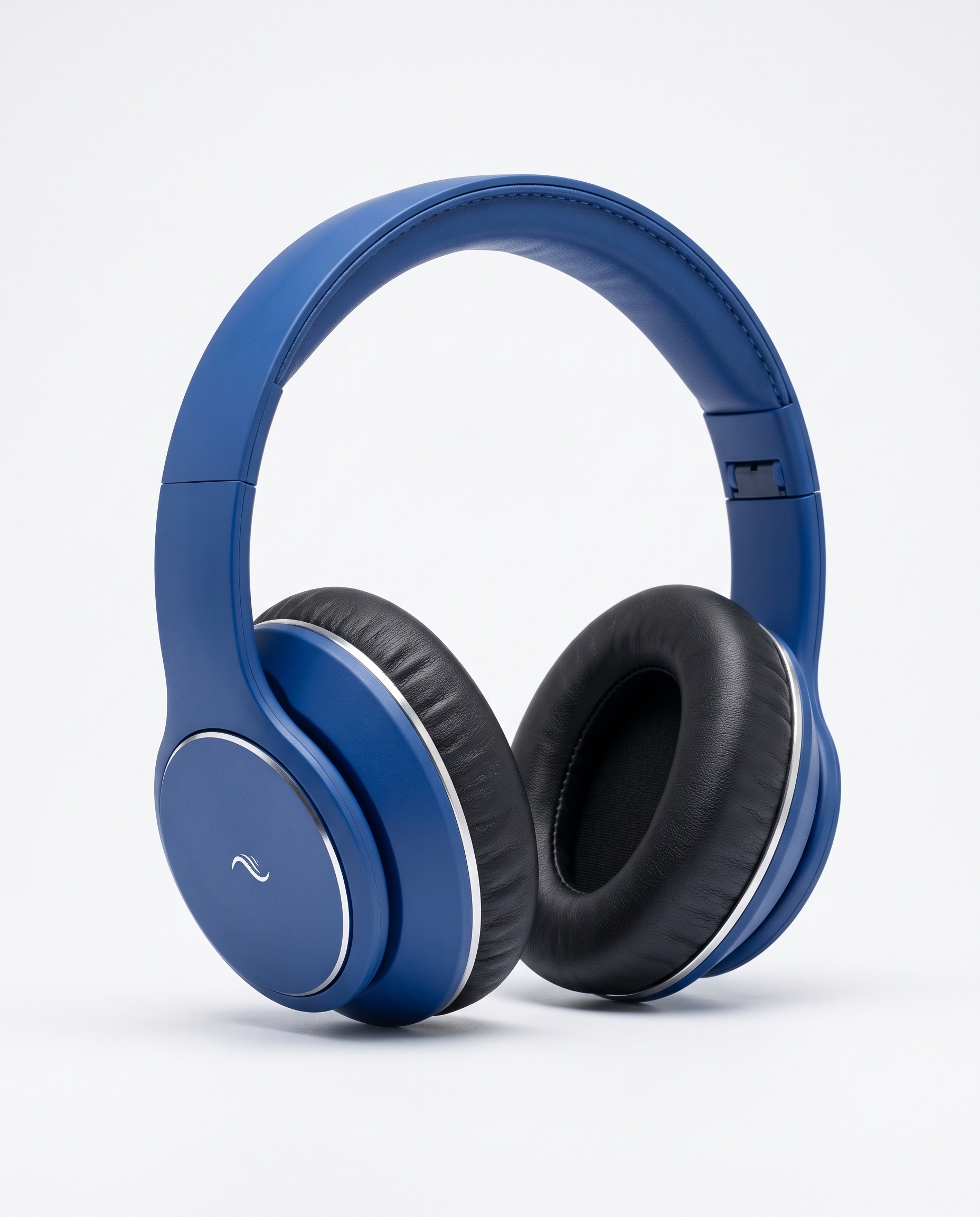 |  |
The fictional headphones have a padded cobalt headband, round blue cups, black cushions, silver rings, and a small white wave symbol. Those details formed the approval checklist.
Step 1: Translate a Product Benefit Into One Metaphor
The campaign idea is “sound becomes landscape.” That provides one strong visual metaphor without adding a character, city, logo wall, and multiple unrelated effects.
Choose a metaphor that supports the product category, then limit the scene vocabulary. Here, smooth waves, reflective pools, and blue architecture echo sound and the headphone color.
Step 2: Set a Product-to-World Ratio
Use the uploaded headphones as the exact product reference.

Create a surreal 4:5 social advertising poster where the single headphones float above a miniature cobalt-blue soundscape made of smooth architectural waves and tiny reflective pools.

Preserve the exact headband thickness, circular ear-cup geometry, cobalt-blue color, black cushions, silver rings, and white wave symbol. Position the product as the unmistakable hero, occupying about 55 percent of the frame, fully visible and not intersected by scenery.

Use a pale ice-blue sky, long soft shadows, controlled cinematic light, premium editorial realism, and a strong depth illusion.

No text, no people, no extra headphones, no altered logo, no fantasy creature, no neon, and no UI elements.
The 55-percent instruction prevents the concept environment from becoming the actual subject. “Not intersected by scenery” protects the silhouette and makes later cutdowns easier.
Step 3: Inspect the Transition Zones
Surreal edits often fail where product and environment meet. Check the headband edges, cup rings, cushion openings, contact shadows, reflections, and repeated forms. The final image keeps the product floating cleanly above the landscape; the reflection supports the concept without creating an extra sellable unit.
The result stays within one blue color family, so the product belongs to the world while its black cushions and silver rings maintain separation.
A Reusable Surreal Ad Formula
Use the uploaded [product] as the exact reference.

Turn the benefit “[benefit]” into one visual metaphor: [metaphor]. Create a [ratio] ad where the same single product [relationship to world].

Preserve exactly: [silhouette], [construction], [materials], [colors], [logo/mark], [product count], and [camera orientation]. Keep the product fully visible, unobstructed, and approximately [percentage] of the frame.

Build the environment from only [two or three scene elements]. Use [lighting], [depth], and [palette].

Do not add people, duplicate the product, alter the mark, merge scenery into the product, add unauthorized text, or introduce unrelated fantasy elements.
Creative and Fidelity Checklist
- Can the concept be described in one sentence?
- Does the metaphor connect to the product benefit?
- Is the product still the largest and clearest object?
- Are silhouette, openings, hinges, rings, cushions, and marks preserved?
- Does the environment intersect or hide a sellable detail?
- Is a reflection clearly a reflection rather than a second product?
- Does the palette support separation at thumbnail size?
- Can copy be added later without covering the product?
Practical Limitations
One successful output does not guarantee identical fidelity for every geometry or finish. Transparent parts, tiny ports, cable routing, legal marks, and exact color values may drift. Surreal reflections can also imply duplicate products. Review at full resolution and keep catalog imagery separate from campaign experimentation.
Final Takeaway
Nano Banana 2 created a concept-led headphone ad without letting the environment overwhelm the product. The strongest control was not a longer style list; it was one metaphor, a defined product-to-frame ratio, and explicit protected details.
You can try it directly using the tool on the right.
Build a Surreal Ad Around One Product Truth
Upload an approved product image, choose one visual metaphor, and keep the product as the unobstructed hero in WeShop.