












Create a Consistent Halloween Pet Trading Card Set With Nano Banana 2
Turn one clear pet photo into a coordinated Halloween trading-card set while preserving fur markings, eye color, and distinctive features.
Pet Halloween content is easy to make cute but hard to make consistent. A collectible-card system solves both problems: the same animal remains recognizable, while costumes, titles, borders, and stats create repeatable variety. It is useful for social carousels, adoption campaigns, pet retail content, community challenges, and personalized digital keepsakes.
Identity lock: the details that make this cat this cat
| Source photo | Must preserve |
|---|---|
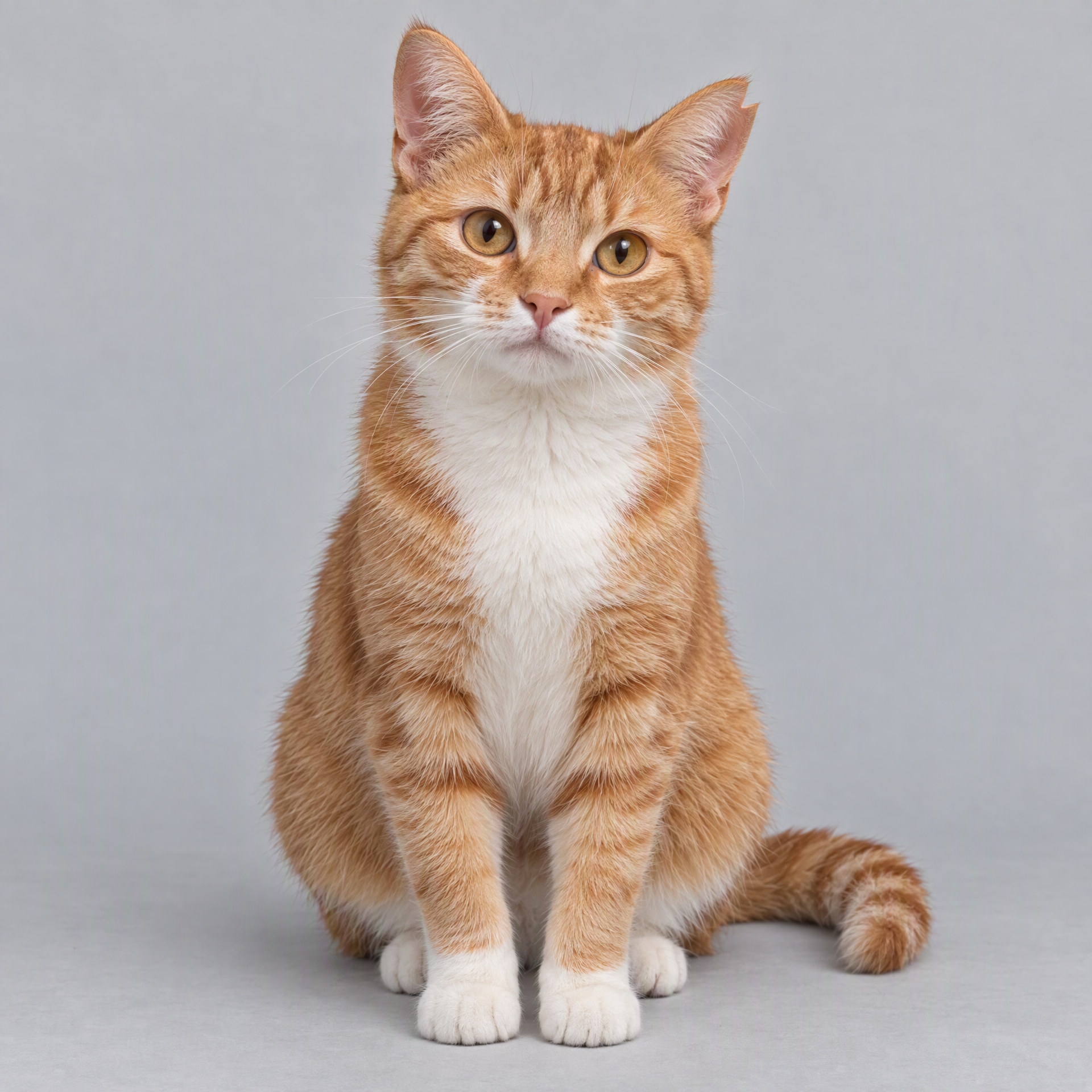 | Orange tabby pattern, white chest, white front paws, amber eyes, and the tiny notch in the left ear |
These physical details matter more than the costume. Repeat them in every image-to-image prompt, and avoid changes to the mouth, ears, or body shape.
The three-card collection
| Card | Costume system | Generated result |
|---|---|---|
| BOO BEAN | Loose ghost cape, cream-and-black frame, orange stars, GHOST TYPE, MISCHIEF 88 | 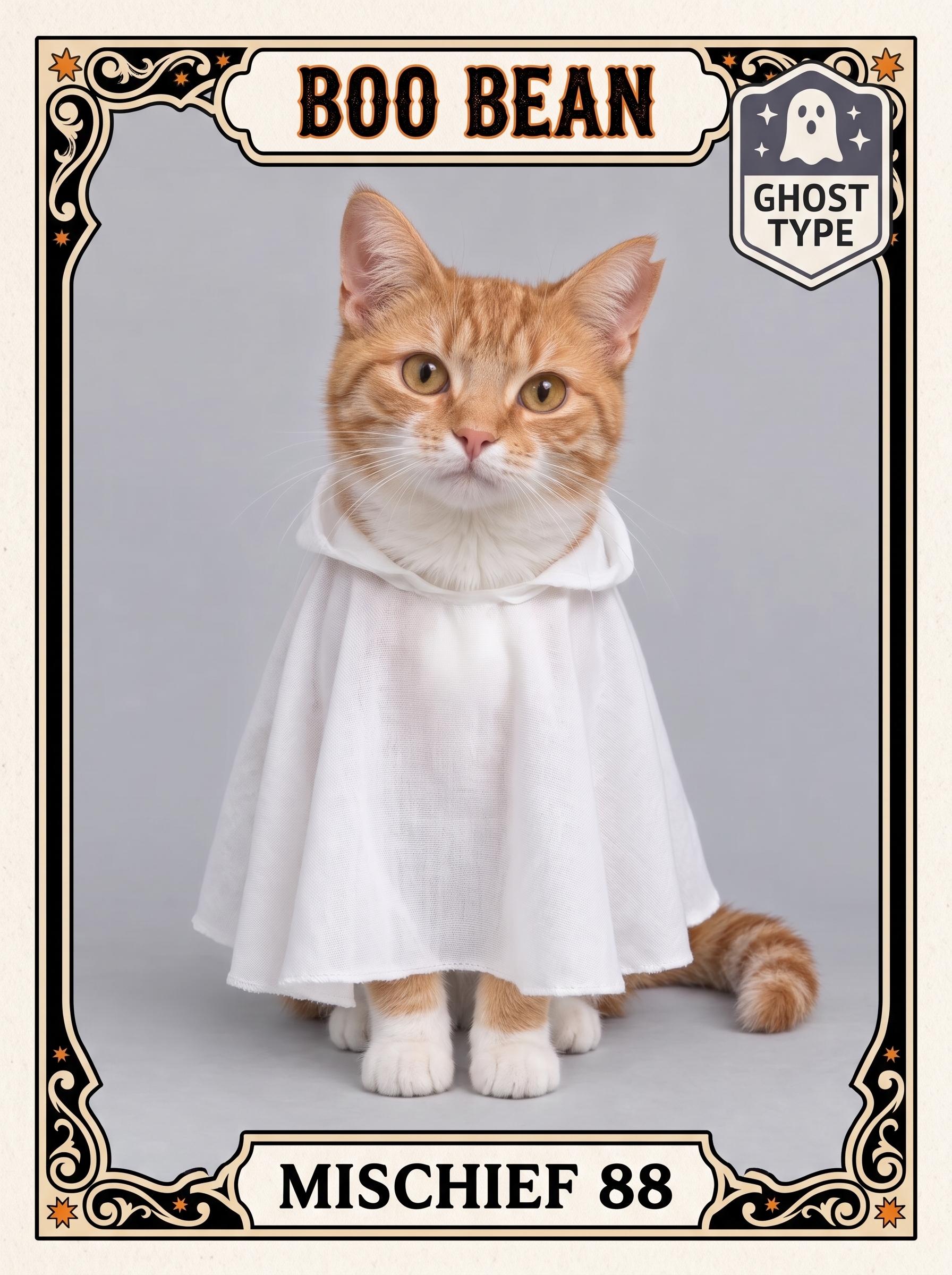 |
| WHISKER WITCH | Violet felt hat, tiny pumpkin, violet-and-tangerine border, MAGIC TYPE, CHARM 96 | 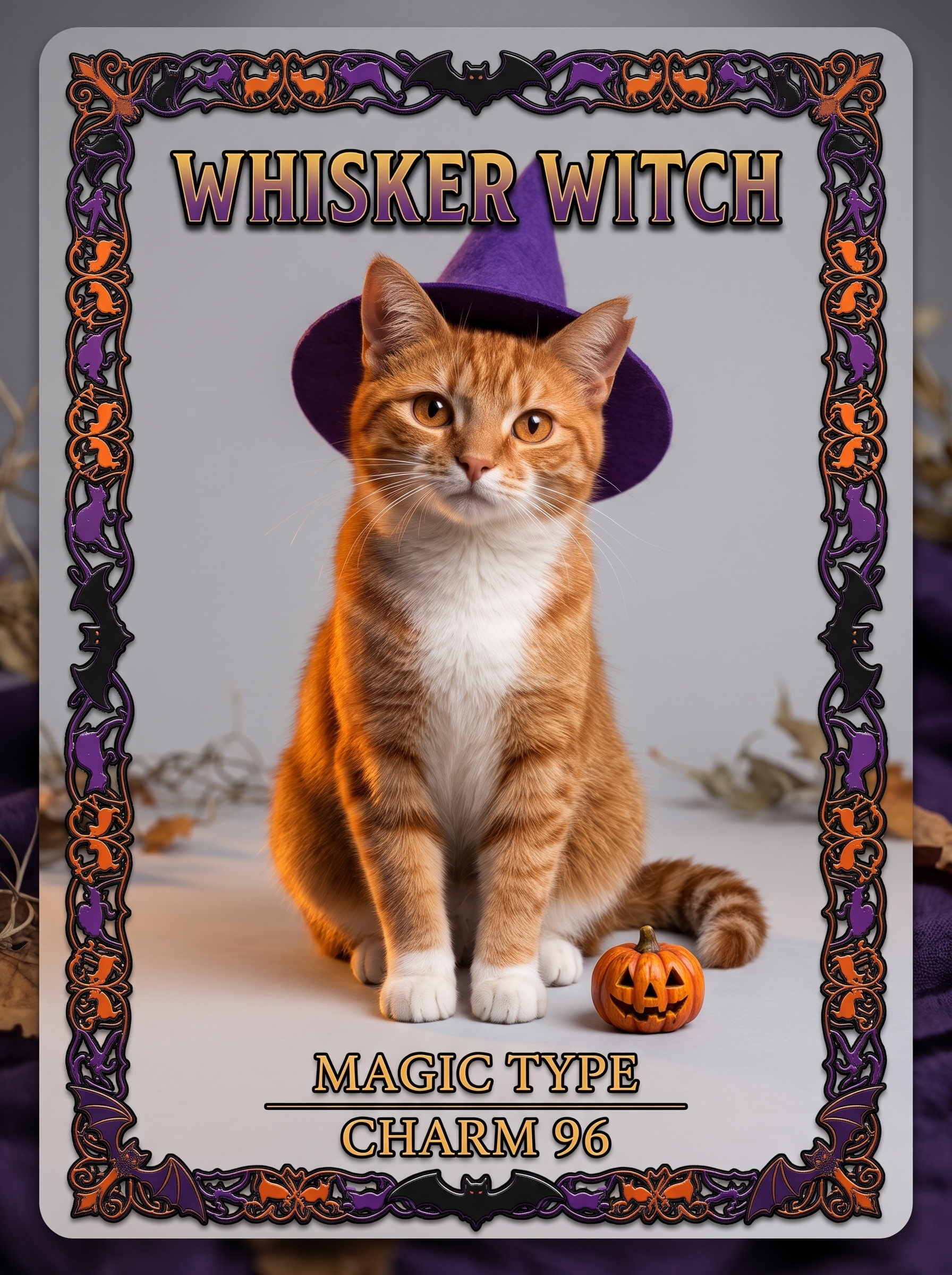 |
| COUNT PURR | Soft velvet cape, moon disk, oxblood border, NIGHT TYPE, DRAMA 91 | 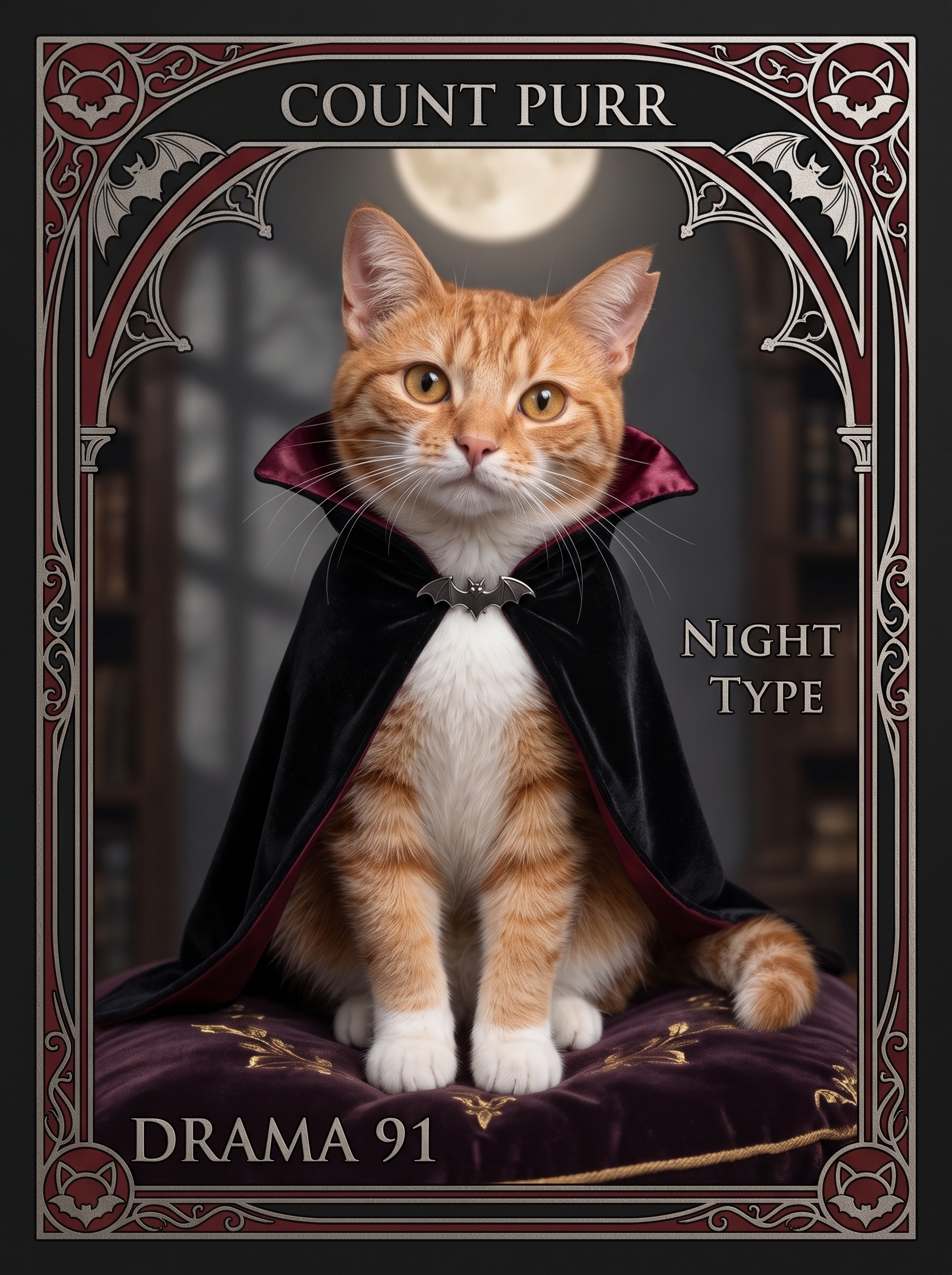 |
Step 1 — Create a neutral pet reference
Use a full-body photo with even light and a simple background. The eyes, ears, paws, and markings should all be visible. Remove collars or props that might be mistaken for permanent features.
Create an original square pet reference photograph of one fictional small adult orange tabby cat with a white chest, white front paws, amber eyes and a tiny notch in the left ear. The cat sits facing camera on a seamless light-gray studio background, calm curious expression, full body visible, soft even light, detailed fur, no collar, no costume, no props, no text, no watermark.
Step 2 — Design the card grammar
Every card needs the same information architecture: character name, type badge, and one stat line. Keep the type short and the score prominent. Use a consistent vertical ratio, ornamental border density, studio-photo finish, and title placement.
Step 3 — Add one safe costume idea at a time
Use the uploaded cat as the exact pet identity reference. Preserve the orange tabby markings, white chest, white paws, amber eyes and left-ear notch. Create a vertical collectible Halloween trading card: the cat wears a safe loose white ghost cape with the real head fully uncovered and sits inside a cream-and-black ornamental border with tiny orange stars. Add only these exact labels: title “BOO BEAN”; badge “GHOST TYPE”; stat line “MISCHIEF 88”. Crisp print design, soft studio photo, no altered fur, no extra animal, no watermark.
For the next cards, change only the costume, palette, character name, type, and stat. Keep the pet identity and card grammar fixed.
Step 4 — Run a collection-level review
Check the cat’s stripe pattern, chest shape, paw color, eyes, and ear notch across all outputs. Then inspect each label for spelling and duplication. Finally, place the cards side by side: borders can vary, but title scale, image balance, and finish should still feel like one deck.
Expansion ideas
- Add a foil-style rare card while preserving the same pet identity.
- Create dog, rabbit, or bird editions with species-specific safety constraints.
- Turn community pet submissions into a themed card wall.
- Replace numeric stats with adoption-friendly traits such as “CUDDLES” or “ZOOMIES.”