







Turn Everyday Life Into a PS2-Era Open-World Game Meme With GPT Image 2.5
Use one character reference and GPT Image 2.5 to create a consistent series of nostalgic PS2-era open-world game scenes from ordinary everyday moments.
Social feeds need repeatable visual formats that can turn small everyday stories into recognizable content. Ordinary moments such as deciding what to eat, waiting for laundry, or buying snacks may not look remarkable in a normal photo. Reframing them as serious missions inside an early-2000s open-world game gives creators a nostalgic, humorous format that can support a complete carousel or recurring series.
For this first-party WeShop test, we used one original fictional character and generated four separate scenes with GPT Image 2.5. The main question was whether hairstyle, clothing, and character identity could remain coherent while the locations and actions changed.
| Character source |
|---|
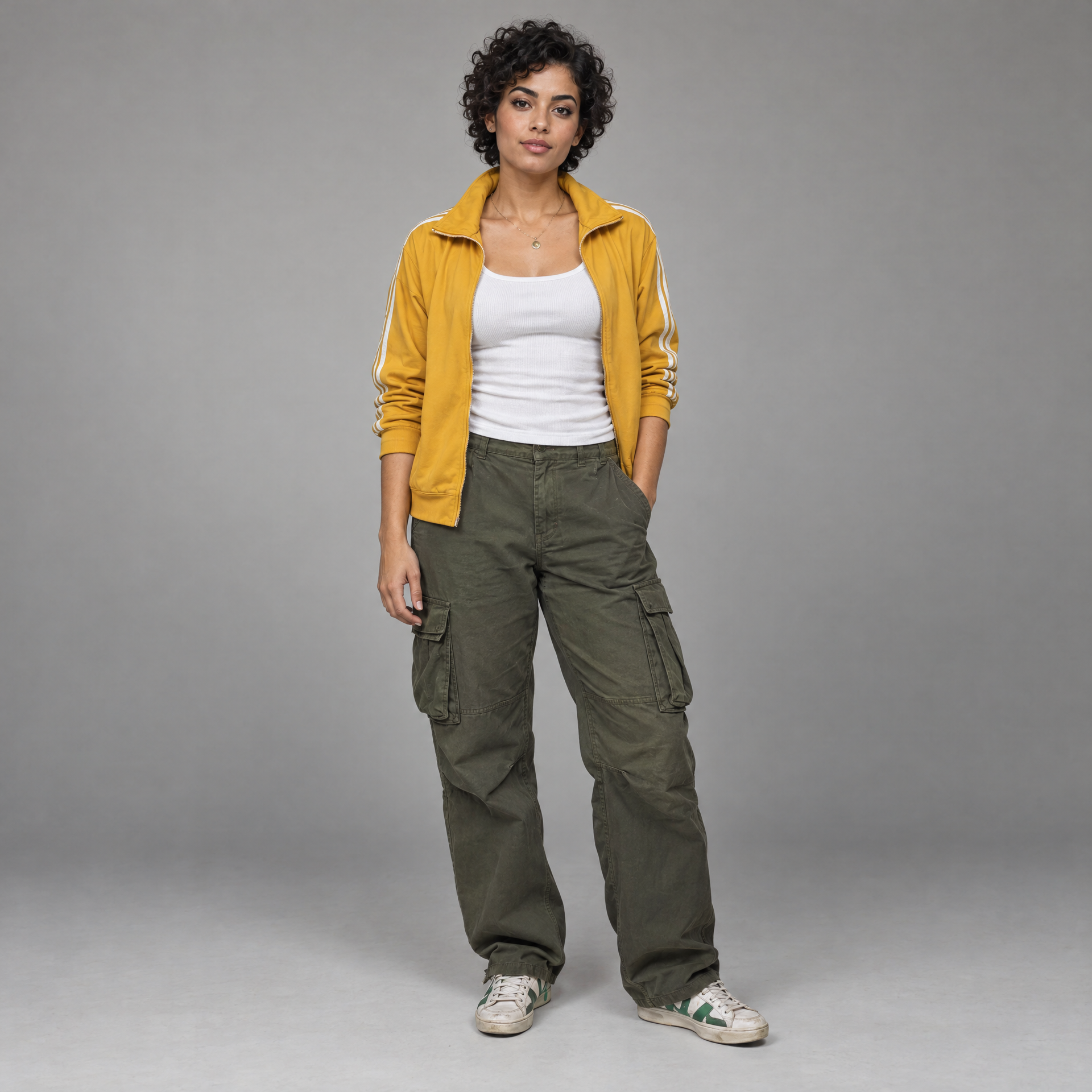 |
| A full-body reference establishes the character's identity, hairstyle, outfit colors, trousers, and shoes before the environment changes. |
Four everyday side quests
| Scene | Generated result |
|---|---|
| Searching “What should I eat tonight?” at an internet café | 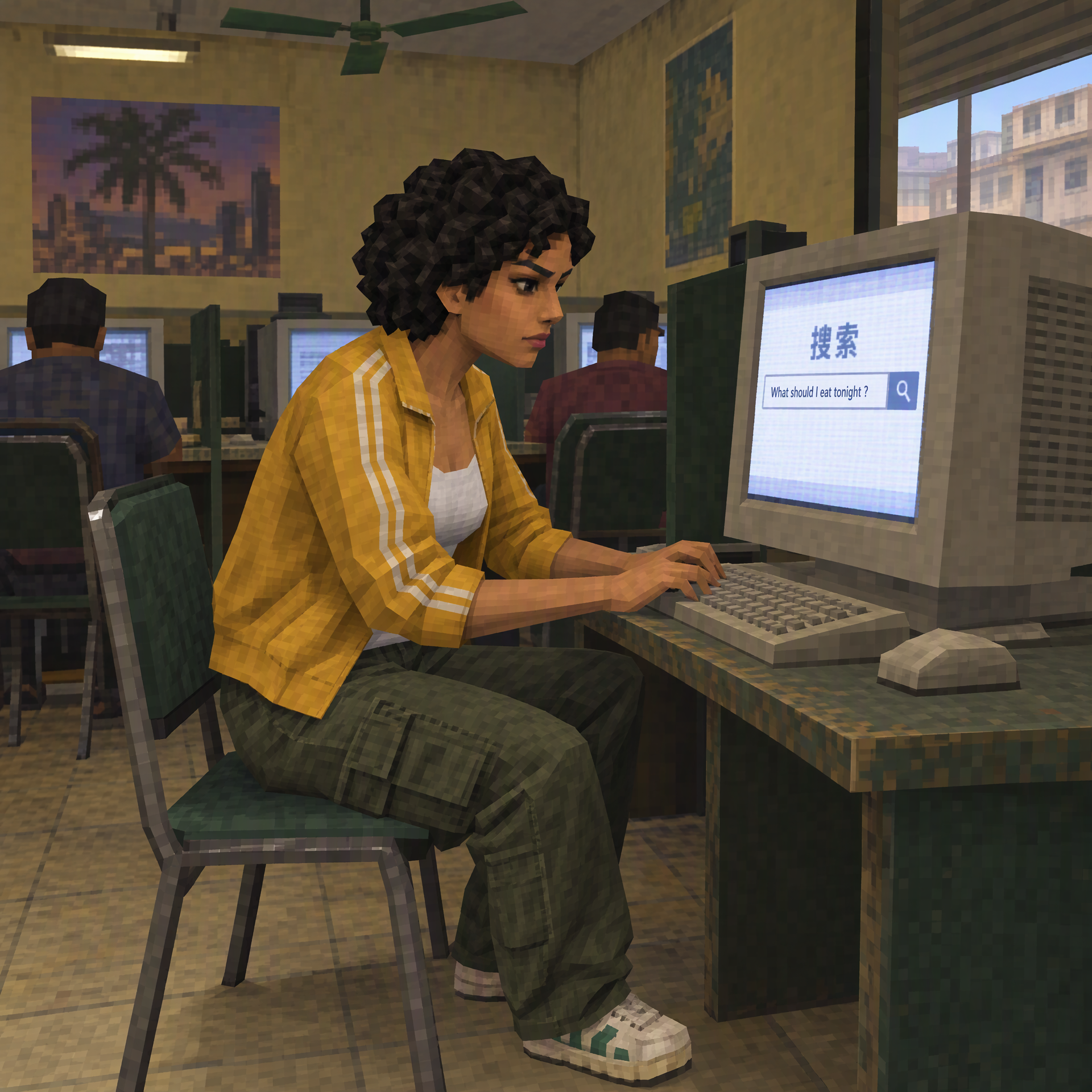 |
| Investigating a missing sock at the laundromat | 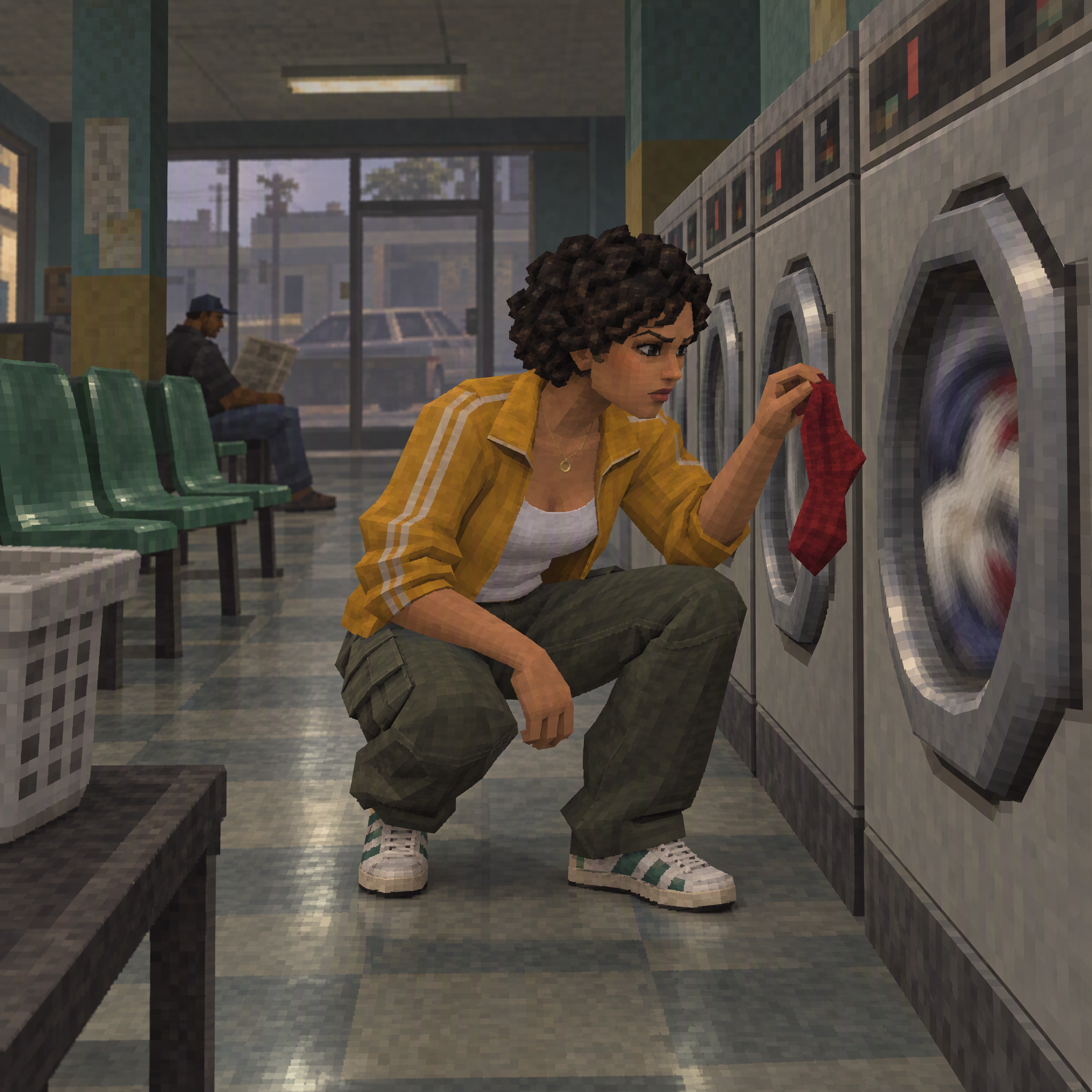 |
| Choosing between two drinks | 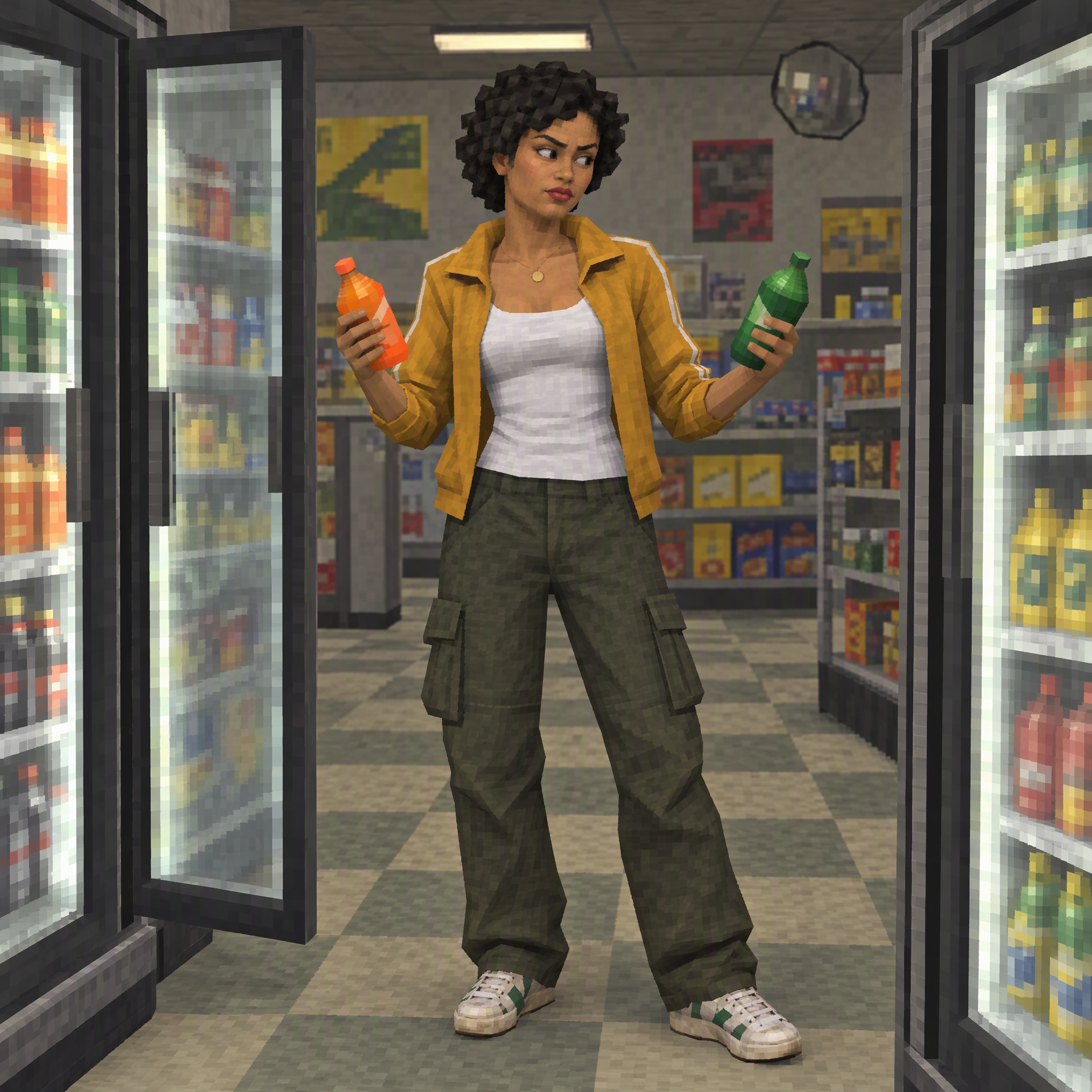 |
| Escaping with too many snacks | 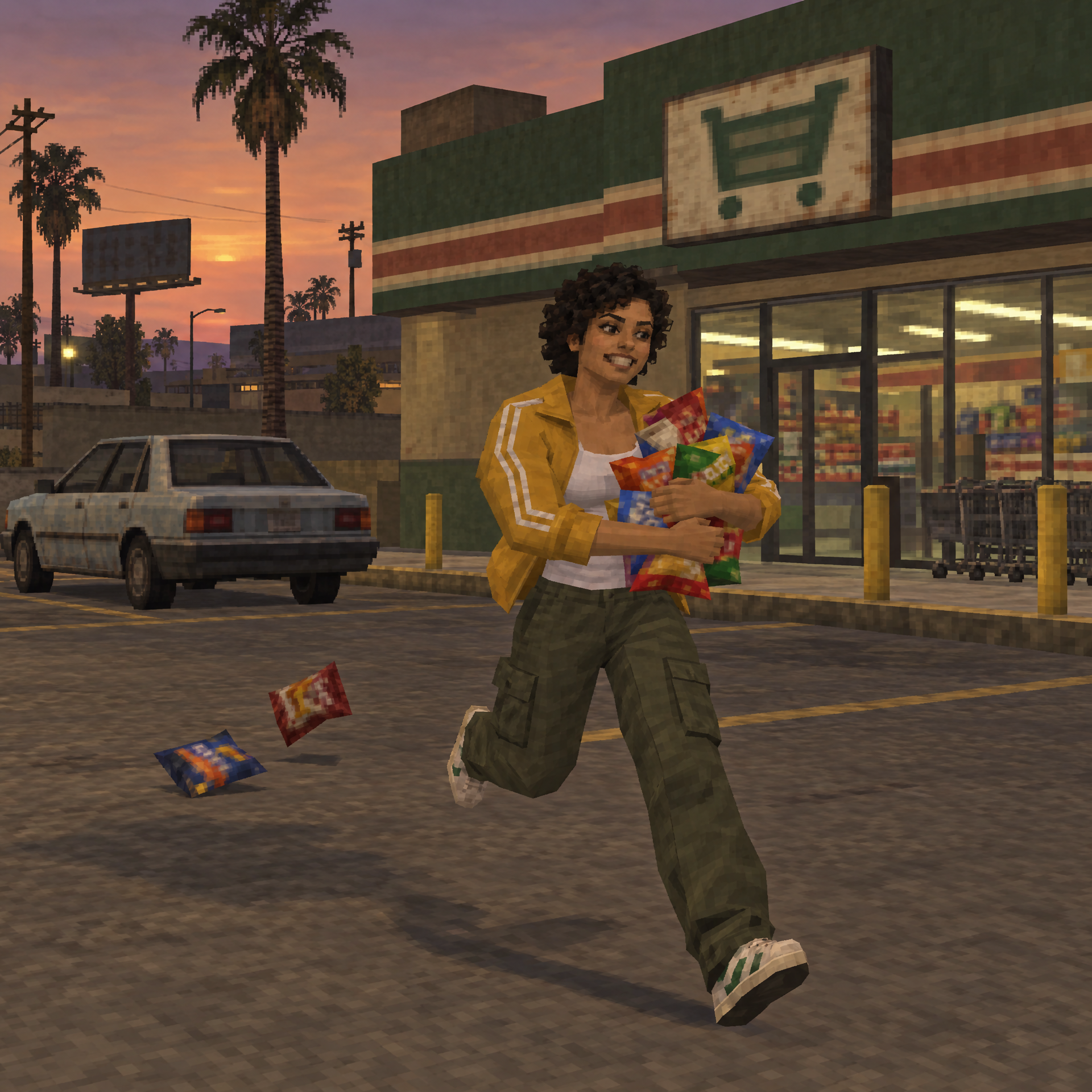 |
All four outputs keep the short curls, mustard jacket, white tank, olive cargo trousers, and sneakers. The variation is concentrated in the setting and performance, so the images read as one social carousel instead of four unrelated style filters.
What makes the style convincing
Naming a specific game is less reliable than describing the visual system. The useful controls are low-to-medium polygon density, simplified hands and joints, stretched low-resolution textures, clothing folds baked into the surface, basic real-time light, deep focus, a third-person camera, and mild compression. Acting should be stiff but readable. Expressions can be exaggerated without drifting into modern animated-feature rendering.
Base prompt
Use the uploaded person as the identity and wardrobe reference for one consistent fictional character. Transform the person into an early-2000s PS2-era open-world 3D game screenshot: a low-to-medium polygon model with mostly realistic body proportions, slightly angular edges, simplified hands and joints, matte skin, slightly blurred and stretched low-resolution photo textures, and clothing folds partly baked into the texture.

Use a third-person medium or wide shot, deep focus, simple real-time lighting, and simplified shadows. Build the environment from gray-brown, dusty yellow, and dark green, with only a few brightly colored props. The pose should be slightly stiff but immediately readable, and the expression can be moderately exaggerated like an NPC performance. Present an absurd everyday moment with a serious camera to create a nostalgic internet-life meme.

Scene: replace this line with one specific everyday mission, including the location, prop, action, and expression.

Preserve the same hairstyle, wardrobe colors, and shoes. No modern high-fidelity 3D, cinematic skin, real brand logos, game HUD, watermark, or unrelated readable text.
How to keep a series consistent
Step 1 — Build a character reference
Start with a clear full-body image that shows the face, hairstyle, both hands, complete outfit, and shoes.
Step 2 — Repeat the identity lock
Restate the hairstyle and full wardrobe in every scene prompt instead of relying only on the phrase “same person.”
Step 3 — Fix the game language
Keep the third-person camera, low-poly geometry, rough textures, simple lighting, deep focus, and muted color range stable across the series.
Step 4 — Change one everyday mission
Replace only the location, prop, action, and expression. If text is essential, request one short phrase and specify its language. For an English version, use the query “What should I eat tonight?”
Step 5 — Keep the world original
Avoid copying existing game characters, maps, logos, or interfaces. Build new scenes from a general PS2-era open-world aesthetic.
Quality checks and limitations
Compare jacket color, trouser shape, hairstyle, and shoes across the complete set, then inspect fingers and prop contact. Low resolution is part of the style, but the action still needs to be instantly understandable. For branded publishing, describe the result as a “PS2-era open-world game aesthetic” rather than implying an official relationship with a particular title.