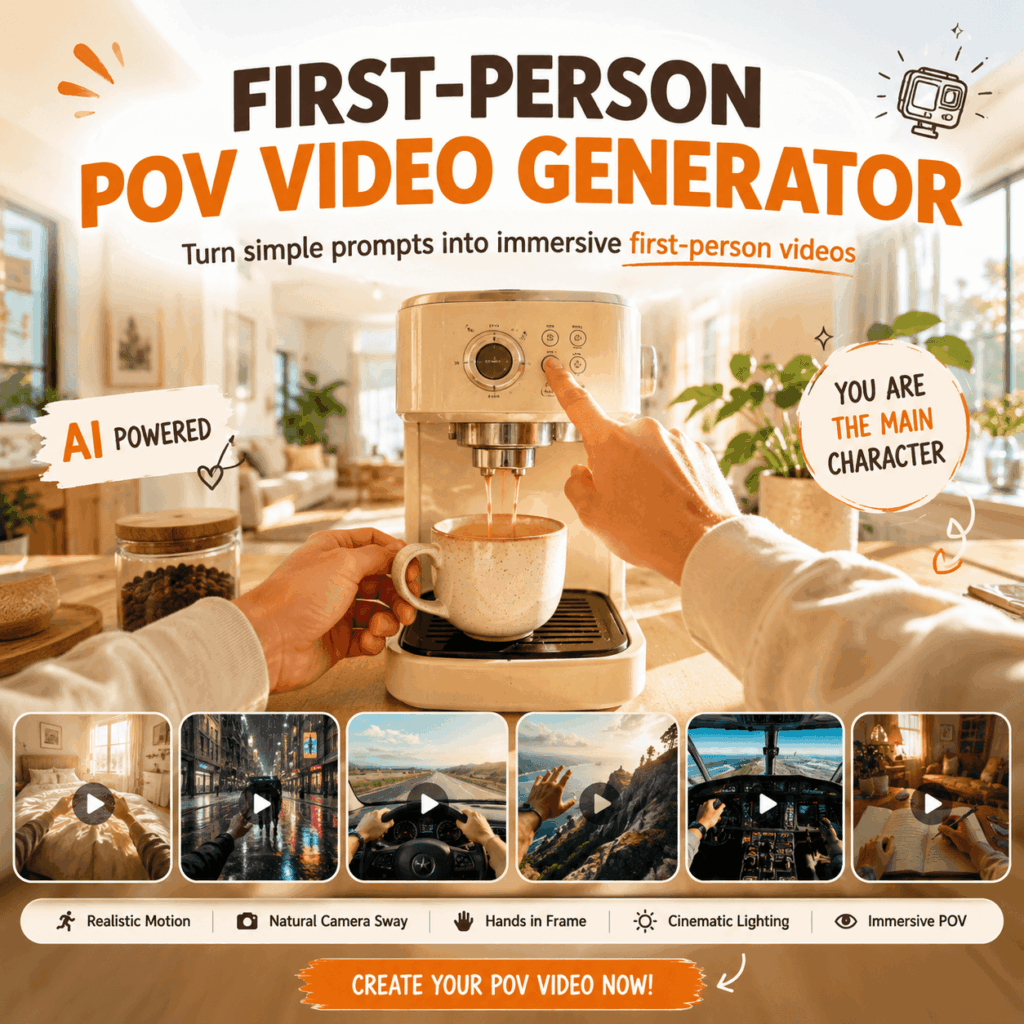
Today, people do not just want to see a product. They want to feel what it would be like to use it. That is why a First-Person POV Video Generator is becoming so useful for creators, brands, and social media teams. Instead of showing a product from the outside, this type of tool helps place the viewer inside the moment.
To put it simply, POV video changes the role of the viewer. They are no longer watching from a distance. Instead, they are walking into the scene, reaching for the product, moving through the space, and experiencing the action from a human point of view.
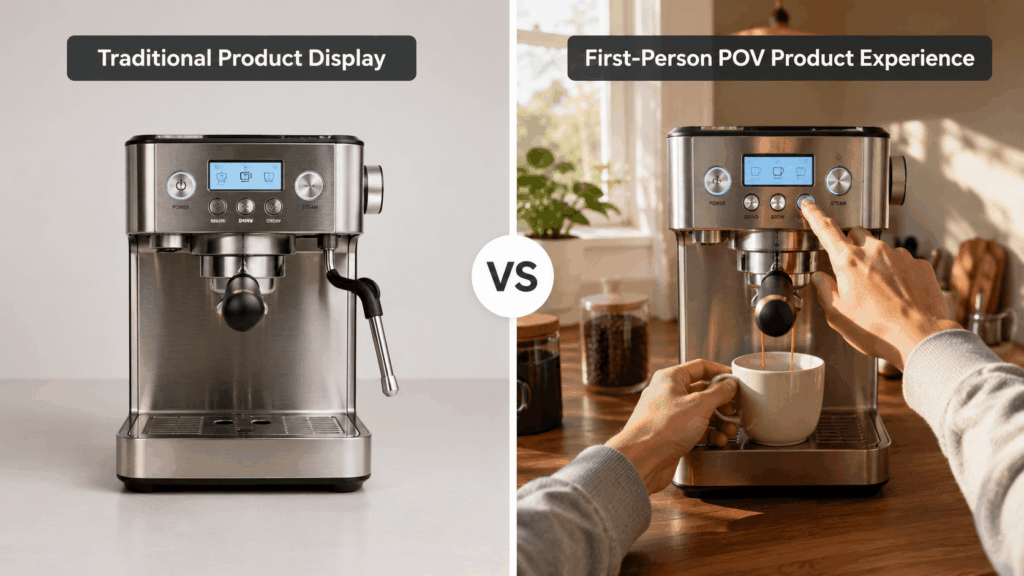
A regular product video can show what a coffee machine looks like. However, a POV video can show a person walking into a sunny kitchen, picking up a cup, pressing the button, and watching the coffee pour out. The product is still there, but now it feels like part of a real morning.
That shift matters.
With WeShop AI’s First-Person POV Video Generator, users can turn text prompts, reference images, or scene ideas into immersive first-person videos. More importantly, the result is not just another AI-generated clip. It feels closer to a real human experience, with natural camera movement, hands-in-frame actions, subtle head motion, realistic walking rhythm, cinematic lighting, and believable depth.
As a result, this tool helps creators move from “showing a product” to “creating a product experience.”
Why First-Person POV Videos Work So Well
Social media is crowded. Every day, users scroll past product photos, polished ads, unboxing clips, lifestyle videos, and AI content. Therefore, brands need more than clean visuals. They need content that creates an instant connection.
This is where first-person POV videos stand out.
Unlike a traditional ad, a first-person video does not make the viewer feel like an outsider. Instead, it makes them feel like they are part of the scene. The camera moves at eye level. Hands appear naturally. Meanwhile, the space has depth, and the motion feels human. As a result, the viewer can imagine themselves inside that moment.
For product marketing, this is powerful.
A backpack is no longer just a backpack on a white background. It becomes the bag someone opens before catching a flight.
Sneakers are no longer just a product shot. Instead, they become the feeling of walking through a city street.
Skincare is no longer just a bottle on a bathroom shelf. In this format, it becomes part of a quiet night routine.
Because of this, POV videos are especially useful for TikTok, Instagram Reels, YouTube Shorts, product ads, travel content, lifestyle storytelling, and “You wake up as…” style videos.
More importantly, they help answer a question every customer has:
What would this feel like in my life?
What Is the First-Person POV Video Generator?
The First-Person POV Video Generator is an online AI video tool from WeShop AI. It helps users create immersive first-person videos from text descriptions, reference images, or scene prompts.
However, the key value is not only video generation. The real value is perspective.
This tool focuses on videos that feel like they are filmed from a human point of view. For example, the camera can move with a natural walking rhythm. It can also include subtle head motion, hands interacting with objects, and a stronger sense of space, light, and movement.
Together, these details make the final video feel more believable.
Instead of generating “a street at night,” users can create a first-person walk through a rainy city street, with neon lights reflecting on the road and the camera moving gently with each step.
Similarly, a simple “bedroom scene” can become something more immersive. The viewer wakes up, pulls back the blanket, looks toward the door, and sees sunlight on the wooden floor.
That is what makes a First-Person POV Video Generator different from a general AI video tool. It does not only create a scene. It creates the feeling of being inside the scene.
From Product Display to Product Experience
Many product videos are clear, but they are not always memorable. They show the product, explain the features, and maybe add a few lifestyle shots. Yet, they often keep the viewer at a distance.
POV content changes that.
With a First-Person POV Video Generator, a product can become part of a real or imagined action. The viewer is not just looking at the product. Instead, they are reaching for it, opening it, using it, wearing it, driving with it, or carrying it into a new scene.
This is especially helpful for ecommerce and social media marketing.
For example, a home appliance brand can show a first-person morning routine. Meanwhile, a travel brand can guide the viewer into a hotel room or across an airport terminal. A fashion brand might show the feeling of getting ready before going out. In another case, an outdoor brand could show hands gripping rocks during a climb or adjusting gear on a trail.
In each case, the product becomes part of the story.
That is the real marketing advantage. The video does not simply say, “This product is useful.” Instead, it helps the viewer feel, “I can imagine myself using this.”
Ultimately, that feeling can make the content more persuasive.
Best Use Cases for the First-Person POV Video Generator
The First-Person POV Video Generator can support many types of content. Still, some use cases are especially strong for brands and creators.
Product Experience Videos
Product experience videos are one of the most valuable use cases.
Instead of placing a product in the center of the frame, creators can build a scene around it. For example, the viewer can walk into a kitchen, pick up a cup, press a coffee machine button, and watch coffee pour into the cup.
In this kind of video, the product is visible, but it does not feel forced. It feels natural.
Because of that, this format works well for home products, beauty products, fashion items, accessories, food and beverage products, tech gadgets, sports gear, and ecommerce ads.
Lifestyle POV Videos
Lifestyle content is not only about the product. It is also about the mood around the product.
For instance, a candle can be part of a quiet evening. Skincare can belong to a night routine. A mug can suggest a slow morning. Likewise, a desk lamp can support a focused work session.
First-person POV makes these moments feel more personal.
As a result, this type of video works well for lifestyle brands, home decor, wellness products, skincare, fragrance, food, drinks, and daily routine content.
Travel and City Exploration Videos
Travel content is naturally suited for POV video. After all, when people watch travel videos, they want to feel like they are there.
A First-Person POV Video Generator can help create scenes like walking down a rainy Tokyo street, entering a hotel room, moving through an airport, driving along a desert road, or exploring a quiet old town.
Because these scenes are easy to understand at a glance, they can work well for travel creators, hotel marketing, destination campaigns, city guides, and tourism brands.
Outdoor, Sports, and Adventure POV Videos
Adventure videos need movement. They need energy. Above all, they need a strong sense of body presence.
First-person POV is great for this.
For example, the viewer can climb a rocky trail, run through a city street, ride a bike, hike through a forest, or look down at their shoes before starting a race. These details make the scene feel active and physical.
For that reason, this type of content is useful for sportswear, outdoor gear, footwear, travel equipment, fitness content, and adventure storytelling.
“You Wake Up As…” Storytelling
“You wake up as…” videos have become popular because they create instant curiosity.
One scene may begin with the viewer waking up as an astronaut. Another could start inside a medieval castle. A different version might open in a cyberpunk apartment, on a pirate ship, or deep in a fantasy forest.
This type of content works because it is simple, visual, and easy to understand. At the same time, the first-person view makes the story feel personal from the first second.
For creators, this is a strong format for short-form storytelling. For brands, it can also become a creative way to build themed campaigns or fantasy product worlds.
How to Write Better POV Video Prompts
To get better results from a First-Person POV Video Generator, the prompt should not only describe the scene. It should describe the experience.
A simple formula can help:
Scene + first-person action + hands-in-frame interaction + camera movement + lighting + realistic details
For example, a weak prompt might say:
“Create a bedroom video.”
A stronger version would be:
“Waking up in a modern bedroom from a first-person POV, hands pulling back a white blanket, warm sunlight entering through the window, soft shadows on the wooden floor, subtle head motion, natural movement, realistic lifestyle video, cinematic lighting.”
The second version gives the AI much more to work with. It includes the location, action, body movement, light, texture, and mood.
The same method also works for product videos.
Here is another example:
“Walking into a bright kitchen from a first-person POV, reaching for a coffee cup, placing it under a coffee machine, pressing the button, coffee slowly pouring into the cup, morning sunlight on the countertop, natural hands-in-frame movement, subtle camera sway, realistic product ad style.”
This prompt does not just show a coffee machine. Instead, it creates a small moment around it.
That is the key. A strong POV prompt should make the viewer feel like something is happening to them or through them.
Why This Tool Matters for Brands
For brands, content production is not only about making one great video. It is also about creating enough strong content to test, learn, and scale.
However, that is often hard.
A team may already have product photos, but they still need fresh videos for ads, landing pages, TikTok, Instagram Reels, YouTube Shorts, email campaigns, and seasonal launches. Shooting all of that can take time and money.
A First-Person POV Video Generator can make the creative process faster.
Brands can test different scenes before planning a full shoot. They can turn one product into several lifestyle concepts. In addition, teams can try different moods, angles, locations, and use cases. Quick visual drafts can also support campaign planning.
For example, the same travel bag can appear in an airport scene, a hiking scene, a hotel check-in scene, and a weekend road trip scene. Each video tells a slightly different story. Yet, all of them help the viewer imagine owning the product.
This is why POV content is so useful for modern marketing. It does not only explain what the product is. It shows where the product fits in the customer’s life.
A Simple Workflow
Using the First-Person POV Video Generator can be simple.
Start by choosing the scene you want to create. It could be a morning routine, a product use moment, a city walk, a driving scene, or a fantasy opening.
After that, write the prompt with clear action. Describe what the viewer is doing, what the hands are interacting with, how the camera moves, and what the lighting feels like.
If you already have a clear starting image, add a first frame. This can help guide the video style and opening composition.
Once the scene is ready, choose the model, video length, and other settings. Finally, click Generate.
After the video is created, review it and improve the prompt if needed. When the movement feels too still, add “natural walking rhythm” or “subtle head motion.” If the hands are not clear enough, add “hands in frame” or describe the hand action in more detail. When the mood feels flat, include lighting, weather, time of day, or emotional tone.
In short, the best results usually come from clear, visual, and action-based prompts.
Prompt Examples You Can Try
Morning Bedroom POV
Prompt:
“Waking up in a modern bedroom from a first-person POV, hands pulling back a white blanket, warm sunlight entering through the window, soft shadows on the wooden floor, subtle head motion, natural movement, realistic lifestyle video, cinematic lighting.”
Coffee Machine Product POV
Prompt:
“Walking into a bright kitchen from a first-person POV, reaching for a coffee cup, placing it under a coffee machine, pressing the button, coffee slowly pouring into the cup, morning sunlight on the countertop, natural hands-in-frame movement, subtle camera sway, realistic product ad style.”
Rainy City Street POV
Prompt:
“Walking through a rainy city street at night from a first-person POV, neon lights reflecting on the wet road, natural walking rhythm, subtle camera movement, bright storefronts, cinematic urban mood, realistic depth, social media video style.”
Outdoor Adventure POV
Prompt:
“Climbing a rocky coastal trail from a first-person POV, hands occasionally touching the rocks for balance, ocean view in the distance, sunset light, sleeves moving in the wind, natural body motion, realistic adventure travel style.”
Final Thoughts
AI video generation is not only about making content faster. It is also changing what kind of content brands and creators can make.
The First-Person POV Video Generator gives creators a way to build videos that feel more personal, more immersive, and more connected to real experiences. It helps turn a simple idea into a scene the viewer can enter.
For brands, that means products can feel less like objects and more like part of a lifestyle. Meanwhile, creators can turn a text prompt into a short video with motion, mood, and story. Social media teams also get more ways to test visual ideas without starting from a full production process.
In the end, the strongest product content does not only show what something looks like.
It helps people imagine what it feels like to have it.
And that is the real value of a First-Person POV Video Generator: it turns products, places, and ideas into first-person experiences that viewers can instantly understand.
Go to WeShop AI For Exploration: