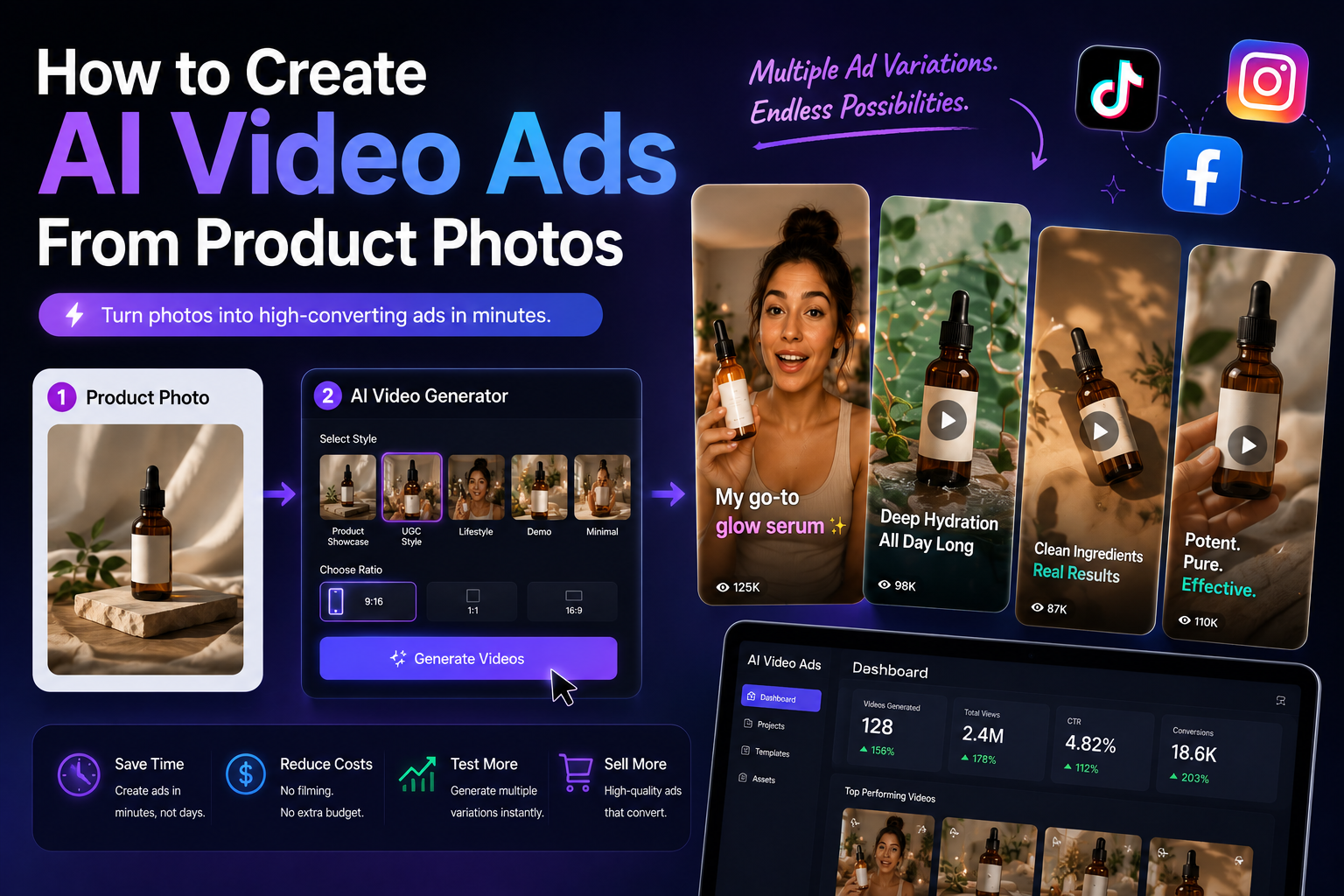
A few years ago, creating UGC ads meant finding influencers, negotiating rates, shipping products, waiting for content, requesting revisions, and hoping the final video would perform.
Today, many ecommerce brands are taking a different approach.
Instead of relying entirely on creators, they’re using AI UGC ads to produce social-first advertising content faster and at a much lower cost.
This doesn’t mean creators are disappearing. But it does mean brands now have another option when they need content quickly.
For ecommerce teams constantly testing new products, launching campaigns, or creating TikTok ads, AI UGC ads are becoming one of the fastest-growing content formats in digital marketing.
Why UGC Ads Work So Well
UGC stands for user-generated content, but most successful UGC ads aren’t successful because they’re created by users.
They’re successful because they feel authentic.
Unlike traditional commercials, UGC ads often look like content people already consume on social media.
They’re casual.
They’re personal.
They focus on experiences rather than polished branding.
This is especially important on platforms like TikTok and Instagram Reels, where users tend to scroll past content that feels too much like an advertisement.
The best UGC ads feel like recommendations from a friend.
That’s why ecommerce brands continue investing heavily in this format.
The Problem With Traditional Creator Campaigns
Working with creators can produce excellent results, but it also introduces several challenges.
Brands often need to:
- find suitable creators
- negotiate pricing
- manage contracts
- ship products
- review content
- request edits
For a single campaign, this process might be manageable.
For brands testing dozens of products and ad concepts every month, it quickly becomes difficult to scale.
The biggest issue isn’t usually cost.
It’s speed.
By the time content is approved, trends may have already changed.
How AI UGC Ads Change the Workflow
AI UGC ads simplify content creation by removing many of the production bottlenecks. Businesses investing in ai agent development services can also automate content workflows, helping teams generate, review, and distribute marketing assets more efficiently.
Instead of waiting for creators to film content, brands can generate creator-style videos directly from existing assets.
A typical workflow looks something like this:
- Upload a product image.
- Choose a UGC-style format.
- Generate multiple ad variations.
- Test different hooks and messaging.
- Launch campaigns.
The goal isn’t to replace creativity.
The goal is to make experimentation easier.
When creating content becomes faster, testing becomes easier too.
And in ecommerce advertising, testing is often where growth comes from.
What Makes a Good AI UGC Ad?
Many marketers assume realistic visuals are the most important factor.
They’re not.
The best-performing AI UGC ads usually focus on three things:
A Strong Hook
The first few seconds matter more than anything else.
Questions, surprising claims, and relatable problems often perform better than generic introductions.
Product Context
Consumers want to understand how a product fits into their daily lives.
Showing use cases often works better than simply showing features.
Natural Storytelling
The strongest UGC ads don’t feel scripted.
They feel like someone sharing an experience.
This is true whether the content comes from a real creator or an AI-generated workflow.
Why Ecommerce Brands Are Adopting AI UGC Ads
The biggest advantage isn’t replacing creators.
It’s creating more opportunities to test.
Imagine launching one creator video.
Now imagine launching ten different variations.
Different hooks.
Different messaging.
Different styles.
Different audiences.
AI makes this possible without multiplying production costs.
For ecommerce teams, that can dramatically improve advertising efficiency.
Creating AI UGC Ads With WeShop AI
Many ecommerce brands already have the ingredients needed to create effective UGC ads.
They have:
- product photos
- marketing assets
- customer insights
- advertising goals
What they’re missing is a fast way to turn those assets into video content.
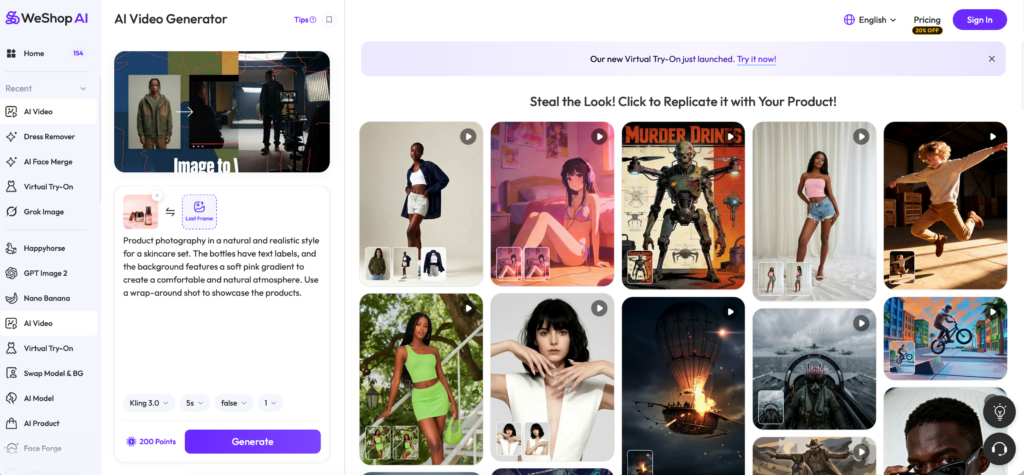
WeShop AI helps bridge that gap by giving brands access to AI-powered video creation workflows designed specifically for ecommerce marketing.

Then you get AI-generated ad videos:
Instead of spending weeks coordinating creator campaigns, brands can generate AI UGC ads, test creative concepts, and launch content much faster.
Final Thoughts
The future of ecommerce advertising isn’t about choosing between human creators and AI.
It’s about having more ways to create content.
AI UGC ads give brands the ability to test ideas faster, produce more creative variations, and keep up with the speed of modern social media marketing.
For teams that need content at scale, AI UGC ads are becoming an increasingly important part of the marketing toolkit.
Go to WeShop AI For Exploration: