AI-generated product photography is no longer experimental. In 2026, many ecommerce brands already use AI visuals daily for product pages, paid ads, Shopify banners, and social campaigns.
The reason is simple:
Traditional product photography is expensive. AI image generation is dramatically cheaper, faster, and easier to scale.
However, not every AI image model works well for ecommerce.
Some models generate beautiful artistic images but fail at product accuracy. Others produce technically clean images that still feel emotionally flat.
For ecommerce, visuals must do more than look impressive.
They must:
- sell products
- build trust
- increase clicks
- improve conversion rates
That changes which AI models actually perform best.
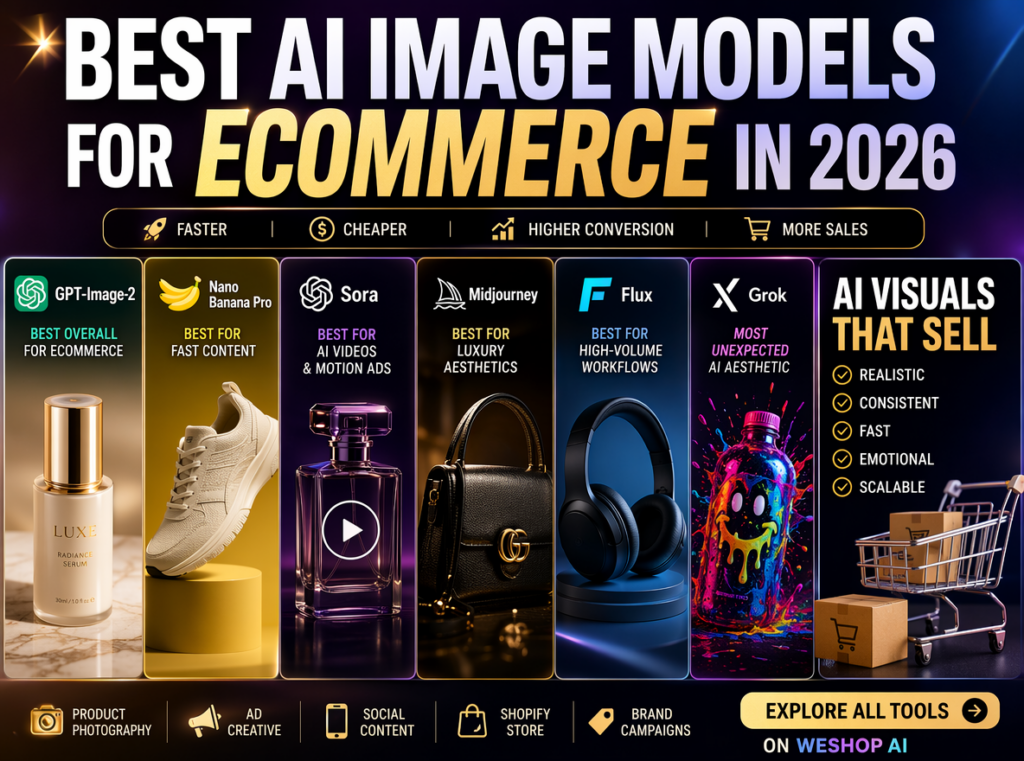
In this ultimate ecommerce AI review, we tested the biggest image models currently dominating the market — including GPT-Image-2, Nano Banana Pro, Sora, Midjourney, Flux, and Grok.
We focused on:
- realism
- product consistency
- prompt accuracy
- commercial usability
- luxury branding potential
- ecommerce workflow speed
🛒 GPT-Image-2 — Best Overall for Ecommerce Brands
GPT-Image-2 currently feels the most commercially reliable AI image generator for ecommerce.
Unlike highly artistic AI models, GPT-Image-2 understands product structure surprisingly well. Packaging, labels, shadows, and reflections usually remain stable even under complex prompts.
This matters enormously for ecommerce because customers notice small inconsistencies immediately.
The model performs especially well for:
- skincare products
- beauty ads
- fashion accessories
- electronics
- minimalist luxury branding
One major strength is prompt control.
For example, prompts like:
“Luxury skincare bottle on beige marble surface with soft studio lighting and premium commercial photography aesthetic”
usually generate highly usable results with minimal regeneration.
That consistency saves brands significant production time.
Most importantly, GPT-Image-2 images often look close to real commercial photography rather than obvious AI art.
🍌 Nano Banana Pro — Best for Fast Marketplace Content
Nano Banana Pro is growing rapidly among smaller ecommerce sellers because it focuses heavily on speed and simplicity.
The platform feels lightweight, efficient, and highly optimized for fast content generation.
Unlike cinematic AI models, Nano Banana Pro prioritizes:
- product visibility
- clean composition
- quick rendering
- marketplace-friendly layouts
This makes it surprisingly useful for:
- Amazon sellers
- Etsy stores
- dropshipping creatives
- Shopify thumbnails
- fast ad testing
The outputs may not always feel ultra-premium, but the workflow speed is genuinely impressive.
For sellers producing dozens of variations weekly, that speed becomes incredibly valuable.
🎬 Sora — Best for AI Product Videos and Motion Ads
OpenAI developed Sora primarily for AI video generation, but many ecommerce creators are already experimenting with it for commercial advertising concepts.
This is where Sora becomes exciting.
Instead of generating static product images, Sora can create:
- cinematic motion shots
- animated product reveals
- luxury brand sequences
- lifestyle ad scenes
- AI commercial concepts
For example, fashion brands can simulate entire campaign visuals without organizing physical shoots.
The emotional quality feels surprisingly high.
However, Sora currently works better for:
- brand storytelling
- advertising concepts
- social campaigns
rather than precise ecommerce catalog photography.
Still, its future commercial potential looks enormous.
🔥 Midjourney — Best for Luxury Ecommerce Aesthetics
Midjourney remains the king of cinematic AI visuals.
Few models currently match Midjourney in:
- luxury atmosphere
- dramatic lighting
- editorial aesthetics
- emotional visual storytelling
For premium ecommerce branding, Midjourney can create stunning campaign visuals.
However, there is a tradeoff.
Product consistency still becomes unstable sometimes.
Common problems include:
- distorted packaging
- changing logo placement
- inaccurate product dimensions
- unrealistic reflections
Because of this, Midjourney works better for:
- homepage banners
- luxury campaigns
- visual branding inspiration
rather than strict product catalog workflows.
⚡ Flux — Best for High-Volume Ecommerce Teams
Flux has become increasingly popular among performance marketing teams because it combines:
- fast generation
- decent realism
- low friction workflows
- scalable creative production
This makes it ideal for ecommerce brands constantly testing:
- Meta ads
- TikTok creatives
- product thumbnails
- landing page variations
Flux may not always produce the most cinematic visuals. However, it excels at rapid content production.
For many ecommerce teams, speed matters more than perfection.
🤖 Grok Image Generation — Most Unexpected AI Aesthetic
xAI is still evolving visually, but Grok’s image outputs already feel different from most AI generators online.
The platform often produces images with:
- internet-native humor
- meme energy
- chaotic creativity
- bold visual exaggeration
This makes Grok surprisingly effective for:
- viral product marketing
- meme-based ecommerce brands
- Gen Z campaigns
- attention-driven ads
It feels less polished than GPT-Image-2. However, it often creates stronger emotional reactions.
And online, emotional reaction drives clicks.
📈 What Actually Makes an AI Model Good for Ecommerce?
The answer is not simply “better image quality.”
The best ecommerce AI models usually combine:
- realism
- consistency
- speed
- emotional branding
- scalable workflows
At the same time, product clarity remains critical.
If customers cannot immediately understand the product, even beautiful visuals fail commercially.
That is why the strongest ecommerce AI models balance aesthetics and usability together.
Final Thoughts
Right now, GPT-Image-2 offers the strongest overall balance for ecommerce workflows because it combines realism, prompt accuracy, and commercial consistency extremely well.
Meanwhile:
- Nano Banana Pro excels at fast marketplace production
- Sora unlocks cinematic AI advertising
- Midjourney dominates luxury aesthetics
- Flux wins on scalable content workflows
- Grok creates emotionally chaotic viral content
Ultimately, the best ecommerce AI model depends on what your brand actually needs.
Go to WeShop AI For Exploration: