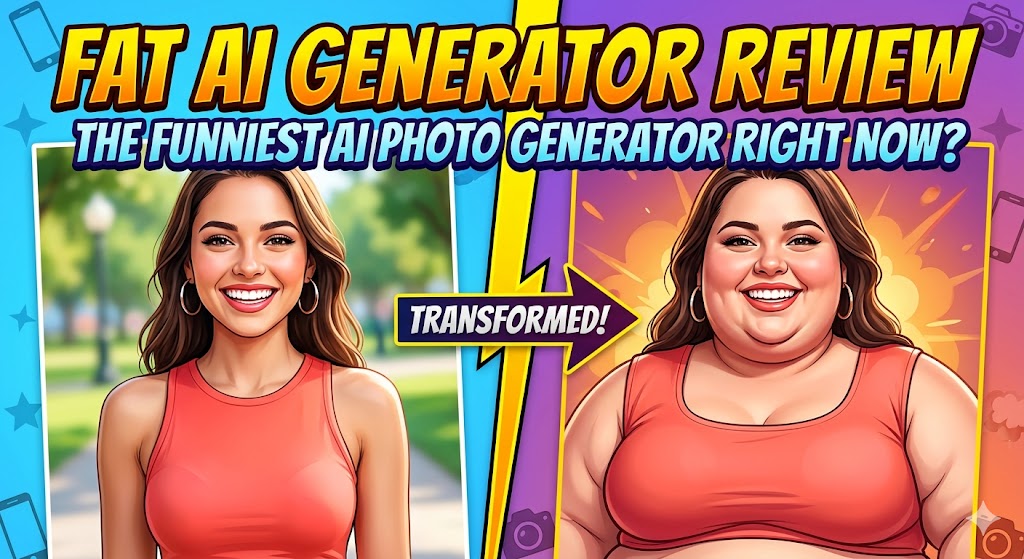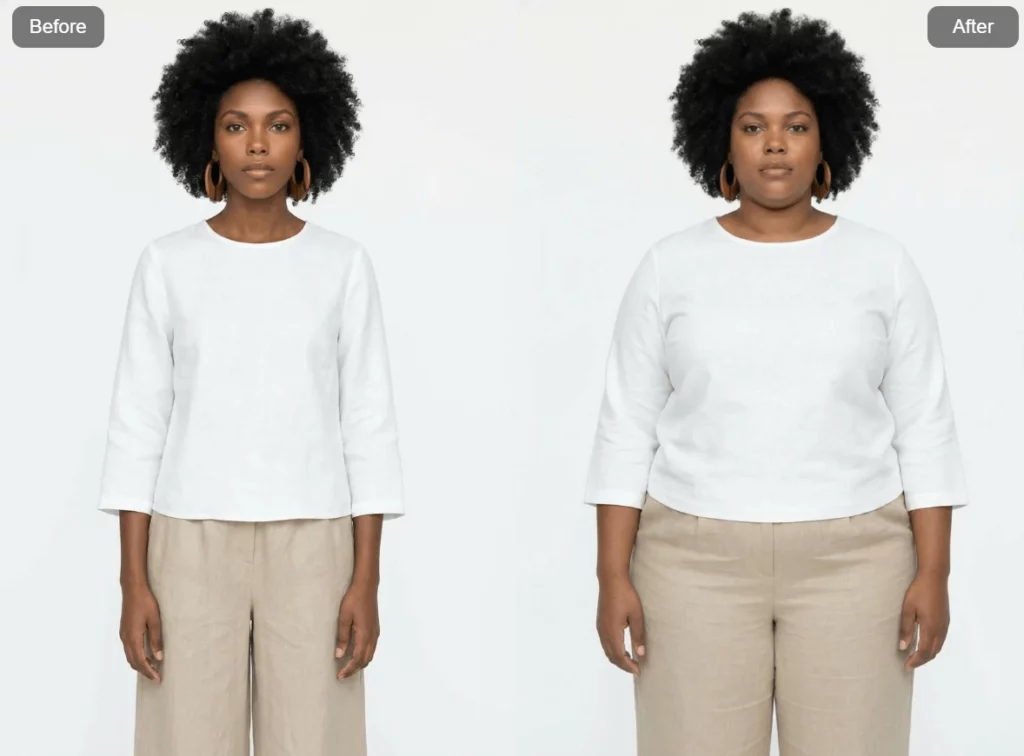
An AI fat generator creates a body-size variation of an image. It does not predict how a real person will look after gaining weight. It also cannot measure health, prove clothing fit, or replace a real plus-size photo shoot.
That distinction gives the tool a more useful role. You can explore an approved self-portrait, develop a fictional character, or test a larger-body direction for a fashion concept. However, the output remains a generated image. It is a visual proposal, not personal evidence.
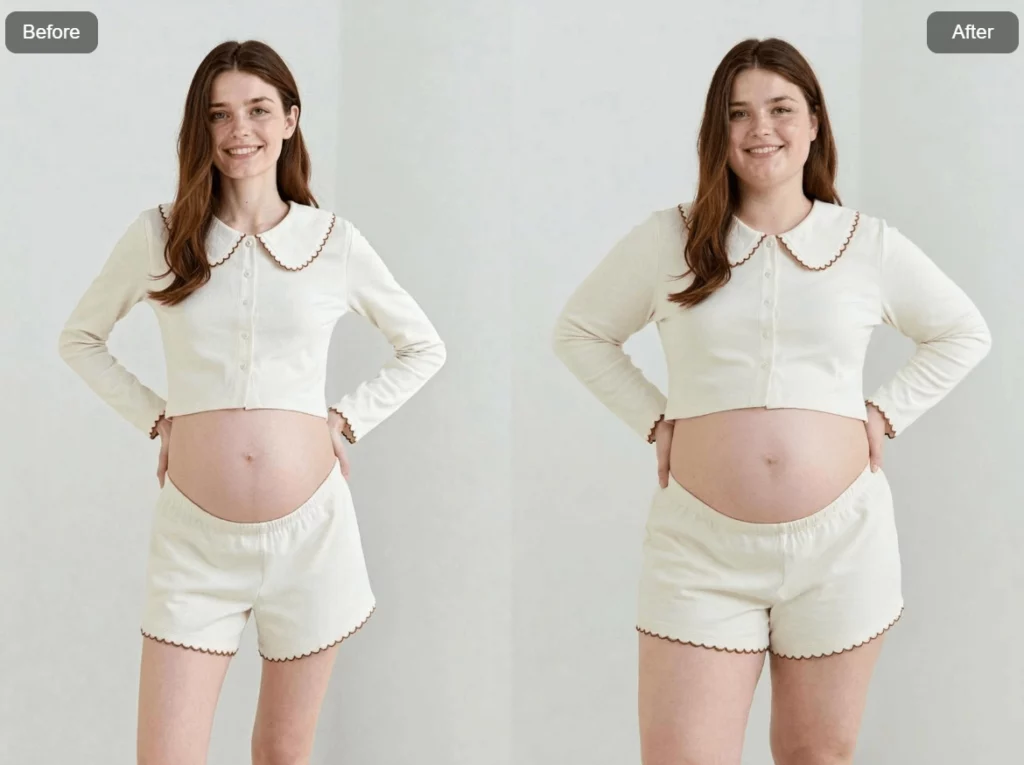
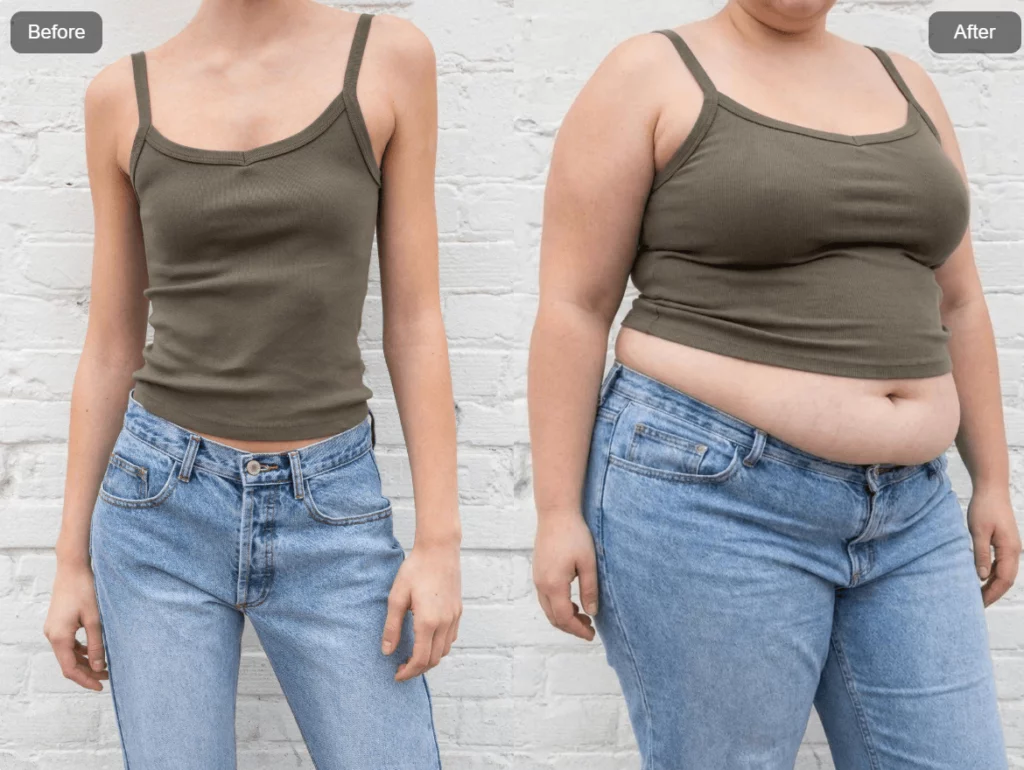
The current WeShop AI tool is presented as a Plus Size Model Generator. Its page describes use with real models, AI models, mannequins, and flat-lay clothing sources. It is designed to create XL–XXXL visual directions and adjust clothing around the revised form. Even so, every result needs a human review. Identity, garment construction, and body proportions can change in ways the user did not request.
Read the Result as a Concept, Not a Forecast
The question “What would I look like?” sounds simple. In reality, no AI fat generator can answer it with certainty. Real bodies change in different ways. Also, a single portrait does not contain enough information to forecast those changes.
Therefore, use careful language when saving or sharing the result:
- “A larger-body AI edit” is accurate.
- “A plus-size visual concept” is useful for creative work.
- “This is exactly how I would look” is not supported.
- “This proves how the garment fits” is also not supported.
For fashion teams, the same boundary matters. An AI image can help shape casting, styling, or campaign direction. Yet it cannot confirm grading, comfort, stretch, mobility, or real garment behavior. Those decisions still require product data, fit testing, and photography when accuracy matters.
Give the AI Fat Generator a Clear Editorial Brief
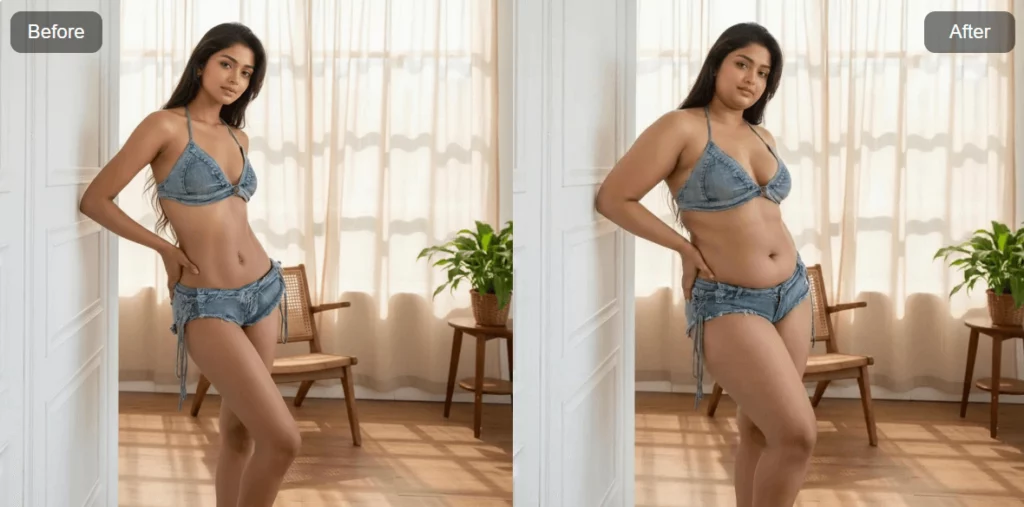
A useful AI fat generator edit begins with a purpose. “Make this person fat” is vague. It may also produce an uneven or disrespectful result. A better brief names the intended body-size direction. Then, it lists everything that should remain stable.
Use a short instruction block such as:
Create a larger-body fashion variation of the consenting adult model. Preserve the face, skin tone, expression, pose, camera angle, lighting, and background. Keep the garment color, print, seams, neckline, sleeve length, hem, and logo placement consistent. Adjust the body proportions as one coherent form. Let the garment drape follow the revised body without inventing new design details. Do not change the hair, hands, accessories, or crop.
If the active AI fat generator accepts a size direction, choose one clear target for the first version. Do not combine a larger body, new pose, different outfit, and new background in the same request. Too many changes make it hard to see which part failed.
The wording also matters. Outside the product name and search keyword, prefer “larger-body variation,” “plus-size model,” or “body-size edit.” Avoid turning a body type into a joke, punishment, or visual shock.
The Source Photo Decides What Survives
The source image sets the limits of the edit. A full-body fashion photo gives the AI fat generator more information about posture and garment length. It also shows more of the body balance. By contrast, a tight crop may leave the system to invent the missing waist, hips, legs, or clothing edges.
Choose an image where the adult subject is easy to see. Keep the face, torso, hands, and main garment details clear. Simple lighting also helps you judge whether shadows still follow the revised form.
Crowded group photos add risk. The tool may alter the wrong person or blend nearby bodies. Mirrors can create a second, inconsistent version of the subject. Likewise, crossed arms, large bags, loose coats, and furniture can hide the areas the edit needs to rebuild.
AI Fat Generator Inputs That Need Extra Care
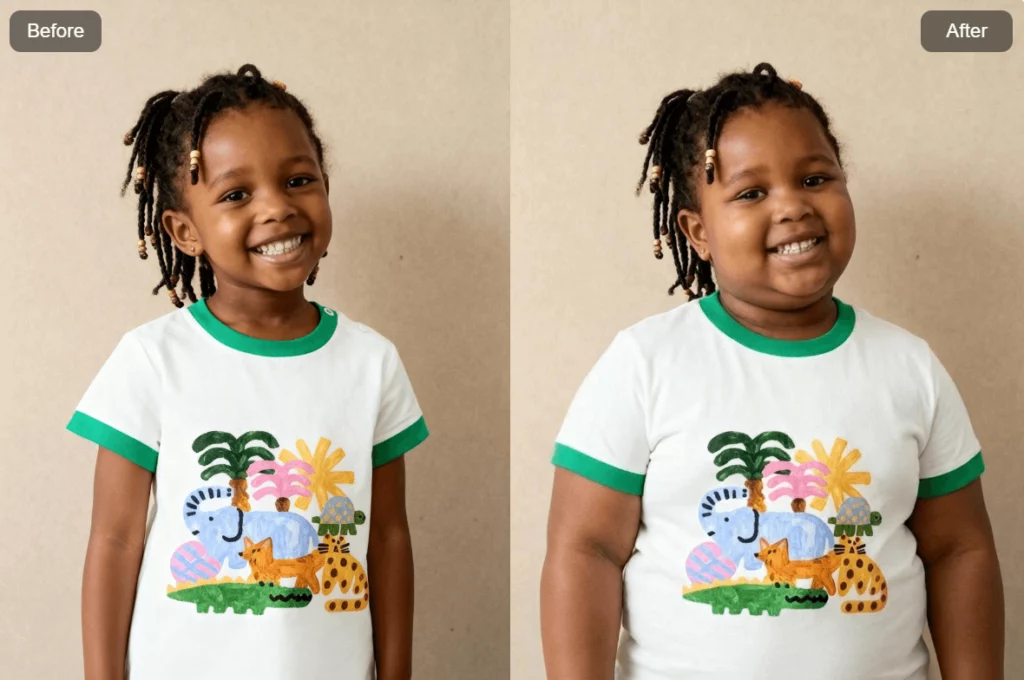
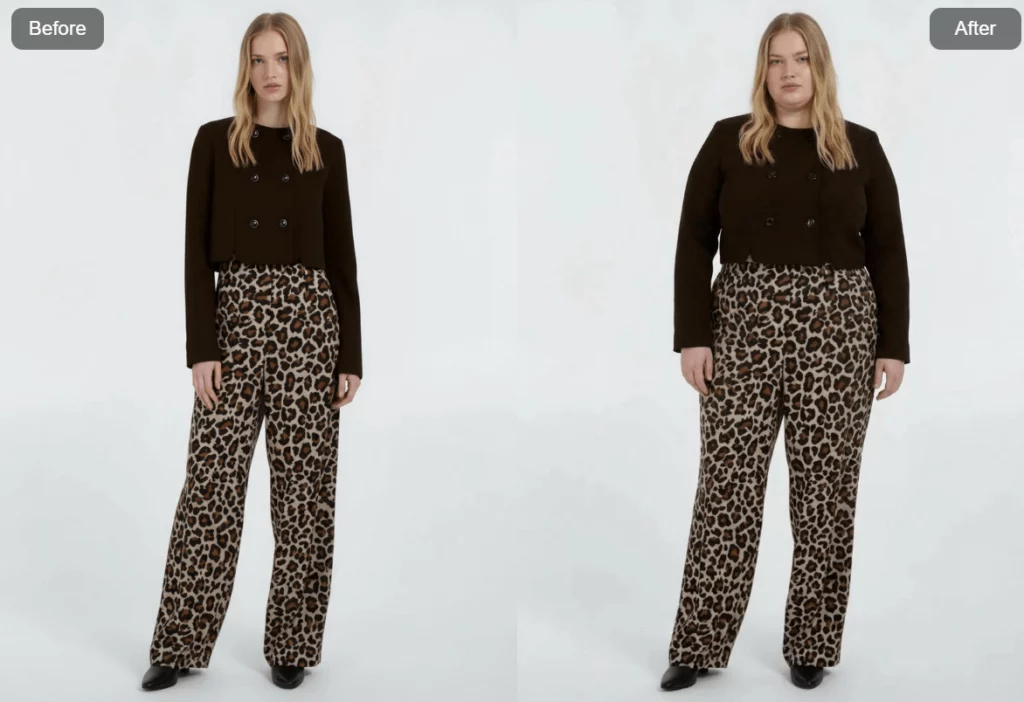
Patterned garments deserve a close check. Stripes should follow the new volume without breaking. Plaids should keep their grid. Logos, buttons, pockets, zippers, and seams should stay in the same logical place.
Flat lays and mannequins need a different review from model photos. They may help suggest a larger presentation direction, but they do not show a real person wearing the item. Therefore, do not describe those results as proof of fit or body representation.
Finally, inspect the face and hands even when the requested change concerns the body. An AI fat generator may preserve them well in one result and shift them in another. Treat preservation as something to verify, not something to assume.
Four Briefs Need Four Different Standards
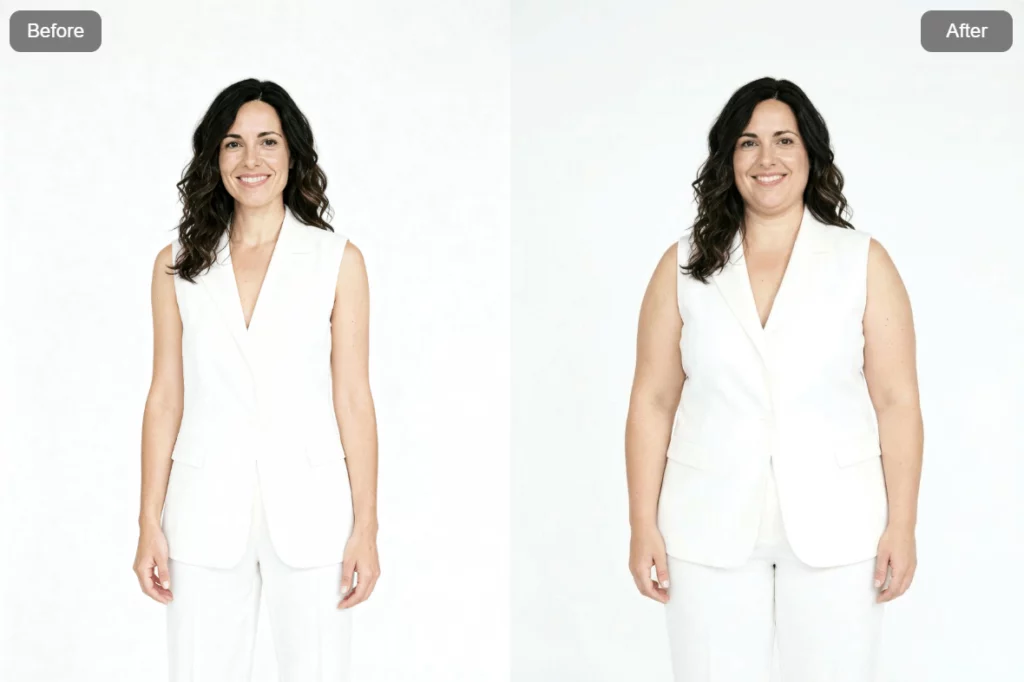
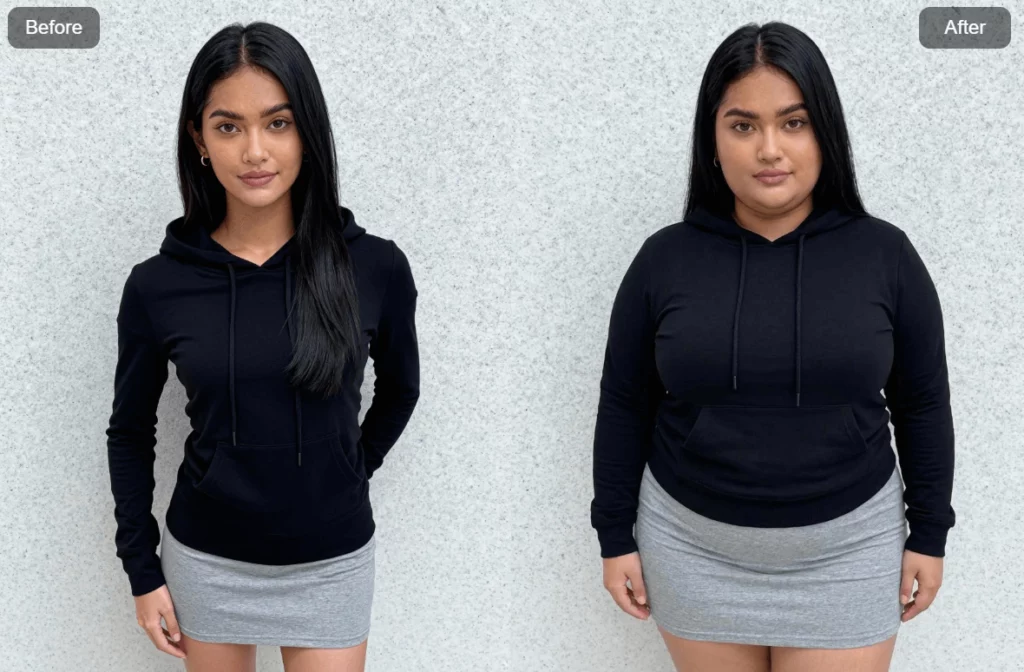
The same visual effect can be acceptable in one context and misleading in another. The purpose should decide the review standard.
A private self-portrait experiment
Use your own image and decide whether the result will stay private. The value is creative curiosity, not a claim about future appearance. If the image feels uncomfortable, there is no reason to save or share it.
A size-inclusive campaign concept
Use an authorized model or AI model. Preserve the garment and avoid language that treats the larger body as a before-and-after joke. The result can support an art-direction discussion. However, it should not replace accurate plus-size product photography when customers need fit information.
A fictional character variation
Keep the character’s face, costume, color language, and role consistent. In this setting, the AI fat generator supports character development rather than a claim about a real person.
A multi-model visual set
Keep the camera, pose, styling, and background aligned across the set. Then, viewers can focus on the intended body-size range. Still, each image must pass its own identity and garment check before the set is used.
Judge the AI Fat Generator Result in Two Passes
The first pass is about the person. Confirm that the adult subject approved the edit and its intended audience. Also, check whether the image still treats them with dignity. A smooth result can still be unsuitable. It may invite ridicule or change someone without consent.
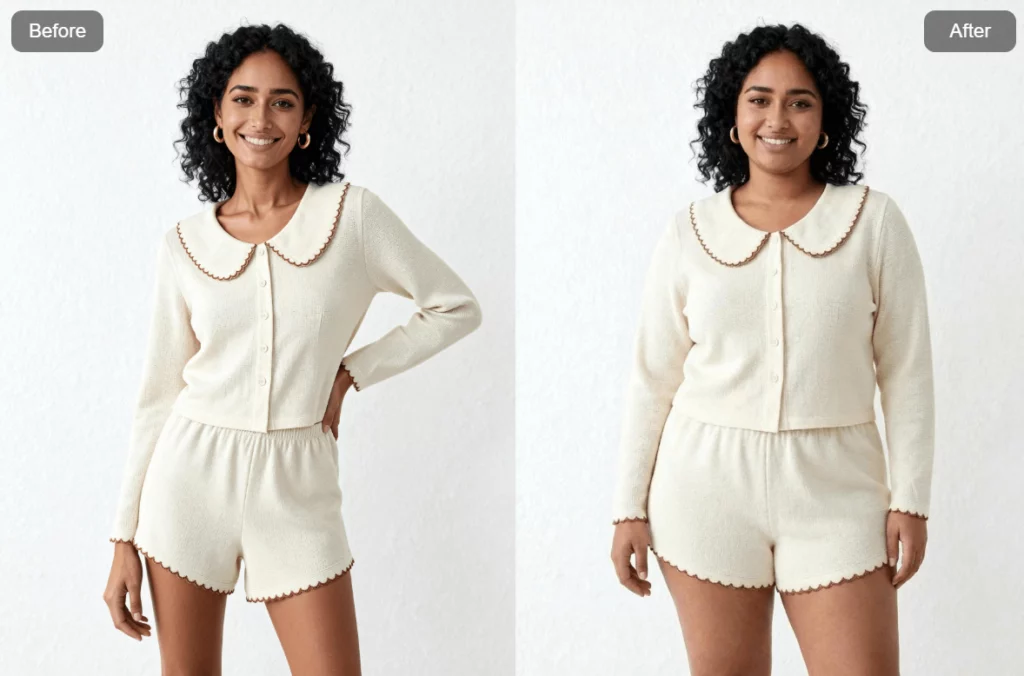
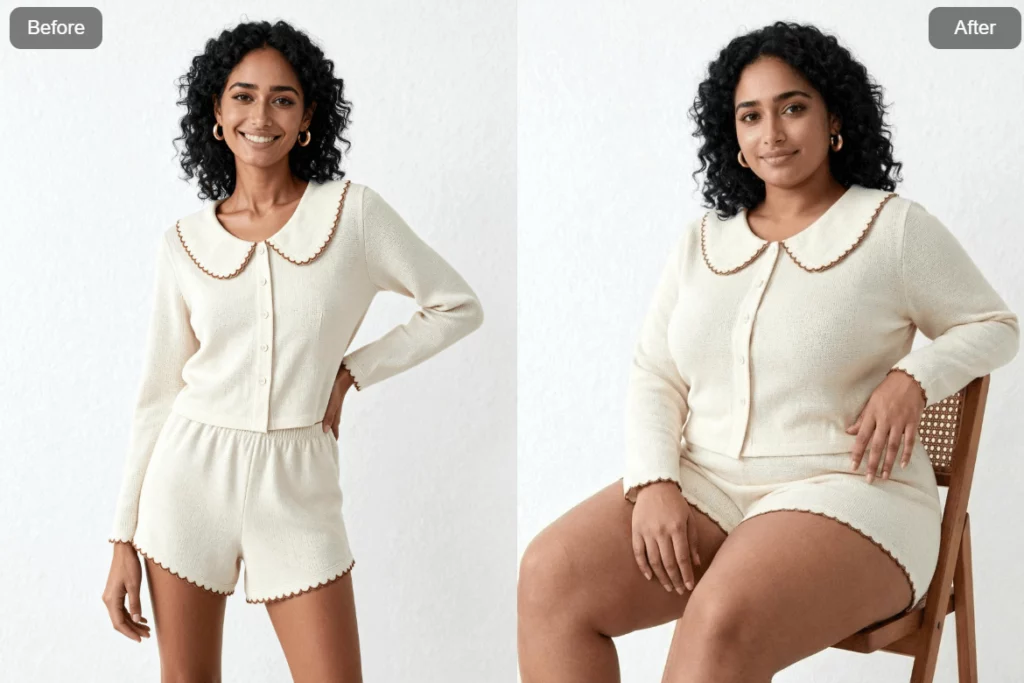
The second pass is about the picture. Check the face, jaw, neck, shoulders, elbows, waist, hips, knees, and hands. Then, inspect garment prints, seams, closures, logos, shadows, and background lines. Look for stretched patterns, repeated details, bent furniture, mismatched reflections, or clothing that appears fused to the body.
If the AI fat generator changes more than the brief allowed, reject the result. Do not hide a major error with a crop, sticker, or filter. A cleaner input or a narrower request is the better next move.
When the Right Choice Is Not to Publish
Do not upload or share someone else’s photo without clear permission. This is especially important because body-size edits can be used for harassment, humiliation, impersonation, or false claims.
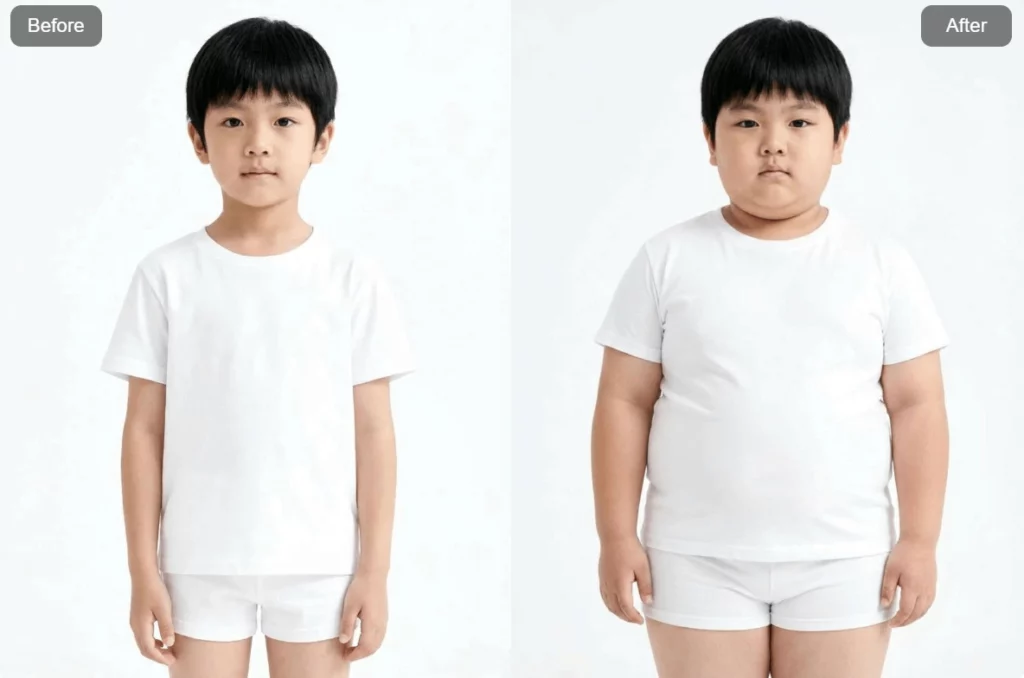
Avoid editing minors, strangers, public figures, coworkers, classmates, former partners, or private individuals who did not agree. Do not use an AI fat generator to make a medical claim, predict weight change, market an unproven treatment, or imply that one body size is a failure and another is a success.
For commercial use, confirm the rights to the source image and model likeness. Check the garment artwork, logos, and final output too. Also, review the current tool terms. Consent for a private test does not include permission for an ad or public post unless the person agrees.
Judge the AI Fat Generator Result in Two Passes
The first pass is about the person. Confirm that the adult subject approved the edit and its intended audience. Also, check whether the image still treats them with dignity. A smooth result can still be unsuitable. It may invite ridicule or change someone without consent.
The second pass is about the picture. Check the face, jaw, neck, shoulders, elbows, waist, hips, knees, and hands. Then, inspect garment prints, seams, closures, logos, shadows, and background lines. Look for stretched patterns, repeated details, bent furniture, mismatched reflections, or clothing that appears fused to the body.
If the AI fat generator changes more than the brief allowed, reject the result. Do not hide a major error with a crop, sticker, or filter. A cleaner input or a narrower request is the better next move.
When the Right Choice Is Not to Publish
Do not upload or share someone else’s photo without clear permission. This is especially important because body-size edits can be used for harassment, humiliation, impersonation, or false claims.
Avoid editing minors, strangers, public figures, coworkers, classmates, former partners, or private individuals who did not agree. Do not use an AI fat generator to make a medical claim, predict weight change, market an unproven treatment, or imply that one body size is a failure and another is a success.
For commercial use, confirm the rights to the source image and model likeness. Check the garment artwork, logos, and final output too. Also, review the current tool terms. Consent for a private test does not include permission for an ad or public post unless the person agrees.
A Better Use Is More Specific Than a Transformation
The original article treated the tool mainly as a fast and funny effect. That angle is easy to repeat, but it gives readers little help. A stronger use begins with a defined purpose, an authorized image, and a clear boundary around what the result means.
Use the AI fat generator to explore a body-size concept. Then, review whether the face, pose, garment, and setting survived the edit. Be honest about what the image cannot prove. Most importantly, do not use another person’s body as the punchline.
When those standards are in place, the output can support a creative discussion, character study, or early campaign direction. It remains an AI-assisted image, not a forecast and not a substitute for real people.
Go to WeShop AI For Exploration: