For years, AI virtual try-on technology felt impressive in demos but frustrating in real-world ecommerce workflows. Clothes looked fake. Fabric textures melted together. Hands disappeared into jackets 😭 And honestly, many AI try-on systems still felt more like experimental tech showcases than actual production-ready tools. That is exactly why people inside the AI fashion world suddenly started paying attention to Doubao 4.0 virtual try onworkflows. Because this time, the conversation feels different 👀 Instead of focusing only on “cool AI effects,” people are asking:
- Can this actually work for ecommerce?
- Can brands use this at scale?
- Can AI-generated try-on images look commercially usable?
- Is China becoming a major AI fashion technology leader?
And surprisingly…
Doubao 4.0 is starting to look genuinely competitive.
👗 Why Virtual Try-On Became One of AI’s Biggest Battlegrounds
AI image generation exploded fast.
However, fashion ecommerce has always been one of the hardest real-world applications.
Why?
Because clothing is brutally complicated.
AI must understand:
- body proportions
- fabric physics
- wrinkles
- shadows
- texture layering
- pose consistency
- lighting realism
- garment structure
Even tiny mistakes instantly feel uncanny.
That is why many older virtual try-on systems looked “almost correct” but still emotionally fake.
Consumers notice immediately.
🚀 What Is Doubao 4.0?
ByteDance continues pushing aggressively into AI through the Doubao ecosystem.
Doubao 4.0 represents a major step toward more advanced multimodal AI workflows, especially in:
- AI image generation
- ecommerce visuals
- virtual try-on
- Chinese AI ecosystems
- production AI pipelines
- consumer-facing AI tools
And unlike many experimental AI tools, Doubao increasingly feels designed for actual large-scale deployment.
That difference matters a lot.
🧥 Why Doubao 4.0 Virtual Try-On Feels More “Production-Ready”
A huge problem with earlier AI try-on systems was consistency.
One image might look incredible.
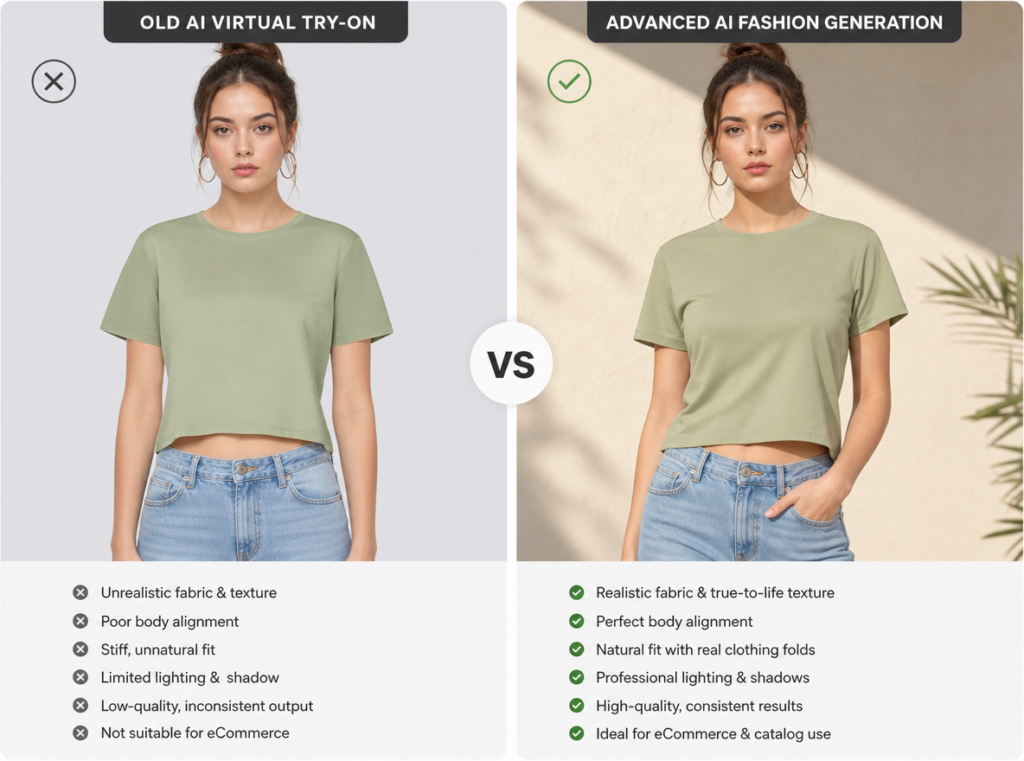
The next image might generate:
- broken sleeves
- warped fabric
- distorted faces
- impossible body shapes
- melted accessories 💀
Doubao 4.0 appears increasingly optimized for:
- stable clothing generation
- cleaner garment preservation
- more realistic folds
- stronger body alignment
- ecommerce-friendly lighting
- consistent product presentation
That is exactly why ecommerce people are paying attention.
Because brands care less about “AI magic” and more about:
repeatable workflows.
🛍 Why China Is Becoming Extremely Important in AI Fashion
Western AI discussions often focus heavily on:
- OpenAI
- Midjourney
Meanwhile, China’s AI ecosystem is evolving insanely fast behind the scenes.
Especially in:
- ecommerce AI
- livestream commerce
- fashion automation
- AI retail systems
- social commerce workflows
And honestly, virtual try-on technology fits China’s ecommerce ecosystem perfectly.
Because Chinese ecommerce platforms already operate at massive visual scale.
They need:
- faster product photography
- cheaper content pipelines
- AI-generated model imagery
- localized fashion visuals
- rapid SKU generation
That creates huge demand for production-ready AI fashion tools.
📸 What Makes AI Virtual Try-On So Difficult?
Most users underestimate how insanely hard virtual try-on actually is.
The AI must simultaneously preserve:
- human identity
- clothing realism
- body proportions
- fabric texture
- pose accuracy
- environmental lighting
all at the same time.
And if even one detail breaks…
the image instantly feels fake.
That is why realistic AI clothing generation is still considered one of the hardest multimodal AI challenges today.
⚡ Doubao 4.0 vs Older Virtual Try-On Systems
Earlier AI try-on tools often felt:
- stiff
- overprocessed
- unrealistic
- low-detail
- socially unusable
Meanwhile, newer Doubao 4.0 workflows increasingly prioritize:
- photorealism
- natural clothing drape
- modern fashion aesthetics
- influencer-style presentation
- ecommerce-ready visuals
That shift is extremely important.
Because modern ecommerce images must now compete directly with:
- TikTok aesthetics
- Instagram fashion culture
- influencer photography
- luxury branding visuals
Consumers expect AI-generated fashion content to feel native to social media now.
👀 Why Fashion Brands Are Watching Closely
The economic incentives are massive.
Traditional fashion photography is expensive.
Especially when brands need:
- multiple body types
- different regions
- localized campaigns
- seasonal updates
- thousands of SKUs
AI virtual try-on potentially reduces:
- studio costs
- reshoots
- model logistics
- editing pipelines
- localization expenses
That is why production-ready AI fashion tools could completely reshape ecommerce workflows.
And honestly…
the industry knows it.
📱 TikTok Culture Is Quietly Changing Virtual Try-On Expectations
Modern shoppers increasingly discover clothing through:
- TikTok creators
- livestreams
- short-form video
- influencer content
- AI-generated campaigns
Static ecommerce photography alone no longer feels enough.
Consumers now expect:
- cinematic presentation
- dynamic styling
- personalized visuals
- fast trend adaptation
That is why AI try-on tools are evolving beyond simple catalog images.
They are becoming:
content generation systems.
🔥 The Real Shift Behind Doubao 4.0
The biggest story is not simply “better AI images.”
It is:
scalable visual production.
AI fashion tools are increasingly optimized for:
- workflow speed
- large-scale generation
- ecommerce deployment
- social media adaptation
- commercial consistency
That is what makes Doubao 4.0 interesting.
It feels less like an experimental AI toy and more like infrastructure.
And honestly, that may matter far more long term.
⚠️ Problems AI Virtual Try-On Still Has
Of course, current systems still struggle with:
- difficult poses
- layered clothing
- transparent fabrics
- jewelry details
- hand positioning
- visual consistency across batches
And yes…
AI hands still occasionally enter sleep paralysis demon mode 😭
But compared to earlier virtual try-on generations, the improvements are becoming increasingly obvious.
Final Thoughts
Doubao 4.0 virtual try-on workflows show how quickly AI fashion technology is evolving beyond simple demos into real ecommerce infrastructure 👗
With stronger realism, improved garment consistency, scalable image generation, and production-focused workflows, China’s latest AI ecosystem is becoming a serious force in the future of virtual fashion technology.
And honestly?
The era of AI-generated ecommerce fashion content at massive scale may already be starting.
Go to WeShop AI For Exploration: